
10 Functional Fitness Exercises For Seniors Over 55+
Not all exercises are created equal. Functional fitness exercises for seniors go beyond simply staying active. They’re designed to help you move through daily life with more ease and confidence. These movements mirror everyday tasks like standing up, reaching, and walking, so the benefits show up quickly in the things that matter most in your daily life.
What are Functional Fitness Exercises?
Functional fitness exercises are routines that prepare your body for real-life activities. Instead of working muscles in isolation, these movements train your body the way you actually use it every day.
Think of it this way: traditional exercise might have you doing leg extensions on a machine. Functional fitness has you practicing squats that help you get out of your favorite chair. The squat movement mimics sitting and standing, so you’re literally training for something you do dozens of times each day.
Every functional exercise serves a purpose you can relate to. When you practice stepping movements, you’re preparing for stairs and curbs. When you work on reaching overhead, you’re making it easier to grab items from high shelves. When you strengthen your balance, you’re building confidence for walking on any surface.
10 Functional Fitness Exercises For Seniors
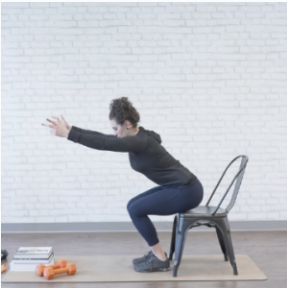
1. Chair Squats
Why it helps: Builds leg strength and mirrors getting in and out of chairs, car seats, and up & down from the toilet.
How to do it:
- Stand in front of a sturdy chair with feet shoulder-width apart
- Cross your arms over your chest or place your hands on your hips
- Slowly lower yourself until you lightly touch the chair seat
- Push through your heels to stand back up
- Try 5–8 reps
Make it more challenging: Hold for 4 seconds before standing up.
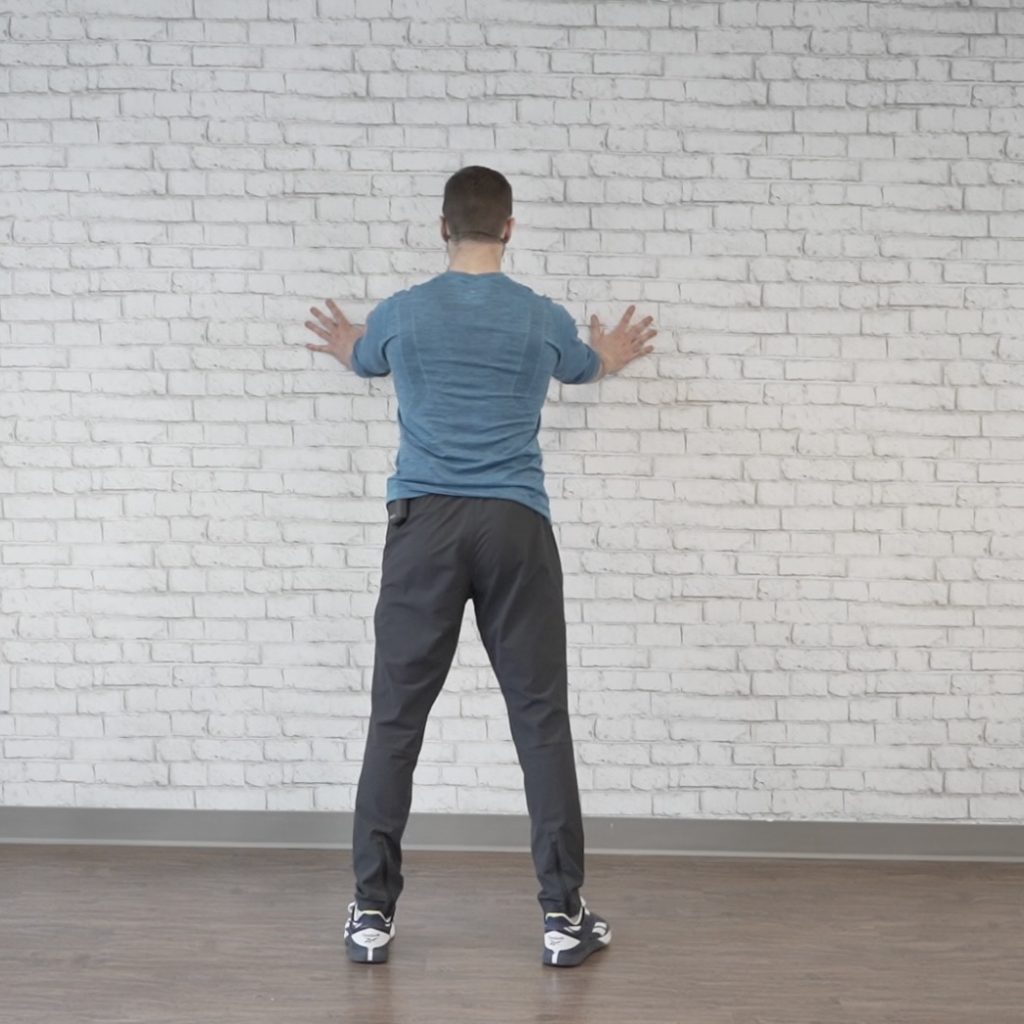
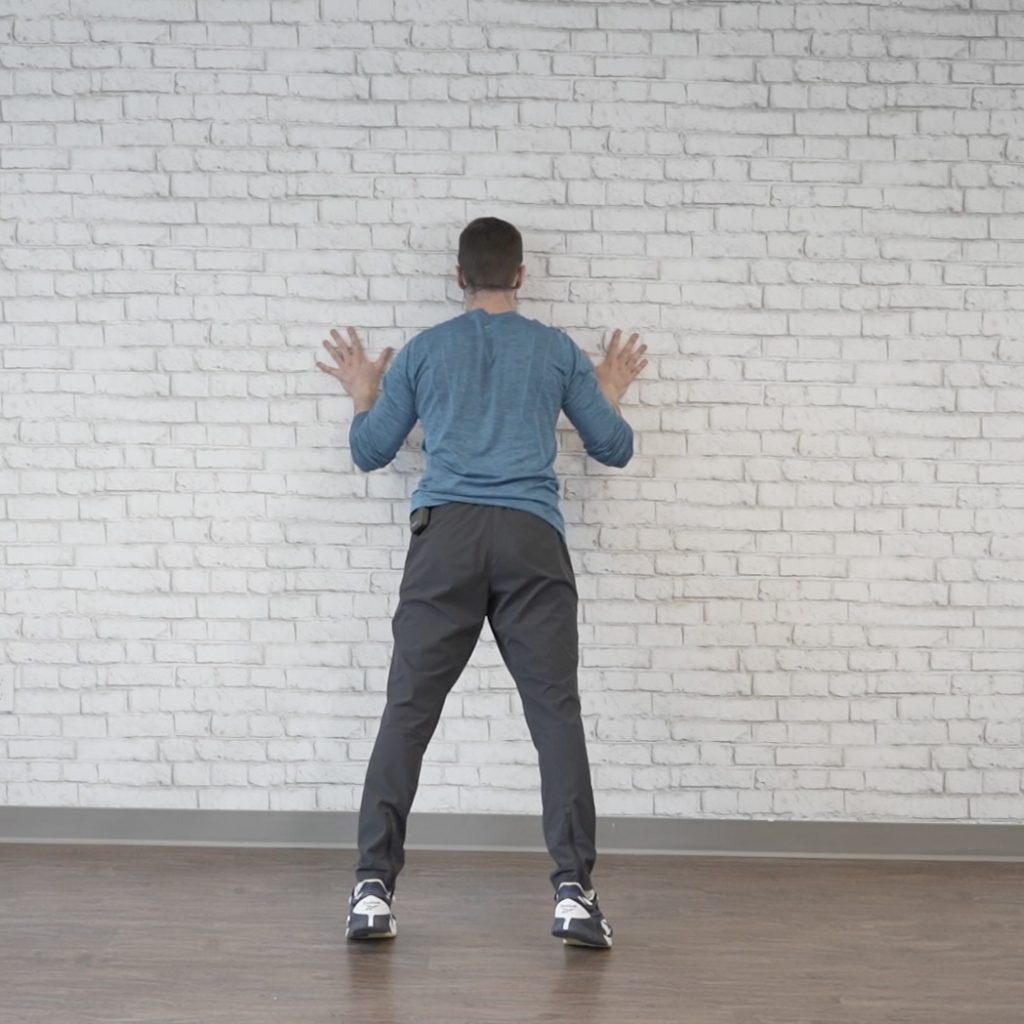
2. Wall Push-ups
Why it helps: Strengthens arms and chest for opening heavy doors and pushing shopping carts.
How to do it:
- Stand arm’s length from a wall
- Place palms flat against the wall at shoulder height
- Keep your body straight from head to heels
- Push into the wall, then push back to the starting position
- Try 5–10 reps
Make it easier: Move closer to the wall or use a kitchen counter.
Make it more challenging: Move farther from the wall.
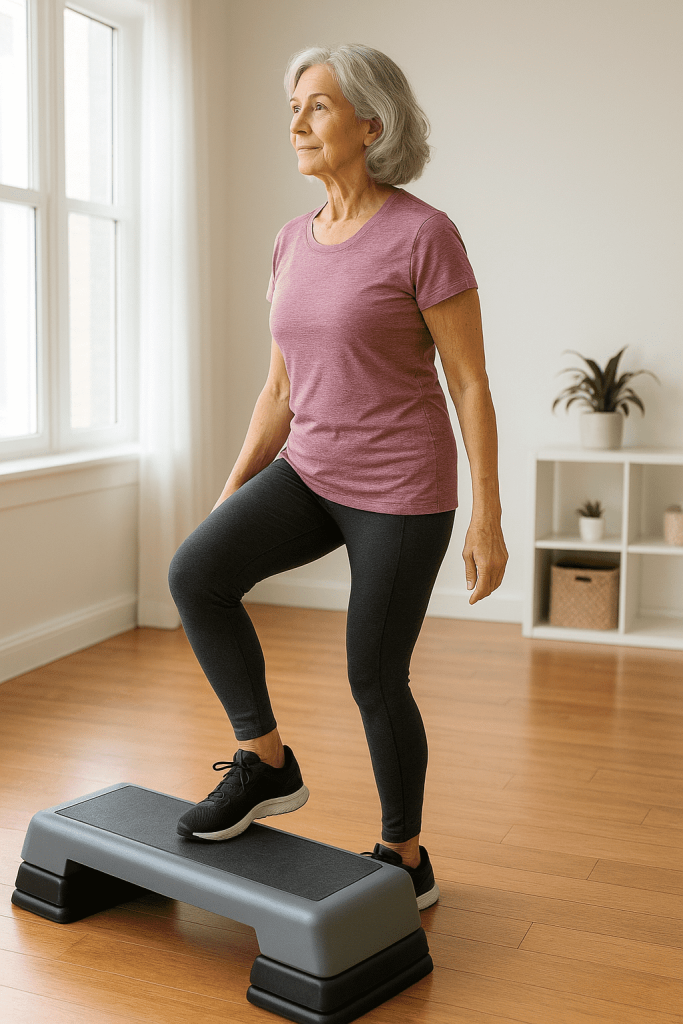
3. Step-ups
Why it helps: Improves leg strength and balance for climbing stairs and stepping onto curbs.
How to do it:
- Use a sturdy step or bottom stair, holding the handrail
- Step up with your right foot, bringing your left foot to meet it
- Step back down with the right foot first
- Alternate leading legs after 5 repetitions
- Repeat five times per leg
Make it easier: Use a lower step or just practice the stepping motion.
Make it more challenging: Don’t use the handrail or to make it even more challenging you can hold light weights.
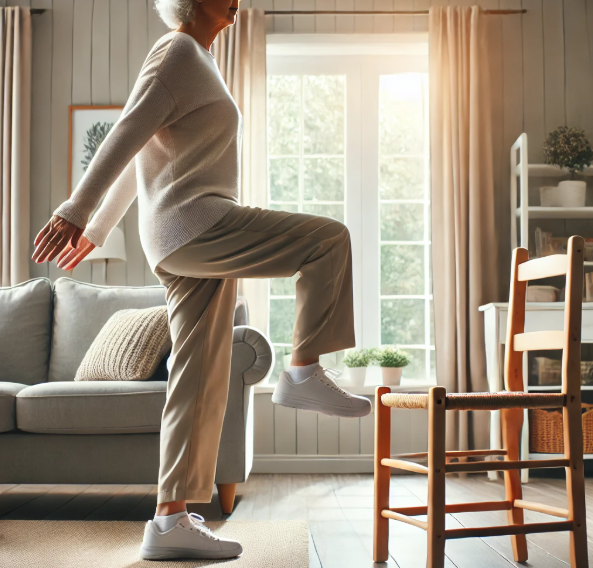
4. Standing Marches
Why it helps: Improves balance and leg strength for walking and climbing stairs.
How to do it:
- Stand tall with feet hip-width apart
- Hold onto a chair or wall for balance if needed
- Lift your right knee toward your chest as high as comfortable
- Lower it back down and repeat with the left knee
- Repeat 10-12 times
Make it easier: Sit in a chair and perform marching motions.
Make it more challenging: Don’t hold onto anything for support.
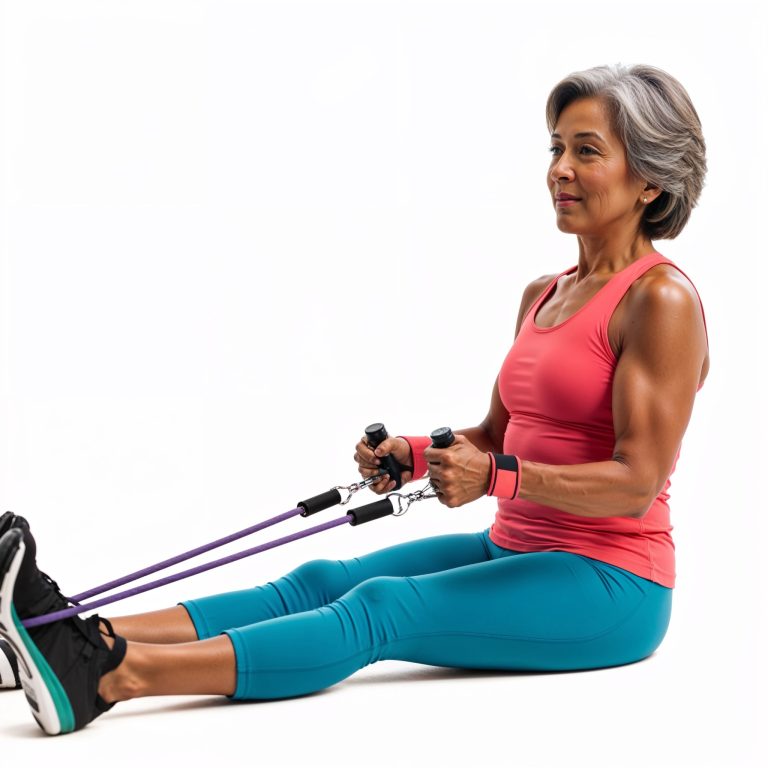
5. Seated Row (with resistance band)
Why it helps: Strengthens back muscles for pulling groceries toward you and opening doors.
How to do it:
- Sit in a chair or on the ground with your feet flat on the floor
- Loop a resistance band around your feet
- Hold the handles with your arms extended in front of you
- Pull your elbows back, squeezing your shoulder blades together
- Repeat 8–12 times
Make it more challenging: Use a thicker resistance band or pause for 2 seconds.
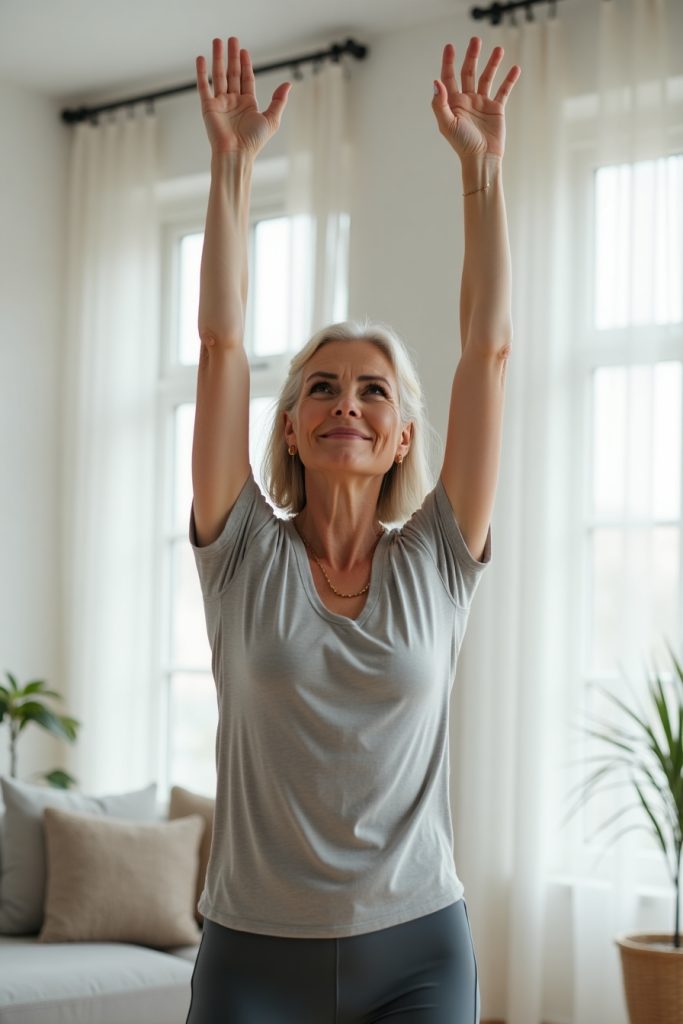
6. Overhead Reach
Why it helps: Builds shoulder strength for reaching high shelves and putting items away.
How to do it:
- Stand with feet shoulder-width apart
- Hold light weights in each hand at shoulder height
- Press weights straight up overhead
- Lower back to shoulder height with control
- Repeat 5–8 times
Make it easier: Perform without weights or while seated.
Make it more challenging: Use heavier weights or add a pause overhead.
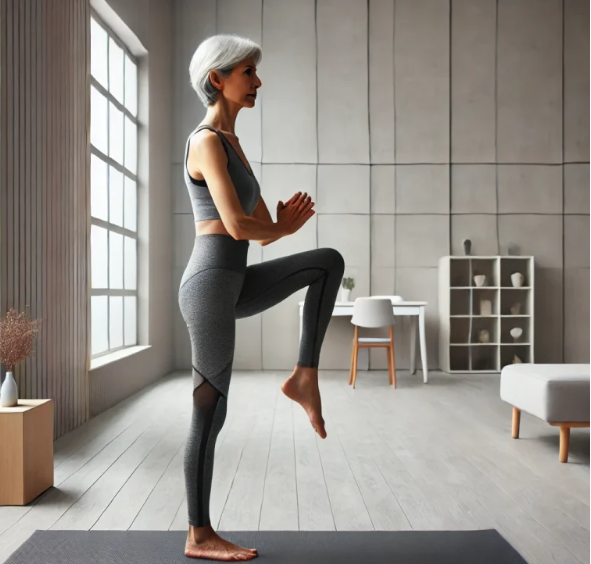
7. Single-leg Stands
Why it helps: Improves balance for walking on uneven surfaces and prevents falls.
How to do it:
- Stand behind a sturdy chair, lightly holding the back
- Lift your right foot slightly off the ground
- Hold this position for 10–30 seconds
- Switch to the other leg
- Try 10–30 seconds per leg
Make it easier: Just lift your heel while keeping your toes on the ground.
Make it more challenging: Don’t hold onto the chair.
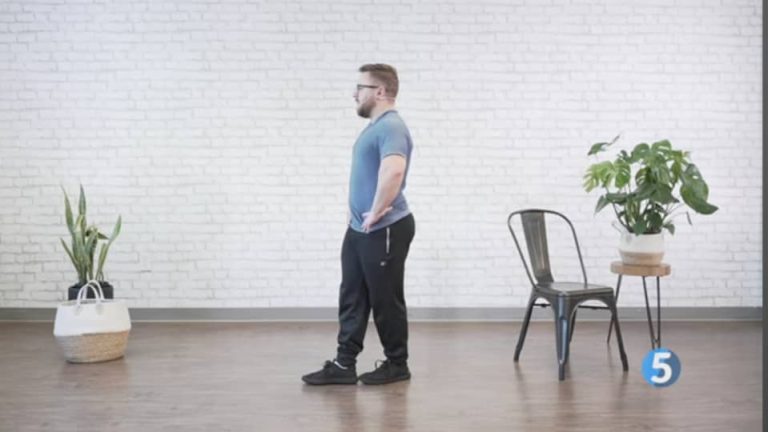
8. Heel-to-Toe Walking
Why it helps: Enhances balance and coordination for walking confidently on any surface.
How to do it:
- Stand near a wall or counter for support
- Place your right heel directly in front of your left toes
- Take a step forward, placing your left heel in front of your right toes
- Continue for 10–20 steps in a straight line
Make it easier: Keep one hand on the wall for balance.
Make it more challenging: Walk without touching the wall.
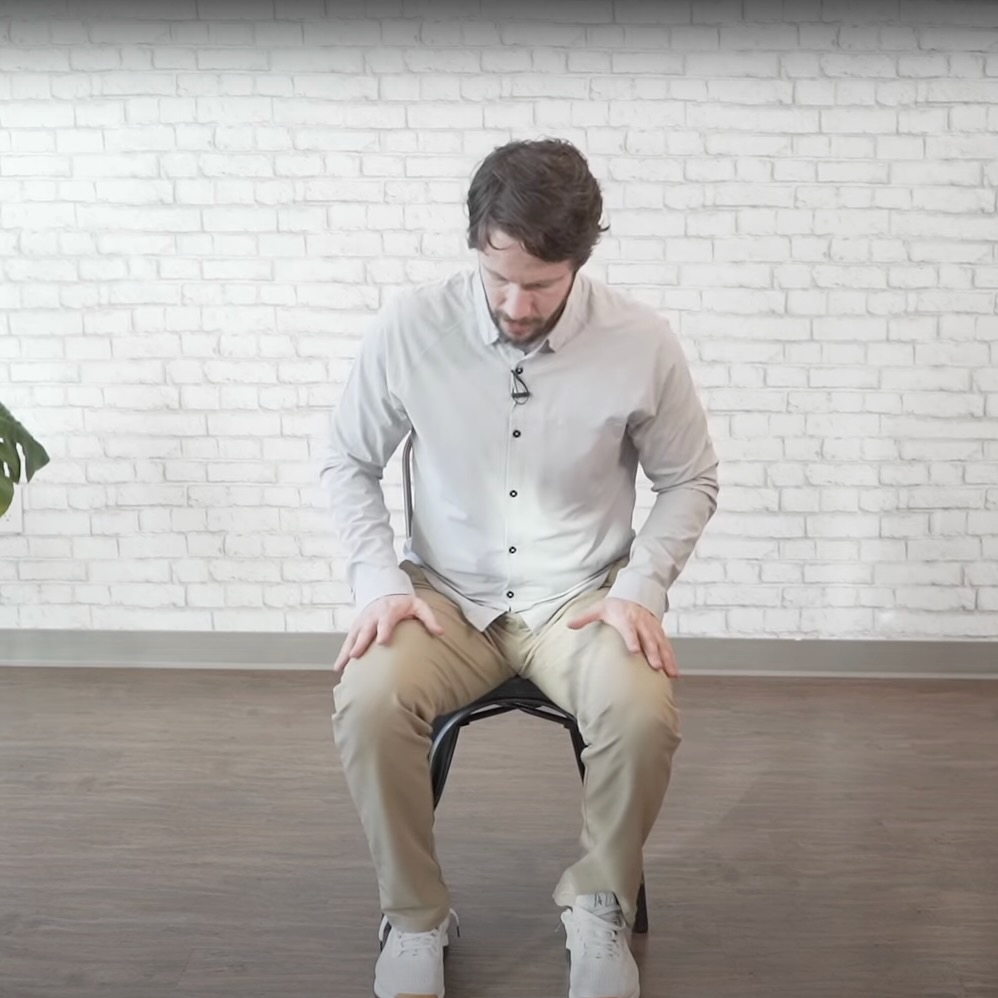

9. Sit-to-Stand
Why it helps: Builds leg strength and mirrors the movement of getting out of low chairs and beds.
How to do it:
- Sit in a chair with your feet flat on the floor
- Scoot forward to the edge of the seat
- Lean slightly forward and push through your heels to stand
- Slowly lower back down to a seated position
- Repeat 5-8 times
Make it easier: Use a higher chair or place a cushion on the seat.
Make it more challenging: Hold a light weight.
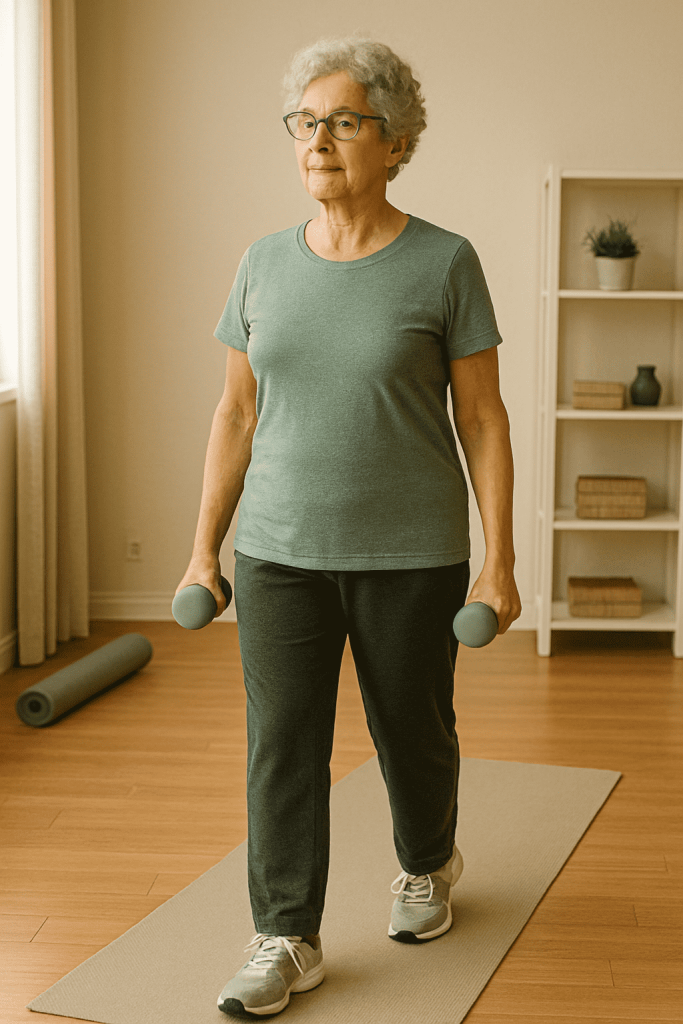
10. Farmer’s Walk
Why it helps: Strengthens grip and core for carrying groceries, luggage, and laundry baskets.
How to do it:
- Hold a light weight in each hand at your sides
- Stand tall and walk forward 20–30 steps
- Keep your shoulders back and core engaged
- Turn around and walk back
- Walk 20–30 steps in each direction
Make it easier: Start with just one weight or use lighter objects.
Make it more challenging: Use heavier weights or walk for a longer distance.
If you’d like to follow along with a professional, watch this expert-led functional strength training video.
Wrapping Up
Ready to make every daily task easier? Join the Improve Your Functional Strength Digital Class today and start feeling stronger.
You now have the foundation to start building functional strength that translates directly to your daily life. These exercises aren’t just about getting stronger. They’re about getting your confidence back and making every movement feel easier.
The beauty of functional fitness exercises for seniors is that small, consistent efforts lead to noticeable improvements quickly. Within just a few weeks, you’ll likely notice that getting out of your chair feels smoother, reaching for items becomes more natural, and you feel more stable on your feet.