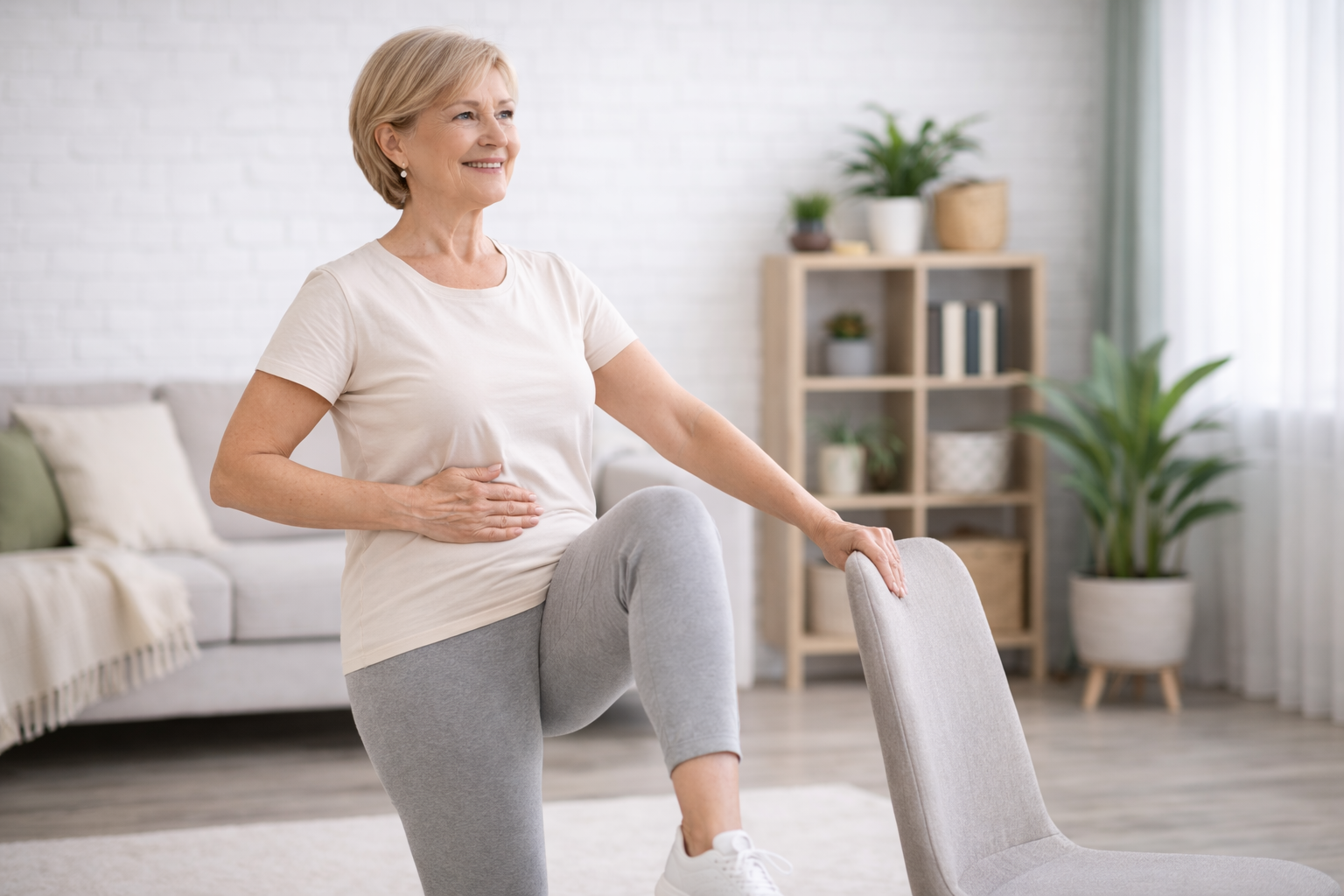
Core Exercises for Seniors: 8 Safe Moves That Work
Core exercises for seniors strengthen the muscles in your abdomen, back, and hips — the group that holds your body upright, powers every movement, and plays the biggest role in fall prevention. A stronger core means better balance, less back pain, and more confidence in everything from getting out of a chair to reaching for a shelf.
Why Core Strength Matters After 60
Many people think of the core as just the abs — but your core includes your lower back, hips, pelvis, and even your glutes. Together, these muscles stabilize your spine and transfer power to your arms and legs during everyday activities.
As we age, core muscles naturally weaken if we don’t actively train them. This leads to poor posture (the rounded-shoulder slouch that many seniors develop), chronic lower back pain, and — most critically — a higher risk of falls. Research consistently shows that targeted core training reduces fall risk in older adults by improving balance and reaction time.
The good news: you don’t need a gym, floor exercises, or intense workouts to build real core strength. All of the moves below can be done seated or standing, making them accessible even if you have joint issues or balance concerns.
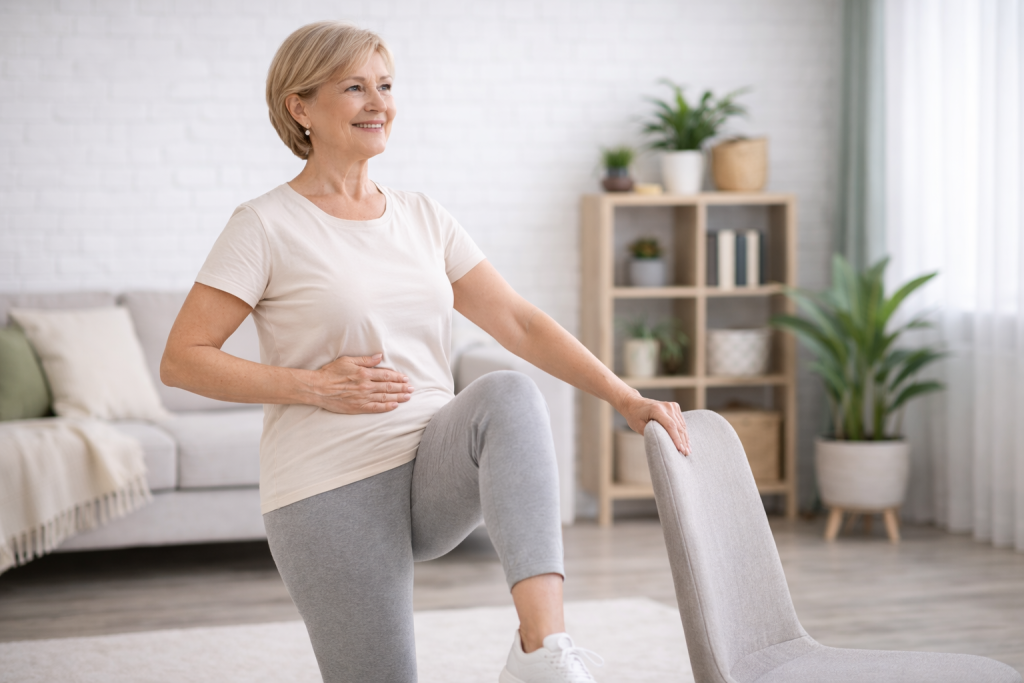
8 Core Exercises for Seniors to Try at Home
Aim to do this routine 3–4 days per week. Start with 8–10 reps per move and build up over time. Move slowly and breathe steadily — never hold your breath during core work.
1. Seated Abdominal Bracing
This foundational move trains you to activate your deep core muscles on command — the same muscles that protect your spine every time you stand, walk, or lift something.
- Sit tall on the edge of a firm chair, feet flat on the floor
- Take a breath in, then as you exhale, gently pull your belly button toward your spine
- Hold for 5–10 seconds while breathing normally
- Release and repeat 8–10 times
Tip: Think of it as gently tightening your belt by one notch — not a full stomach crunch. This subtler contraction is what activates the deep stabilizer muscles.
If you want to take your core work a step further, try our Seated Tummy Tightening Core class. This seated program uses simple daily exercises and 360 breathing to help you activate your deep core muscles, improve posture, and build stronger, more controlled movement without any floorwork or crunches.
2. Seated Knee Lifts
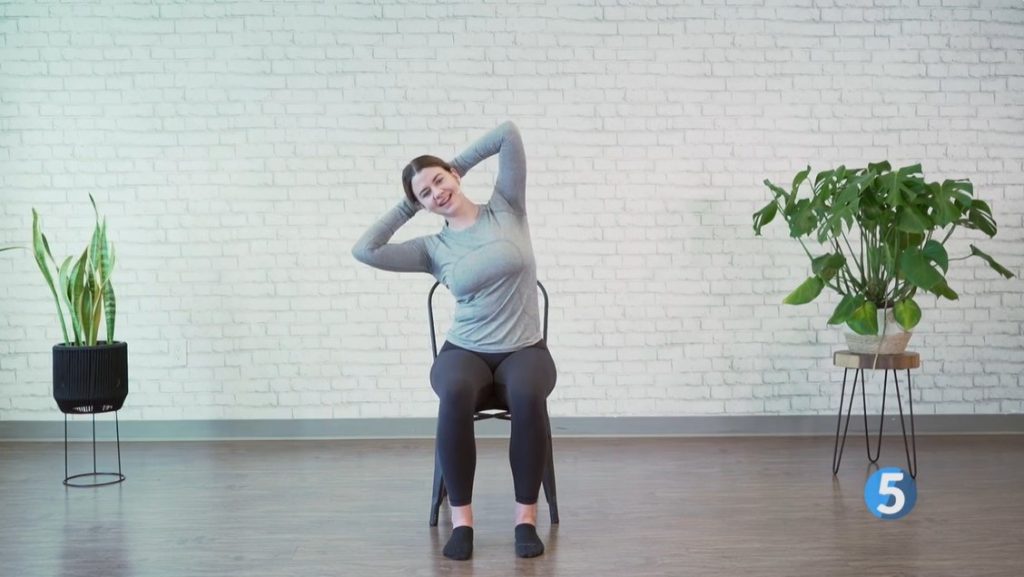
This move targets your hip flexors and lower abdominals — a key combination for lifting your feet off the ground when walking (which prevents shuffling and tripping).
- Sit tall in your chair with your hands lightly resting on the armrests
- Slowly lift your right knee toward your chest as high as comfortable
- Hold for 2–3 seconds, then lower it slowly
- Alternate sides for 8–10 reps each
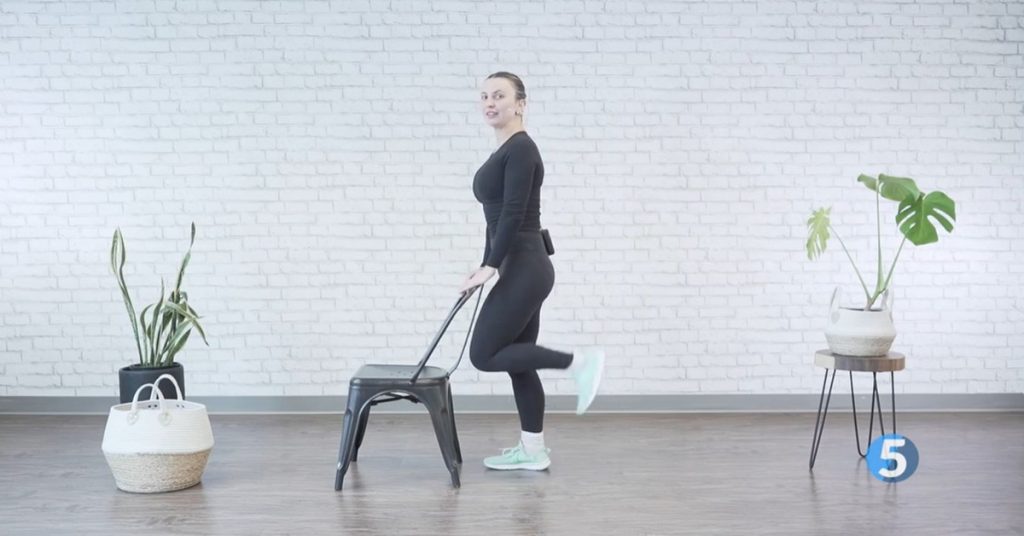
3. Standing Marching in Place
Standing marching builds core endurance while also improving your coordination and gait — the way your body moves when you walk.
- Stand behind your chair, holding the back for light support
- March in place, lifting each knee to hip height if you can
- Swing the opposite arm as you lift each knee (like natural walking)
- March for 30–60 seconds, 2–3 sets
Safety note: Use the chair only for light touch — don’t lean your full weight on it. The goal is to challenge your balance and core strength slightly while keeping the core engaged.
If you want extra support while building core strength and endurance with movements like standing marching in place, try our Indoor Walking Workout for Improved Uphills—a standing, low-impact class that builds core stability, leg strength, and cardio fitness to make uphill walking feel easier over time—perfect for older adults.
4. Seated Side Bends
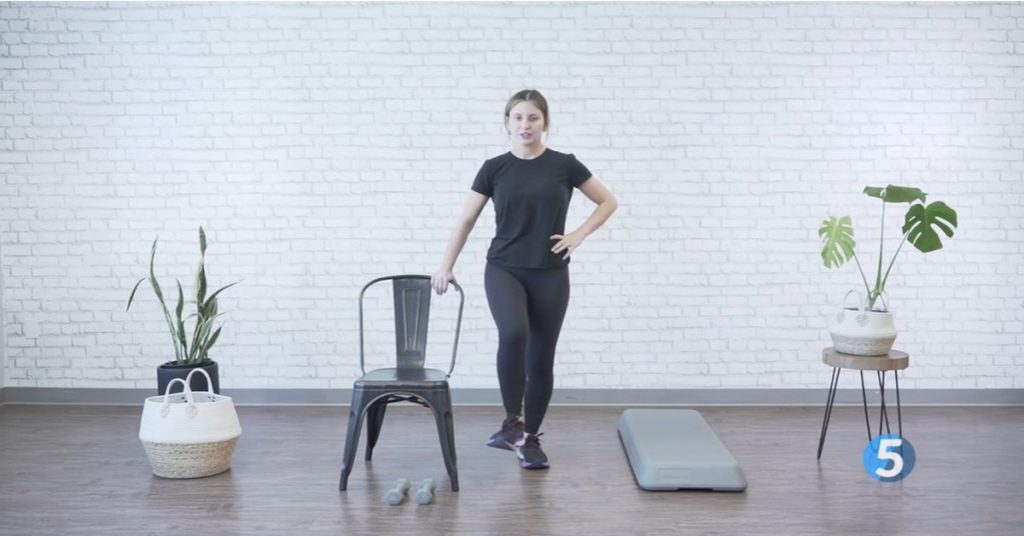
Your lateral core muscles (the obliques on the sides of your torso) are responsible for rotational movements and lateral stability — important for tasks like reaching sideways or catching yourself if you start to tip.
- Sit tall with both feet flat on the floor
- Place one hand behind your head and let the other hang at your side
- Slowly lean toward the hanging-arm side, letting your hand slide down your leg
- Return to center, then repeat to the other side
- Do 8–10 reps each side
5. Pelvic Tilts (Seated or Standing)
Pelvic tilts are one of the best core strengthening exercises for seniors with lower back pain. They gently mobilize the lumbar spine and activate the deep muscles that support posture.
- Sit tall on the edge of a chair (or stand with a slight bend in your knees)
- Rock your pelvis forward slightly, letting your lower back arch a little
- Then gently rock it backward, flattening your lower back and tucking your tailbone
- Move slowly and rhythmically — 10–15 reps
If you have lower back issues, the Improved Knee Strength & Mobility seated chair class at Better5 includes gentle lower body and core moves specifically designed to protect your back while building stability.
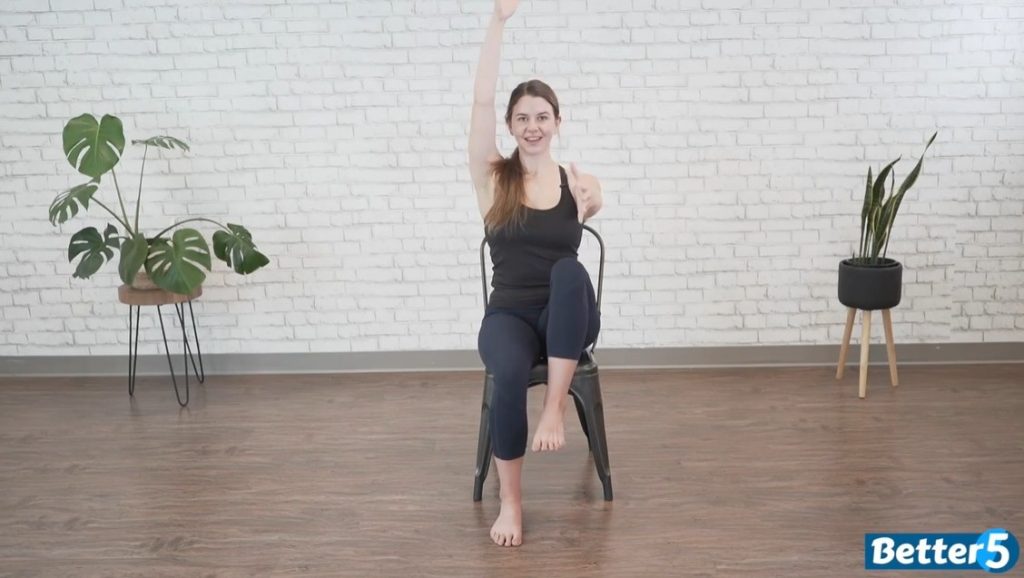
6. Dead Bug (Modified, Seated)
The “dead bug” is a classic core exercise — this seated version gives you the same deep core activation without any floor work.
- Sit tall with your core gently braced (as in move 1)
- Raise both arms straight out in front of you at shoulder height
- Slowly lower your right arm down to your side while simultaneously lifting your left knee
- Return to start and alternate sides
- Do 8 reps each side, moving slowly
The coordination challenge is the point — your brain and core have to work together to keep you stable, which builds the kind of functional strength that protects you in real life.
7. Standing Hip Circles
Hip circles look deceptively simple — but they require constant core engagement to keep your torso stable while your hips move. This is great for hip mobility and core endurance together.
- Stand with your feet hip-width apart, hands on your hips
- Slowly draw large circles with your hips — 5 clockwise, then 5 counterclockwise
- Keep your shoulders still and your core gently engaged throughout
- Do 2–3 sets
8. Seated Torso Rotations
Rotational core strength is what allows you to look over your shoulder safely while driving, reach across your body, and react quickly to prevent falls.
- Sit tall with arms crossed over your chest or hands on your shoulders
- Slowly rotate your upper body to the right as far as is comfortable
- Hold for 1–2 seconds, then rotate to the left
- Keep your hips square and still — the rotation comes from your mid-back and core
- Do 10–12 reps each side
How Often Should Seniors Do Core Exercises?
Aim for 3–4 sessions per week, with at least one rest day between sessions. Core muscles recover quickly, but consistency matters more than intensity. Even 10–15 minutes of dedicated core work three times a week will produce noticeable changes in posture and stability within 4–6 weeks.
If you’re new to exercise, pair these core moves with a gentle balance routine. The Fall Prevention Exercises class at Better5 is a natural companion — it combines balance, lower body strength, and coordination into a complete program built specifically for older adults.
Tips for Getting the Most Out of Core Exercises for Seniors
- Breathe steadily. Never hold your breath during core work — exhale on the effort, inhale on the release.
- Quality over reps. 8 slow, controlled reps beats 20 sloppy ones every time. The control is what builds stability.
- Stay consistent. Core strength is built through repetition over weeks, not through intense one-off workouts.
- Add variety over time. Once these feel easy, add a second set, slow down the tempo, or try chair Pilates. The 7 Days of Chair Pilates for Mobility class is a great next step — it builds core strength through full-body movement patterns with low joint stress.
- Listen to your body. Mild muscle fatigue is normal. Sharp pain in your back or hips is not — stop and rest if you feel that.
Core strength is one of the most important investments you can make in your physical independence as you get older. The moves above are low-impact, require no equipment, and deliver real results when done consistently.
Core exercises for seniors don’t need to be complicated or painful — they just need to be done regularly, with good form, and with progressively more challenge as you get stronger.
Ready to build a stronger, more stable core? Explore Better5 classes built for seniors like you — gentle, effective, and designed for real life after 60.