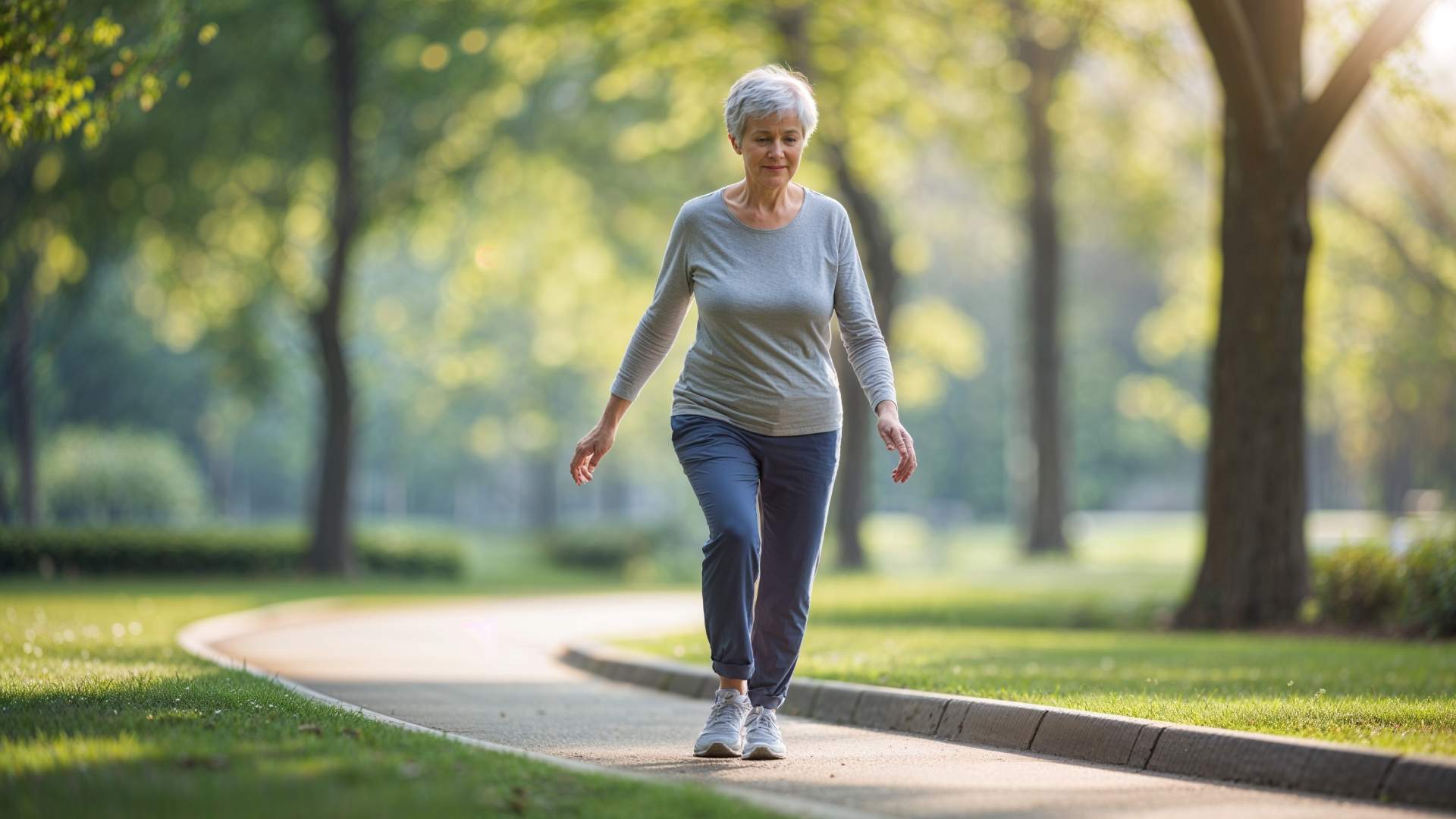
Dynamic Balance Exercises For Seniors Made Easy
Balance impacts every single part of your day. It’s not just important for when you’re walking. It’s something you depend on when you get up from the couch or reach above you—you depend on your balance anytime you shift your center of gravity with every movement you make. That’s why dynamic balance exercises for seniors are so valuable. They help you stay stable when walking, reaching, or turning. Getting older shouldn’t mean giving up your independence or living in fear of falling. With a little practice, you can improve your coordination and reduce the risk of falls.
What Is Dynamic Balance & Why Do Seniors Need It?
Dynamic balance is your body’s ability to stay steady while you’re moving. It’s what keeps you upright when you’re walking, turning around, or stepping over something on the floor. Unlike static balance, which is about standing still without wobbling, dynamic balance comes into play during movement and everyday activities.
For seniors, dynamic balance is especially important. Think about moments when you’re stepping off a curb, reaching into a cabinet, or moving from one room to another. Each of these movements challenges the body to stay balanced as your weight shifts. Without a good sense of balance, these simple actions can feel shaky or uncertain and increase the risk of falling.
8 Dynamic Balance Exercises For Seniors
Below are eight dynamic balance exercises for seniors you can practice daily.
1. Marching
- Stand tall with your feet hip-width apart
- Slowly lift one knee toward your chest until your thigh is parallel to the floor, then lower it back down
- Switch to the other leg
- Keep your back straight and your arms relaxed
- Continue alternating legs in a smooth, steady rhythm.
- Aim for 10 marches on each leg for a start
Why it helps: This mimics the motion of walking up stairs or stepping over objects.
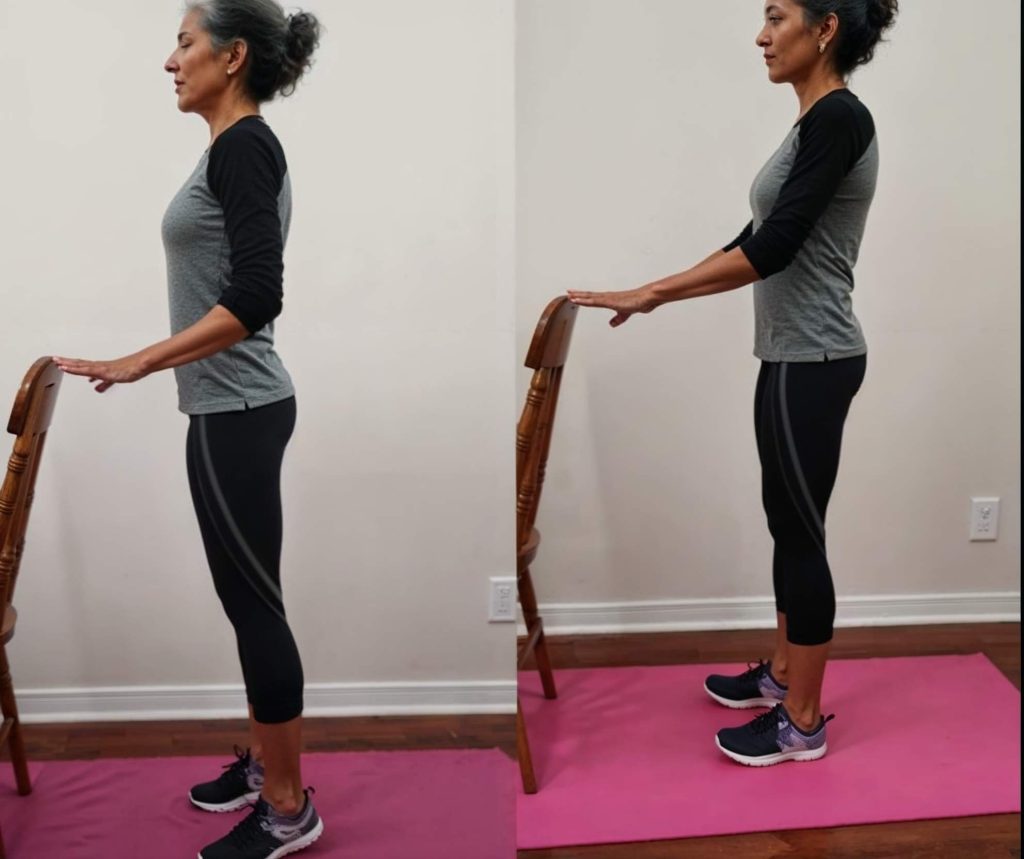
2. Front/Back Weight Shifting
- Stand tall behind a sturdy chair, hands resting lightly on the backrest
- Place your feet hip-width apart.
- Slowly lean forward from your ankles, shifting weight toward your toes
- Pause for 2-3 seconds, feeling the shift
- Return to neutral standing position
- Now shift your weight back toward your heels, leaning slightly backward from your ankles
- Pause again for 2-3 seconds
- Repeat this forward and backward shift 8–10 times.
Why it helps: This exercise trains the body to react to shifts in weight and maintain stability.
Tip: Keep your movements slow and controlled.
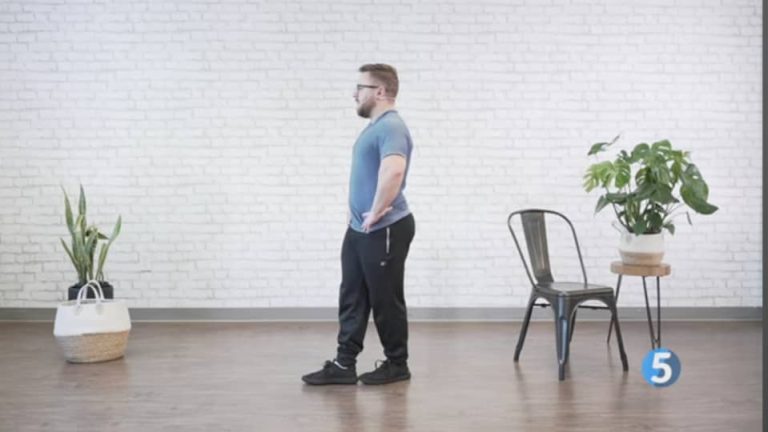
3. Heel-to-Toe Walking
- Stand with your arms at your sides
- Step forward, placing your heel directly in front of your other foot’s toes
- Continue walking in a straight line for 10-15 steps
- Keep your eyes looking ahead, not down at your feet
Tip: Practice along a wall if you need extra support.
Why it helps: Perfect for navigating narrow spaces like hallways or walking on curbs.
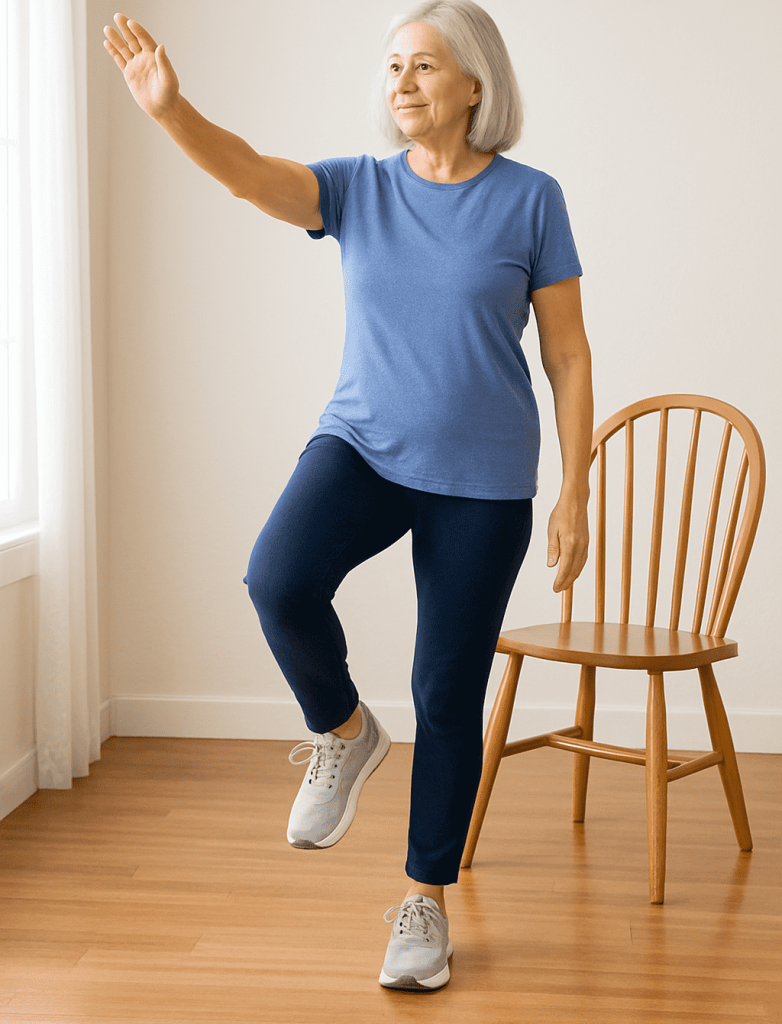
4. Clock Reach
- Stand tall, imagining you’re in the center of a clock face.
- Shift your weight onto your left leg and lift your right foot slightly off the floor.
- Extend your right arm straight ahead toward 12 o’clock, then return it to the center.
- Reach your right arm out to the side toward 3 o’clock, then return to the center.
- Reach your right arm down and slightly behind you toward 6 o’clock, then return to the center.
- Perform the full sequence 3 to 5 times, keeping your left leg strong and steady.
- Switch sides and repeat.
Why it helps: Trains your body to stay balanced while reaching, turning, or stepping in different directions
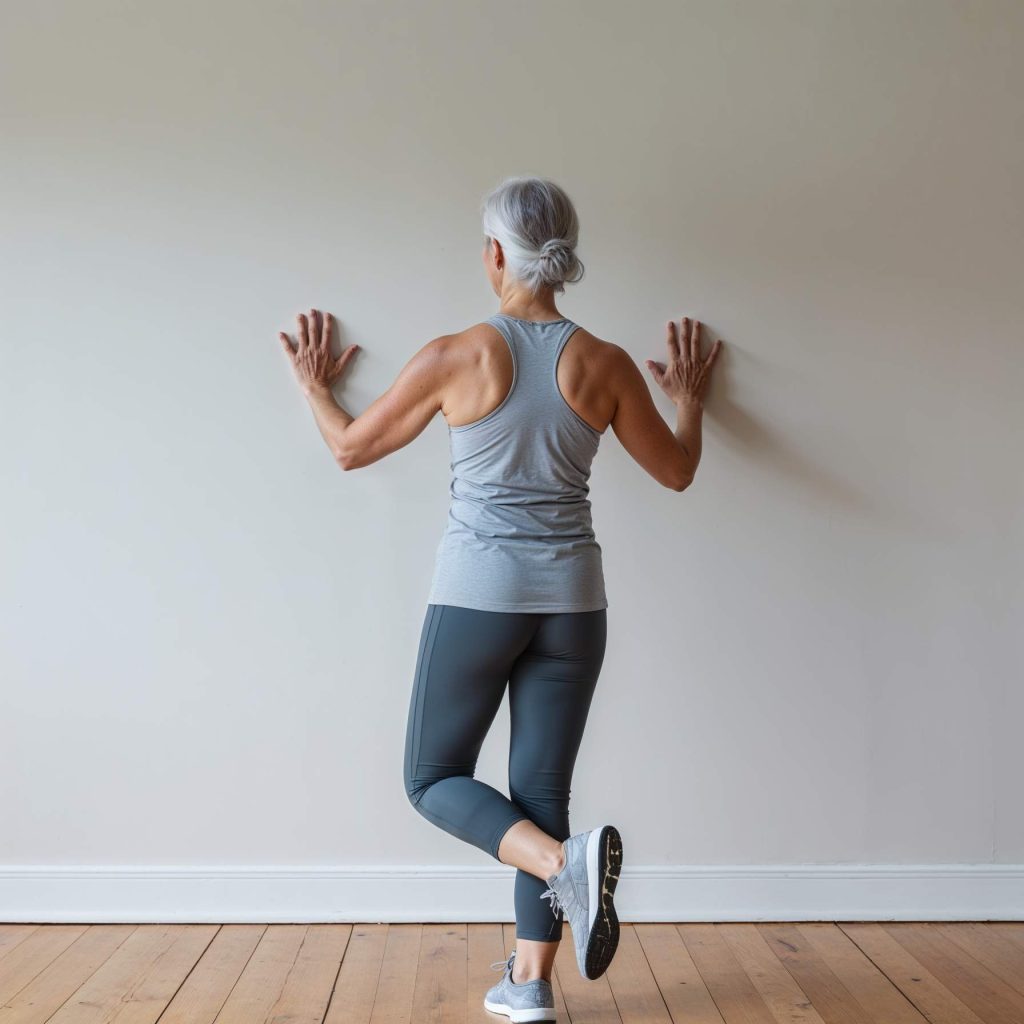
5. Single Leg Calf Raises
- Stand tall facing a sturdy chair or countertop for support.
- Place your feet hip-width apart, toes pointing forward.
- Lift your left foot slightly off the ground, so all your weight is on your right leg.
- Keep your right knee straight, but not locked.
- Lift your right heel as high as you comfortably can, rising onto your toes.
- Pause briefly at the top.
- Slowly lower your heel back down to the floor with control.
- Complete 8-10 reps, then switch to the left leg.
Why it helps: Builds ankle strength and control for steady walking, stair climbing, and standing on uneven surfaces.
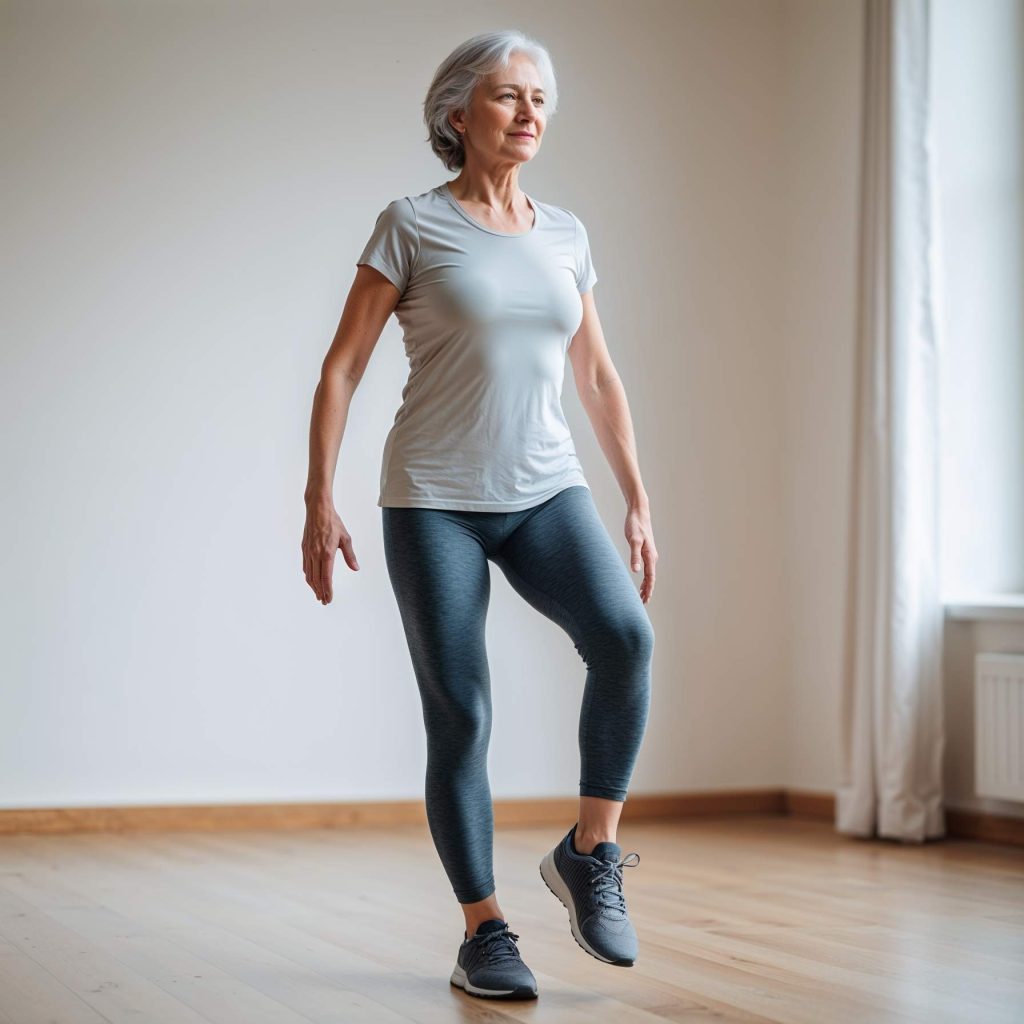
6. Rock The Boat
- Stand with your feet hip-width apart.
- Press your weight evenly between both feet, feeling grounded and steady.
- Slowly shift your weight onto your left foot, keeping your body upright and stable.
- Once your weight is fully on your left foot, lift your right foot a few inches off the floor.
- Hold this position for about 10 seconds.
- Lower your right foot back down and return your weight evenly between both feet.
- Now shift your weight onto your right foot and lift your left foot off the floor.
- Hold for 10 seconds, then return to the center.
- Repeat 5–10 times per side or as it feels comfortable.
Why it helps: It teaches the body to shift weight smoothly between legs.
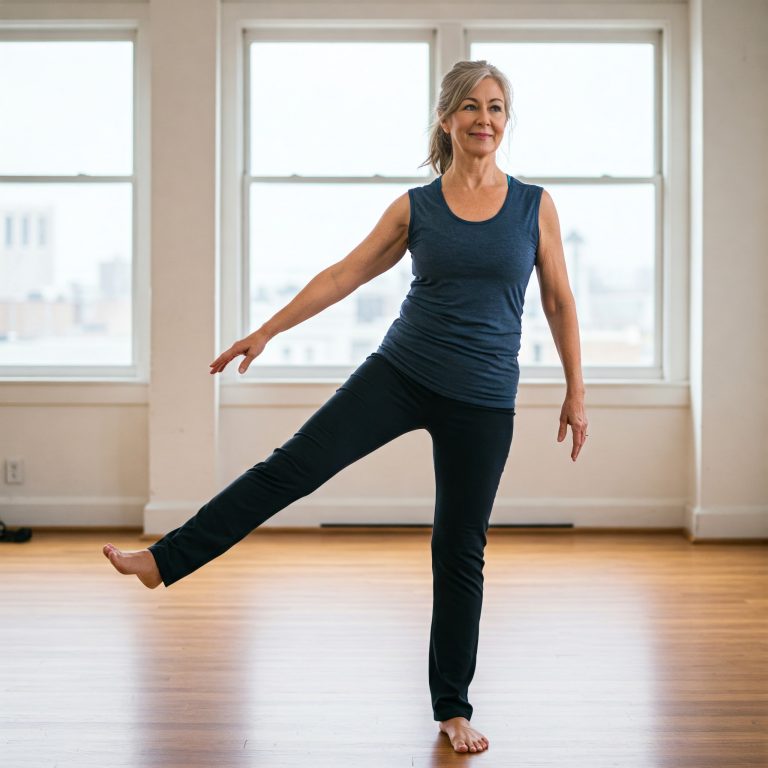
7. Side Leg Raises
- Stand next to a sturdy chair or countertop for support.
- Place your feet hip-width apart.
- Shift your weight slightly onto your left foot, keeping it strong and stable.
- Slowly lift your right leg out to the side.
- Lift only as high as is comfortable.
- Pause briefly at the top of the movement.
- Lower your leg back down slowly with control.
- Repeat for your desired number of reps, then switch sides.
Why it helps: Strengthens muscles that prevent side falls
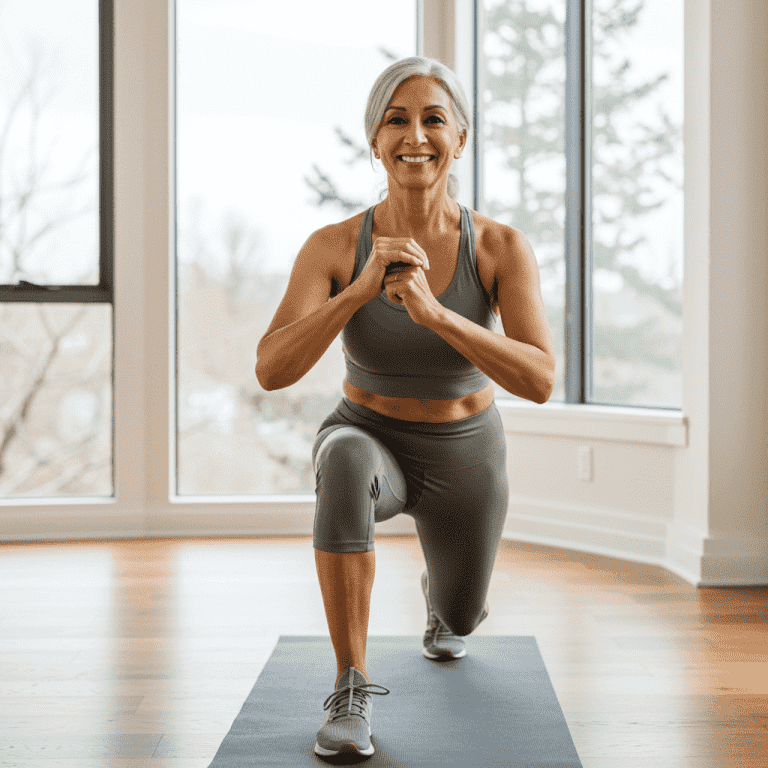
8. Lunges
- Stand with your feet hip-width apart
- Take a comfortable step forward with your right foot
- Lower your body by bending both knees slightly – just a few inches
- Keep your back straight and your weight evenly distributed
- Make sure your front knee stays directly over your ankle
- Hold this position for 1-2 seconds
- Step your right foot back to return to the starting position
- Repeat with your left foot stepping forward
- Complete 5-8 lunges on each side, moving slowly and controlled
Why it helps: Builds the leg strength and balance control you need for stepping up curbs, climbing stairs, or stepping over obstacles safely.
Wrap Up
Improve your dynamic balance with expert-led routines built for seniors. The Balance & Coordination Booster Digital Class helps you practice safely and confidently at home.
You don’t have to settle for feeling unsteady. Static and dynamic balance can be rebuilt one small step at a time. These dynamic balance exercises for seniors aren’t complicated. Make them a part of your daily routine, and you’re on your way to feeling more balanced. Your balance is yours to build at your pace and in your way.