Easy & Gentle Bodyweight Exercises for Seniors
There’s a world where a chair, open space, and a wall are all you need to build real strength. With bodyweight exercises for seniors, you can make that happen right in your living room. These moves use your own body as resistance. You don’t need a gym membership or extra equipment.
The routine below breaks down five beginner-friendly exercises that train the legs, core, upper body, and balance. Each movement includes step-by-step form cues, common mistakes to avoid, and an easier or harder option so older adults can match the work to their current ability. Done consistently, this kind of practice can support steadier movement and more confidence during everyday tasks.
Why Bodyweight Exercises Matter for Seniors
Apart from ease of access and minimal equipment requirements, bodyweight exercises offer several other benefits in your senior years.
Strength for Daily Tasks
Bodyweight exercises improve functional fitness, helping you build the kind of strength that shows up in your daily routine. The muscles you use to stand from a low seat get stronger. So do the ones that help you steady yourself when you lose your footing.
Harvard Health Publishing notes that bodyweight movements tend to work multiple muscles at once, rather than isolating single muscle groups, which is common with gym equipment. This makes them more functional because they engage balance and mirror the way your body actually moves throughout the day.
Bone Health and Fall Prevention
Many bodyweight exercises are a form of strength training. In addition to building muscles, they can improve strength, bone health, joint stability, and metabolic health. According to Mayo Clinic, strength training may help maintain bone density. That matters because stronger bones can reduce your risk of fractures from falls.
Better Balance & Coordination
These exercises also improve your balance and coordination. Better balance means more stability when you’re walking on uneven ground or navigating stairs. These exercises also help you learn to control your own bodyweight before adding external resistance. That builds a foundation for any future strength work.
5 Bodyweight Exercises for Seniors You Can Try Today
1. Chair Squats
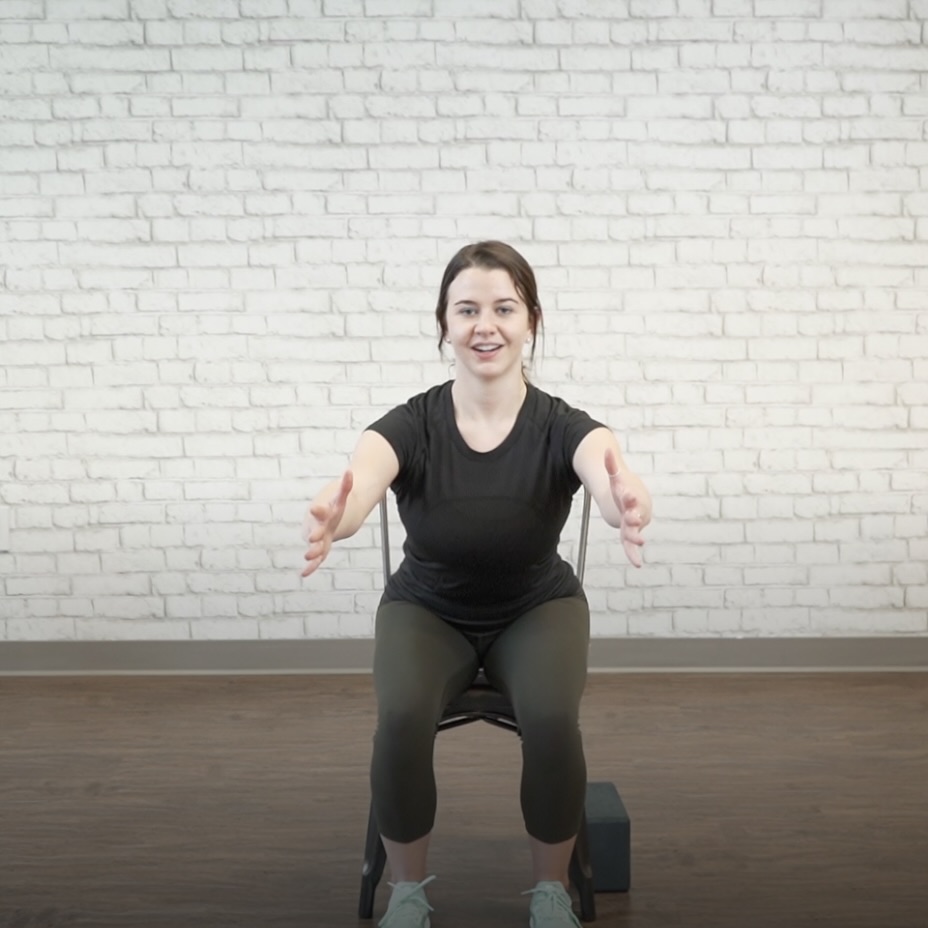
Why it matters: This builds leg and hip strength for standing up from chairs, getting in and out of cars, and climbing stairs (quads, glutes, core).
How to do it:
- Stand in front of a sturdy chair with feet about hip-width apart so you have a safe “target” behind you.
- Reach your hips back and slightly lean your torso forward so your legs (not your knees) do most of the work.
- Lower with control until you lightly touch the chair, so you practice the full stand-to-sit pattern safely.
- Press through your mid-foot and heels to stand tall so you build strength where it counts in daily life.
- Pause for a breath at the top so you reset your posture before the next rep.
Goal: 2 sets of 8–10 reps
Tips:
- Keep knees tracking in line with toes (don’t let them cave inward).
- Exhale as you stand to help brace your core.
- Aim for a gentle tap on the chair, not a drop.
2. Wall Push-Ups
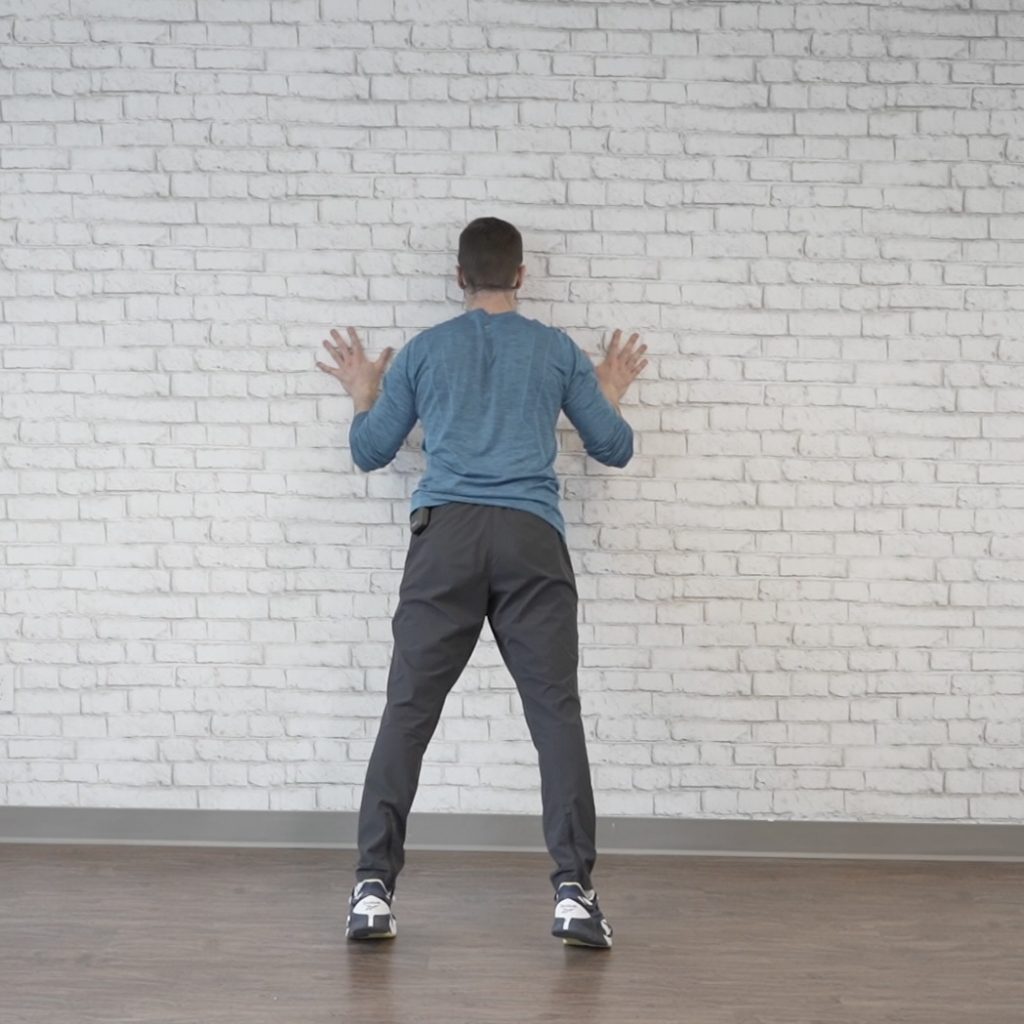
Why it matters: This strengthens the chest, shoulders, and arms for pushing doors, using countertops, and getting up more confidently (chest, shoulders, triceps, core).
How to do it:
- Place your hands on a wall at chest height so your wrists stay comfortable and stable.
- Walk your feet back until your body forms a straight line so you train the full pushing pattern.
- Bend your elbows and lower your chest toward the wall so you build strength through a controlled range.
- Pause briefly, keeping your shoulders down, so your upper back stays engaged and supported.
- Press the wall away to return to the start so you can practice pushing power safely.
Goal: 2 sets of 8–12 reps
Tips:
- Keep elbows angled about 45° from your body (not flared straight out).
- Keep your body in one line (avoid bending at the hips).
3. Glute Bridges
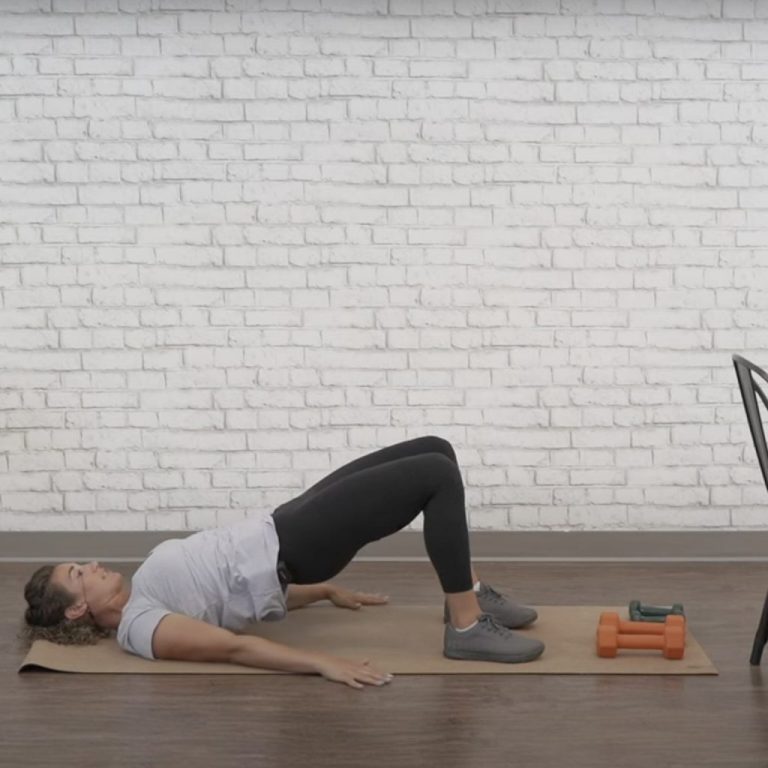
Why it matters: This strengthens the hips and core for walking, standing tall, and supporting the lower back (glutes, hamstrings, core).
How to do it:
- Lie on your back with knees bent and feet flat so your legs can drive the movement.
- Place your feet about a hand’s length from your hips so you can push through your heels.
- Gently brace your core so your lower back stays supported as you lift.
- Squeeze your glutes and lift your hips until your body forms a straight line from shoulders to knees, so you target the right muscles.
- Lower slowly to the floor so you build control, not just momentum.
Goal: 2 sets of 8–12 reps
Tips:
- Keep ribs down (avoid over-arching your back).
- Pause for 1 second at the top while breathing steadily.
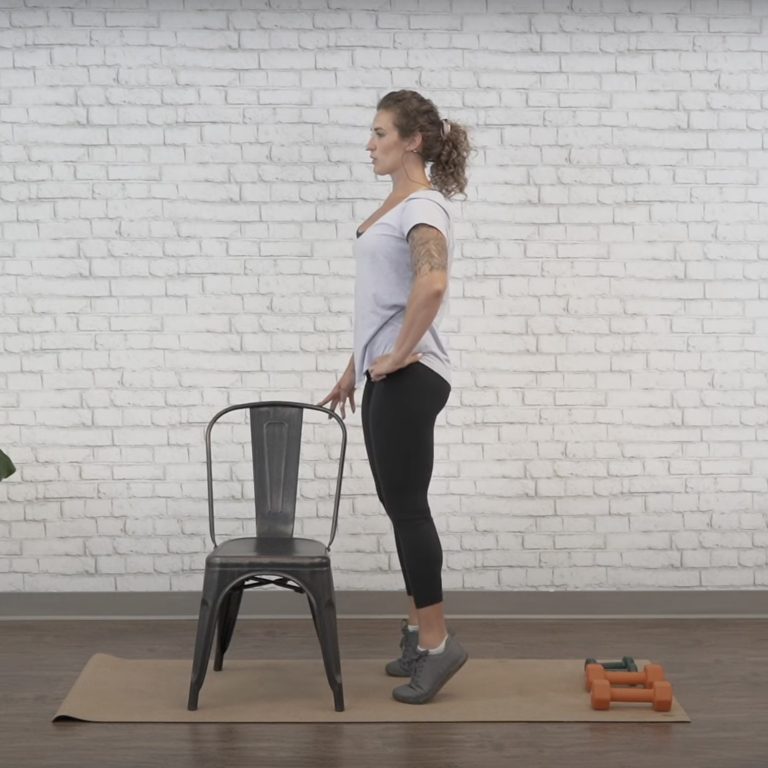
4. Standing Heel Raises
Why it matters: This strengthens calves and ankles to support steadier walking and balance (calves, feet/ankle stabilizers).
How to do it:
- Stand tall behind a chair or near a wall so you can use light support if needed.
- Place your feet hip-width apart so you feel stable before you rise.
- Lift your heels slowly so you train ankle strength and balance together.
- Pause at the top so your muscles learn control, not wobble.
- Lower heels slowly to the floor so you build strength through the full range.
Goal: 2 sets of 10–15 reps
Tips:
- Keep weight centered (don’t roll to the outer edges of your feet).
- Stand tall; avoid leaning forward into the chair.
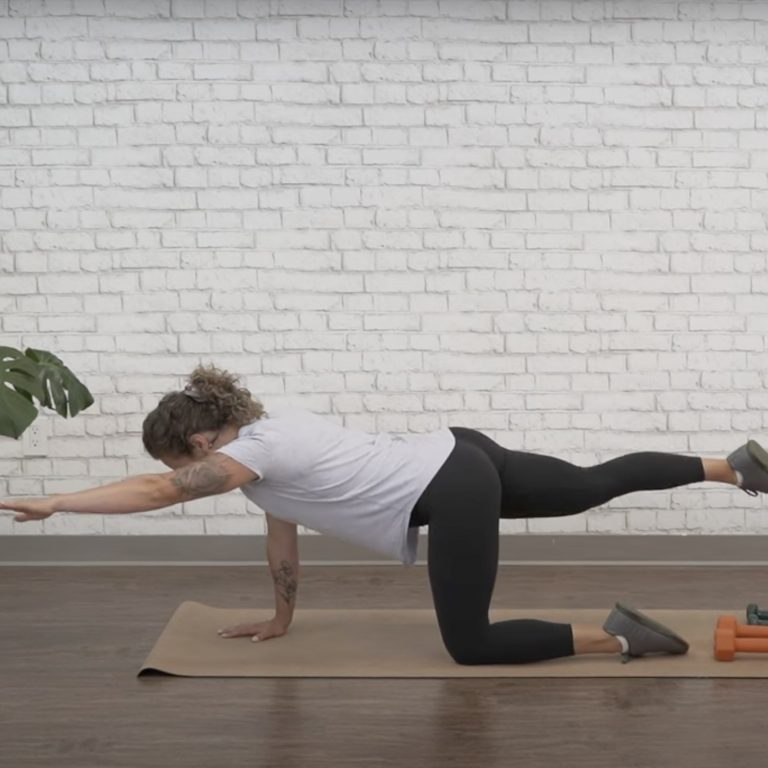
5. Bird Dog
Why it matters: This builds core stability and coordination for safer bending, reaching, and walking (core, back stabilizers, glutes, shoulders).
How to do it:
- Start on hands and knees with hands under shoulders and knees under hips so your base is steady.
- Gently brace your core so your spine stays neutral and supported.
- Extend one leg back while reaching the opposite arm forward so you train cross-body control used in real movement.
- Keep your hips level and ribs steady so you avoid twisting and build true stability.
- Return slowly and switch sides so both sides work evenly.
Goal: 2 sets of 6–8 reps per side
Tips:
- Reach long, not high—keep your back flat.
- Keep your gaze down to avoid neck strain.
- Move slowly enough that you could pause at any point.
Your Starter Bodyweight Exercises For Seniors Workout
Do this 2–3 times per week (rest a day between).
- Warm up (5 minutes): easy marching in place + arm circles
- Workout: complete all 5 exercises in order
- Sets: 2 sets per exercise
- Rest: 30–60 seconds between sets/exercises
- Cool down (3–5 minutes): gentle stretches for calves, hips, and chest
What to expect: The first week should feel “challenging but controlled.” Aim for smooth reps, not speed.
Final Thoughts
If you want more structure and real-time guidance, try the Functional Strength Training Without Floorwork class. It builds the everyday movement patterns you’re practicing here and helps you progress with clear form cues and coaching.
The five exercises above give you a simple, repeatable way to train at home using just your body and a few household supports. Start where you are, focus on controlled reps, and build consistency week by week. With bodyweight exercises for seniors, small improvements add up to steadier movement and more confidence in daily life.