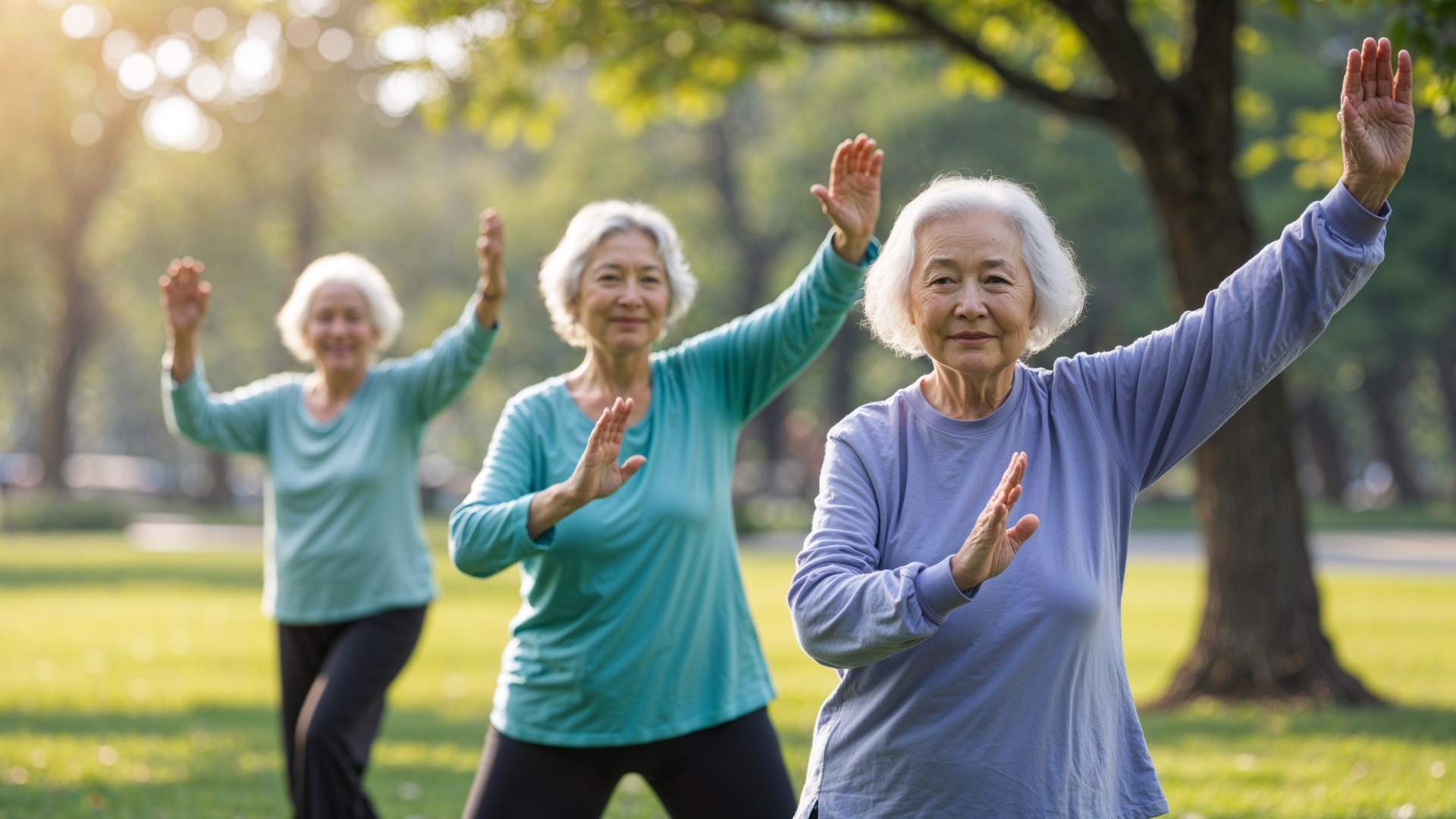
Easy Tai Chi for Beginners—With Free Follow Along Video!
Getting started with a new mindfulness routine can be a mixed bag. It’s easy to feel overwhelmed by unfamiliar terms or unsure where to begin. With tai chi, the idea is to slow things down mentally and physically through gentle, flowing movements that center your focus and calm the body. This is why tai chi for beginners focuses on foundational postures and simple sequences that allow newcomers to gradually build confidence and experience the profound benefits of this ancient practice. If you’re looking to get started with tai chi as a complete beginner, this is the guide you need.
Types of Tai Chi
There are five basic types of tai chi movement, all stemming from the original martial traditions of China. Each style emphasizes different aspects. Some focus more on slow, graceful flow, while others highlight posture, power, or internal energy. Knowing the difference can help beginners choose a style that matches their fitness level and goals.
Chen
The oldest type of tai chi, Chen focuses on fusing slow and quick movements. Many consider it the original type of tai chi. It includes explosive movements like jumps and kicks. This is often alternated with smooth, controlled motions, making it more physically demanding than other styles.
Yang
If you’ve seen someone performing tai chi before, chances are that they were practicing the Yang style. It’s the most popular and widely practiced form today. Yang features slow, steady, and expansive movements that are easy to follow and gentle on the joints. This makes it especially suitable for beginners and seniors.
Wu
The Wu-style tai chi is similar to the Yang style, and also beginner-friendly. The style emphasizes extending the body by leaning forward and backward instead of remaining upright.
Sun
The sun tai chi style entails smooth, flowing movements often described as feeling like water flowing gently. A key characteristic is the ‘follow step,’ where one foot always follows the other to create nimble and agile movements. Sun style typically features higher stances.
Hao
Hao is a more advanced style of tai chi. The style is anchored on controlling the internal force (qi). Because of its focus on precision and internal control rather than large, visible motions, Hao is typically practiced by experienced learners who want to deepen their tai chi practice.
Fundamental Principles of Tai Chi for Beginners
Tai chi is built upon a few fundamental principles that guide every movement. These principles help you stay balanced and connected physically and mentally. Learning them early on gives your practice structure and purpose, even when the movements feel new or unfamiliar.
1. The Mind Leads the Movement
Tai chi is not just about motion; it’s about intention. Every move should begin with mental focus. Your body follows where your attention goes.
2. Natural Breathing
Avoid forcing your breath. Let it flow smoothly and match your pace. Inhale during opening movements, exhale during closing ones. This keeps your energy steady.
3. Relax the Body
Tension blocks movement. Keep your muscles soft, not limp. Relaxed doesn’t mean collapsed. It means open, flexible, and ready.
4. Root Through the Feet
Balance starts from the ground up. Keep your weight centered and press gently into the floor. Think of your feet as anchors.
5. Maintain Upright Posture
Stand tall without stiffness. Your head should feel like it’s floating upward. This posture protects your spine and allows energy to flow freely.
6. Shift Weight Smoothly
Avoid wobbling or rushing. Transfer your weight from one leg to the other with care. Always know where your center of gravity is.
Simple Tai Chi Forms for Beginners
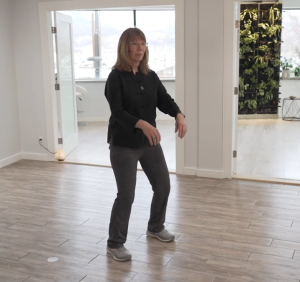
Commencement Form
- Start Relaxed: Begin standing with your feet about shoulder-width apart, feeling relaxed and balanced. Let your arms hang naturally at your sides.
- Step Sideways (Left Foot): Gently shift a little of your weight onto your right leg. Take a small, easy step to your left with your left foot, so your feet are now a comfortable shoulder-width apart. Place your whole foot down gently.
- Feel Your Balance: Make sure your weight feels even on both feet. Keep your knees slightly soft, not locked straight.
- Breathe In, Arms Float Up: As you slowly breathe in, imagine your arms are like balloons gently floating upwards from your sides. Keep your shoulders relaxed. Let your arms rise to about the height of your shoulders. Keep a soft bend in your elbows. Your hands should be open and relaxed.
- Breathe Out, Arms Float Down: As you slowly breathe out, imagine those balloons gently floating back down to your sides. Keep your arms relaxed throughout the movement.
- Repeat Gently: Do this movement a few times, focusing on coordinating your slow, gentle arm movements with your breath. Inhale as your arms rise, and exhale as they lower.
Tip: Keep your shoulders down when moving your arms up.
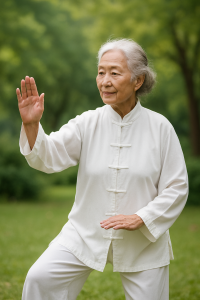
Parting the Horse’s Mane
- Starting Position: Begin in your relaxed tai chi stance, with your feet shoulder-width apart and your arms hanging gently at your sides.
- Hold a Gentle Ball (Right Hand Up): Imagine you’re holding a light, soft ball in front of you. Your right hand is gently curved on top, and your left hand is underneath. Keep your arms relaxed.
- Step to the Left: Gently shift a little weight to your right leg. Take a small, easy step to your left with your left foot. Place your whole foot down comfortably.
- Weight on Left, Hands Separate: Now, slowly move your weight onto your left leg. As you do this, let your left hand gently rise up in front of you, like you’re showing someone your palm at about shoulder height. At the same time, let your right hand gently drift downwards in front of your right thigh. Think of a soft, easy separation of your hands.
- Hold the Gentle Ball (Left Hand Up): Now, imagine holding that gentle ball again, but this time with your left hand on top and your right hand underneath.
- Step to the Right: Gently shift a little weight to your left leg. Take a small, easy step to your right with your right foot. Place your whole foot down comfortably.
- Weight on Right, Hands Separate (Opposite): Slowly move your weight onto your right leg. As you do this, let your right hand gently rise up in front of you to about shoulder height, and let your left hand gently drift downwards in front of your left thigh.
- Keep Flowing: You can continue this gentle back-and-forth movement, stepping to one side and then the other, with your hands gently “parting.” Remember to keep your movements slow and your body relaxed.
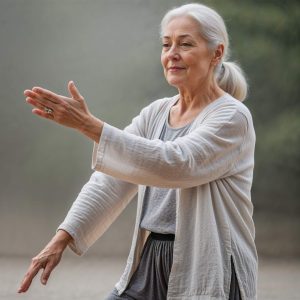
Waving Hands Like Clouds
- Gentle Shift & One Hand Up: Slowly shift a little bit of your weight onto your right leg. At the same time, gently bring your left hand in front of your belly, like you’re holding a small balloon. Now, let your right hand float up in front of you, about as high as your chest. Keep both arms relaxed and slightly bent.
- Step Left, Switch Hands: Take a small, easy step to your left with your left foot. As you do this, gently let your right hand float down in front of your belly, and let your left hand float up in front of you to about chest height. Imagine your hands are just softly passing each other.
- Gentle Shift & Other Hand Up: Now, slowly shift your weight onto your left leg. Let your left hand float down to your belly, and let your right hand float up to chest height.
- Step Right, Switch Hands Again: Bring your right foot in a little, then take a small, easy step to your right with your right foot. As you step, let your right hand float down to your belly, and your left hand float up to chest height.
- Keep the Gentle Flow: Keep doing this slow, gentle stepping from side to side, letting one hand float up as the other floats down in front of your belly. Imagine you’re gently swaying with a light breeze, and your hands are like soft clouds moving with you.
Follow Along With The Free Tai Chi For Beginners Video Below
Because Tai Chi involves constant, yet slow, movement it’s much easier to follow along with an instructor than follow written instructions. Here’s a free tai chi class you can follow along with today—just click play below!
This video comes from the 7 day program Beginner Tai Chi for Body and Mind Health by Better5. If you want to keep nurturing your practice you can get the full program today.
Wrap Up
Tai chi can have a calming effect on your body and improve overall mental well-being. With guided training on simple forms, you can begin to feel more grounded, balanced, and at ease. If you’re enjoying these first gentle steps into tai chi, imagine how good you’ll feel exploring even more beginner-friendly movements and deepening that sense of calm. The best way to build on the gains of this tai chi for beginners guide is to explore more resources that offer structured lessons and ongoing support specifically designed for newcomers.