
Exercises for Seniors with Arthritis: 9 Safe Moves
Exercises for seniors with arthritis can ease joint pain, reduce stiffness, and help you move more freely — without making your symptoms worse. The key is choosing low-impact movements that strengthen the muscles around your joints and keep your range of motion intact. Below, you’ll find 9 safe, gentle moves designed specifically for older adults living with arthritis.
Why Exercise Matters When You Have Arthritis
It might feel counterintuitive — if your joints hurt, why move more? But research consistently shows that regular, gentle exercise is one of the best things you can do for arthritis. Movement lubricates your joints, strengthens the muscles that support them, and reduces the inflammatory markers that cause pain.
Staying sedentary, on the other hand, leads to muscle loss, reduced flexibility, and joints that become even stiffer over time. The goal isn’t to push through pain — it’s to find the range of movement that feels safe and sustainable.
According to the Arthritis Foundation, adults with arthritis should aim for at least 150 minutes of moderate activity per week. That breaks down to about 20–30 minutes per day — which is very achievable with the exercises below.

What to Know Before You Start
Before diving into any exercise routine, keep these principles in mind:
- Warm up first. Never start cold. Take 5 minutes to walk slowly or do gentle arm circles before beginning.
- Move within a pain-free range. Mild discomfort is okay; sharp or worsening pain is a signal to stop.
- Don’t skip rest days. Your joints need recovery time just like your muscles do.
- Talk to your doctor. Especially if you have a recent flare-up, surgery, or replacement joint.
9 Safe Exercises for Seniors with Arthritis
1. Seated Knee Lifts
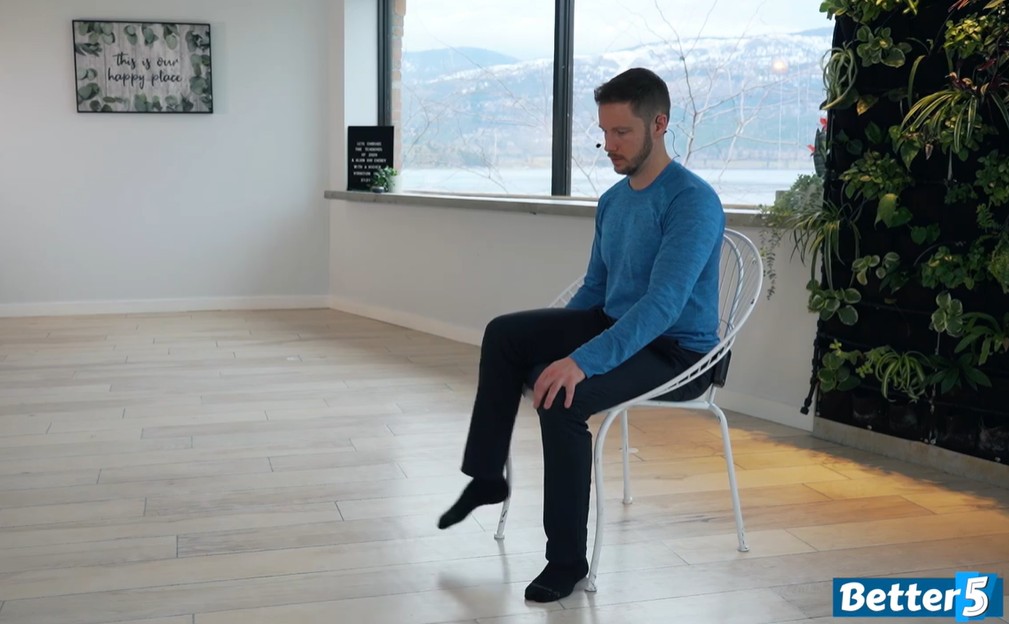
This move targets the hip flexors and lower back without putting any stress on your knees. Sit in a sturdy chair with your feet flat on the floor. Slowly lift one knee toward your chest, hold for 2–3 seconds, then lower it back down. Alternate sides for 10–12 reps each. The Improved Knee Strength & Mobility class at Better5 walks you through a full progression of safe seated knee work.
2. Ankle Circles
Stiff ankles are a common arthritis complaint, especially in the morning. While seated, extend one leg slightly off the floor and slowly rotate your foot in circles — 10 clockwise, 10 counterclockwise. Switch feet. This improves circulation and range of motion with zero joint loading.
3. Wall Push-Ups
Traditional push-ups can be too hard on arthritic wrists and shoulders. The wall version gives you the upper body benefit without the strain. Stand about 2 feet from a wall, place your palms flat on it at shoulder height, then slowly bend your elbows and lean in — then push back. Aim for 10–15 slow, controlled reps.
4. Seated Calf Raises
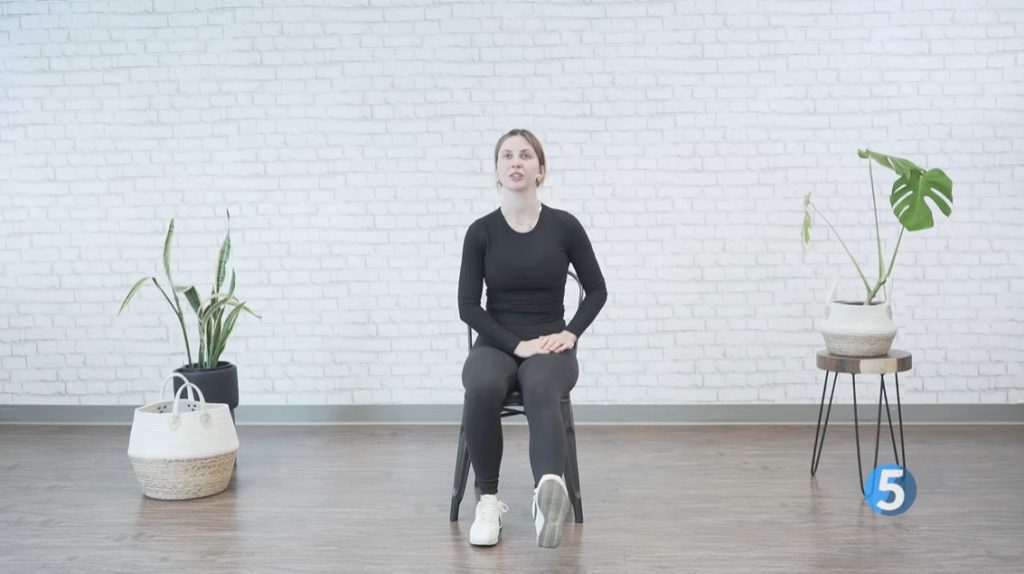
Sit in a chair with feet flat on the floor. Slowly raise your heels as high as you can, hold for 2 seconds, then lower. This strengthens the calves and supports ankle stability — both important for fall prevention. If you want to pair this with more structured programming, the Fall Prevention Exercises class at Better5 includes a full sequence focused on lower leg and balance work.
5. Gentle Neck Rolls
Cervical arthritis often shows up as neck stiffness. To ease this, sit tall and slowly tilt your right ear toward your right shoulder — don’t roll your head backward. Hold 5 seconds, return to center, then tilt left. Never force the movement; just let gravity gently provide the stretch. Aim for 5 reps each side.
6. Finger and Hand Stretches
Arthritis in the hands is especially limiting — it affects grip strength, fine motor tasks, and daily independence. Try this: open your hand wide, spreading all fingers apart, hold 5 seconds, then curl into a gentle fist. Repeat 10 times on each hand. You can also try “finger walking” — pressing each fingertip to your thumb one at a time in a slow sequence.
7. Standing Hip Circles (Chair-Supported)
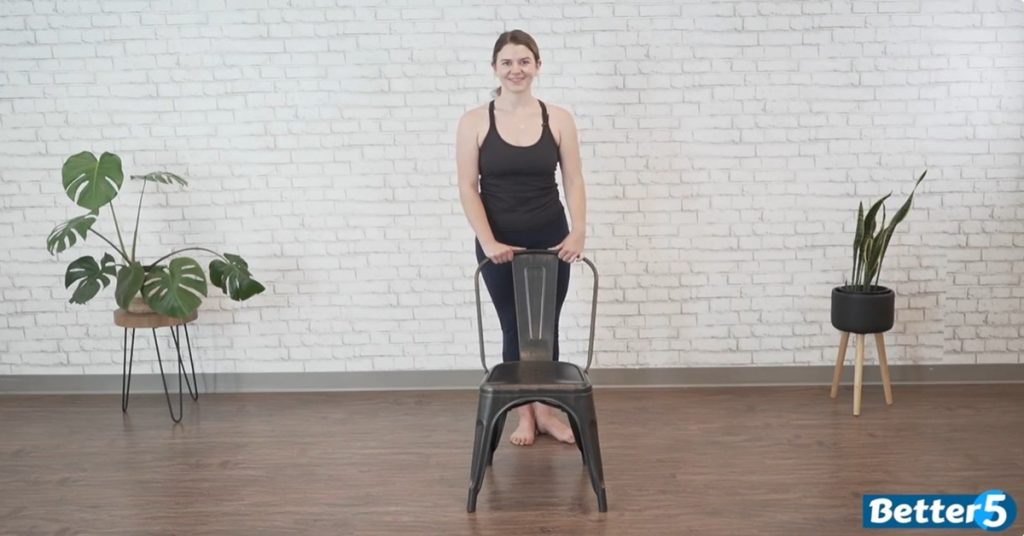
Hold the back of a sturdy chair with both hands. Stand with feet hip-width apart and slowly make small circles with your hips — first clockwise, then counterclockwise. This loosens the hip joint gently and improves mobility in the pelvis. Keep the circles small and controlled; this isn’t a dance move. The 7 Days of Chair Pilates for Mobility & Strengthening class includes a full hip mobility sequence if you want more guided work.
8. Seated Shoulder Rolls
Sit tall with arms at your sides. Slowly roll your shoulders forward in large, slow circles — 5 forward, then 5 backward. This relieves tension in the shoulder joint, upper back, and neck. Keep the movement smooth and deliberate. For anyone with rotator cuff arthritis or shoulder impingement, staying in a seated position removes gravity loading and makes this much more comfortable.
9. Gentle Standing March
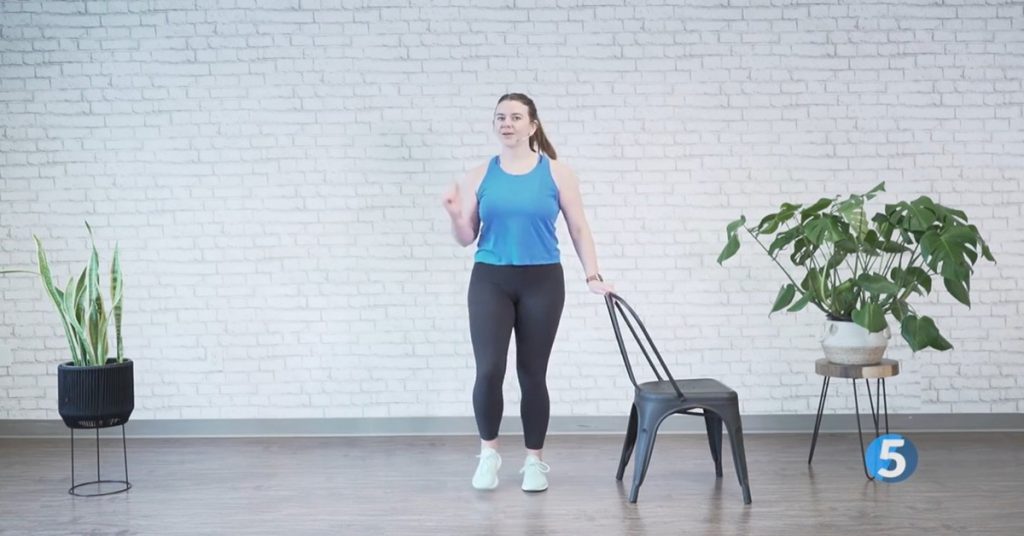
Hold the back of a chair and slowly march in place — lifting each knee to about hip height (or whatever feels comfortable). Aim for 1–2 minutes at a slow, comfortable pace. This boosts circulation, warms up the hip flexors, and improves balance — all without the impact of walking on hard floors. If outdoor walking is appealing, the 7 Day Indoor Walking Workout includes a walking prep sequence you can do before heading outside.
How Often Should You Do These Exercises?
For most seniors with arthritis, doing this routine 3–5 times per week is ideal. On days when your joints are particularly stiff or inflamed, stick to the gentlest moves (ankle circles, hand stretches, shoulder rolls) and skip anything that loads the affected joint. Consistency matters more than intensity — 15 minutes every day beats 60 minutes once a week.
As your strength and comfort improve, you can gradually increase the number of reps, add light resistance bands, or try a structured program that progressively builds on these foundations.
Tips to Reduce Arthritis Flare-Ups After Exercise
- Apply heat before exercise to loosen stiff joints (10 minutes with a heating pad works well).
- Apply ice after exercise if any joint feels inflamed or swollen (15–20 minutes with a cloth-wrapped ice pack).
- Hydrate well — joint cartilage relies on water to stay cushioned.
- Rest if you flare. A flare-up is a signal to reduce load temporarily, not stop moving entirely.
- Track your pain levels so you can notice what triggers flare-ups and what helps.
The Bottom Line on Exercises for Seniors with Arthritis
The 9 exercises for seniors with arthritis above are a starting point — not a finish line. As your joint comfort improves, you’ll likely want more variety, more guidance, and a program that progresses over time. That’s exactly what the classes at Better5 are built to deliver: safe, structured, senior-focused fitness you can do at home, at your own pace.
Ready to move with less pain? Explore Better5 classes built for seniors with arthritis and joint issues.