
How to Build Muscle After 60 at Home (No Gym Required)
You can learn how to build muscle after 60 without joining a gym. Many gyms feel intimidating, memberships cost money, and travel adds an extra layer of friction. Training at home removes those barriers and makes it easier to stay consistent. Your muscles respond to resistance, whether it comes from your body weight or simple tools like resistance bands. What matters most is consistency and how you apply that resistance. This guide explains how at-home strength training can support muscle growth, what basic equipment can help, and how to set up a routine that fits your space and schedule.
Why Home Workouts Can Help You Build Muscle After 60
While a gradual loss of muscle mass is normal as we grow older, research consistently shows that adults over 60—even into their 80s—can build measurable muscle with resistance training. In one 12-week study, participants across multiple age groups saw meaningful gains.
Your Muscles Don’t Need a Gym to Grow
At a basic level, muscle tissue responds to resistance, not to specific locations or equipment. When you challenge your muscles with enough load, they adapt by getting stronger. That adaptation happens whether you’re lifting dumbbells at a gym or using resistance bands in your kitchen.
A randomized controlled trial in the International Journal of Environmental Research and Public Health found that older women using bodyweight exercises and elastic bands for 16 weeks showed significant increases in muscle mass and strength. The program relied on simple resistance rather than gym machines, showing that effective muscle building does not depend on specialized equipment.
Small Progress Counts
Another reason home workouts can help is that they make gradual progress easier to manage. Working out at home makes it easier to add small challenges at your own pace.
You can increase reps by one or two, hold a position a few seconds longer, or switch to a slightly stronger resistance band without the pressure of gym equipment or schedules.
These small steps create what’s called progressive overload—gradually increasing the challenge your muscles face over time. Your body doesn’t distinguish between a leg press machine and a bodyweight squat performed with proper form. Both create the stimulus your muscles need to grow stronger.
Fits Physical Limitations
Home workouts let you work around mobility issues, joint pain, or balance concerns without navigating crowded gym spaces. You can position a chair nearby for support during squats, take breaks whenever you need them, and adjust exercises based on how your body feels that day.
A study in Frontiers in Psychology tested an online home-based resistance training program for adults aged 70-71 with low muscle mass. The program achieved a 90% completion rate over 10 weeks. This level of adherence suggests that comfort and control can play a role in staying consistent.
When interviewed, participants reported that training at home allowed them to adapt exercises to their own pace and make modifications without pressure or judgment.
Getting Started With Strength Training at Home After 60
Understanding why home workouts build muscle is one thing. Knowing where to start is another. Let’s break down exactly what you need.
Start With What You Have
Most people think building muscle requires specialized equipment; it doesn’t. Your body weight provides resistance for foundational movements. A sturdy chair supports seated exercises and step-ups. Kitchen counters work for elevated push-ups. These simple tools let you begin immediately without purchasing anything.
Add Simple Equipment as You Progress
Once bodyweight exercises feel manageable, these affordable tools expand your options:
- Resistance bands: They provide adjustable resistance and are easier on joints.
- Light dumbbells (5 to 10 pounds): They allow you to load arm, shoulder, and leg exercises without a complex setup.
- Ankle weights: They add light resistance to leg movements and walking-based exercises.
- Exercise mat: It adds comfort for floor exercises and reduces pressure on knees and hips.
- Stability ball or firm cushion: It supports balance and core engagement during seated exercises.
These tools store easily and take little time to set up. Their role is to support steady progress, not to complicate your routine.
What Makes a Good At-Home Muscle-building Routine?
Include Recovery Days
While training sets the tone for muscle building, adequate recovery is also an essential part of the mix. This is why a solid routine balances consistency with recovery.
According to the National Association of Sports Medicine, much of muscle repair and cell cleanup in the body and brain happens during sleep. Training two to three times per week on non-consecutive days gives your muscles time to repair and grow stronger.
Increase Difficulty Gradually
Progress happens when you gradually increase the difficulty. Start with exercises you can complete with good form. Once a movement feels noticeably easier, add one or two more reps, slow down the tempo, or switch to a slightly stronger resistance band. Small increases signal your muscles to keep adapting.
Balance Movement Patterns
Your routine should cover different movement types: pushing, pulling, squatting, and hip hinge exercises. This balance prevents overworking certain muscles while neglecting others.
For example, if you only do upper-body work, you may miss the lower-body functional strength needed for stairs, standing up from chairs, and walking with stability.
Support Training With Protein
In addition to training and recovery, adequate protein intake is the third key ingredient needed for muscle growth. A study on daily protein supplementation with or without resistance training in healthy older adults showed that only resistance training paired with protein supplementation effectively preserved muscle mass and increased strength.
The result of the study further confirms that training alone isn’t enough—you must fuel your muscles with adequate protein to see gains. Aim to include a protein source at each meal: eggs, Greek yogurt, fish, chicken, beans, or lentils.
4 Simple Exercises to Build Muscle After 60
These movements target major muscle groups and support daily function. Start with 2 sets of 8–12 reps for each exercise.
Safety Note: Start with a 5-minute warm-up (gentle walking, arm circles). Focus on controlled movements rather than speed. Stop if you feel sharp joint pain; muscle fatigue is normal, but pain is your body’s warning signal.
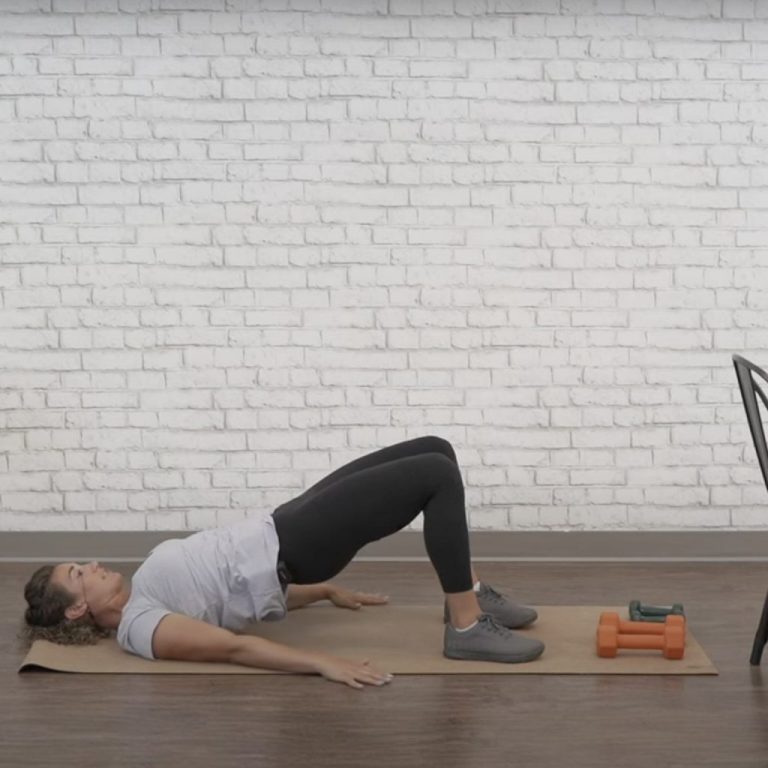
- Glute Bridges
- Lie on your back with knees bent and feet flat on the floor
- Press through your heels to lift your hips until your body forms a straight line from shoulders to knees
- Lower back down with control
Benefit: The exercise strengthens your glutes and helps with getting up from low seats.
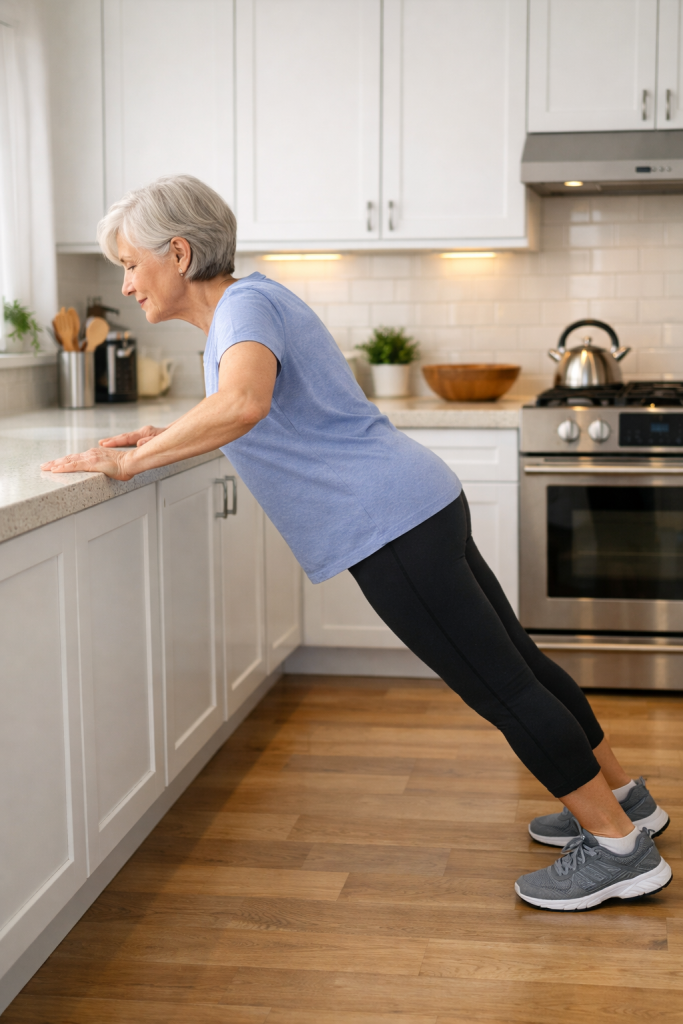
- Counter Push-Ups
- Stand an arm’s length from a kitchen counter
- Place your hands on the edge and walk your feet back slightly
- Lower your chest toward the counter, then press back up
Benefit: This exercise builds chest and arm strength for tasks that require pushing.
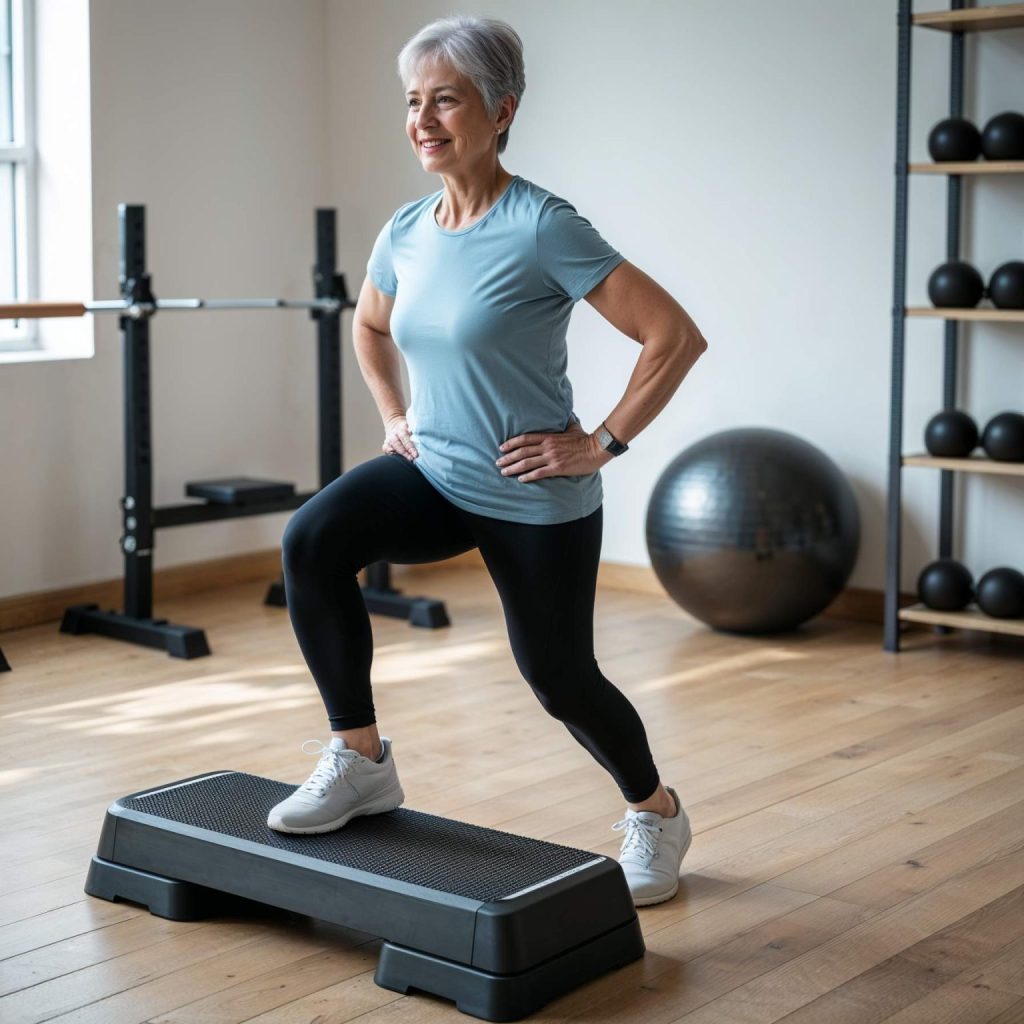
- Step-Ups
- Use a sturdy step or a low platform
- Step up with one foot, bring the other foot up, then step back down
- Alternate your leading foot each rep
Benefit: This improves leg strength and balance for navigating stairs.
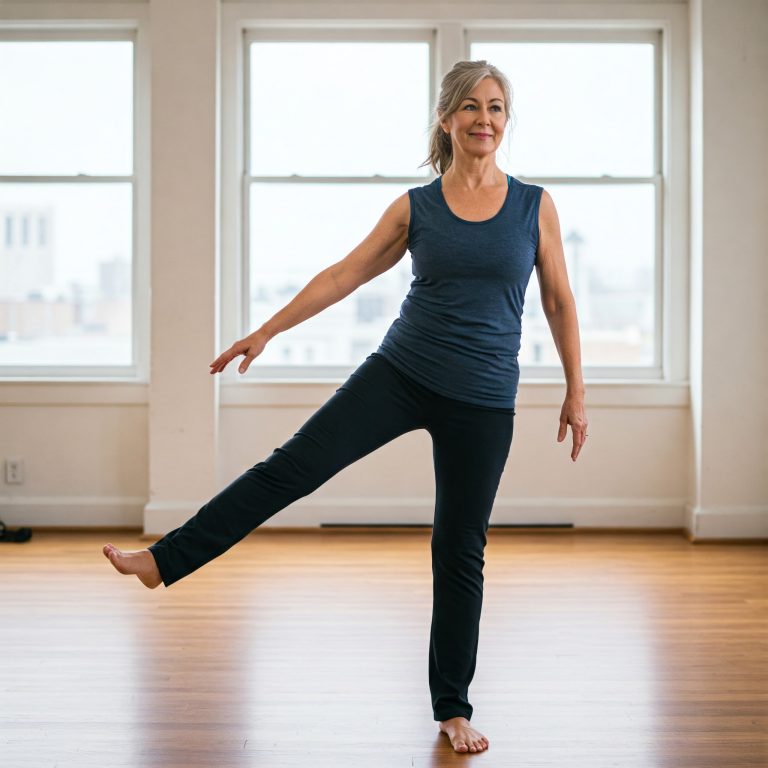
- Standing Side Leg Raises
- Stand near a wall or chair for support
- Lift one leg out to the side, keeping your body upright
- Lower with control and repeat
Benefit: It strengthens hip stabilizers that support balance and walking.
Your Next Steps to Stronger Muscles
If you need guided support to kickstart your muscle-building journey, the Full Body Fitness & Strength For 55+ Digital Class removes the guesswork. You’ll get 5 days of structured sessions that build on each other and clear demonstrations.
Building muscle after 60 doesn’t require a gym membership or expensive equipment. The exercises in this guide give you a starting point. Your commitment to showing up consistently will determine your results. Now that you know how to build muscle after 60, start with what you have, focus on form, and trust that small efforts add up to meaningful strength over time.