
Osteoporosis Exercises to Avoid & Easy Alternatives
Exercising regularly is one of the recommended ways of managing osteoporosis as it strengthens the bones & connected tissues. However, not all exercises are ideal when managing this condition. In fact, knowing which osteoporosis exercises to avoid is just as important as staying active. Movements that strain the spine or increase fall risk can lead to fractures—something no one managing osteoporosis wants to experience. This guide will help you identify these risky exercises and explore safer alternatives to keep you active & injury-free.
Why Certain Exercises Are Risky for Osteoporosis
With osteoporosis, bone density significantly decreases. The aim is to gradually strengthen your bones through a combination of exercising, lifestyle changes, & supplements.
More than 80% of all fractures in people 50+ are caused by osteoporosis. Therefore, exercises that put excessive pressure on already weakened bones are a no-no. Similarly, movements that involve high impact, twisting, or excessive bending can overstress vulnerable areas like the spine, wrists, and hips.
Common Osteoporosis Exercises to Avoid & Alternatives
The right exercises make it easier to manage osteoporosis. The wrong ones could worsen the problem. Here are some osteoporosis exercises you should avoid & safe alternatives.
Crunches
While crunches and similar abdominal exercises like sit-ups are great for enhancing core strength, they are not great options for those with osteoporosis. These routines involve spinal flexion (bending the spine forward). This stresses weakened vertebrae excessively & increases the risk of spinal fractures.
In place of these exercises, you can try out gentler variations of the plank exercise. The forearm and incline variants of the plank exercise offer core engagement without putting undue strain on the spine.
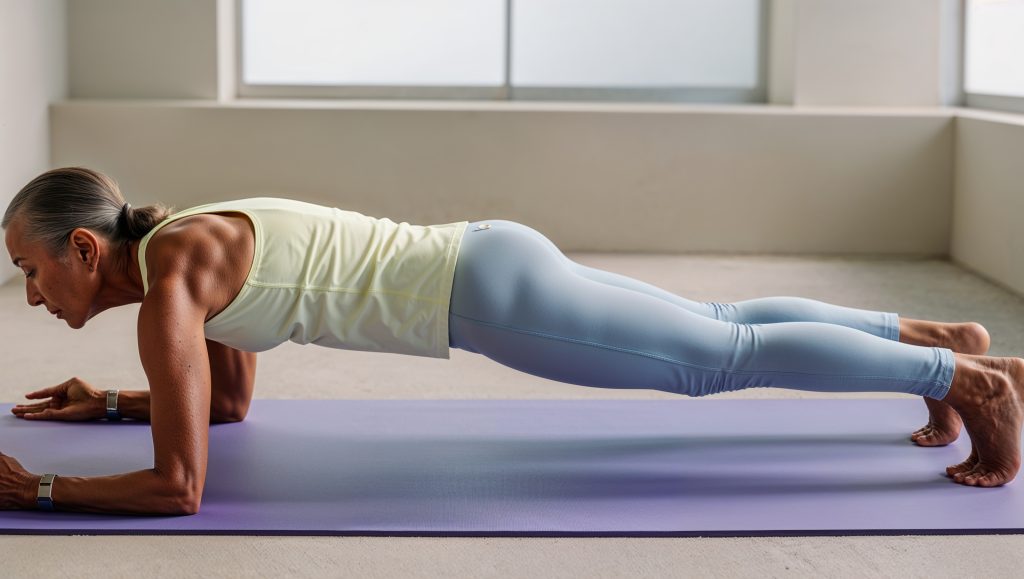
To perform a forearm plank routine:
- Start by kneeling on the floor and placing your forearms down, ensuring they are shoulder-width apart.
- Your elbows should be directly beneath your shoulders, forming a 90-degree angle.
- Step your feet back one at a time to form a straight line from your head to your heels.
- Keep your toes firmly pressed into the ground.
- Ensure your head is in a neutral position (avoid looking up or down).
- Your body should form a straight line without sagging or arching your back.
- Pull your belly button toward your spine to activate your core muscles.
- Squeeze your glutes and thighs to maintain stability.
Hamstring Stretches
Hamstring stretches enhance flexibility & help improve posture. However, the forward lean of the traditional hamstring stretch can cause flexion, which is dangerous for people with osteoporosis. You can replace the traditional hamstring stretch with a variant that includes a strap.
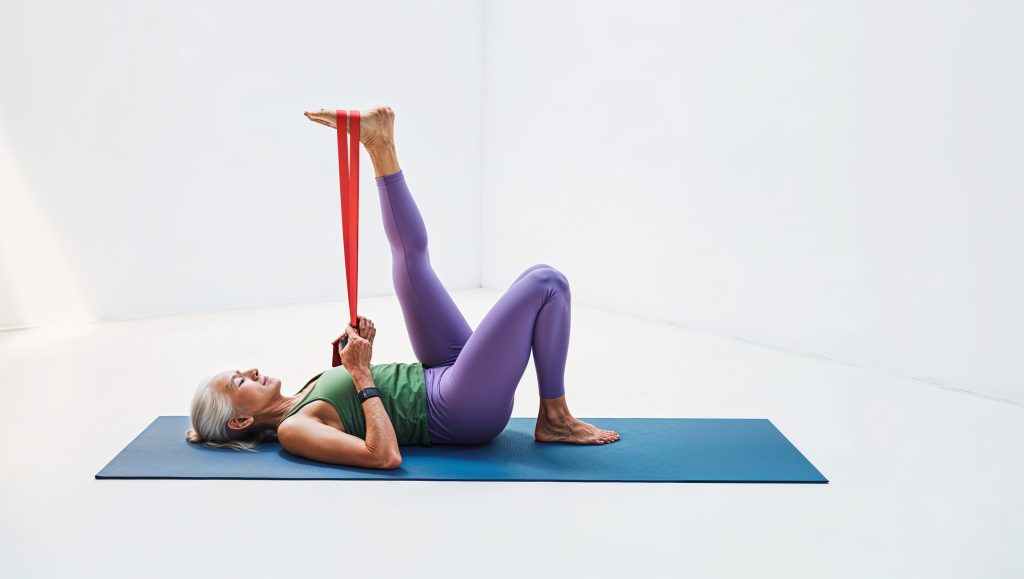
To perform a hamstring stretch with a strap:
- Lie on your back on a flat surface.
- Bend your left leg, placing your left foot flat on the ground. This helps maintain pelvic alignment.
- Wrap a strap, belt, or towel around the arch of your right foot.
- Gently pull your right leg toward your face, keeping your knee as straight as possible.
- Feel the stretch along the back of your thigh (hamstrings).
- Maintain the position for 10-20 seconds.
- Repeat the stretch on your left leg.
- Perform two rounds on each leg for maximum benefit.
Avoid pulling too hard and make sure to keep your movements controlled to prevent strain.
Toe Touch With Twist
Toe touches with twists involve bending and twisting at the waist, which makes them risky. Twisting motions can stress the vertebrae and increase fracture risks. The seated hamstring stretch is a safer alternative to this. To perform, follow this routine:
- Sit on the front edge of a firm chair with your back straight.
- Extend one leg straight out in front of you, keeping your foot pointed up.
- Bend the opposite knee, ensuring the foot is flat on the floor for support.
- Center your chest over the extended leg, maintaining a straight spine.
- Slowly bend forward from the waist, stopping when you feel a stretch in the back of your outstretched leg.
- Hold the stretch for 30 seconds, breathing steadily.
- Return to the starting position and switch legs.
- Repeat the stretch up to three times for each leg.
High-impact Sport
Any form of high-impact sport is not ideal for anyone managing osteoporosis. Contact sports such as soccer, football, and hockey pose a significant risk of falls & collisions. Other non-high-impact sports with a high risk of falling such as skiing, ice skating & equestrian sports are better avoided. In place of these, opt for gentler alternatives like dancing & walking.

Golf & Tennis
Golf and tennis get special mention because they are senior-friendly, moderate-intensity sports. However, the twisting and turning movements involved in golf swings and tennis strokes significantly stress the spine. For individuals managing osteoporosis, these motions can increase the risk of vertebral compression fractures (crumpling of bones in the spine). The sudden jerks and side-to-side movements common in tennis may pose a fall risk. Modifications or alternative activities like practising balance-focused exercises such as Tai Chi may be safer.
Yoga Adjustments for Osteoporosis Safety
In addition to the exercises mentioned above, certain yoga poses are not osteoporosis-friendly. While yoga is certainly a very senior-friendly form of exercise, even if you have osteoporosis, there are some yoga poses that are best to avoid.
Movements that involve deep forward bends can place excessive stress on the spine. Poses that require significant torso twisting may strain the vertebrae & should be avoided.
Remember, everyone’s body is different. Always consult with your healthcare provider or physical therapist to determine the best exercises for your individual needs and condition.
Wrap Up!
Staying active while managing osteoporosis requires careful consideration of your exercise choices. Avoiding high-risk movements helps protect your bones and prevent unnecessary injuries. Thus, knowing the osteoporosis exercises to avoid ensures your fitness routine supports your long-term health and safety.
You can take the guesswork out of staying active with osteoporosis by signing up for the Osteoporosis Exercises For Strong Bones Digital Class. Join Maria Raitt, a certified personal trainer & group fitness instructor, as she takes you through the 4 types of exercise that are important for preventing & managing osteoporosis.