
Senior Fitness Motivation To Stay Active In 2026
You know staying active matters, but actually doing it is another story. It’s completely normal for motivation to ebb and flow as the years go by and your schedule and energy levels change. Senior fitness motivation isn’t about willpower or pushing through workouts you hate; it’s about building exercise into your day in simple, realistic ways.
The barriers are real. Fear of falling, low energy, feeling too old to start. These concerns make sense, but they don’t have to stop you. This article will help you identify your personal reasons for staying active, work past common obstacles, and build habits that stick in 2026 and beyond.
Why Senior Fitness Motivation Declines With Age (And How to Fix It For The New Year)
Staying motivated to move isn’t the same at 65 as it was at 35. That’s not a failure on your part. Your body, your routines, and your circumstances have changed. Understanding what’s shifted can help you work with these changes instead of fighting against them.
Fear of Injury Holds You Back
Many older adults worry about getting hurt, and that fear is real. Research shows that concern about falling can reduce physical activity levels and make older adults less willing to try new movements. This makes sense. You’ve probably known someone who fell and struggled to recover. Maybe you’ve had a close call yourself.
That caution is protective, but it can also keep you from activities that would actually improve your balance and strength. The key is finding ways to move that feel stable and safe, not avoiding movement altogether.
Uncertainty About What’s Safe
You want to exercise, but you’re not sure where to start or what’s appropriate for your body now. Lack of clear guidance can lower your confidence and make it easier to put off starting. This uncertainty often grows when health conditions are involved.
You might wonder if certain movements will aggravate your knee pain or if your blood pressure means you should avoid specific activities. Without straightforward answers, it’s hard to build the motivation to keep fit. Better5‘s array of senior-focused fitness classes includes movements designed specifically for your stage of life.
Health Conditions & Low Energy
Chronic pain, fatigue, or ongoing health issues make activity feel less manageable. Some days you simply don’t have the energy you used to. This can lead to reduced participation even when the desire to stay active is still there. You’re not lazy. Your body is dealing with real physical challenges that weren’t present before.
Social Changes Affect Your Drive
When daily contact with friends or family decreases, so does movement. Retirement or friends moving away can all reduce your motivation to exercise. Group activities that once felt natural may no longer fit your routine. Feeling less connected to others can make solo exercise feel isolating rather than empowering.
These barriers are common and backed by current research. Your experience is normal and understandable. Recognizing what’s changed is the first step toward finding strategies that work for you now.
How to Build Senior Fitness Motivation That Lasts
Motivation doesn’t stay high on its own. It needs practical support. These strategies are backed by research and designed to work with your life as it is now, not as you think it should be.
Set Small Goals
Large goals can feel overwhelming. Small ones build momentum. A ten-minute walk is more manageable than committing to an hour at the gym. According to the Centers for Disease Control and Prevention, older adults can break physical activity into shorter sessions throughout the week and still gain health benefits.
One helpful approach is the SMART framework. Your goals should be:
- Specific: Pick one clear action you plan to do.
- Measurable: Choose something you can count or track.
- Achievable: Set a goal that fits your current ability.
- Relevant: Make sure it supports the activities you care about.
- Time-bound: Give yourself a simple timeframe.
Instead of “I want to exercise more,” try “I’ll walk for ten minutes after breakfast three times this week.” The goal is specific, measurable, and doable. It also fits your routine and has a clear timeframe.
This matters because short, simple actions are easier to start and easier to repeat. Each time you complete a small goal, you prove to yourself that staying fit is possible. That proof becomes fuel for the next day.
Pick Activities You Enjoy
There are a variety of fitness options from walking to gentle strength work and light yoga. However, they only work if you actually like doing them. Research on exercise adherence shows that enjoyment is a stronger predictor of long-term adherence to physical activity. If you dread an activity, you won’t stick with it no matter how beneficial it’s supposed to be.
Try different exercises until you find something that feels good. It could be morning stretches or chair exercises while you watch television. The best exercise is the one you’ll actually do.
Use Social Support
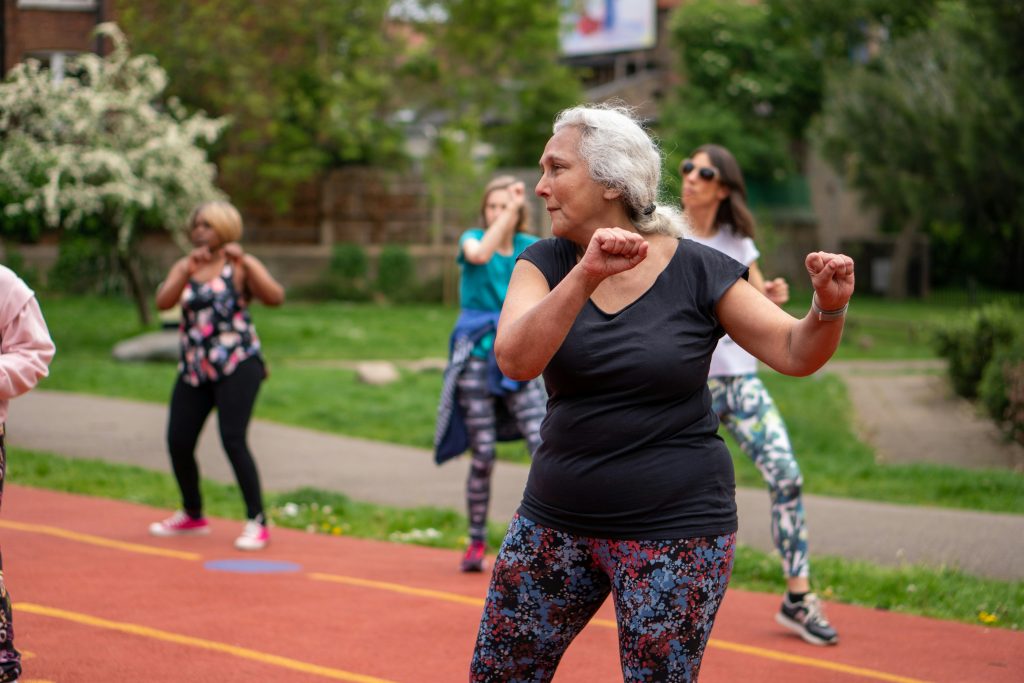
Friends, groups, or online classes can make a real difference. Having company helps you stay accountable. When someone else is counting on you to show up, you’re more likely to follow through.
The National Institute on Aging recommends finding exercise partners or joining group activities as a way to stay engaged. This doesn’t mean you have to exercise with others all the time. But having even one person who checks in or joins you occasionally can lift your motivation when it dips.
Track Your Progress
You don’t need a fancy app or complicated metrics. Simple markers work just as well. Notice whether you can stand from a chair more easily than last month or if you feel less winded after climbing stairs. These small observations show real progress.
A basic weekly fitness tracker can help you spot patterns and celebrate wins without overwhelming you with data. If you prefer technology, a fitness tracker designed for older adults can monitor steps, heart rate, and activity levels in ways that feel manageable rather than complicated.

Behavior change research shows that feedback improves adherence because it makes progress visible. When you can see that movement is making a difference, even a small one, you’re more likely to keep going.

Tips That Make Fitness Easier Day To Day
Small adjustments can remove friction and keep you moving even on harder days. These practical tips help you work with your body’s rhythms instead of against them.
- Keep a short list of gentle backup options like light stretching or indoor walking for low-energy days.
- Aim for five minutes instead of your usual routine when energy is low.
- Remember that some movement is always better than none.
- Start with a short warmup to ease joint stiffness before your main activity.
- Always choose simple movements that feel comfortable rather than pushing through pain.
- Pick times of day when you feel your best, whether that’s morning or afternoon.
- Link fitness to an existing habit like having coffee or watching the news.
- Keep your routine flexible so missed days don’t derail your progress.
Building Senior Fitness Motivation Starts With One Small Step
The 7-Day Chair Yoga for Full Body Release Digital Class gives you structure, guidance, and movements intentionally created for older adults who want to build confidence, strength, and consistency—without strain or confusion.
Senior fitness motivation is about understanding what drives you, working through the barriers, and finding strategies that fit your life as it is now. Small goals help you build momentum, and activities you enjoy keep you consistent. Social support and simple progress markers help you stay on track. The barriers are real, but they don’t have to stop you. Start with one small action and notice how it feels.