Stress Management for Seniors: Simple Ways to Reduce Anxiety
Look, stress doesn’t magically disappear when you hit retirement. If anything, life can sometimes feel even more stressful as you age. Sure, there’s more time to kick back, but that doesn’t stop those worries about health, finances, or simply keeping up with life. But what if we told you that stress management for seniors doesn’t have to be complicated or a full-time job?
Forget everything you’ve heard about long, exhausting routines or feeling like you’re not doing enough. Stress relief for seniors can actually be easy—dare we say, enjoyable—if you know where to start. And no, you don’t need to become a meditation guru or bend yourself into a yoga pretzel.
Let’s get straight to simple, no-fuss solutions that actually work for people like you.
Why Seniors Experience Stress More Often
Aging comes with its own set of stressors that can sometimes feel overwhelming. Understanding these common causes of stress can help you take a more proactive approach to managing it.
Health Concerns
Chronic illnesses, mobility issues, and pain from arthritis or other conditions can add to daily stress. As seniors face new health challenges, managing doctor appointments, medication routines, and physical limitations can create anxiety.
Financial Concerns
Many seniors live on a fixed income after retirement, which can make financial stress a constant presence. Whether it’s worrying about healthcare costs or managing day-to-day expenses, financial uncertainty is a major cause of stress.
Social Isolation
With age often comes a shrinking social circle, especially when friends or family move away or pass on. Loneliness and isolation are common sources of stress for seniors, making it important to find ways to stay socially connected.
Loss of Independence
Losing the ability to perform daily tasks or having to rely on others for assistance can make seniors feel frustrated or helpless. This loss of independence is another significant contributor to stress in older adults.
5 Simple Stress Management Techniques for Seniors
Let’s take a look at five easy-to-implement stress management techniques that can help seniors reduce anxiety and improve their quality of life. These methods are designed to be gentle yet effective, allowing you to start feeling better with just a few minutes each day.
1. Deep Breathing Exercises
Deep breathing is one of the most accessible and effective ways to reduce stress. It helps calm the nervous system and can be done anywhere, anytime.

How to Practice Deep Breathing:
- Sit comfortably in a chair with your back straight.
- Inhale slowly through your nose, counting to four.
- Hold your breath for four seconds.
- Exhale slowly through your mouth, counting to four.
- Repeat for 5-10 minutes, focusing on your breath.
This simple exercise can help you relax, reduce muscle tension, and improve your focus.
2. Gentle Chair Stretches
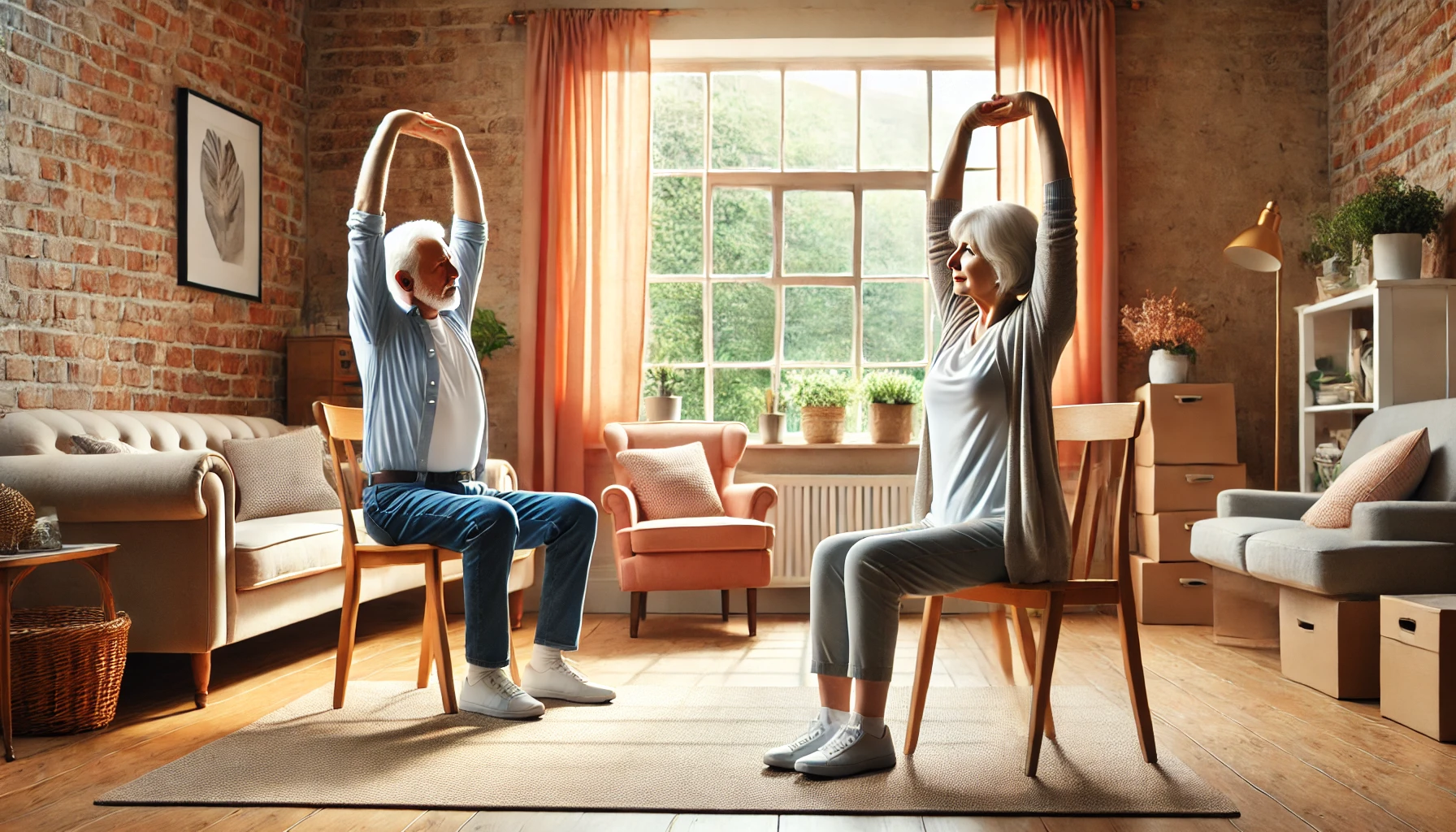
For seniors with limited mobility, chair stretches offer a low-impact way to relieve tension and improve circulation—both of which can help reduce stress. A simple chair stretch can be a great start, but if you’re looking to explore more, there’s an entire class dedicated to accessible, effective movements.
How to Perform A Simple Chair Stretch:
- Sit upright in a chair with your feet flat on the floor.
- Slowly raise your arms above your head and stretch toward the ceiling.
- Hold the stretch for 10-15 seconds, then relax.
- Repeat 3-5 times, focusing on slow, controlled movements.
Chair stretches can be incorporated into your daily routine, helping to relieve physical tension and promote relaxation.
Are you looking to go beyond a single stretch?
Try the Chair Yoga for Beginners class for a guided, full-length experience in gentle, stress-relieving movements designed specifically for seniors.
Also, for a quick, low-impact workout you can do right from your chair, check out this Printable Chair Exercise Routine for Seniors, perfect for easing tension and managing stress.
3. Mindfulness Meditation
Mindfulness is about being present in the moment and accepting it without judgment. For seniors, practicing mindfulness can help reduce anxiety, improve mental clarity, and increase a sense of calm.
How to Practice Mindfulness:
- Find a quiet, comfortable place to sit.
- Close your eyes and take a few deep breaths.
- Focus your attention on your breathing, noticing the sensation of air entering and leaving your body.
- If your mind wanders, gently bring it back to your breath without judgment.
- Start with 5 minutes of meditation, gradually increasing the time as you feel more comfortable.
Mindfulness can be a powerful tool in managing stress and maintaining mental health for seniors.
4. Journaling
Writing down your thoughts and feelings can be an excellent way to process emotions and relieve stress. For seniors, journaling can offer a private space to express concerns, reflect on the day, or set positive intentions.
How to Start Journaling:
- Set aside a few minutes each day, perhaps in the morning or before bed, to write.
- Focus on your thoughts and emotions, whether positive or negative.
- Write freely without worrying about grammar or structure—just let the words flow.
- Use journaling to reflect on what’s causing stress and explore ways to cope with those feelings.
By putting thoughts into words, you can gain a clearer perspective and reduce feelings of overwhelm.
5. Listening to Calming Music
Music has a profound effect on mood and can be a wonderful tool for stress management. Listening to calming music, such as classical or nature sounds, can help you relax and reduce anxiety.
How to Use Music for Relaxation:
- Choose a playlist of calming music that you enjoy.
- Set aside time each day to sit quietly and listen, whether during a morning routine or before bed.
- Focus on the music, allowing it to wash over you and help you unwind.
Music can act as a simple yet effective way to bring a sense of peace and relaxation into your day.
How Social Connections Can Help Reduce Stress
Maintaining strong social connections is vital for reducing stress, especially for seniors who may feel isolated. Research has shown that staying socially active can improve mental health and overall well-being. Whether it’s spending time with family, meeting up with friends, or joining a local community group, social interactions can provide emotional support and reduce feelings of loneliness.

Ways to Stay Socially Connected:
- Join a local senior center or group to meet new friends.
- Stay in touch with family through phone calls, video chats, or visits.
- Consider participating in online communities or virtual classes where you can interact with others from the comfort of your home.
Staying socially engaged is one of the most effective ways to combat stress and improve your overall outlook on life.
Consider trying one of these outdoor activities for seniors that are fun and easy to do with others.
The Benefits of Physical Activity for Stress Relief
Physical activity is a proven way to reduce stress and improve mood. For seniors, even gentle exercise can release endorphins, the body’s natural stress relievers, and help you feel more relaxed.
Gentle Exercises for Stress Relief:

- Walking: A 10-15 minute walk can boost your mood and reduce tension. If you’d like structured guidance, check out our Indoor Walking Workout Digital class, perfect for seniors looking to get started with regular, gentle walks.
- Chair Yoga:This low-impact exercise is ideal for seniors who want to improve flexibility and reduce anxiety. Explore the Gentle Chair Yoga For Aging Adults class to experience a full, guided session designed specifically with seniors in mind.
- Stretching: Simple stretching exercises relieve physical tension and improve circulation, both of which are essential for stress management. For a more comprehensive routine, try the Bed Stretching Program Digital class, which offers accessible stretches to promote relaxation and mobility.
By staying physically active, seniors can enhance their overall well-being while effectively managing stress.
When to Seek Professional Help for Stress Management
While these techniques can be very effective, there may be times when additional support is needed. If stress becomes overwhelming or interferes with daily life, it’s important to speak to a healthcare professional. They can offer further guidance, such as counseling, medication, or other therapies to help manage stress.
Signs you may need to seek professional help:
- Persistent feelings of anxiety or depression.
- Difficulty sleeping or changes in appetite.
- Physical symptoms such as headaches, fatigue, or chest pain related to stress.
There’s no shame in asking for help, and doing so can make a significant difference in your quality of life.
Start Managing Stress Today
Here’s the truth: stress is here to stay, but how you handle it? That’s up to you.
Stress management for seniors doesn’t need to be complicated. Whether it’s deep breathing, stretching, or simply picking up the phone for a chat, the power is in your hands to feel a little more at ease each day. And when things get tough, remember—it’s okay to ask for help.
Life’s too short to spend it feeling overwhelmed. Take that first small step today, and you’ll see—it adds up to something big.