
10 Safe Types Of Cardio For Seniors You Can Try Today
Cardio exercises are suitable for individuals of all ages. For seniors, these exercises offer a way to support heart health and maintain independence in daily activities. You can choose cardio that fits your current abilities and helps you keep doing what matters most. Whether that’s walking through the park, keeping up with grandchildren, or simply moving with more ease throughout your day.
This guide explains the benefits of cardio for seniors and walks you through different cardio exercise options for seniors. You’ll find options for seated movement, low-impact activities, and continuous exercise, along with practical tips to keep things interesting.
Why Cardio Matters for Seniors
The cardiovascular system comprises your heart, lungs, and blood vessels, which work together to deliver oxygen throughout your body. As you age, the heart can become less efficient at pumping blood, and arteries may lose some flexibility. Because of these age-related changes, the National Institute on Aging recommends engaging in physical activity, including cardio, to maintain heart health.
May Support Healthy Resting Heart Rate
Regular cardio can help your heart work more efficiently at rest. When your cardiovascular system adapts to consistent activity, your heart doesn’t need to beat as often to pump the same amount of blood. A lower resting heart rate often indicates better heart efficiency.
Helps Maintain Blood Pressure Levels
Aerobic exercise may support blood pressure within healthy ranges. The American Heart Association notes that regular physical activity helps blood vessels stay flexible and responsive, which allows blood to flow more smoothly and reduces strain on your cardiovascular system.
Supports Blood Sugar Management
Cardio helps your body use glucose more effectively. When you perform exercises like cardio, your muscles pull sugar from your bloodstream for energy. Over time, regular activity can improve how your body responds to insulin, which may help maintain healthier blood sugar levels as metabolism changes with age.
Contributes to Bone and Muscle Health
Weight-bearing cardio activities like walking or dancing work directly on bones in the legs, hips, and lower spine. According to the Mayo Clinic, these activities may help slow bone loss. This can help reduce fall risk and help you maintain independence as you age.
Top 10 Types Of Cardio For Seniors

Walking
Walking is one of the most accessible forms of cardio for seniors. You can do it almost anywhere, adjust your pace as needed, and stop whenever you want to rest.
How to do it:
- Start on flat, even surfaces like sidewalks or indoor tracks.
- Keep your shoulders back and your gaze forward, not down at your feet.
- Let your arms swing naturally at your sides.
- Begin with five to 10 minutes and add a minute or two each week as it feels comfortable.
Best for: Solo or group activity, indoors or outdoors, no equipment needed.
Tip: Wear supportive shoes with good cushioning to protect your feet and ankles.
Jogging
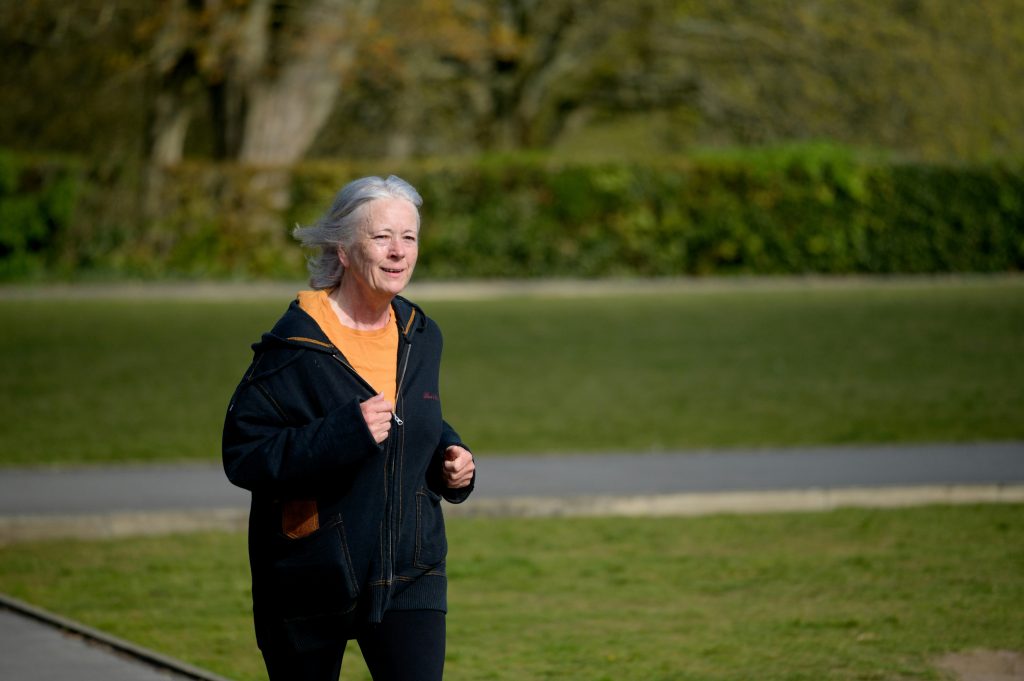
Jogging is a higher-intensity option for seniors who are already comfortable with regular walking and want to challenge their cardiovascular system further.
How to do it:
- Warm up with five minutes of brisk walking first.
- Start with short jogging intervals of 30 seconds to one minute.
- Alternate between jogging and walking to give your body recovery time.
- Land on the middle of your foot rather than your heel to reduce impact.
Best for: Solo or group activity, outdoors or on tracks, active seniors comfortable with impact.
Tip: Choose softer surfaces like tracks or trails rather than concrete to protect your joints.
Treadmill Walking
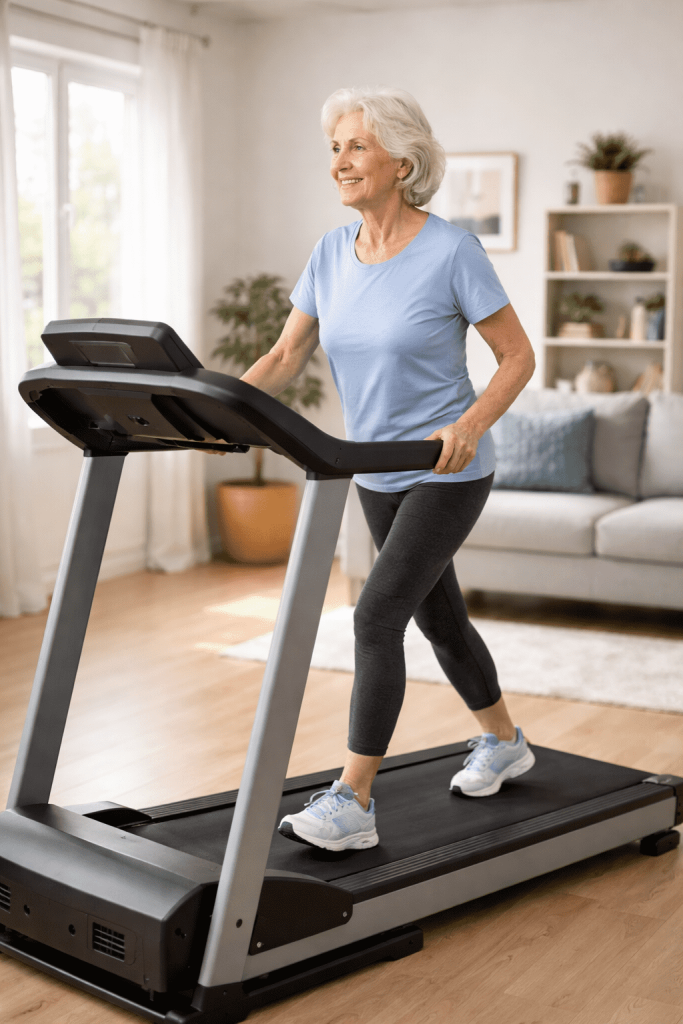
A treadmill lets you walk or jog indoors with control over your speed and incline. Most models have handrails for added stability if you need them.
How to do it:
- Start with the treadmill at a slow speed and zero incline.
- Step onto the belt carefully, holding the handrails if needed.
- Once comfortable, increase speed to a pace that feels challenging but sustainable.
- Add a slight incline over time to increase intensity without raising your speed.
Best for: Gym or home use, solo activity, walking, or jogging indoors.
Tip: Don’t hold the handrails while walking unless you need them for balance. Let your arms swing naturally.
Swimming
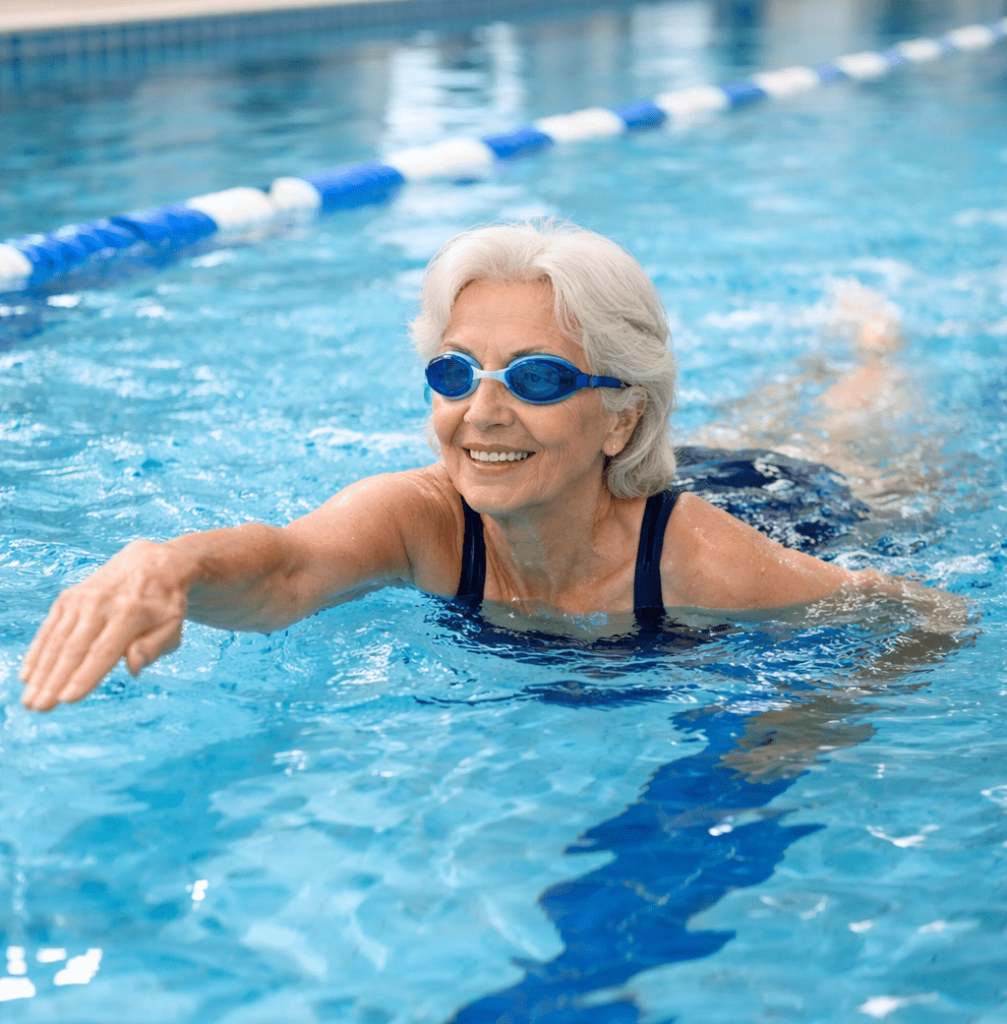
Swimming provides a full-body workout with minimal impact on your joints. The water supports your body weight while your arms and legs work against the resistance of the water.
How to do it:
- Choose a stroke you’re comfortable with, such as freestyle or breaststroke.
- Start by swimming one or two laps, then rest at the pool edge.
- Gradually increase the number of laps as your endurance builds.
- Focus on steady, controlled movements rather than speed.
Best for: Solo activity, pool access required, confident swimmers.
Tip: If swimming laps feels too challenging, try other water aerobic options.
Stationary or Recumbent Biking
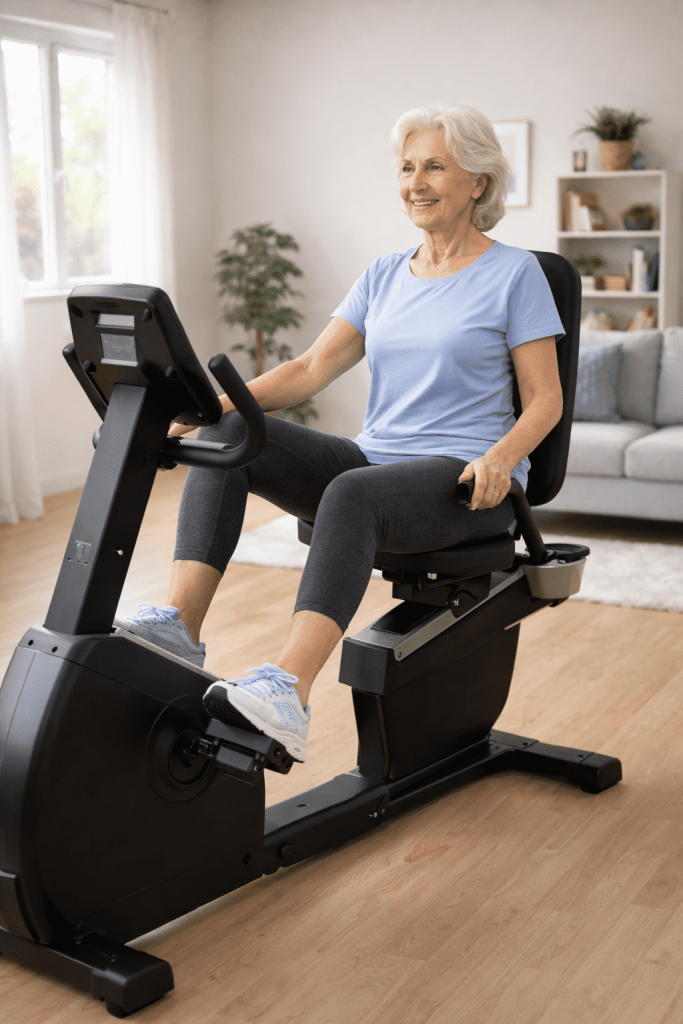
Both types of stationary bikes provide effective cardio while you sit. A recumbent bike offers a reclined seat with back support, while a standard stationary bike keeps you more upright.
How to do it:
- Adjust the seat so your knee has a slight bend when the pedal is at the bottom.
- Start pedaling at a comfortable pace with low resistance.
- Keep your back straight and avoid leaning too heavily on the handlebars.
- Aim for five to 10 minutes initially, then build up as you get stronger.
Best for: Gym or home use, solo activity, seated option.
Tip: If your lower back bothers you, choose the recumbent bike for extra support.

Cycling (Outdoor)
Riding a bike outdoors combines cardio exercise with fresh air and changing scenery. It’s a low-impact activity that lets you control your pace and distance.
How to do it:
- Choose flat, paved paths or bike trails to start.
- Adjust your seat height so your leg has a slight bend when the pedal is at the bottom.
- Start with short rides of 10 to 15 minutes on familiar routes.
- Wear a helmet and choose times when traffic is light.
Best for: Solo or group activity, outdoors, requires a bike and helmet.
Tip: Start on familiar routes close to home so you can turn back easily if you get tired.
Marching
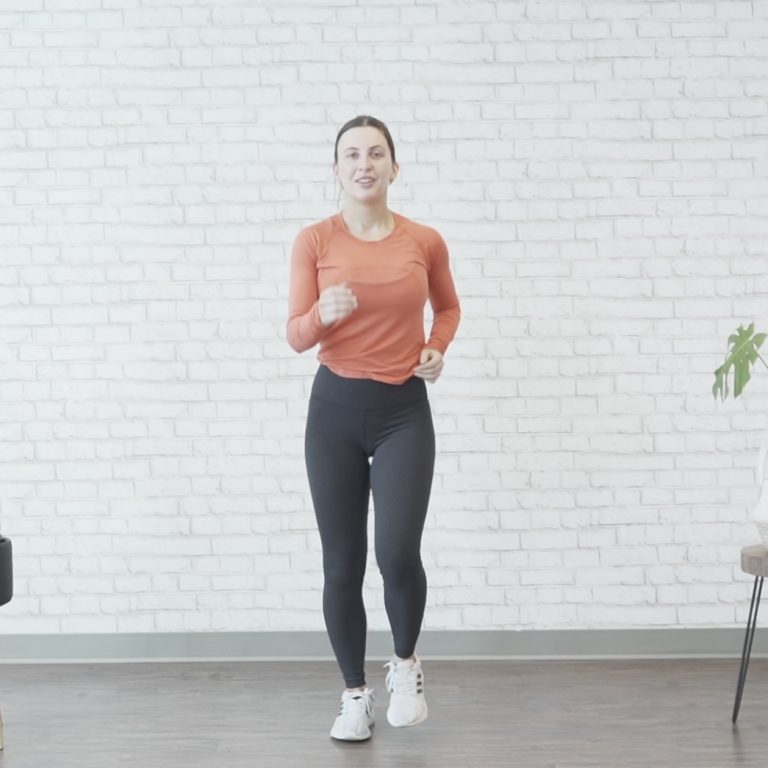
Marching in place gets your heart rate up without requiring any equipment or much space. You can do it standing or seated, depending on your comfort level.
How to do it:
- Stand with your feet hip-width apart, or sit upright in a sturdy chair.
- Lift one knee toward your chest, then lower it back down.
- Alternate legs in a steady rhythm, similar to walking in place.
- Add arm movements by swinging them naturally or raising them overhead.
Best for: Home use, solo activity, standing or seated option.
Tip: If you choose the seated version, place your chair against a wall to prevent it from sliding.
Arm Circles
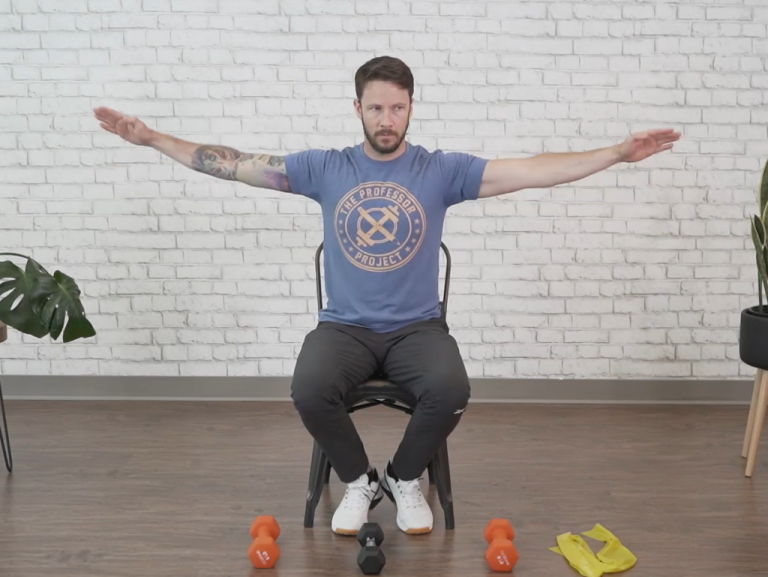
Arm circles provide upper-body cardio that can be done standing or seated. They work your shoulders and arms while raising your heart rate.
How to do it:
- Stand with your feet shoulder-width apart or sit upright in a chair.
- Extend your arms straight out to the sides at shoulder height.
- Make small circular motions with your arms, moving forward for 30 seconds.
- Reverse the direction and circle backward for another 30 seconds.
Best for: Home use, solo activity, standing or seated option.
Tip: Start with smaller circles and gradually increase the size as your shoulders warm up.
Dance-Based Classes
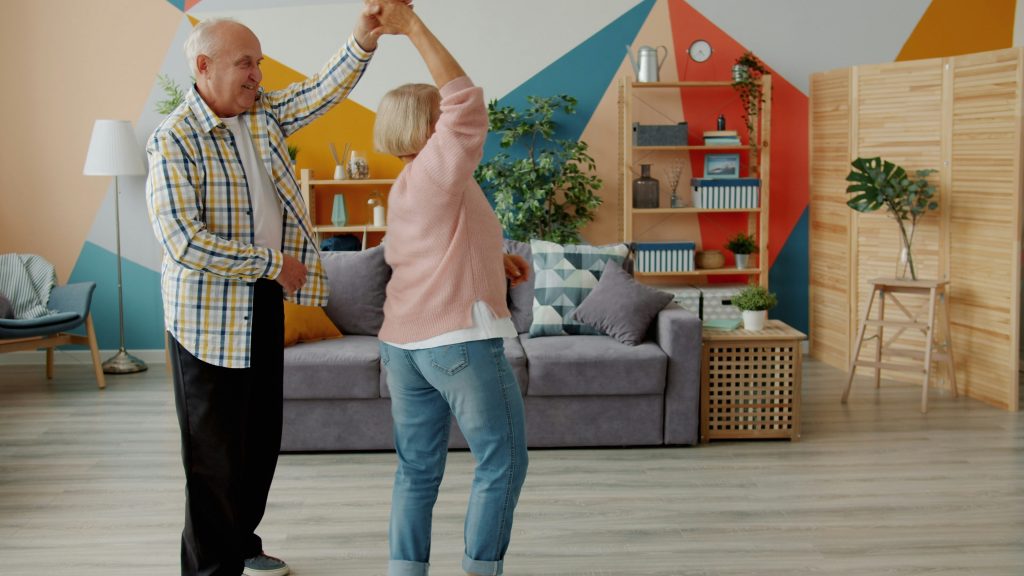
Dance classes designed for seniors combine music with structured movement. You can easily find options that offer choreographed routines that get your heart rate up in a social setting.
How to do it:
- Find a class at a community center, senior center, or gym.
- Follow the instructor’s lead and modify movements as needed.
- Focus on having fun rather than perfect technique.
- Take breaks whenever you need to catch your breath.
Best for: Group activity, community or gym setting, standing option.
Tip: Wear comfortable shoes that allow you to pivot and move easily.
Step-Ups
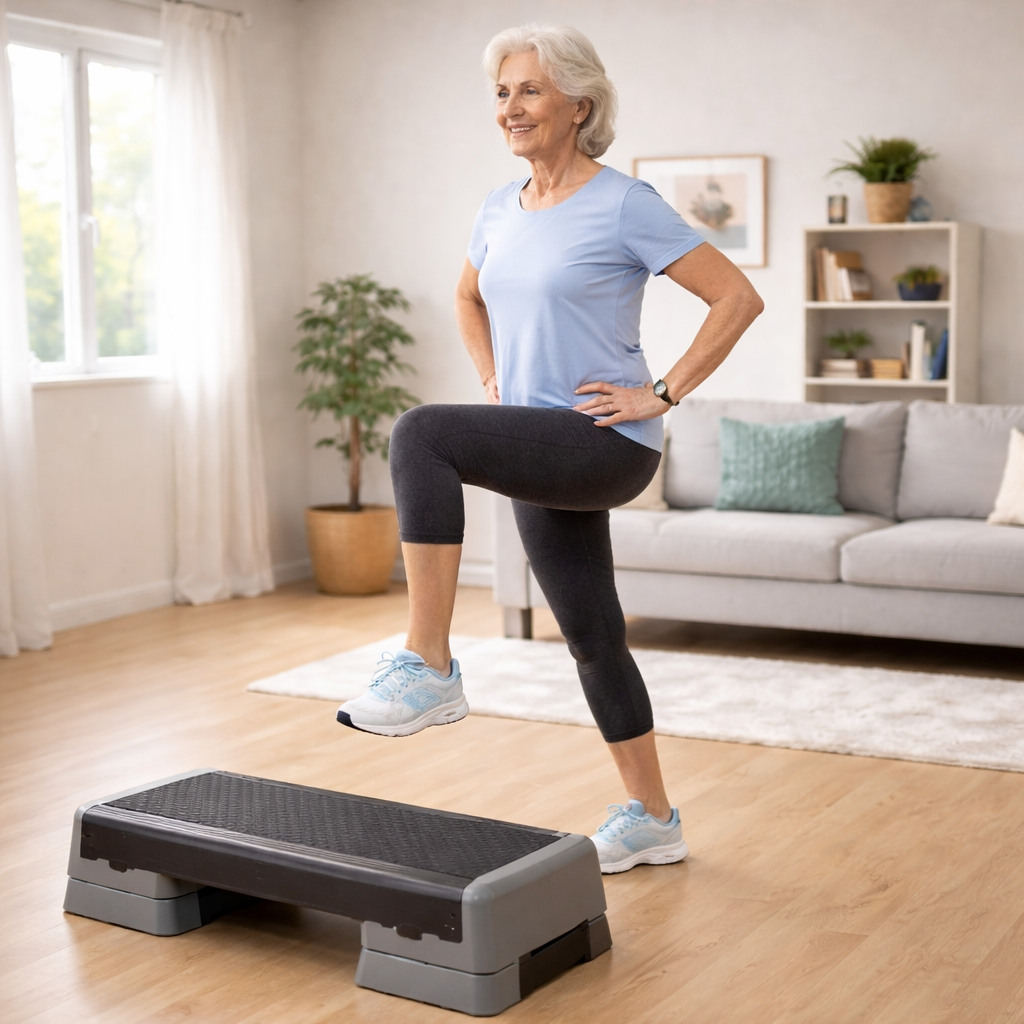
Step-ups provide cardio benefits while strengthening your legs and improving balance. You can use a low sturdy platform, a bottom stair, or a step aerobics platform.
How to do it:
- Stand facing a low step or platform (four to six inches high to start).
- Place your right foot fully on the step, keeping your weight in your heel.
- Push through your right foot to lift your body up, bringing your left foot to meet it on the step.
- Step back down with your right foot first, then your left, returning to the starting position.
- Repeat for 30 seconds to one minute, then switch to the lead with your left foot.
Best for: Home use, solo activity, requires a low stable platform.
Tip: Use a handrail or place the step near a wall for extra stability if balance is a concern.
How to Keep Cardio Interesting
Doing the same cardio exercise every day can make it feel like a chore. Your body adapts to repetitive movement, which can lead to plateaus in your progress.
Tips to maintain interest:
- Rotate between two or three different activities each week to keep sessions feeling fresh.
- Change your walking route, workout time, or playlist to prevent your brain from going on autopilot.
- Set small goals like walking an extra block or completing one more lap than last week.
- Accept that motivation fluctuates—having multiple activity options helps on days when one type doesn’t appeal to you.
Getting Started Safely
Starting a new cardio routine takes patience. Your body needs time to adapt to increased activity, especially if you’ve been less active recently.
Tips for a safe start:
- Begin with short sessions of 5–10 minutes, then gradually add a minute or two each week as it feels easier.
- Listen to your body. Some muscle tiredness is normal, but sharp pain or unusual discomfort means you should stop and rest.
- Warm up with a few minutes of gentle movement before you start, and cool down by slowing down gradually at the end.
- Focus on consistency over intensity.
- Check with your doctor if something doesn’t feel right or if you experience unusual discomfort during exercise.
Conclusion
Sign up for the Indoor Walking for Weight Loss class to access guided cardio routines you can do at home with no equipment. It’s designed specifically for seniors.
Finding the right type of cardio for seniors comes down to choosing activities that fit your current abilities and preferences. The best exercise is the one you’ll actually do consistently. Start with what feels manageable, listen to your body, and build gradually. Whether you walk, swim, dance, or cycle, regular movement supports your heart health and helps you maintain the stamina you need for daily life.