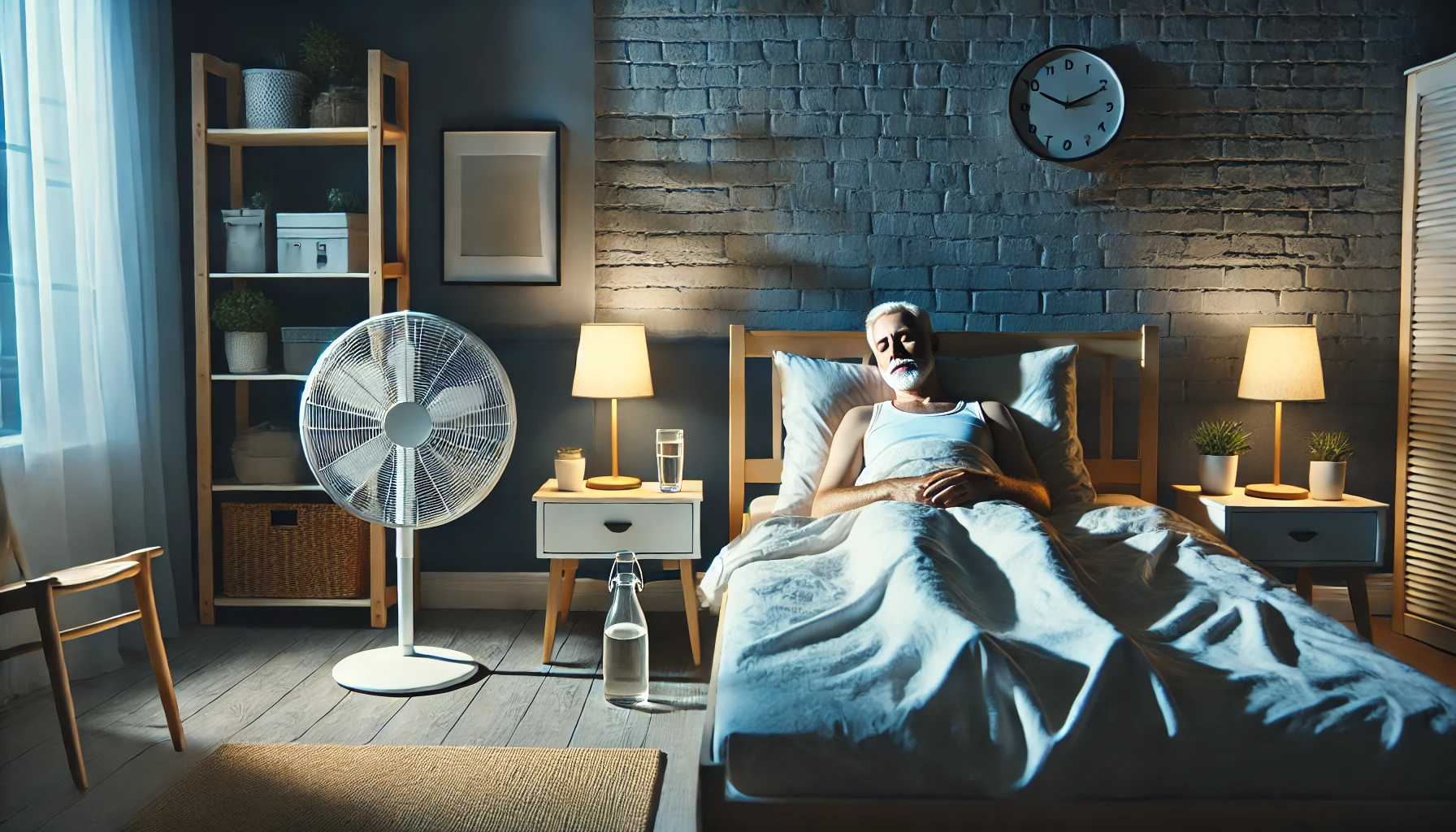
5 Cooling Tips For Seniors At Night To Sleep Better
Let’s be honest: sleeping cool at night shouldn’t feel like an impossible science experiment. But somehow, it’s become just that—one minute you’re freezing, the next you’re sweating like you just ran a marathon (and you’re nowhere near the track). It’s not your fault—your body’s cooling system just isn’t what it used to be, but that doesn’t mean you’re stuck tossing and turning forever. That’s where these cooling tips for seniors at night come in. They’re simple, doable fixes designed to help you finally get comfortable, so you can wake up feeling refreshed—like you actually slept, not survived.
Why Seniors Struggle with Body Temperature Regulation
Aging brings several changes that affect how well the body regulates heat. Understanding these changes can make it easier to apply effective cooling strategies.
1. Decreased Sweating
As we age, our sweat glands become less active, which means the body can’t cool itself down as effectively.
2. Reduced Blood Circulation
Blood vessels also become less responsive, making it harder for heat to escape through the skin.
3. Chronic Conditions & Medications
Many seniors take medications or have conditions (like diabetes or hypertension) that interfere with thermoregulation, leading to night sweats and discomfort.
4. Environmental Sensitivity
Seniors are more vulnerable to heat because their bodies take longer to adjust to temperature changes. This makes it especially important to create a cool and stable sleep environment.
Cooling Tips For Seniors At Night To Improve Sleep
These five practical tips will help you sleep comfortably and wake up refreshed, ready to take on the day.
1. Choose Breathable Bedding & Comfortable Clothing
The fabrics you choose for your bedding and pajamas can greatly impact how comfortable you feel at night.
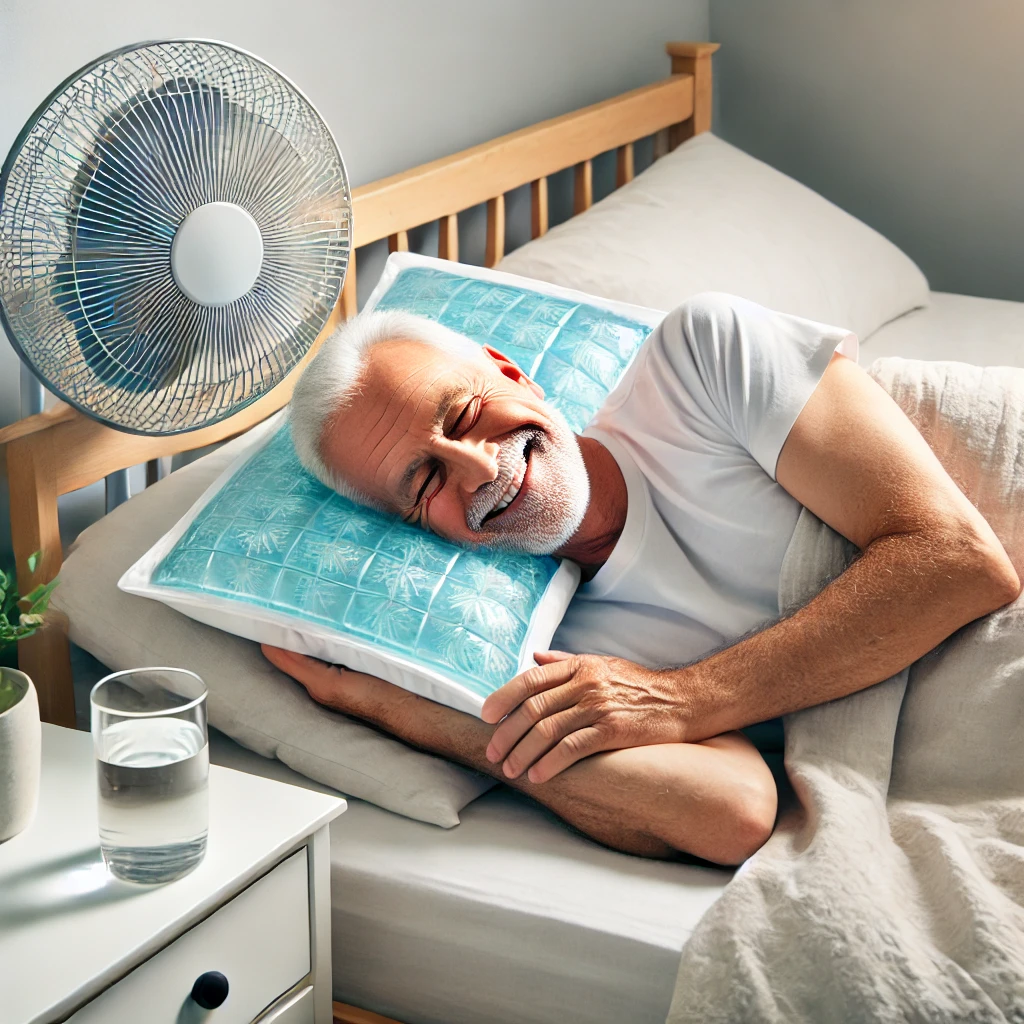
Use Cotton or Bamboo Fabrics
Opt for breathable materials like cotton or bamboo for sheets, pillowcases, and pajamas. These fabrics allow air to circulate and wick moisture away from the skin, keeping you cool throughout the night.
Avoid Synthetic Materials
Materials like polyester trap heat, making it harder to stay comfortable.
Light, Loose-Fitting Pajamas
Wear light-colored and loose-fitting pajamas to promote airflow and prevent overheating. Wash your sheets and pajamas frequently to maintain freshness and prevent sweat buildup.
2. Keep Your Bedroom Temperature Comfortable
The temperature of your sleep environment plays a crucial role in how well you sleep.
Use a Fan or Air Conditioner
Keep the fan running throughout the night, or set it on a timer if you prefer. Air circulation prevents heat from building up around your body.
Block Heat with Curtains or Blinds
Close the blinds during the day to keep the room cool. Blackout curtains are especially effective for reducing daytime heat.
Optimal Temperature Range
Aim to keep the bedroom temperature between 65°F and 78°F for the best sleep quality.
If you’re concerned about energy use, try using a small, energy-efficient fan near your bed.
3. Stay Hydrated to Avoid Night Sweats
Dehydration can make night sweats worse, so staying hydrated throughout the day is essential for temperature regulation.
Drink Water throughout the Day
Sip water regularly, especially in the hours leading up to bedtime. Avoid drinking too much right before bed to prevent waking up for bathroom trips.
Limit Alcohol & Caffeine
Both alcohol and caffeine can contribute to dehydration and intensify night sweats. Swap them for water or herbal teas in the evening.
Keep Water Nearby
Place a glass of water on your nightstand for easy access if you wake up overheated during the night.
Adding cucumber or mint to your water can make staying hydrated feel more refreshing!
4. Use Cooling Accessories for Extra Comfort
Sometimes, small accessories can make a big difference in how comfortable you feel at night.
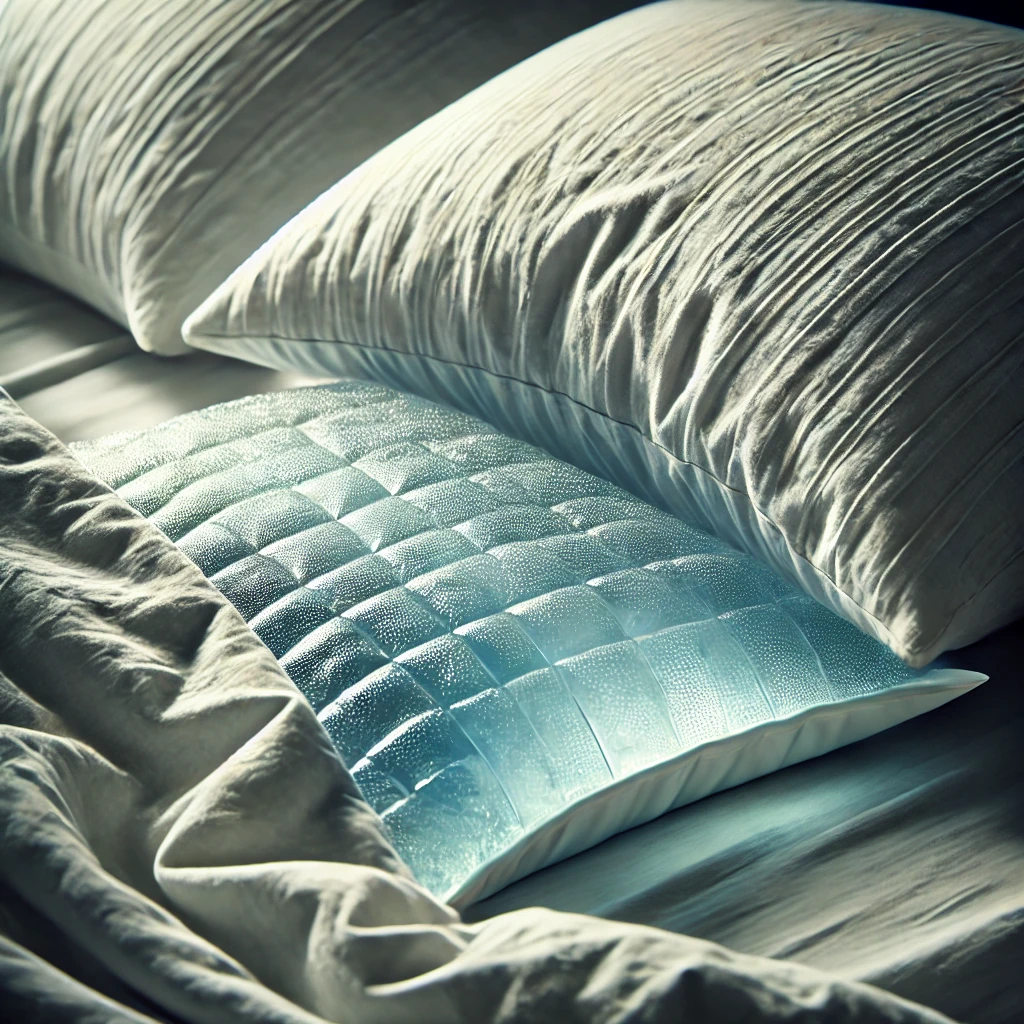
Cooling Gel Pads or Pillows
Place a cooling gel pad under your pillow or use a specially designed cooling pillow to stay cool while you sleep. These accessories help maintain a comfortable surface temperature throughout the night.
Cold Washcloths for Quick Relief
Keep a damp cloth on hand to place on the back of your neck if you wake up feeling too warm.
Mattress Toppers
If your mattress retains heat, consider investing in a cooling mattress topper to regulate your temperature while you sleep.
5. Adjust Your Evening Routine for Better Sleep
Making small adjustments to your evening routine can help lower your body temperature and promote restful sleep.
Take a Lukewarm Shower before Bed
A cool shower helps bring down your core temperature and signals to your body that it’s time to sleep. Avoid extremely cold showers, as they can have the opposite effect by stimulating your body.
Avoid Heavy Meals in the Evening
Eating heavy meals or drinking alcohol late at night can raise your body temperature, making it harder to fall asleep. Opt for light snacks like fruit or yogurt before bed.
Incorporate Gentle Stretching or Yoga

Adding gentle exercises to your evening routine can help relax your body.
Check out our Chair Yoga Routine to wind down before bed.
Sleep Soundly, Wake Refreshed
Creating a cool and comfortable sleep environment is essential for better sleep quality, especially for seniors. By choosing the right fabrics, staying hydrated, and using cooling accessories, you’ll feel more comfortable and avoid waking up from night sweats. Small changes—like taking a cool shower before bed—can make a big difference in your sleep experience.
Try one or two of these tips tonight and see how they improve your comfort and sleep quality!That’s a wrap on cooling tips for seniors at night. For more advice on staying active and healthy, explore our Morning Stretch Routine.