Ankle Exercises for Seniors: 8 Moves to Improve Balance
The best ankle exercises for seniors are simple, seated or standing moves that strengthen the muscles around the ankle joint, improve balance, and reduce fall risk — all without needing any special equipment. Weak ankles are one of the most overlooked causes of poor balance in adults over 60, but the good news is that targeted ankle exercises can make a noticeable difference in just a few weeks.
Your ankles do a lot of quiet work every day. Every step you take, every time you stand up from a chair, and every time you shift your weight, your ankles are firing to keep you upright. When ankle strength and flexibility decline — which happens gradually with age and reduced activity — your stability suffers, your risk of tripping increases, and your confidence walking on uneven ground drops. The exercises below target exactly that.
Why Ankle Strength Matters More After 60
Falls are the leading cause of injury in older adults, and most falls happen because of a moment of imbalance — a stumble on a curb, a missed step, or a slip on a slick floor. Strong, flexible ankles are your first line of defense. They help you react quickly when the ground shifts unexpectedly.
As we age, the muscles around the ankle (the calf, the tibialis anterior in the shin, and the peroneal muscles on the outside of the ankle) tend to weaken. Ligaments can stiffen. Nerve signals from the ankles to the brain slow down slightly, which affects what’s called “proprioception” — your body’s ability to sense where it is in space. Ankle exercises address all of these issues at once.
The good news: research consistently shows that targeted lower leg exercises improve balance and reduce fall risk even in adults over 75. You don’t need to do a lot. Consistency matters far more than intensity.
8 Ankle Exercises for Seniors (No Equipment Needed)
These eight ankle exercises for seniors can be done at home, seated or standing, in about 15 minutes. Start with seated variations if you’re newer to exercise or recovering from an injury. A sturdy chair is all you need for most of these.
1. Seated Ankle Circles
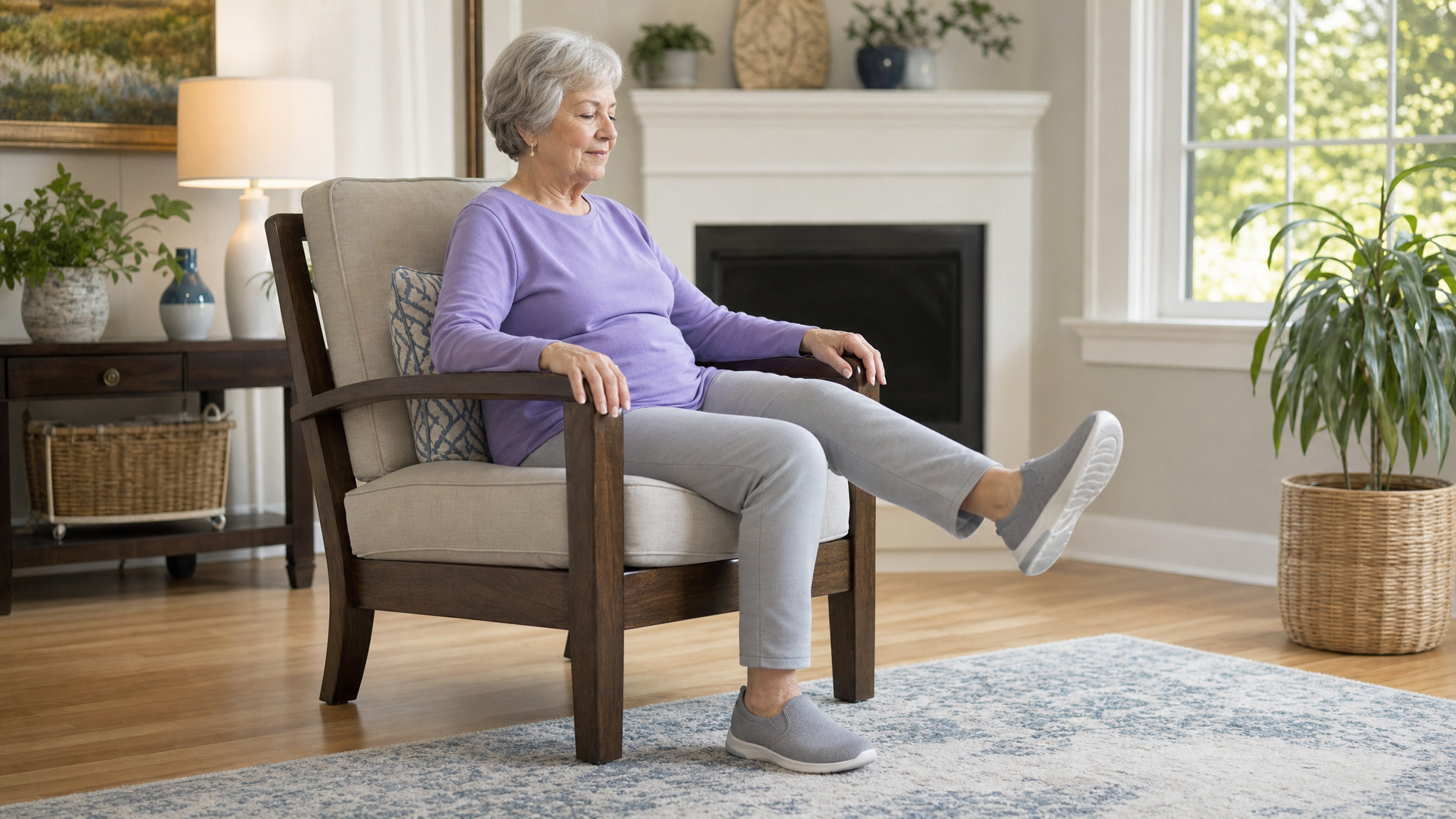
Sit in a chair with your feet flat on the floor. Extend one leg slightly and lift your foot a few inches off the ground. Slowly rotate your ankle in a circle — 10 rotations clockwise, then 10 counterclockwise. Switch feet. This warms up the joint and improves range of motion in all directions.
2. Heel Raises
Stand behind a chair and hold the back lightly for balance. Rise up onto the balls of your feet as high as you comfortably can, then slowly lower back down. Do 10–15 reps. This exercise directly targets your calf muscles, which are the primary ankle stabilizers. Tip: Go slowly on the way down — the lowering phase is where much of the strength benefit happens.
3. Toe Raises
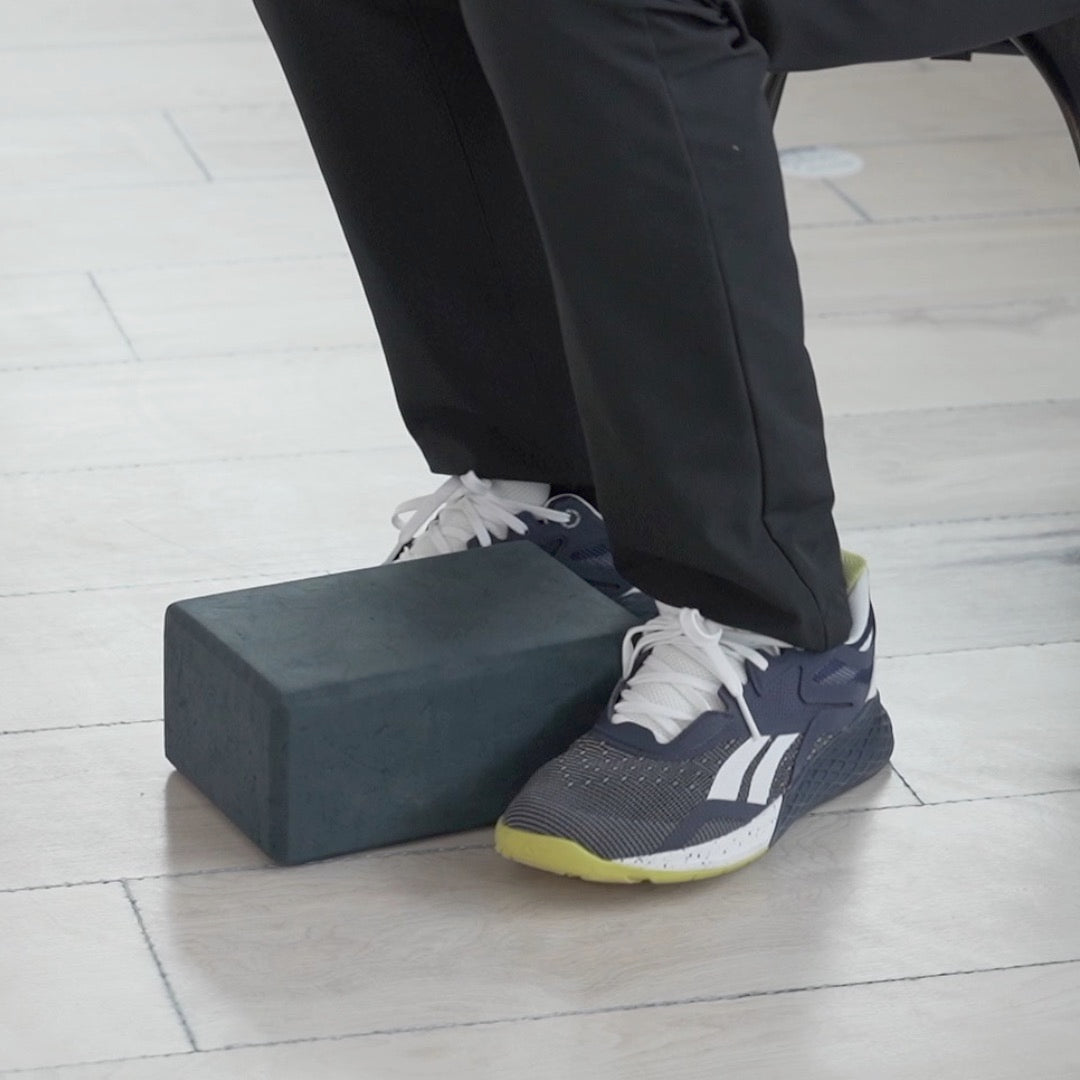
Stand holding the back of a chair. Keep your heels on the floor and lift your toes and the front of your foot upward, then lower slowly. Do 10–15 reps. This strengthens the tibialis anterior (the muscle on your shin), which helps lift your foot during each step and prevents the “foot drop” that can cause tripping.
4. Seated Ankle Pumps
Sit in a chair with both feet flat. Slowly pump one foot up and down, flexing the foot toward your shin then pointing it away from you. Do 15 reps on each foot. This is one of the gentlest ankle exercises you can do and is especially useful if you have ankle swelling or circulation issues.

5. Alphabet Ankles
Sit in a chair, extend one leg, and use your big toe to trace the letters of the alphabet in the air. Switch feet. This might look simple, but it works your ankle through a huge range of motion — far more varied than any single exercise. It’s great for improving proprioception and is a favorite in physical therapy settings.
6. Single-Leg Standing Balance
Stand next to a wall or behind a chair. Shift your weight onto one foot and slowly lift the other foot a few inches off the floor. Hold for 10–30 seconds, working up over time. Switch sides. This activates all the small stabilizing muscles in your ankle and is one of the most effective exercises for reducing fall risk. Pair this with the balance exercises routine in Better5’s no-floorwork guide for faster progress.
7. Resistance Band Ankle Eversion
Sit in a chair, loop a light resistance band around your foot, and anchor the other end to a table leg or door. Slowly push your foot outward against the band’s resistance, then return to the starting position. Do 10–12 reps per foot. This targets the peroneal muscles on the outside of the ankle — the ones most responsible for preventing ankle rolls and sprains.
8. Heel-to-Toe Walking
Walk in a straight line placing your heel directly in front of your toes with each step — like walking a tightrope. Go slowly for 10–20 steps, then turn and return. This challenges your ankle stability dynamically, which is exactly how you use it in real life. Keep a wall nearby for the first few sessions.
How Often Should Seniors Do Ankle Exercises?
Most physical therapists recommend doing ankle exercises 3–5 times per week for the best results. Because these exercises are gentle and low-impact, you can do them daily if you feel good — the key is consistency. A 10–15 minute session at any time of day will do the job.
If you have existing ankle issues — including arthritis, previous sprains, or peripheral neuropathy — start with seated exercises only and check with your doctor or physiotherapist before progressing to standing or resistance band work.
Combining Ankle Work With Full Balance Training
Ankle strength is one piece of the balance puzzle. Hip strength, core stability, and overall leg strength all contribute to how steady you feel on your feet. If you want a more complete approach, try pairing this ankle routine with the Fall Prevention Exercises class at Better5, which combines lower body strength, balance work, and coordination drills in one follow-along program.
You can also build on these ankle exercises by adding the foot strengthening exercises from this Better5 guide, which specifically target the small muscles in the sole of your foot that work alongside your ankles. The two routines complement each other well.
For those looking to improve overall mobility and not just the ankles, the 7 Days of Chair Pilates for Mobility class is a great companion — it works your hips, knees, and ankles together in a way that builds functional stability for everyday life.
Safety Tips Before You Start
Before jumping into ankle exercises, keep these points in mind:
- Always warm up first. Spend 2–3 minutes walking in place or doing gentle ankle pumps before more demanding exercises.
- Pain is a stop sign. Mild muscle fatigue is normal; sharp pain in the joint is not. Stop and rest if you feel anything sharp.
- Use a sturdy surface for standing exercises. A solid chair back, kitchen counter, or wall work well — nothing with wheels or that can tip.
- Progress slowly. If you haven’t exercised in a while, start with just 2–3 exercises and build from there over a couple of weeks.
Frequently Asked Questions
Can ankle exercises really reduce fall risk?
Yes. Multiple studies, including a landmark meta-analysis published in the British Medical Journal, have shown that balance and lower limb strengthening exercises — including ankle-specific work — reduce fall rates in older adults by 21–34%. The key is doing them consistently. Pair this with the Fall Prevention Exercises Volume 2 class for a complete program.
What if I have arthritis in my ankles?
Gentle movement is almost always recommended for arthritic joints — staying still typically makes things worse. Start with seated ankle circles and ankle pumps, which are very low load. Avoid resistance band exercises until you’ve confirmed with your doctor that your joint can handle it.
How long until I see results?
Most people notice improved ankle flexibility and balance within 3–4 weeks of consistent practice. Strength improvements typically show up around 6–8 weeks. The improvements in confidence and stability often come before the measurable strength gains — which is one of the best reasons to start today.
Ankle exercises for seniors don’t need to be complicated to work. The eight moves above — done regularly, with good form — will strengthen the muscles and improve the balance reactions your ankles provide with every step. Start with what feels manageable, build from there, and you’ll notice the difference in your day-to-day movement within a few weeks.
Ready to move better and feel steadier? Explore Better5 classes built for seniors — gentle, effective, and designed for you.