
Best Workout for Women Over 40: 9 Strength Moves
The best workout for women over 40 is one that builds muscle, protects your bones, and fits into a real life. It is not about punishing hour-long sessions. It is about consistent, smart movement that trains strength, balance, and heart health together. This routine gives you nine moves you can do at home, in about 25 minutes, two or three times a week.
Here is the short answer: the best workout for women over 40 combines resistance training for muscle and bone, a little cardio for your heart, and balance work to keep you steady as you age. Do the nine moves below in order, rest as needed, and you have covered all three in one session.
Why strength matters most after 40
Starting around age 40, women naturally lose muscle each year if they do nothing to stop it. That loss speeds up through menopause, when shifting hormones also thin the bones. Muscle is what keeps your metabolism humming, your joints supported, and your posture upright. When you train it, you slow that decline and often reverse part of it.
Strength work does more than build muscle. It loads your bones, which signals them to stay dense and strong. It sharpens the balance and coordination that protect you from falls later. And it steadies your mood and energy on the days life feels heavy. That is why every workout on this list leans on resistance first, with cardio and balance woven around it. For a deeper look at loading heavier over time, our weight training guide for women over 50 walks through safe progression you can start using in your 40s.
Before you start
You need very little: a sturdy chair, a set of light dumbbells (2 to 8 lb to begin), and a clear patch of floor. Wear supportive shoes. Warm up with two minutes of marching in place and gentle arm circles. Breathe out on the effort, in on the release. If a move hurts a joint, stop and scale it back. Good form beats heavy weight every time.
The 9 moves
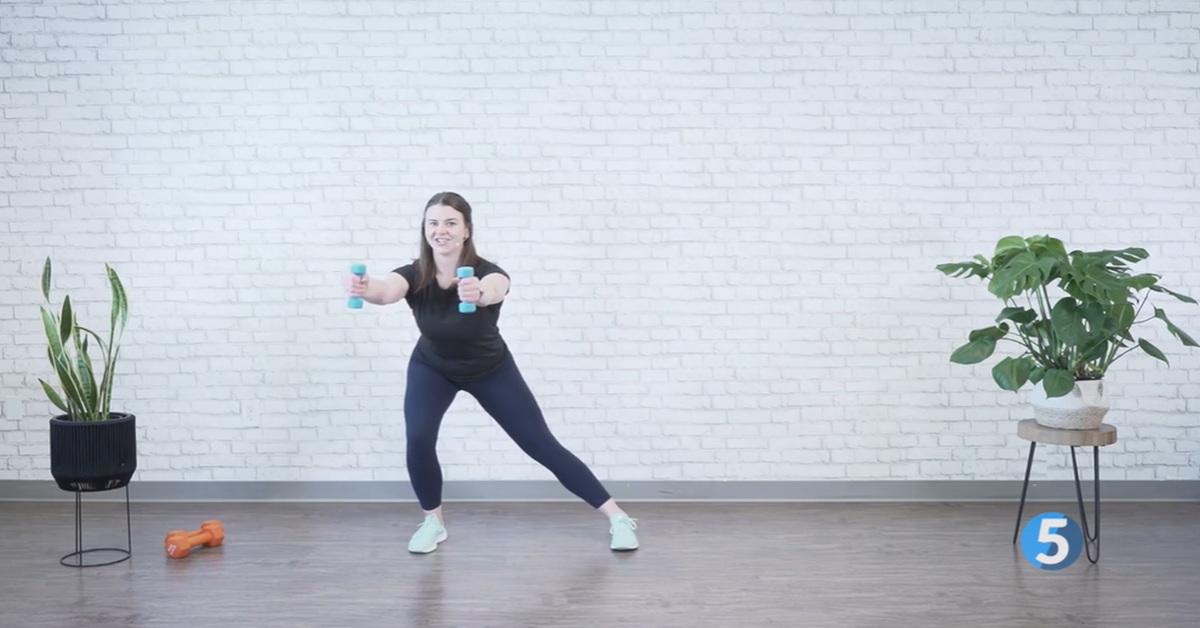
Move through these in order. Aim for 8 to 12 repetitions of each, or hold for the listed time. Rest 30 to 60 seconds between moves. Complete one full round to start, and build to two rounds as you get stronger. A structured plan like our Full Body Fitness and Strength class can guide the pacing if you want a coach walking you through it.
1. Chair squats
Stand in front of a chair, feet hip-width apart. Push your hips back and lower until you lightly touch the seat, then drive through your heels to stand. Keep your chest tall and knees tracking over your toes. This is the single most important move for lower-body strength and independence. Targets: glutes, quads, and the sit-to-stand strength you use all day.
2. Dumbbell chest press
Lie on the floor or a bench with a dumbbell in each hand at chest level, elbows bent. Press the weights up until your arms are straight, then lower with control. Targets: chest, shoulders, and triceps for pushing strength.
3. Bent-over row
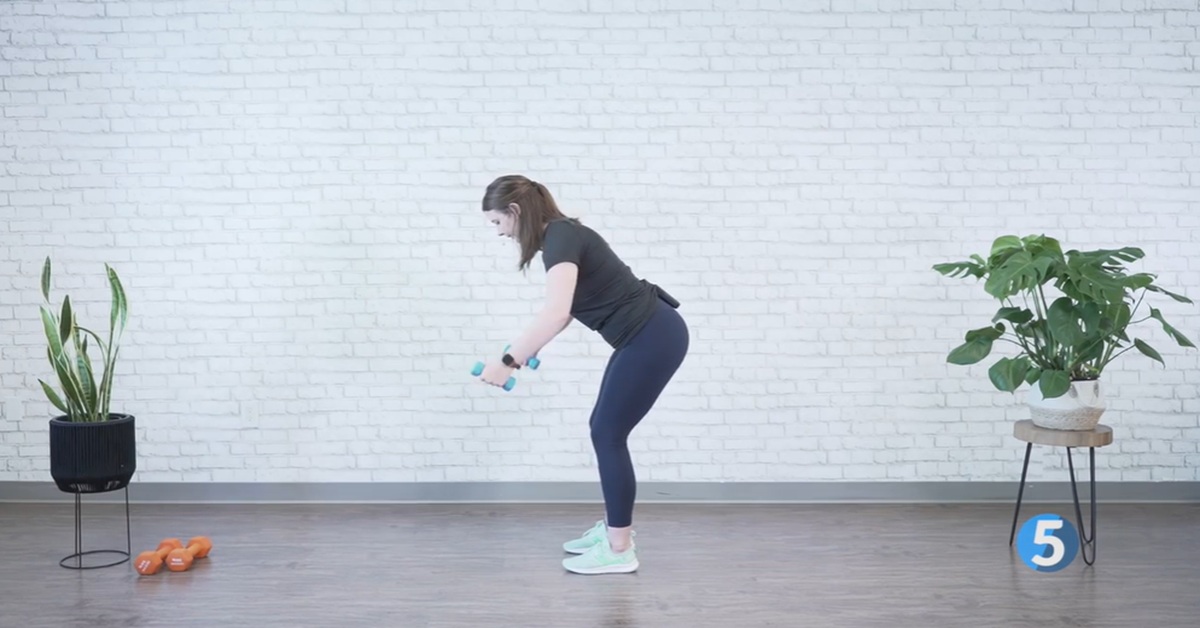
Hold a dumbbell in each hand, hinge forward from the hips with a flat back, and let the weights hang. Pull them toward your ribs, squeezing your shoulder blades together, then lower slowly. Targets: upper back and biceps, the muscles that keep your posture upright.
4. Glute bridge
Lie on your back, knees bent, feet flat. Press through your heels and lift your hips until your body forms a straight line from knees to shoulders. Squeeze your glutes at the top, then lower. Targets: glutes, hamstrings, and lower-back support.
5. Standing overhead press
Stand tall with a dumbbell in each hand at shoulder height. Press the weights straight overhead without arching your back, then lower. Targets: shoulders and core stability for reaching and lifting.
6. Reverse lunge
Hold the chair for balance if needed. Step one foot back and lower into a lunge until both knees bend about 90 degrees, then push back to standing. Alternate legs. Targets: legs, balance, and single-leg control that carries over to stairs. If lunges feel shaky, our Improve Your Functional Strength class breaks down the everyday patterns first.
7. Bird dog
On hands and knees, extend your right arm forward and left leg back at the same time. Hold for two seconds, keeping your hips level, then switch sides. Targets: deep core and spine stability, the foundation of a pain-free back.
8. Calf raises
Stand tall, hold the chair for light support, and rise onto the balls of your feet. Pause at the top, then lower slowly. Targets: calves and ankle strength, which quietly protect your balance.
9. Marching hold
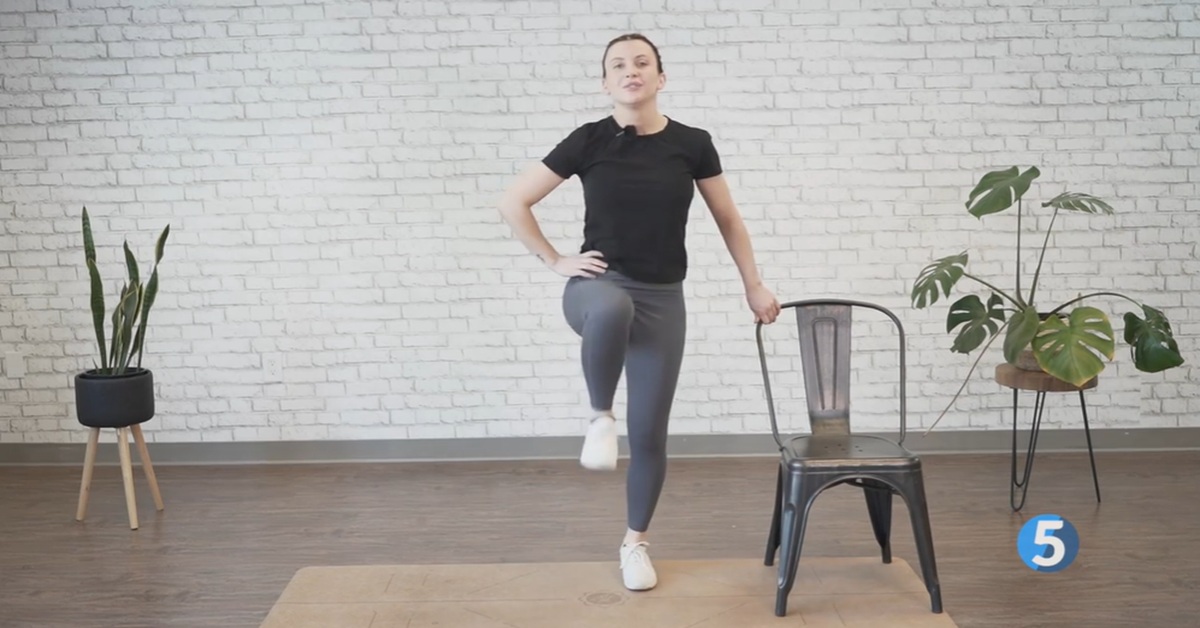
Stand tall and lift one knee to hip height. Hold for three seconds, keeping your standing leg strong and your core braced, then switch. This closes the session with balance under a little fatigue, exactly when you need it most. Targets: hip flexors, core, and single-leg balance.
How to build the week
Two to three strength sessions a week is the sweet spot. On the days in between, add movement you enjoy: a brisk walk, a bike ride, or a low-impact cardio session to keep your heart strong. A quick round like our Cardio and Strength Booster class is an easy way to fill a non-lifting day without pounding your joints. Aim for at least one flexibility or mobility session too. Gentle Beginners Mat Pilates pairs beautifully with strength work, loosening tight hips and firing up the core between heavier days.
Progress by adding a little at a time. When 12 repetitions feel easy, add a second round, then a slightly heavier weight. Small, steady jumps beat big leaps that leave you sore for a week. Track your workouts so you can see yourself getting stronger, because you will.
Common questions
Will lifting weights make me bulky? No. Women over 40 do not have the hormone levels to build large muscles by accident. What you gain is tone, strength, and a firmer shape, along with stronger bones underneath.
Is it too late to start at 45, 50, or beyond? It is never too late. Studies of adults well into their later years show real strength gains within weeks of starting. Your body responds to training at every age.
How sore should I be? A little muscle soreness for a day or two is normal, especially early on. Sharp joint pain is not. Scale back, check your form, and build gradually.
How long until I see results? Most women feel stronger and more energetic within two to three weeks. Visible changes in tone and posture tend to show up around the six to eight week mark, as long as you stay consistent. The scale is not the best measure here, because muscle is denser than fat. Notice how your clothes fit, how easily you climb stairs, and how steady you feel on your feet.
Do I need a gym? Not at all. Everything on this list works at home with a chair and a light set of dumbbells. A home routine removes the biggest excuse, the drive, and makes it far easier to keep the habit going through a busy week.
Your next step
The best workout for women over 40 is the one you will actually keep doing. These nine moves give you a complete, joint-friendly routine that grows with you. If you want expert coaching, follow-along videos, and a full library of classes built for exactly this stage of life, the Better5 All-Access Membership gives you everything in one place, so you can stop guessing and start getting stronger.
Roll out the mat, grab your dumbbells, and give yourself the first session today. Your stronger, steadier self starts with one round.