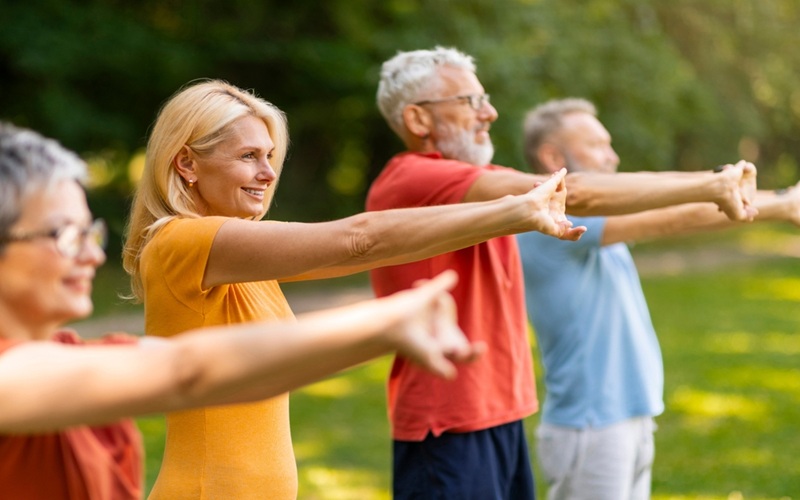
Breathing Exercises for Seniors: 7 Simple Techniques That Work
Breathing exercises for seniors are one of the most effective — and most overlooked — tools for improving health at home. Done regularly, they strengthen your respiratory muscles, lower blood pressure, reduce anxiety, and help you sleep better. And unlike most exercises, you can do them anywhere, anytime, seated in a chair.
In this guide, you'll find seven gentle breathing techniques designed for older adults — no equipment, no floorwork, no experience needed.
Why Breathing Exercises Matter More After 60
As we age, our lung capacity naturally decreases. The muscles that support breathing — the diaphragm and intercostals — weaken over time, just like any other muscle. Studies show that by age 70, lung function can decline by 20–30% compared to younger adulthood.
The good news: like any muscle, your breathing muscles respond to training. Regular practice can meaningfully improve how much air you take in with each breath, reduce shortness of breath during daily activities, and help your nervous system shift out of stress mode faster.
Seniors who practice breathing exercises regularly often report:
Less anxiety and mental stress
Improved sleep quality
Better energy during exercise
Lower resting heart rate
Reduced blood pressure
And because these techniques are done sitting down, they are safe for virtually any fitness level — including those managing arthritis, balance issues, or recovering from illness.
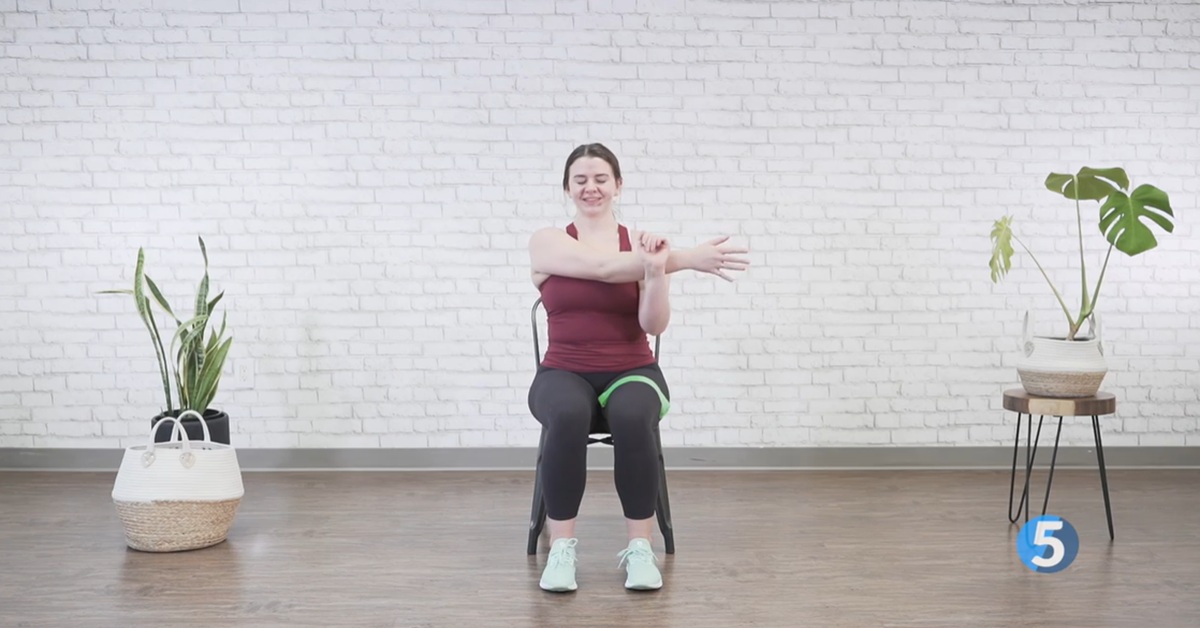
7 Breathing Exercises for Seniors to Try Today
Work through these in order if you are new to breathwork, or mix and match based on what feels right. Aim for 5–10 minutes total.
1. Diaphragmatic (Belly) Breathing
Best for: Building lung capacity, reducing tension
Sit tall in your chair. Place one hand on your chest and one on your belly. Breathe in slowly through your nose — your belly should rise, while your chest stays relatively still. Exhale slowly through your mouth. Repeat for 5–10 breaths.
This is the foundation of all breathwork. Most adults unconsciously breathe high in the chest, which keeps the nervous system on edge. Belly breathing activates the diaphragm and triggers the body's relaxation response.
2. Pursed-Lip Breathing
Best for: Shortness of breath, COPD, post-exertion recovery
Inhale slowly through your nose for 2 counts. Then purse your lips like you are about to whistle, and exhale slowly for 4 counts. The extended exhale slows your breathing rate and helps release trapped air from the lungs.
This technique is particularly useful if you feel winded after climbing stairs or walking briskly. Practice it in a calm moment so it is easy to access when you need it.
3. Box Breathing (4-4-4-4)
Best for: Stress relief, focus, before sleep
Box breathing is used by athletes and wellness practitioners to stay calm under pressure — and it works beautifully for seniors managing daily stress.
Inhale for 4 counts
Hold for 4 counts
Exhale for 4 counts
Hold for 4 counts
That is one box. Do 4–6 rounds. If 4 counts feels like too much at first, start with 3 counts per side and build up gradually.
4. 4-7-8 Breathing
Best for: Sleep, anxiety, winding down in the evening
Inhale through your nose for 4 counts. Hold your breath for 7 counts. Exhale completely through your mouth for 8 counts. Do 3–4 rounds maximum — this is a powerful technique and can cause lightheadedness if overdone, especially when starting out.
Many seniors find this one their favorite for bedtime. It works by slowing your exhale to well below your inhale rate, which activates the parasympathetic nervous system and helps your body prepare for sleep.
5. Alternate Nostril Breathing
Best for: Mental clarity, balance, reducing brain fog
This technique comes from yoga and is simple once you try it a few times.
Close your right nostril with your right thumb
Inhale slowly through your left nostril
Close your left nostril with your right ring finger, release your thumb
Exhale through your right nostril
Inhale through your right nostril
Switch again — close right, open left — exhale through left
That is one cycle. Do 5–10 cycles. It sounds complicated on paper but becomes natural quickly. Research suggests alternate nostril breathing improves cardiovascular function and reduces stress hormones in older adults.
If you enjoy yoga-style breathing, you might also like the 10 Days of Hatha Yoga class at Better5 — it incorporates mindful breathing throughout every session.
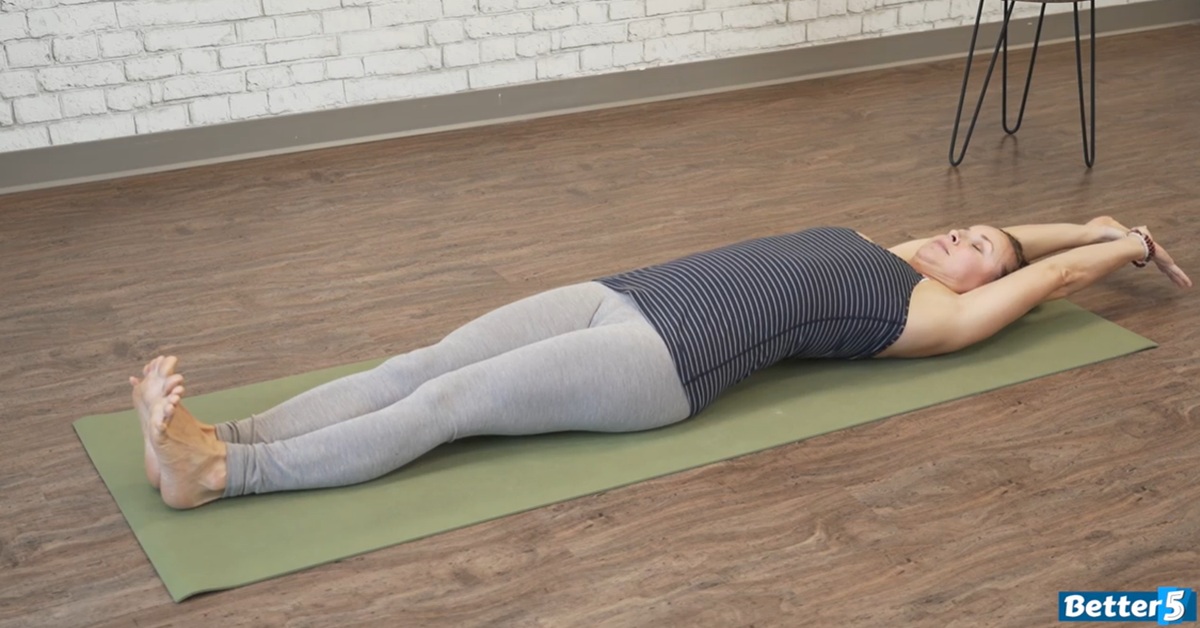
6. Resonance Breathing (5-5 Breathing)
Best for: Heart health, blood pressure, general daily practice
Inhale for exactly 5 seconds. Exhale for exactly 5 seconds. Keep this rhythm going for 10–20 minutes.
At roughly 6 breaths per minute, you hit what researchers call your resonance frequency — the breathing rate that maximizes heart rate variability (HRV), a marker of cardiovascular health and nervous system resilience. This is one of the most well-studied breathing practices for lowering blood pressure.
Use a timer app or simply count in your head. Some people like to close their eyes and listen to quiet music while practicing this one.
7. Humming Bee Breath (Bhramari)
Best for: Calming anxiety quickly, sinus relief, tension headaches
Sit comfortably. Take a deep breath in. As you exhale, make a soft humming sound — like a gentle hum — for the entire length of your exhale. Do 5–10 rounds.
The vibration created by humming stimulates the vagus nerve, which runs from your brain through your chest and abdomen. Vagal stimulation is directly linked to calming the nervous system. Many people feel noticeably relaxed after just 3 rounds.
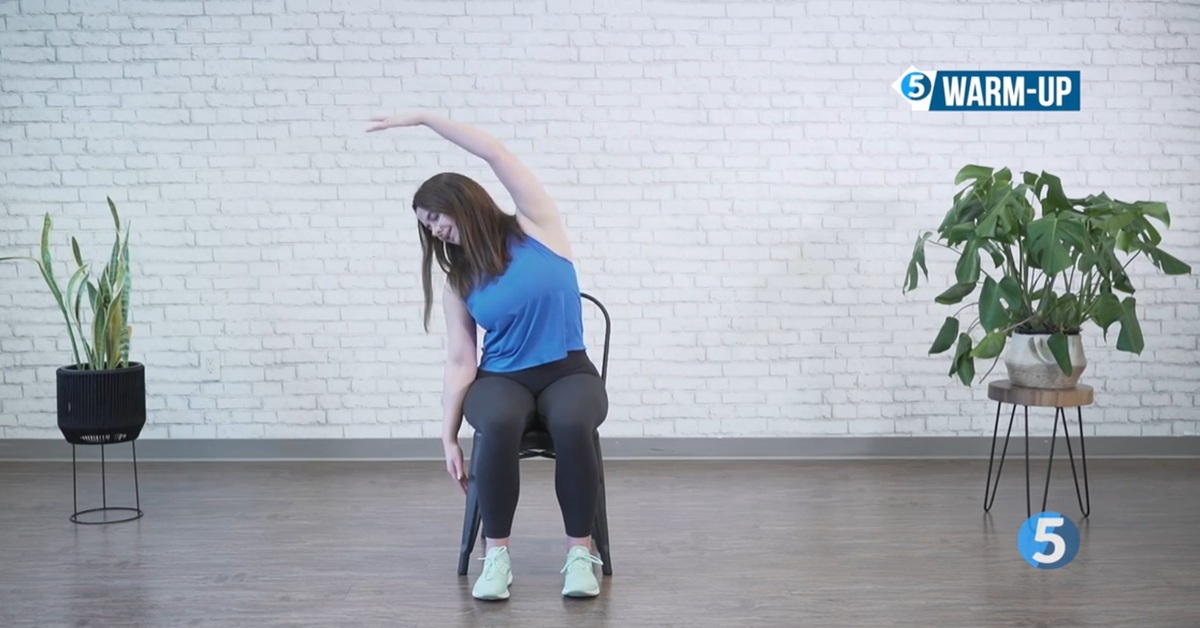
How to Build a Breathing Practice That Sticks
The biggest mistake people make is trying to do too much too soon. Start with just one technique — diaphragmatic breathing is the best starting point — and practice it for 5 minutes every day for a week. Then layer in a second technique.
The best times to practice:
Morning: 5 minutes of belly breathing or box breathing before getting up sets a calm tone for the day
After exercise: pursed-lip breathing helps recovery and slows your heart rate
Before bed: 4-7-8 or resonance breathing signals your body it is time to sleep
During stress: box breathing or humming bee breath for fast relief
Consistency matters more than duration. Five minutes every day beats 30 minutes once a week.
Pairing Breathing With Movement
Breathing and movement are deeply connected. When you exercise, controlled breathing helps you stay relaxed, maintain proper form, and recover faster. B5 classes are designed with this in mind — instructors cue breathing throughout, so you never have to think about it.
If you are looking to pair breathwork with gentle exercise, the Fall Prevention Exercises class at Better5 is a great starting point — it focuses on stability and controlled movement that naturally encourages better breathing. The 7 Days of Chair Pilates class also integrates breath-led movement throughout, making it ideal for those new to mindful exercise. And if balance is a concern, our free gentle balance exercises guide pairs naturally with the breathing techniques here.
You do not need to be fit to start. Breathing exercises meet you exactly where you are.
Safety Notes for Seniors
If you feel dizzy, lightheaded, or short of breath: stop immediately and return to normal breathing. This is common when starting out and usually means you are breathing too deeply or too fast.
If you have COPD, asthma, or a respiratory condition: check with your doctor before starting a new breathwork practice. Pursed-lip breathing is generally recommended, but your provider may have specific guidance.
Do not hold your breath if you have high blood pressure until you have checked with your doctor. Breath holds briefly raise blood pressure — the extended exhale techniques are safer alternatives.
For most healthy older adults, all seven techniques above are safe when done gently and without strain. The goal is always ease, not force.
Start Small, Stay Consistent
Breathing exercises for seniors work — but only if you practice them. Pick one technique from this list, set a 5-minute timer, and do it today. That is all it takes to start.
Once breathing feels like a natural part of your day, weaving in a dedicated relaxation practice makes that calm even easier to reach. If winding down and easing mental tension are your next goal, our Mindful Meditations class at Better5 is a gentle next step — guided breathwork and relaxation in bite-sized sessions that build on everything you gain from techniques like 4-7-8 breathing.
Ready to move and breathe better every day? Explore Better5 classes built for seniors like you — gentle, expert-led, and designed to fit your life.