Core Exercises for Seniors: 8 Moves to Build Stability
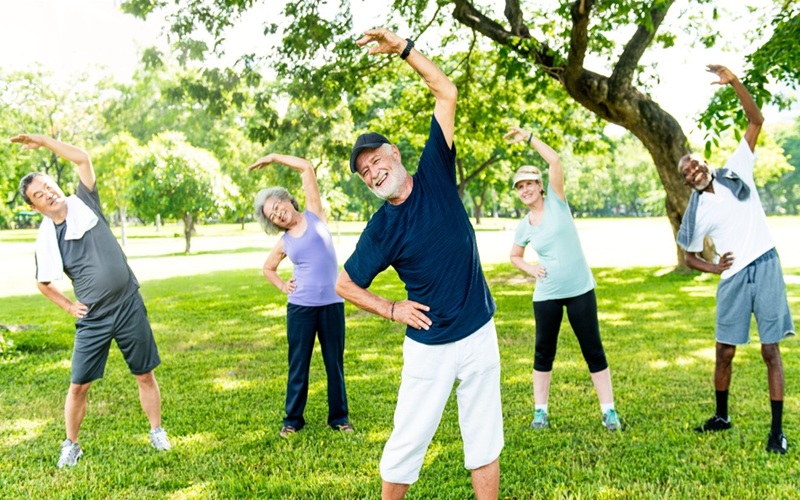
Core exercises for seniors are one of the most effective ways to improve balance, reduce fall risk, and relieve lower back pain — and you can do most of them seated in a chair. Your core isn't just your abs; it includes the muscles of your back, hips, and pelvis that work together to keep you upright and stable every single day.
In this guide, you'll find eight safe, beginner-friendly core moves designed specifically for older adults. No floor work required for most of them — just a sturdy chair and a few minutes a day.
Why Core Strength Matters After 60
After age 60, core strength tends to decline faster than other muscle groups — and that has real consequences. Weak core muscles are directly linked to increased fall risk, poor posture, and chronic lower back pain. Strengthening your core helps your body stay upright, recover quickly when you lose balance, and move with confidence.
Research consistently shows that targeted core training improves functional movement in older adults — meaning it makes everyday tasks like getting up from a chair, carrying groceries, and climbing stairs easier and safer.
8 Safe Core Exercises for Seniors
1. Seated Abdominal Bracing
Sit upright in a sturdy chair with your feet flat on the floor. Take a slow breath in, then as you exhale, gently pull your belly button toward your spine. Hold for 5–10 seconds without holding your breath. Relax and repeat 10 times.
Why it works: This activates your deep stabilizing muscles — the ones that support your spine — without putting any strain on your joints.
2. Seated Marching
Sit tall in a chair with your hands resting on your thighs. Slowly lift your right knee up toward your chest, lower it, then lift your left knee. Alternate for 10–12 reps per side.
Why it works: Marching engages your hip flexors, lower abs, and stabilizing muscles simultaneously. It's a great warm-up movement for any seated core routine.
3. Seated Torso Twist
Sit tall and cross your arms over your chest. Slowly rotate your upper body to the right as far as comfortable, hold 2 seconds, then rotate left. Do 10 reps per side.
Why it works: Rotation works your obliques — the side core muscles that help you reach, twist, and recover from a stumble. Many seniors skip this movement and lose rotational stability over time.
If you enjoy seated core work like this, the 7 Days of Chair Pilates for Mobility class at Better5 covers this type of movement in depth across a structured 7-day program.
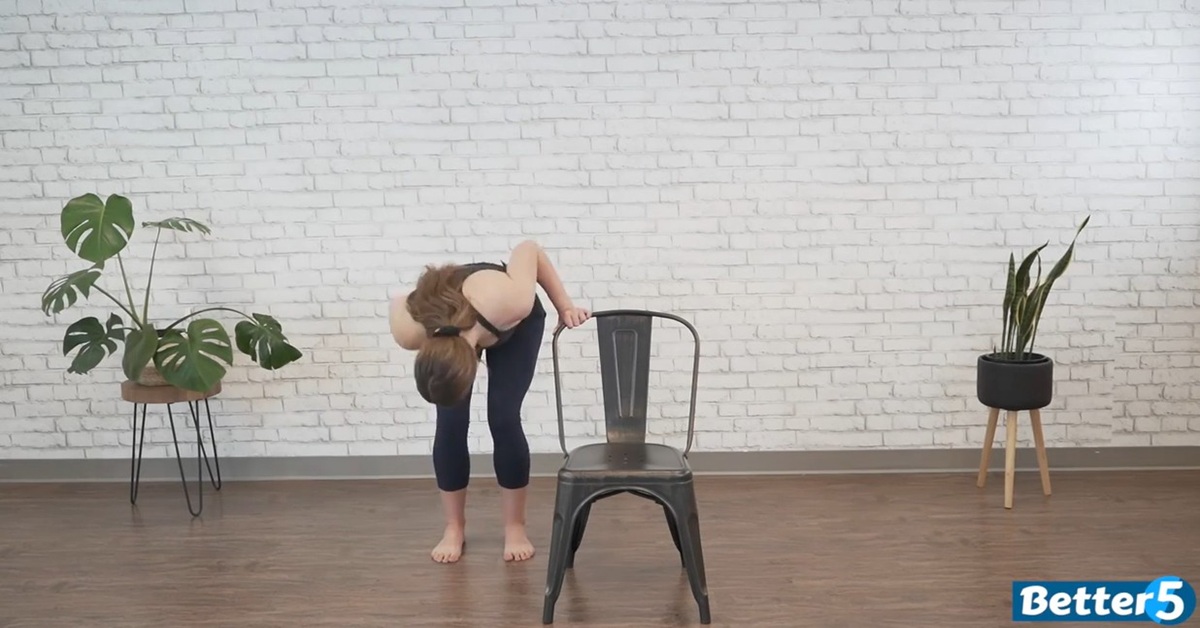
4. Standing Core Bracing with Chair Support
Stand behind a sturdy chair, holding the backrest lightly for balance. Stand tall, feet hip-width apart. Exhale and brace your core (same as exercise 1). While braced, slowly lift one heel off the ground, hold 3–5 seconds, lower it, then switch. Do 8 reps per side.
Why it works: Adding a balance challenge to the brace recruits more of your stabilizing muscles and directly mimics what your core does when you walk or stand on uneven ground.
5. Seated Leg Extensions
Sit near the front edge of a chair, hands on the armrests or sides of the seat. Brace your core, then slowly extend your right leg out straight, hold for 3 seconds, lower it, and switch sides. Do 10 reps per leg.
Why it works: Extending your leg out requires your core to stabilize your spine and pelvis — this is a compound movement that builds both leg and core strength at once.
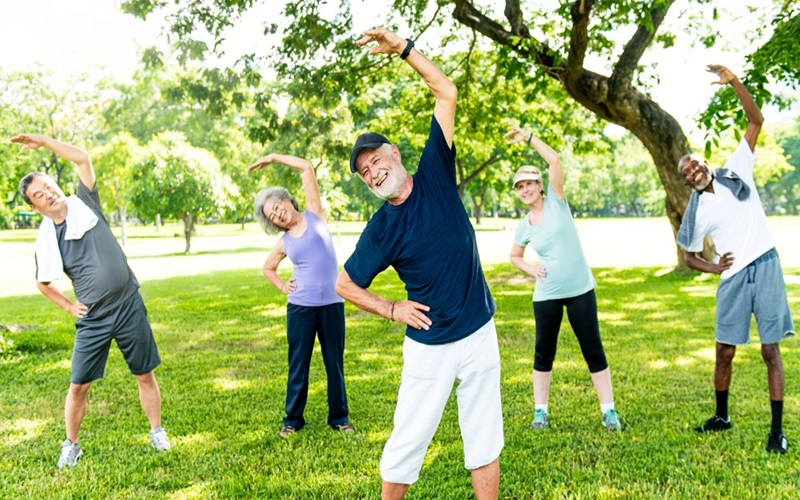
6. Standing Side Bend Stretch
Stand tall (or sit upright) with feet shoulder-width apart. Raise your right arm overhead and slowly bend your torso to the left, feeling a stretch along your right side. Hold 3–5 seconds, return to center, and repeat on the other side. Do 8 reps per side.
Why it works: This stretches and strengthens the lateral core muscles, improves side-to-side stability, and reduces stiffness that builds up from sitting for long periods.
7. Seated Dead Bug (Modified)
Sit tall in a chair. Lift both arms straight in front of you at shoulder height. Brace your core, then slowly lower your right arm down to your side as you simultaneously lift your left knee. Return to start and alternate. Do 8–10 reps per side.
Why it works: The dead bug pattern trains your core to stabilize while opposing limbs move — exactly the coordination pattern your body uses when walking. It's one of the most functional core exercises you can do.
This kind of coordinated movement is central to fall prevention — pairing it with a dedicated program like the Fall Prevention Exercises class at Better5 gives you a complete approach to reducing fall risk at home.
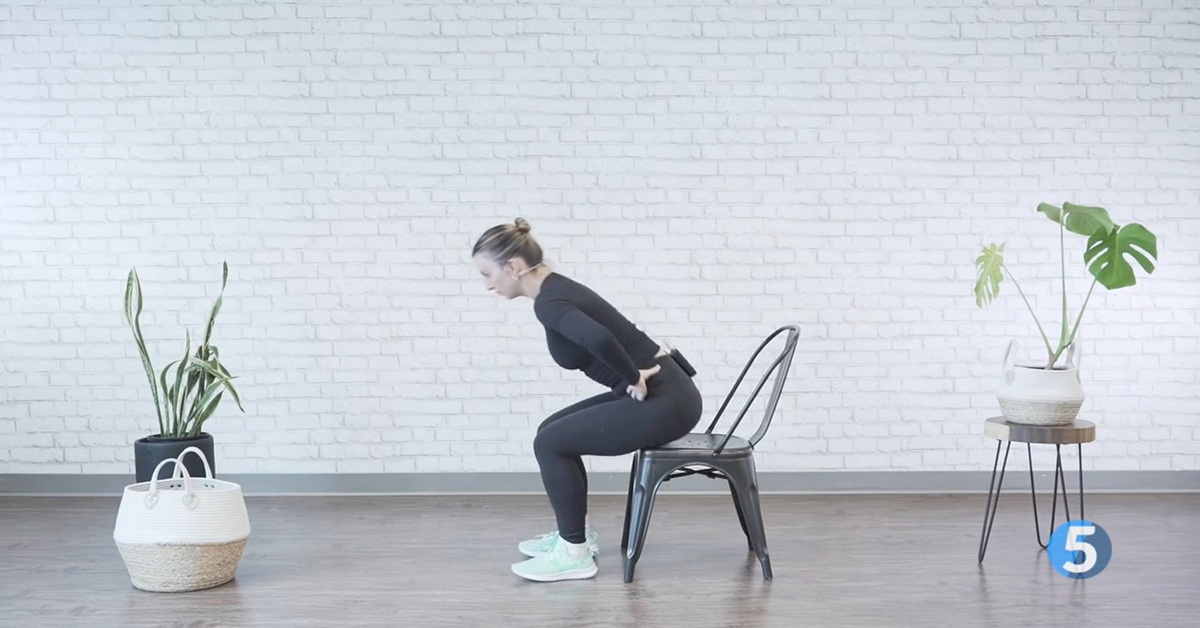
8. Seated Back Extension Squeeze
Sit near the front of your chair, hands on your hips. Sit up as tall as possible, then gently squeeze your shoulder blades together and arch your lower back slightly — think of lengthening your spine upward. Hold 3–5 seconds, relax, and repeat 10 times.
Why it works: This targets your erector spinae — the muscles that run along your spine — and directly counteracts the forward slumping posture that often develops with age. Stronger back extensors mean a more upright, stable stance.
How to Build a Core Routine
You don't need to do all 8 moves every day. A good starting point is 3–4 of these exercises, 3 times per week. As you build strength and confidence, add more exercises or increase your repetitions.
Here's a simple starter plan:
Monday/Wednesday/Friday: Seated Abdominal Bracing + Seated Marching + Seated Torso Twist + Seated Leg Extensions
Rest or light walking on other days
After 2–3 weeks: add Standing Core Bracing and the Seated Dead Bug
Consistency matters more than intensity. Even 10 minutes of core exercises three times a week creates measurable improvements in balance and stability over 4–6 weeks.
Tips for Doing Core Exercises Safely
Never hold your breath. Exhale on the effort (the hardest part of the movement).
Sit on a firm, stable chair — not a recliner or soft couch cushion.
Start gentle. If you feel pain (not just muscle effort), stop and rest.
Keep your spine neutral — avoid rounding your back aggressively forward.
Stay hydrated — especially if you're doing this after light cardio.
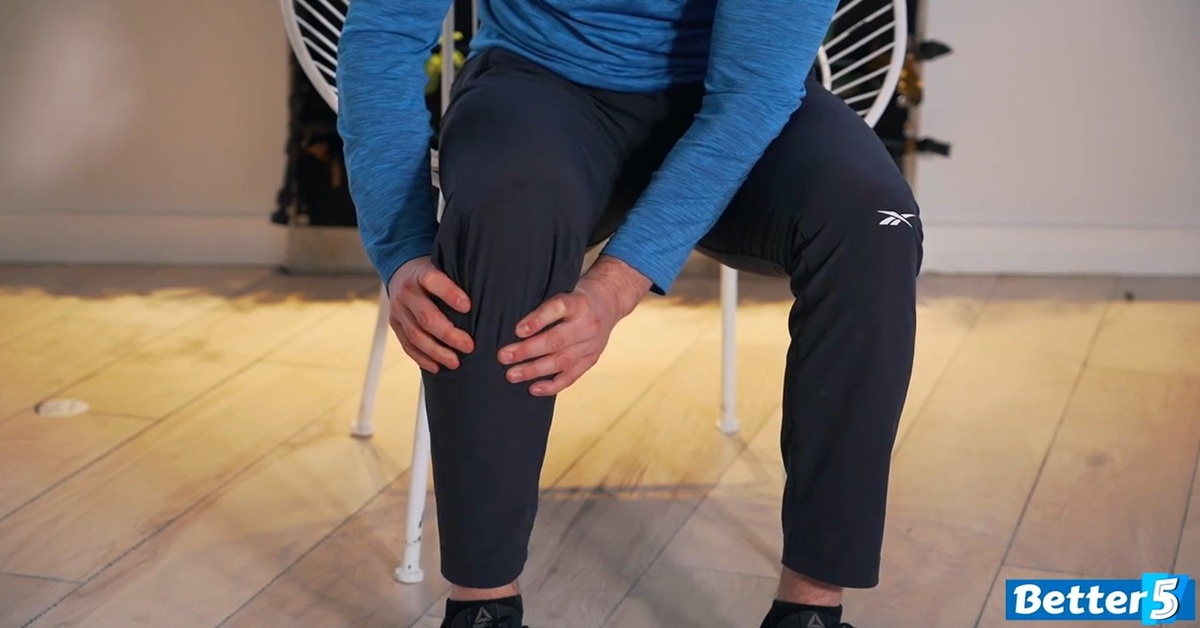
If you're also working on hip and lower body strength, the Improved Knee Strength & Mobility class at Better5 pairs well with core work — stronger legs and a stable core reinforce each other.
Core Exercises for Seniors and Fall Prevention
Core exercises for seniors are one of the single best investments you can make in your long-term independence. Strong core muscles improve your reaction time when you lose balance, help you recover from stumbles, and reduce the chronic lower back pain that limits so many older adults from staying active.
You don't need a gym, equipment, or a lot of time. Just a chair, a few focused minutes, and the consistency to show up three times a week. That's enough to feel a real difference.
Ready to move better, feel stronger, and worry less about falls? Explore Better5 classes built for seniors just like you.