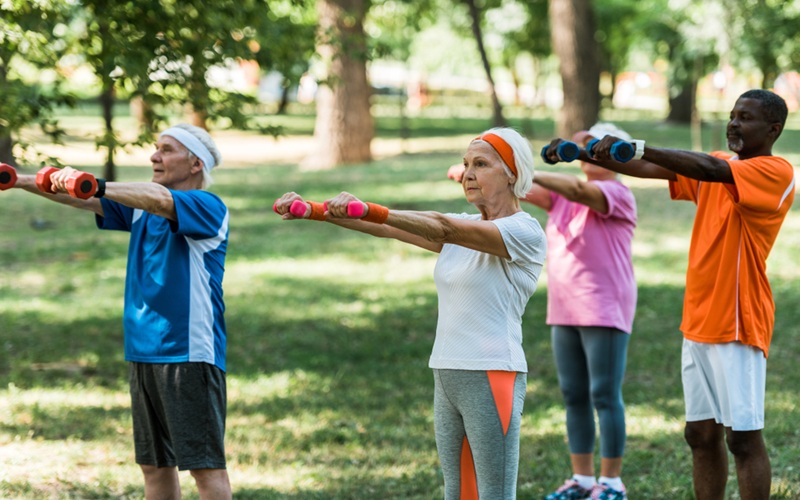
Dumbbell Workout for Seniors: 8 Safe Moves
A dumbbell workout for seniors is one of the simplest, safest ways to rebuild strength at home. With a pair of light dumbbells and a sturdy chair, you can train the muscles that keep you standing tall, carrying groceries, and climbing stairs with confidence. This dumbbell workout for seniors uses eight gentle moves, so you can start today, even if you have never lifted a weight before.
You do not need a gym or heavy equipment. Pick a weight you can lift for 10 to 12 reps with good form, usually 2 to 5 lb to begin. Move slowly, breathe steadily, and stop if anything hurts. That is the whole secret.
Why a dumbbell workout works so well for seniors
After 50, we naturally lose muscle each year if we do not use it. That loss is what makes stairs feel steeper and jars feel tighter. Resistance training reverses the trend. When you ask a muscle to lift a light dumbbell, it responds by getting stronger, and stronger muscles mean better balance, easier daily tasks, and fewer falls.
Dumbbells are ideal because they let you work one side at a time, so your weaker side cannot hide behind your stronger side. They are gentle on the joints when you move with control, and they scale with you: as you get stronger, you simply add a pound or two. Our members tell us the first thing they notice is not bigger muscles, it is standing up from a chair without using their hands.
There is a bonus most people do not expect. Lifting even light weights helps keep your bones strong, because bone responds to gentle stress by holding onto density. That matters a great deal as we age. Stronger bones and stronger muscles together are your best defense against the small stumbles that can turn into big setbacks. A few minutes with a pair of dumbbells, a few days a week, pays you back every time you reach, lift, or catch yourself.
Before you start: a quick safety check
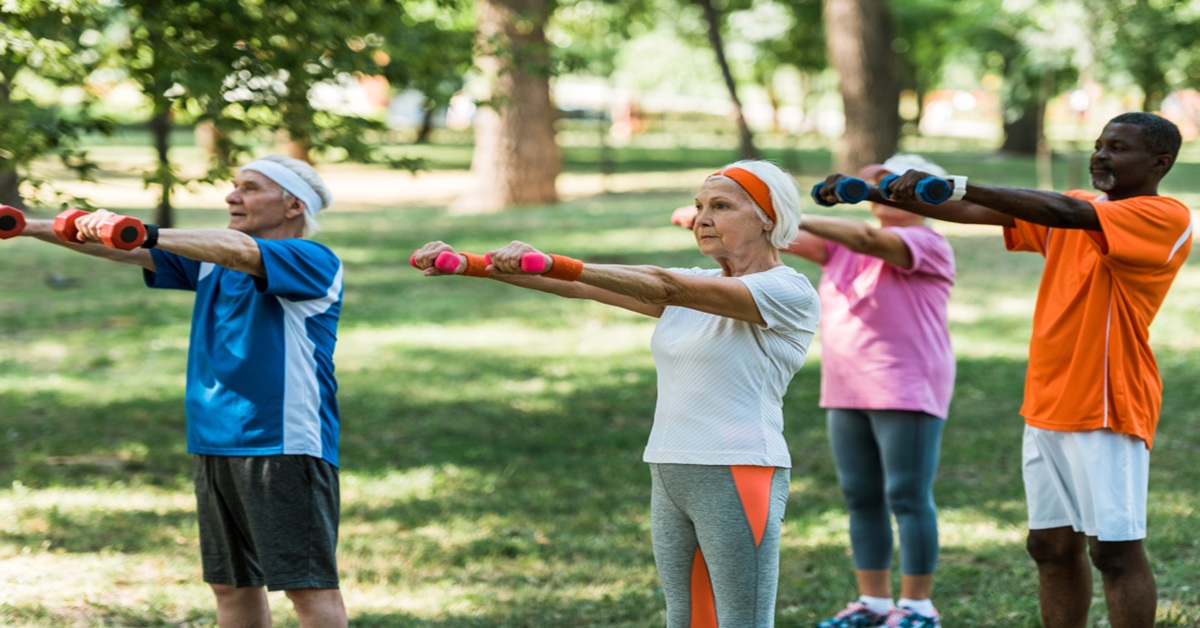
Warm up for three to five minutes first with arm circles, shoulder rolls, and a few marches in place. Keep a sturdy chair nearby for balance. Exhale on the effort, inhale on the return. Rest 30 to 60 seconds between moves. If you are brand new to lifting, do one round of each exercise and build to two or three rounds over a few weeks. If balance is your main concern, our Fall Prevention Exercises class pairs beautifully with this routine and trains the steadiness these lifts depend on.
The 8-move dumbbell workout for seniors
Do each move for 10 to 12 slow reps. Seated options are noted where they help. Nothing here should feel rushed.
1. Seated Dumbbell Shoulder Press
Sit tall with a dumbbell in each hand at shoulder height, palms forward. Press both weights straight up until your arms are nearly straight, then lower with control. This builds the shoulder strength you use to lift a pot onto a shelf. Targets: shoulders and upper back.
2. Bicep Curl
Stand or sit with arms at your sides, palms forward. Bend your elbows and curl the dumbbells toward your shoulders, keeping elbows pinned to your ribs. Lower slowly. Strong biceps make carrying grandchildren and grocery bags far easier. Targets: front of the upper arm.
3. Bent-Over Row
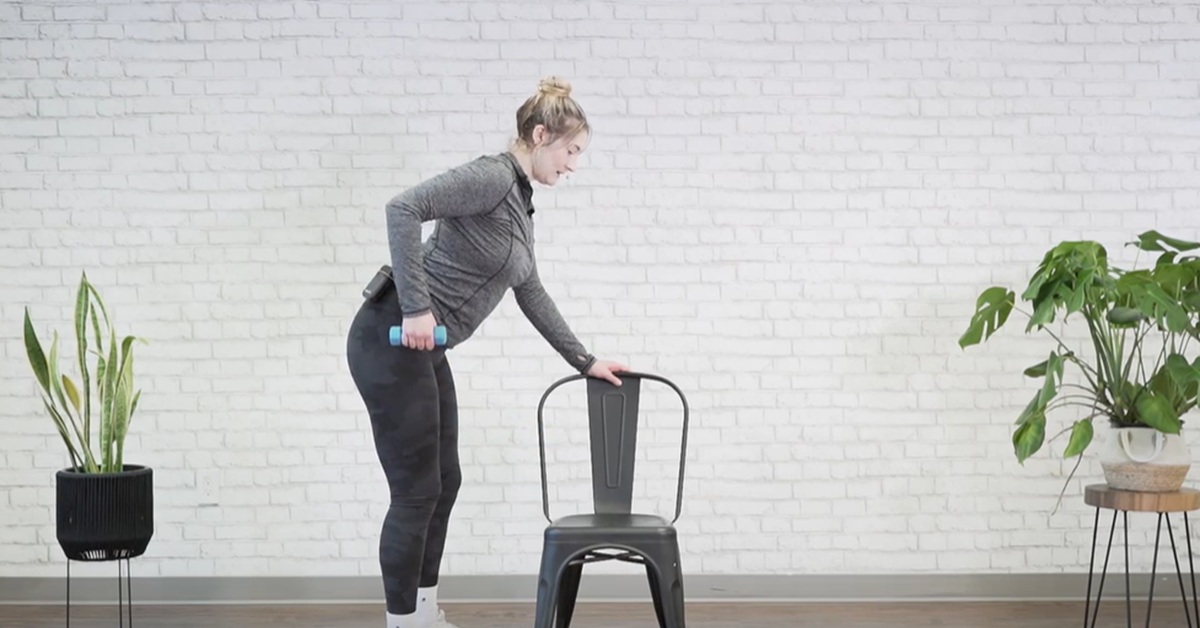
Sit on the edge of a chair, lean forward slightly from the hips with a flat back, arms hanging down. Pull both dumbbells toward your waist, squeezing your shoulder blades together, then lower. This is the posture muscle that fights a rounded upper back. Targets: mid-back and rear shoulders.
4. Sit-to-Stand with Dumbbells
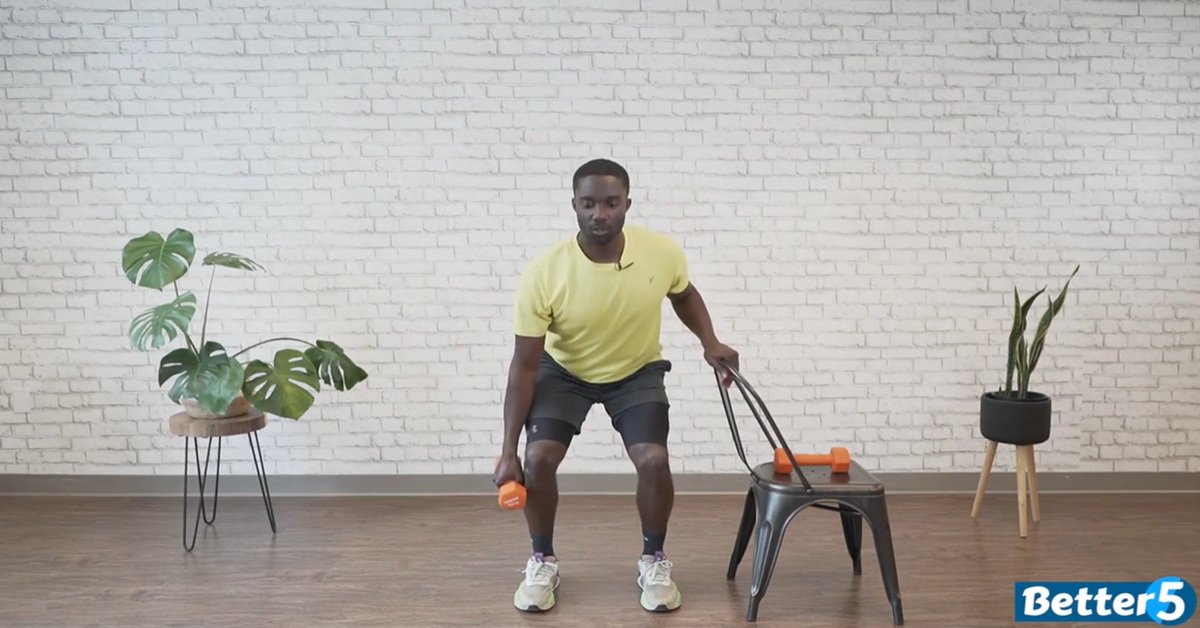
Hold a light dumbbell in each hand at your sides and sit toward the front of a sturdy chair. Stand up fully, then sit back down with control. This mirrors the single most important movement of the day, getting out of a chair, and the added weight makes it a true strength builder. If your knees need extra care, the Knee Strength and Mobility class is a smart companion. Targets: thighs, glutes, and core.
5. Overhead Triceps Extension
Hold one dumbbell with both hands and raise it overhead. Bend your elbows to lower the weight behind your head, then straighten your arms. Keep elbows pointing forward, not flaring out. Strong triceps help you push up out of a chair or bed. Targets: back of the upper arm.
6. Standing Side Raise
Stand tall with a dumbbell in each hand at your sides. Raise your arms out to the sides until they reach shoulder height, then lower slowly. Keep a soft bend in the elbows. This builds the shoulder stability that protects you when you reach or catch yourself. Targets: outer shoulders.
7. Dumbbell Dead Bug (Core)
Lie on your back, knees bent, holding a light dumbbell in each hand with arms pointing at the ceiling. Slowly lower one arm overhead while extending the opposite leg, then return and switch sides. Keep your lower back gently pressed down. A strong core is the quiet engine behind good balance. Targets: deep core and hip stabilizers.
8. Farmer's Carry
Hold a dumbbell in each hand at your sides, stand tall, and walk slowly for 20 to 30 steps. Keep your shoulders back and your steps steady. This simple move trains grip, posture, and whole-body stability all at once, exactly what real life asks of you. Targets: grip, core, and overall strength.
How often should seniors do this workout?
Two to three times a week on non-consecutive days is the sweet spot. Your muscles get stronger during the rest between sessions, not during the workout itself, so those rest days are doing real work. On your off days, keep moving with something gentle. A short Chair Pilates for Mobility class keeps your core engaged, and a Hatha Yoga for flexibility class loosens the hips and shoulders so every lift feels smoother the next time. If you want a broader at-home plan, our guide on weight training for seniors made easy at home walks you through building a full week.
Signs you are doing it right
You should feel your muscles working, a pleasant fatigue in the last two reps, but never sharp pain in a joint. If a move hurts, reduce the weight or skip it. Progress looks like adding a rep, then a round, then a pound, in that order. Small, steady, repeatable. That is how strength comes back to stay.
A few common mistakes are worth avoiding. Do not hold your breath; let your breathing match the movement. Do not swing the weights or use momentum, because the slow, controlled part is where the strength is built. Do not rush to heavier dumbbells before your form is solid. And do not skip the rest days, thinking more is better. Recovery is where your body rebuilds. Listen to it, and it will reward you.
Keep a simple log if you can. Jot down the weight you used and how many rounds you finished. Over a month you will see the numbers climb, and that record becomes its own quiet motivation on the days you would rather sit still.
Ready to make it a habit?
A single workout feels good. A routine changes your life. The Better5 All-Access Membership gives you follow-along dumbbell, strength, balance, and mobility classes built for exactly where you are, with real instructors guiding every rep so you are never guessing. Start today and feel steadier, stronger, and more confident in your own body.
Join the Better5 All-Access Membership and start your first class today.