
Exercises for Osteoporosis of the Hip You Should Try
Growing older has its challenges, but it’s also a chance to stay strong & active. Osteoporosis, especially in the hip, can make mobility tough. But don’t worry—exercises for osteoporosis of the hip can help you stay on your feet & move with confidence. While being active is generally recommended, this condition requires extra care. Movements should be gentle, controlled, & tailored to protect the bones.
What Causes Osteoporosis?
Osteoporosis develops when the body loses too much bone, produces too little, or both. This imbalance weakens the bone structure over time. This condition can be due to several risk factors, including:
- Age: Older adults are more predisposed to developing the condition. Individuals over the age of 50 lose bone density faster & don’t always replace it due to being less active.
- Gender: Women are at a significantly higher risk of developing osteoporosis compared to men. They are four times more likely to be affected. This means men account for just 1 in 5 cases of osteoporosis.
- Body size: People with slender frames are more prone to developing osteoporosis because they have less bone mass by default.
- Diet: Calcium is needed to maintain strong bones & support essential bodily functions. Long-term calcium deficiency diminishes bone density.
- Medications: Medications, such as corticosteroids & diuretics, reduce the body’s ability to absorb calcium & increase how fast bone is broken down.
- Medical conditions: People with medical conditions like rheumatoid arthritis, celiac disease, or cancer have a higher risk of developing osteoporosis.
While the risk factors are diverse, age & gender put post-menopausal women at a higher risk of developing osteoporosis. This is due to the significant drop in estrogen levels following menopause, which is important for maintaining bone density.
5 Key Exercises for Osteoporosis of the Hip
Per the American Academy of Orthopaedic Surgeons, more than 300,000 people in the U.S. sustain a hip fracture annually. In addition, most of these fractures occur in patients 65 years or older whose bones have been weakened by osteoporosis. Here are some exercise routines tailored to these specific needs:
1. Standing Hip Abduction
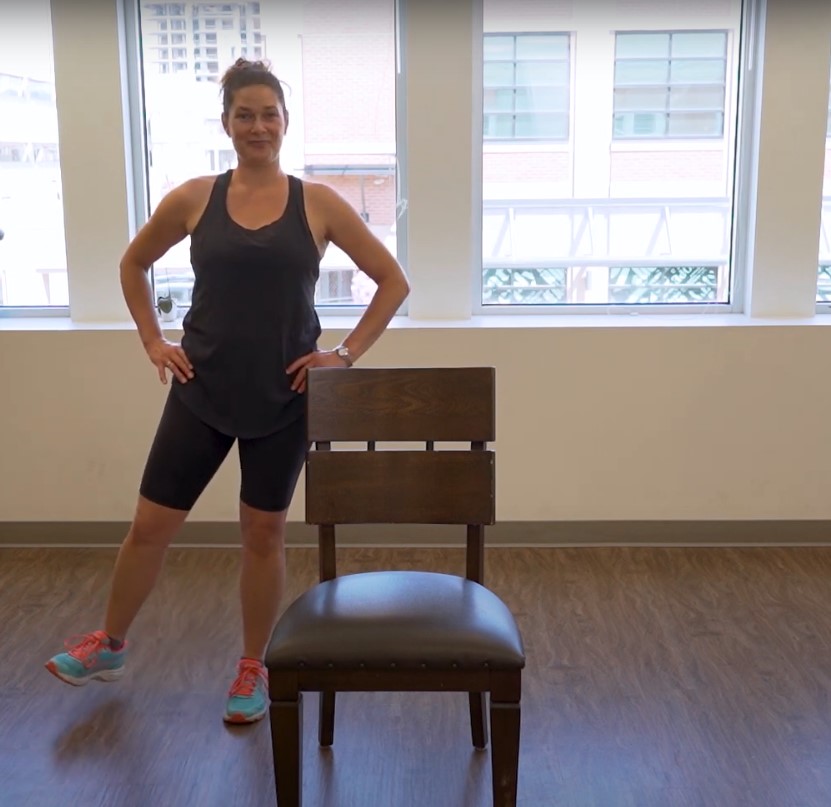
Standing hip abduction is a simple weight-bearing exercise that primarily targets the gluteus medius muscle. This muscle is important for walking & maintaining pelvic stability when standing on one leg. To perform the exercise:
- Stand upright & hold onto a sturdy chair for support.
- Make sure your toes are pointed straight ahead.
- Slowly lift one leg outward to the side, keeping the movement controlled.
- Bring your leg back to its original position.
- Repeat the movement on one side, then switch to the other.
2. Sit-to-stand
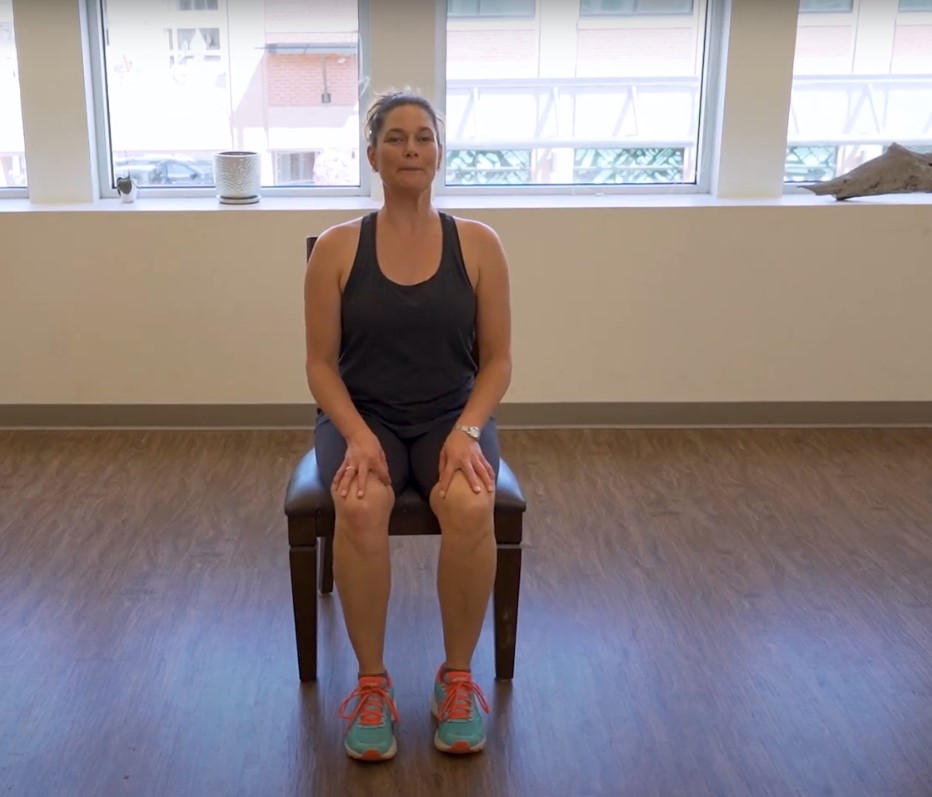
The sit-to-stand exercise targets the muscles that flex & extend the hip. Doing this exercise makes daily activities like sitting, standing and moving up & down stairs easier.
- Sit in a sturdy chair with your feet flat on the floor & shoulder-width apart.
- Press firmly through your feet & slowly rise to a standing position.
- Lower yourself back down into the chair by bending your knees in a controlled motion.
- Rest briefly before repeating the movement as many times as feels comfortable.
3. Clamshells
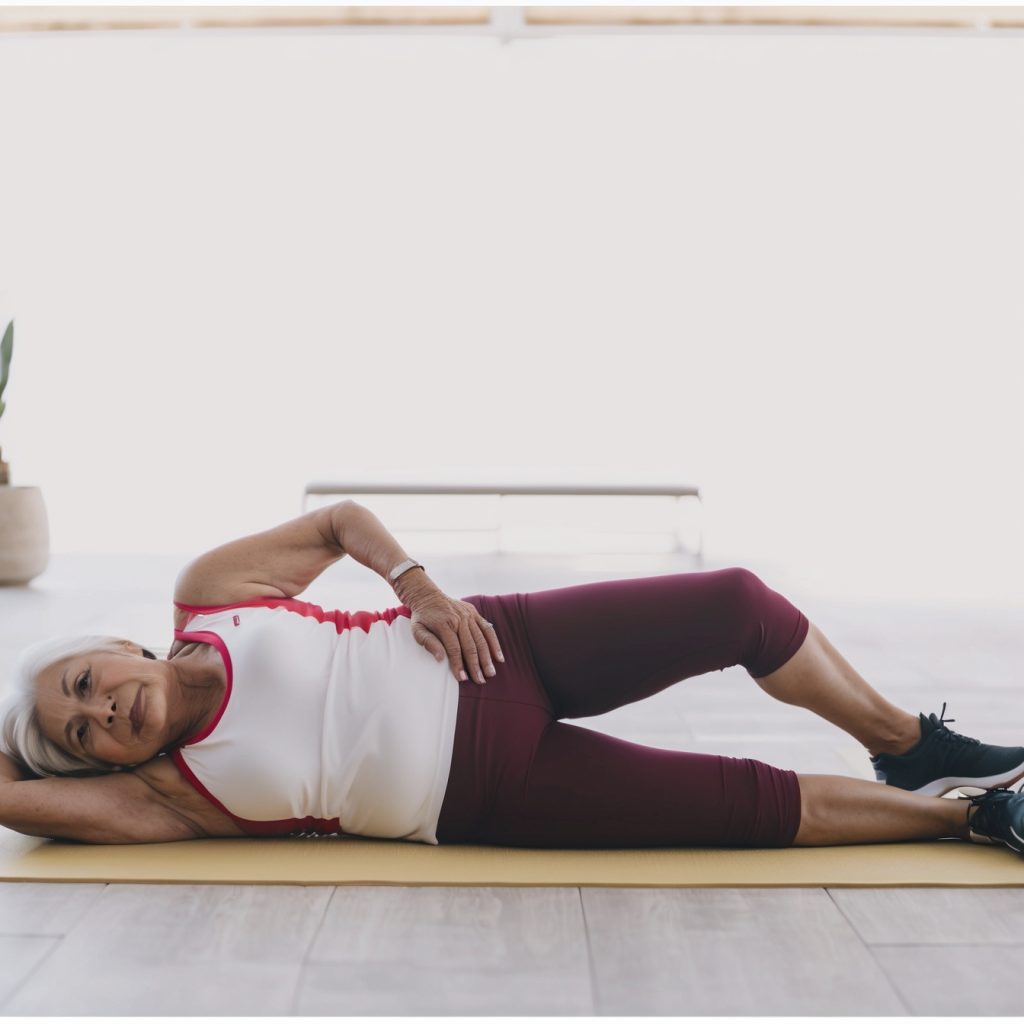
Clamshells mimic the opening & closing movement of clams. The exercise can strengthen the hip rotator & gluteus medius muscles, which are important for pelvic stability.
- Lie on one side with your legs stacked & your forearm supporting your upper body.
- Bend your knees at about a 45-degree angle, keeping your hips & knees stacked while the feet stay together.
- Rest your head on your hand & place the other hand on your waist for added stability.
- Keeping the lower knee on the ground, slowly lift the upper knee upward, as if opening a clamshell.
- Pause at the top for 3-5 seconds, then gently return your knee to the starting position. This completes one rep.
4. Squats
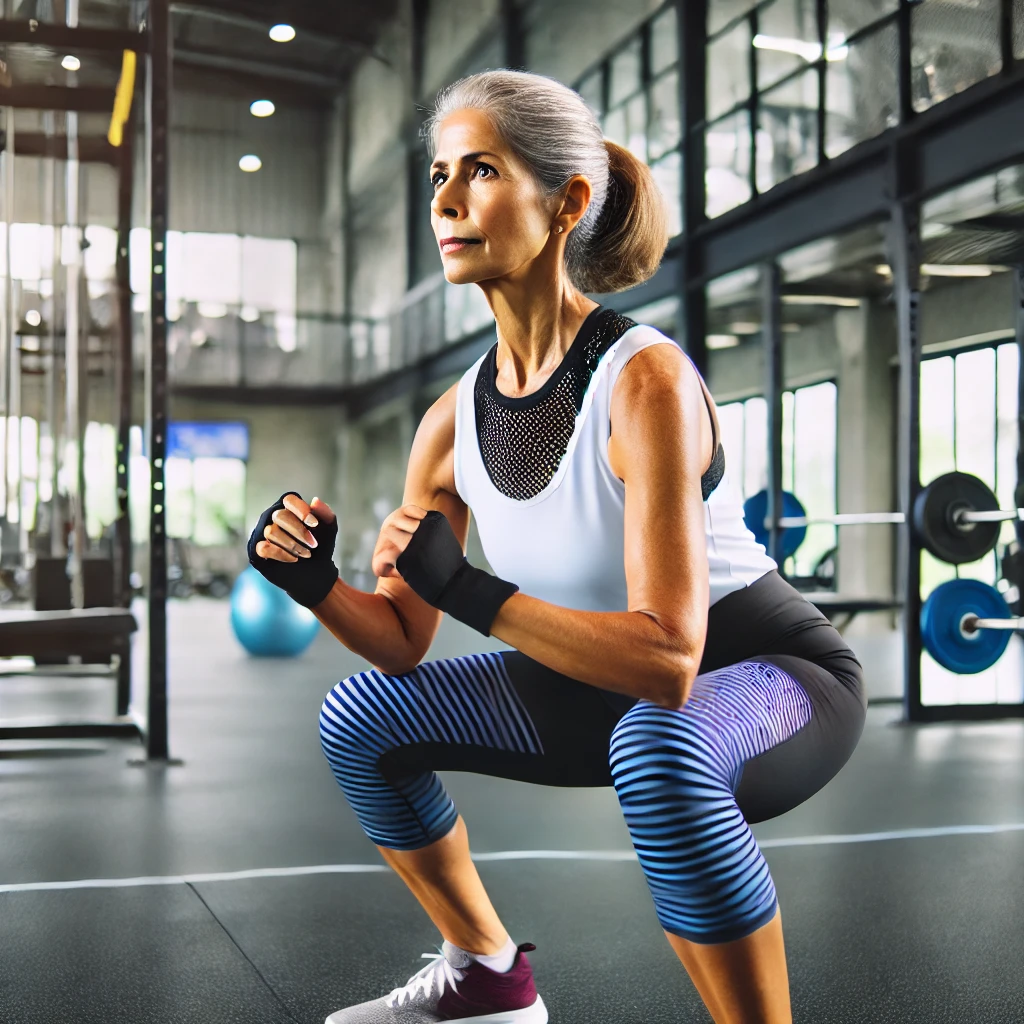
This exercise works on the glutes & quadriceps.
- Stand with the feet hip-width apart.
- Extend your arms forward for stability or place them at your sides.
- Bend your knees as if you’re going to sit in an invisible chair.
- Pause briefly at the bottom of the squat.
- Return to the standing position.
5. Resisted Side Stepping
Resisted side stepping works on the hip abductor muscles. For this exercise, you will need a resistance band.
- Place a resistance band securely around your ankles.
- Stand with your feet hip-width apart, keeping the band taut.
- Bend your knees slightly & lower into a mini squat, maintaining a stable pelvis.
- Step one foot out to the side.
- Follow with the trailing foot, keeping the band slightly stretched.
- Continue stepping one foot after the other in the same direction for about 5 small steps or as far as your space allows.
- Step sideways in the opposite direction, leading with the other foot, for another 5-10 steps.
- Perform 5-10 steps per direction, aiming for up to 3 sets.
Exercising Safely With Osteoporosis
The exercises above were recommended with the peculiar needs of seniors with osteoporosis in mind. Ideally, they should be gentle & pain-free. To be in the clear, get your physician’s opinion before starting a new exercise routine.
Even when cleared, always understand your limit and exercise accordingly. Exercise programs are more like marathons than sprints (but not as hard!) The benefits are gradual, and consistency over time yields the most impactful results.
Additional Tips for Bone Health
In addition to the exercises mentioned, these additional tips will come in handy:
- Proper nutrition: For better bone health, increase your intake of foods rich in calcium & vitamin D. Good sources of calcium include nuts & leafy greens. Oily fish, such as salmon & tuna are good sources of vitamin D. Sunlight also helps the body produce vitamin D.
- Reduce alcohol: Excessive alcohol consumption affects the body’s ability to absorb calcium, which is needed for bone building. Salt, coffee, & processed meats also fall into this category as they can negatively impact bone density.
- Quit smoking: Smoking reduces blood flow to bones & slows the production of bone-forming cells. Quitting helps improve bone strength & overall health.
Final Thoughts
The independence of yesteryears is what every senior hopes to have in advanced years. Strong hips are fundamental to this, supporting mobility & daily activities. Incorporating exercises for osteoporosis of the hip into your routine allows you to take proactive steps to maintain your independence and age gracefully.
To support your journey toward stronger bones, check out our Osteoporosis Exercises for Strong Bones Digital Class. This program offers effective exercises tailored to improve bone health and enhance mobility, all while being gentle on the body.