Exercises for Seniors Over 70: 9 Safe Moves to Stay Strong
The best exercises for seniors over 70 are the ones you can do safely at home — no gym required, no equipment needed, and no need to push through pain. Whether you're just getting back to movement or looking to stay consistent, these 9 moves are designed specifically for adults over 70 who want to build strength, improve balance, and stay independent longer.
Why Exercise After 70 Is Non-Negotiable
After 70, adults can lose up to 3–5% of their muscle mass every decade — a condition called sarcopenia. This loss of strength is directly linked to slower walking speed, difficulty getting up from a chair, increased fall risk, and reduced independence. The good news: research consistently shows that regular, low-impact exercise can slow and even reverse this process at any age.
You don't need to run a 5K or lift heavy weights. You need consistent movement that targets the muscles you use most in daily life: your legs, core, and upper body. The exercises below do exactly that — and all of them can be done safely at home, with a chair nearby for support if needed.
What to Know Before You Start
Before beginning any new exercise routine, check in with your doctor — especially if you're managing a health condition like osteoporosis, heart disease, or recent surgery. That said, gentle movement is almost always encouraged.
Move slowly and with control. It's not about speed. Focus on feeling the right muscles working.
Keep a chair or wall nearby for balance support whenever you need it.
Stop if something hurts. Mild muscle fatigue is normal. Sharp or joint pain is not.
Start with one set of 8–10 reps per exercise. Add a second set over time as you get stronger.
9 Exercises for Seniors Over 70 to Do at Home
1. Sit-to-Stand
This is one of the most important exercises for seniors over 70 because it directly mimics the movement you use every time you get up from a chair or toilet — a key marker of independence.
How to do it: Sit toward the front of a sturdy chair with feet flat on the floor, hip-width apart. Lean slightly forward and push through your heels to stand up tall. Pause at the top, then lower back down slowly. Aim for 8–10 reps.
Muscles worked: Quadriceps, glutes, core
2. Heel Raises
Heel raises strengthen your calf muscles and improve ankle stability — two things that are directly tied to your ability to walk steadily and reduce fall risk.
How to do it: Stand behind a sturdy chair, lightly holding the back for balance. Slowly rise up on your tiptoes, hold for 2 seconds, then lower back down. Do 10–15 reps. If standing feels unstable, you can do this seated.
Muscles worked: Calves, ankles
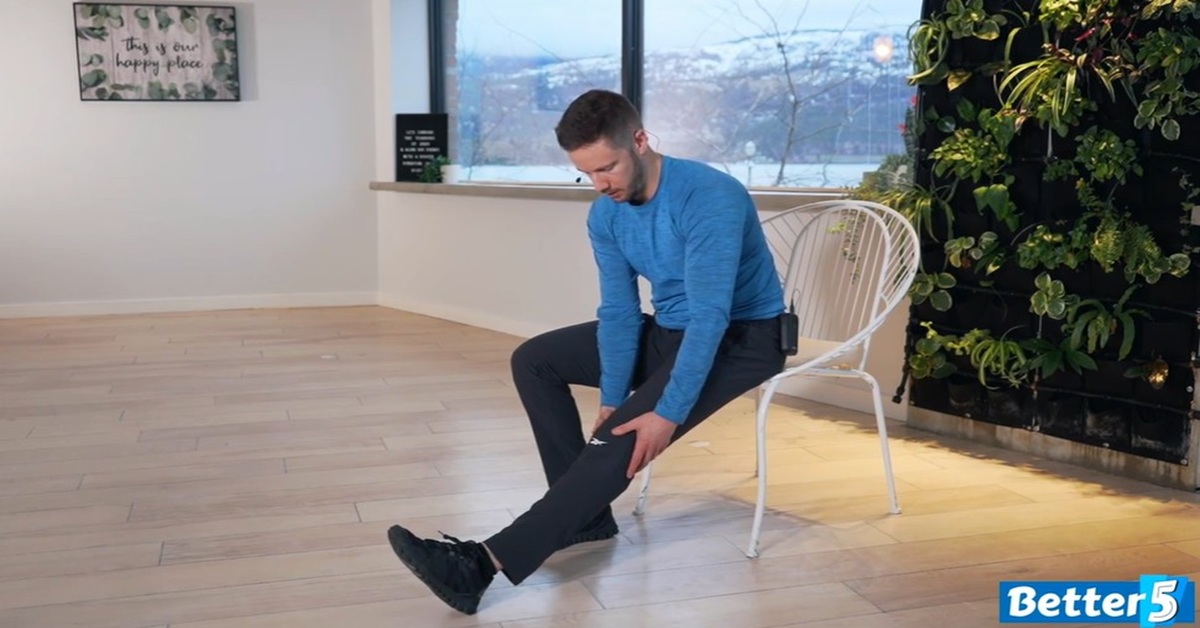
3. Seated Knee Extensions
Weak quadriceps (the muscles at the front of your thighs) are one of the biggest contributors to knee pain and instability in older adults. This seated version is safe and effective.
How to do it: Sit tall in a chair with feet flat on the floor. Slowly straighten your right leg, lifting it until it's parallel to the floor. Hold for 2–3 seconds, then lower. Do 10 reps per leg. For added challenge, try the Improved Knee Strength & Mobility class at Better5, which walks you through a full seated knee routine.
Muscles worked: Quadriceps, hip flexors
4. Standing Hip Abduction
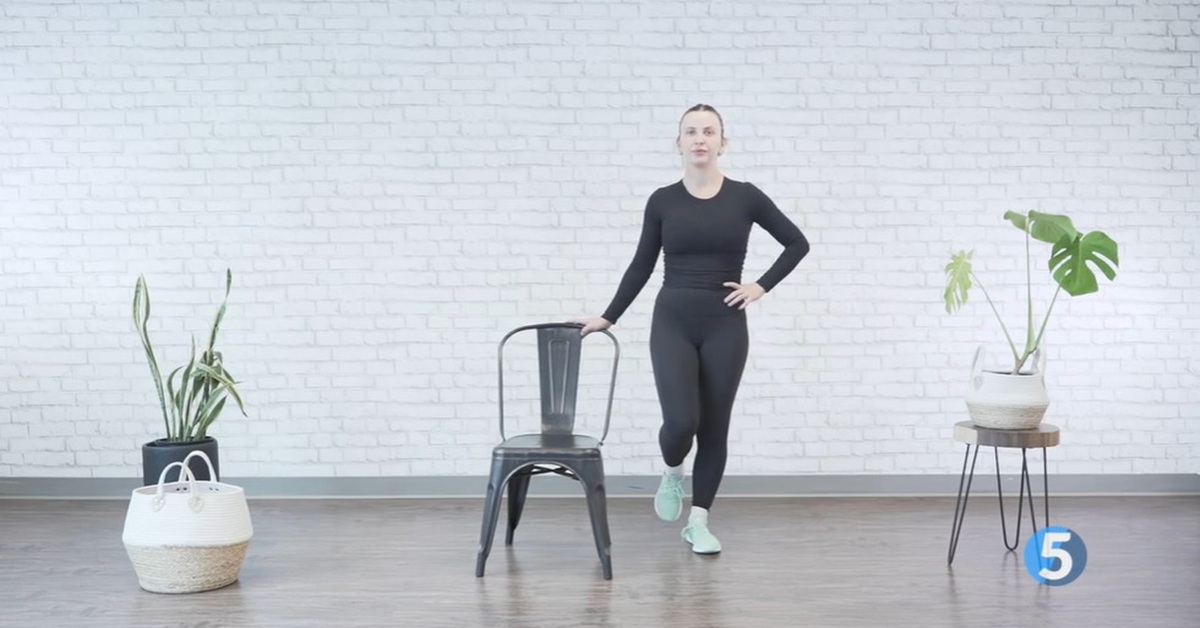
Your hip abductors run along the outer thighs and are critical for sideways stability — the kind that catches you when you stumble. Strengthening these muscles is a foundational piece of any fall prevention program for seniors over 70.
How to do it: Stand behind a chair, holding the back lightly for balance. Slowly lift your right leg out to the side, keeping it straight and your torso upright. Lower back down with control. Do 10 reps per side.
Muscles worked: Hip abductors, glutes
5. Wall Push-Ups
Upper body strength is often overlooked in senior fitness, but it matters for getting up off the floor, carrying groceries, and maintaining good posture. Wall push-ups are a safe, low-impact way to build chest and arm strength without going to the floor.
How to do it: Stand arm's length from a wall, palms flat against it at shoulder height. Bend your elbows to bring your chest toward the wall, then push back to the start. Keep your body in a straight line throughout. Do 10–12 reps.
Muscles worked: Chest, shoulders, triceps, core
6. Seated Marching
Seated marching keeps your hip flexors strong and your circulation moving. It's especially good for seniors with balance concerns or those who spend a lot of time sitting.
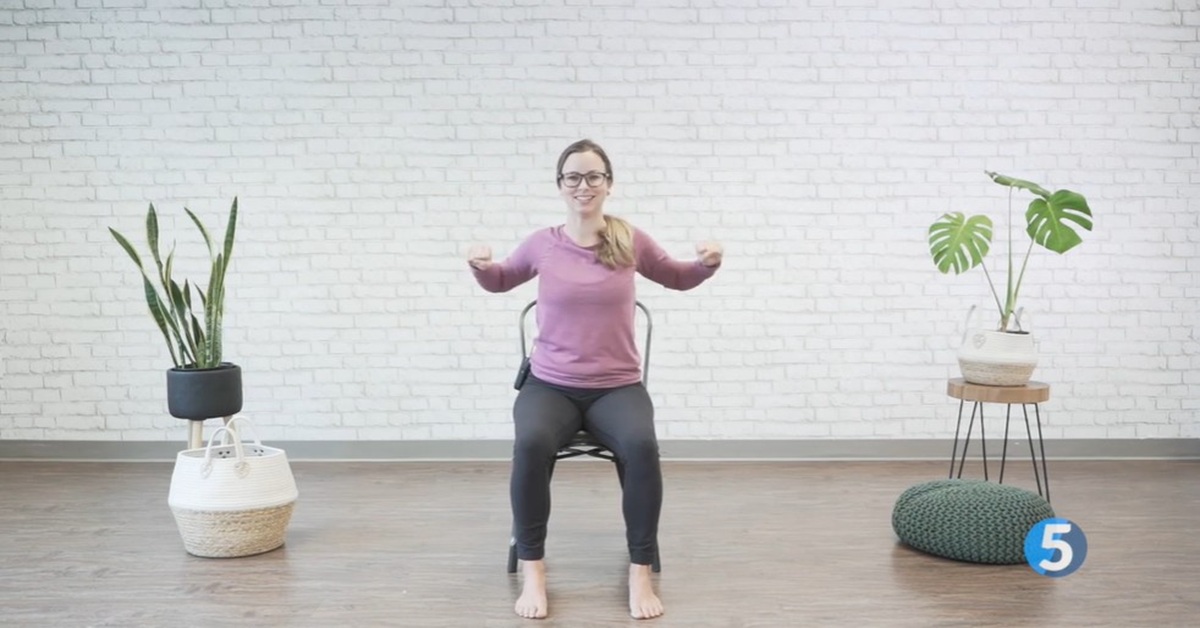
How to do it: Sit tall in a chair with feet flat on the floor. Lift your right knee toward your chest, hold for a second, lower it, then alternate with your left. Move at a comfortable pace for 30–60 seconds. To make it harder, pair this with the 7 Days of Chair Pilates class at Better5 — which builds on seated movements like this into a full program.
Muscles worked: Hip flexors, core, coordination
7. Single-Leg Balance Hold
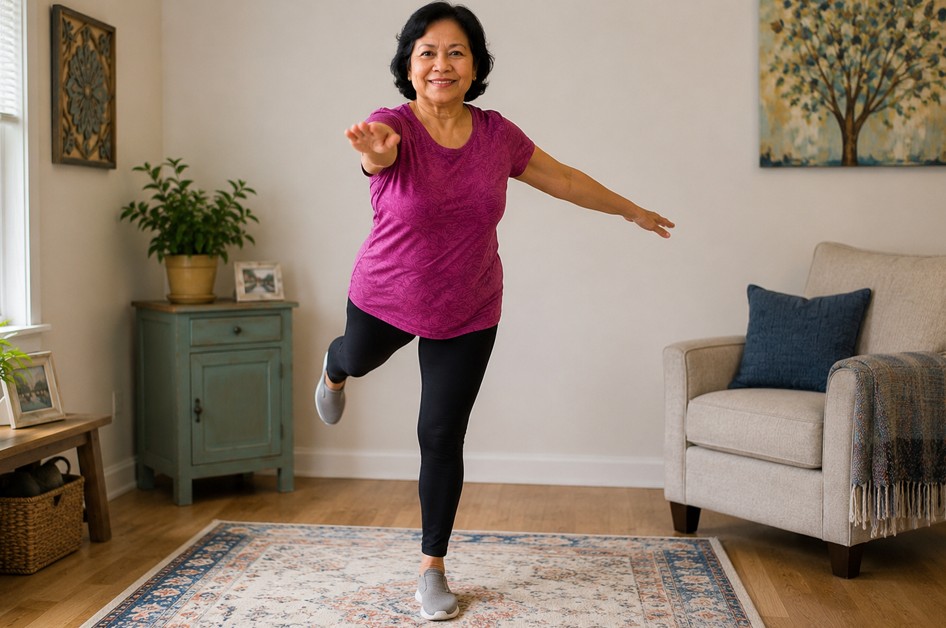
Balance training is one of the most evidence-backed tools for fall prevention in seniors over 70. Even holding a single-leg balance for a few seconds, a few times a day, builds the stability you need to catch yourself before a fall happens.
How to do it: Stand behind a chair, holding lightly for support. Shift your weight to your right foot and slowly lift your left foot off the floor. Hold for 5–10 seconds (or longer as you get stronger). Lower, then repeat on the other side. Do 3–5 holds per leg. For a full progression of balance moves, see the 13 gentle balance exercises guide on the Better5 blog.
Muscles worked: Ankles, calves, core, hip stabilizers
8. Bird Dog
The bird dog strengthens the lower back and core in a way that's safe for most seniors — no floor work required if you modify it at a table or countertop. A strong core protects your spine and improves your stability in every other movement.
How to do it: Stand behind a sturdy chair and rest both hands on the back. Slowly extend your right arm forward while lifting your left leg straight behind you, keeping your hips level. Hold for 3–5 seconds, then return. Do 8 reps per side.
Muscles worked: Lower back, glutes, core, shoulders
9. Shoulder Rolls and Chest Opener
Most people over 70 carry tension in their shoulders and upper back — especially those who sit for long stretches. This move relieves that tightness and counteracts the forward-rounded posture that makes breathing harder and increases upper-body stiffness.
How to do it: Sit or stand tall. Roll your shoulders slowly backward in large circles 5–8 times. Then clasp your hands behind your back, gently squeeze your shoulder blades together, and open your chest. Hold for 10 seconds. Repeat 3 times.
Muscles worked: Upper back, shoulders, chest
How Often Should Seniors Over 70 Exercise?
The CDC and most physical therapists recommend that adults over 70 aim for at least 150 minutes of moderate-intensity activity per week — or about 20–30 minutes most days. That sounds like a lot, but it doesn't need to be all at once.
A realistic starting point: pick 4–5 exercises from the list above and do 2–3 sets of each, 3–4 times per week. Rest at least one day between strength sessions. On your off days, a gentle walk or the stretching routine from our free balance exercises guide is the perfect complement.
The Bottom Line
Exercises for seniors over 70 don't need to be complicated or intense — they just need to be consistent. The 9 moves above cover the most important muscle groups for strength, stability, and daily function. Start with what feels manageable, build over time, and remember: the best workout is the one you'll actually do.
If you're looking for a guided program built specifically for adults over 60, the Fall Prevention Exercises class at Better5 is one of the most popular starting points — it combines balance, leg strength, and stability training in a safe, follow-along format.
Ready to move more and worry less? Explore Better5 classes built for adults over 70 — all at home, all at your own pace.