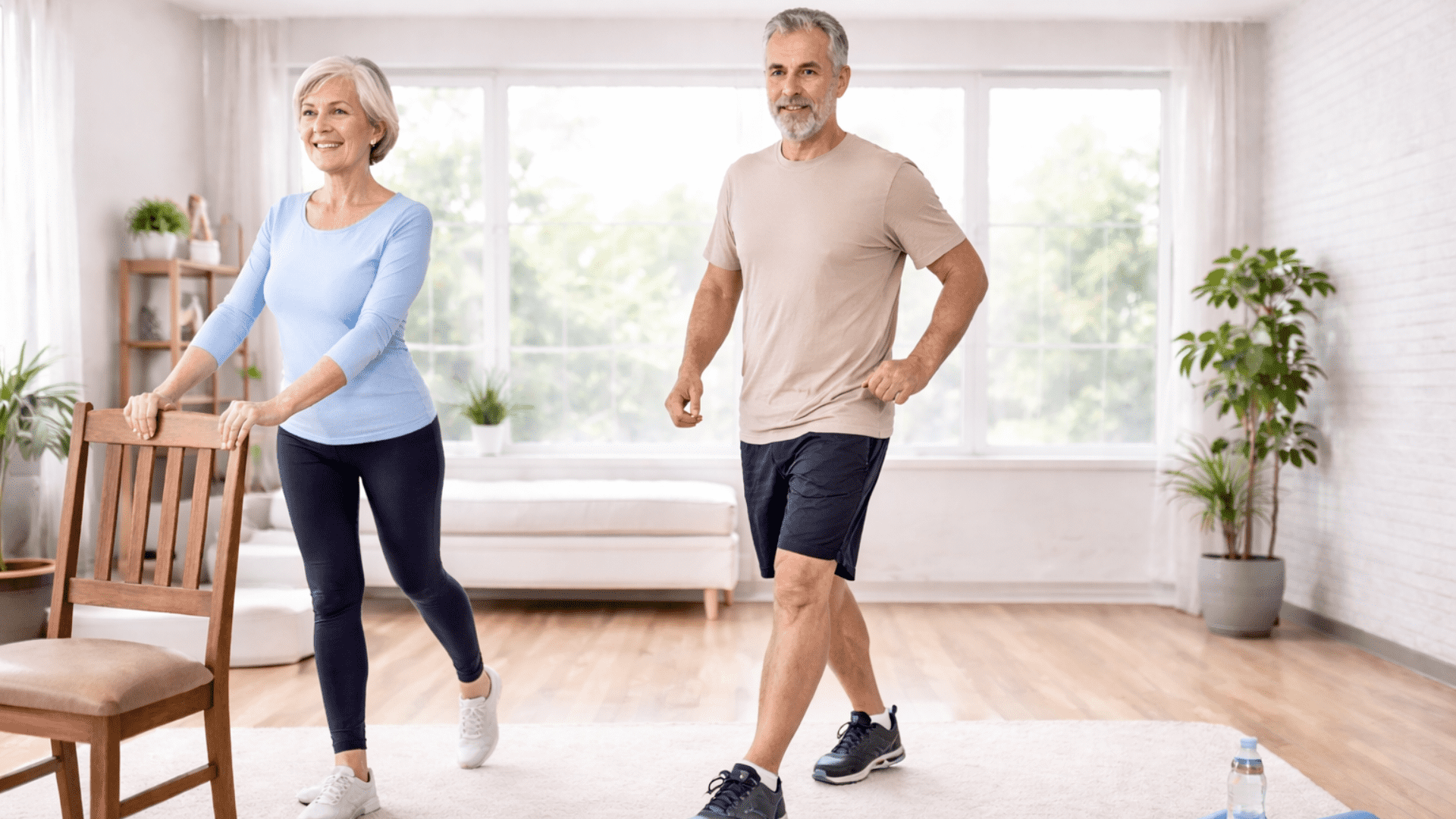
Fear of Falling? Try Seniors Exercises For Better Balance
Losing your balance even once can shake your confidence. That hesitation that follows is natural, but “fear of falling” seniors exercise programs can help you feel steadier and stronger again through gentle, consistent practice. These exercises don’t require a gym or special equipment, and they work by strengthening your legs and core while improving your balance. Over time, they can help you reduce your fear of falling and move through daily activities with more ease and less worry.
Why Fear of Falling Creates a Dangerous Cycle
When you worry about losing your balance, your first instinct is often to move less. That caution feels protective, but it actually starts a pattern that can make things worse over time.
Worry Leads to Less Movement
You might skip your morning walk or avoid stairs. You may hesitate before reaching for something or choose to stay home more often. These small decisions add up quickly.
Inactivity Weakens Your Body
Less movement means your leg muscles lose strength. Your core becomes weaker. Balance naturally declines when you don’t practice it regularly. These physical changes happen gradually, so you might not notice right away.
The Cycle Feeds Itself
Here’s the problem: a weaker body actually makes falls more likely. That increases your anxiety, which leads to even less activity. You may also start avoiding social activities or give up hobbies you once enjoyed, which can affect your mood and sense of independence.
According to the Centers for Disease Control and Prevention, exercise is one of the most effective ways to reduce fall risk in older adults. Strength and balance training may help reverse this pattern and decrease both fall risk and the fear itself. The key is starting with movements that feel safe and building from there.
5 “Fear of Falling” Exercises for Seniors
The exercises below target the muscles and skills you use every day. They’re arranged from easiest to more challenging, so you can start where you feel comfortable.
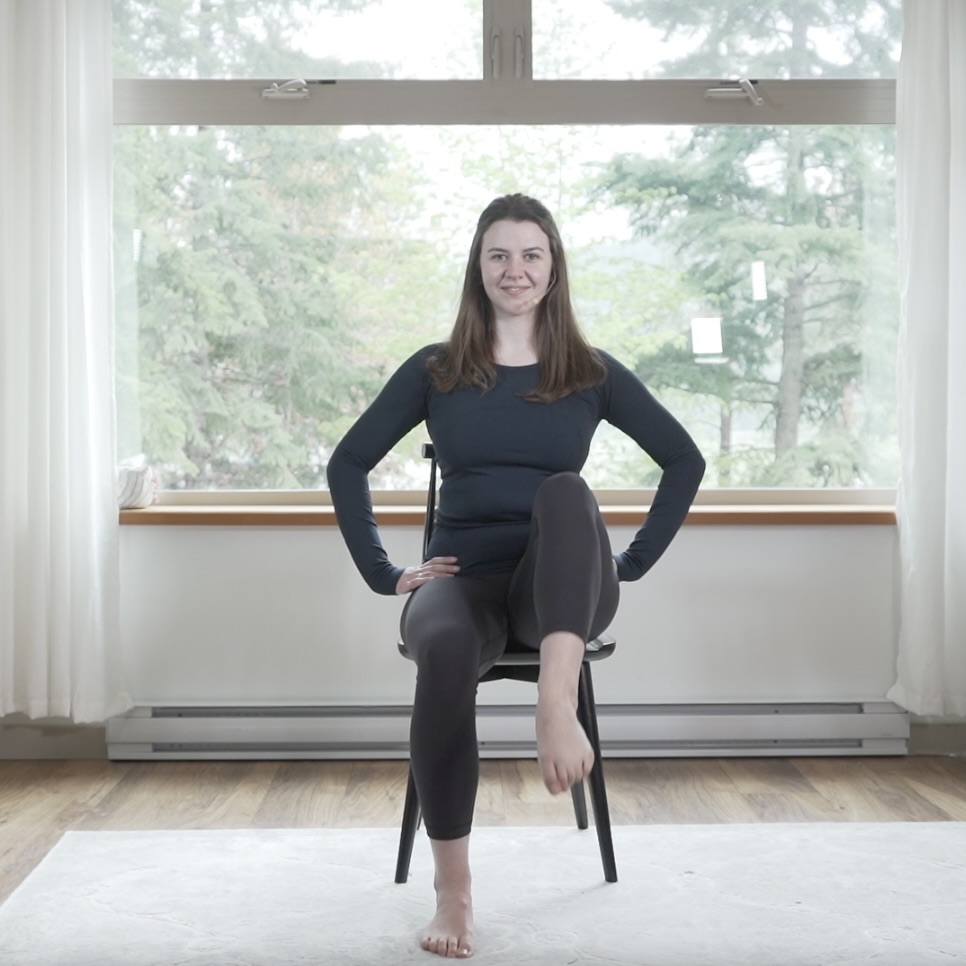
1. Seated Marching
- Sit near the front edge of a sturdy chair with your feet flat on the floor.
- Lift your right knee toward your chest as high as feels comfortable.
- Lower it back down with control, then repeat with your left knee.
- Continue alternating legs in a slow, steady rhythm.
Goal: Two sets of 10 marches per leg
Focus: This warms up your hip flexors and teaches you to control leg movement, which helps when stepping over objects or climbing stairs.
Tip: Keep your back straight and core engaged. If you feel steady, you can lift your knees a bit higher each week.
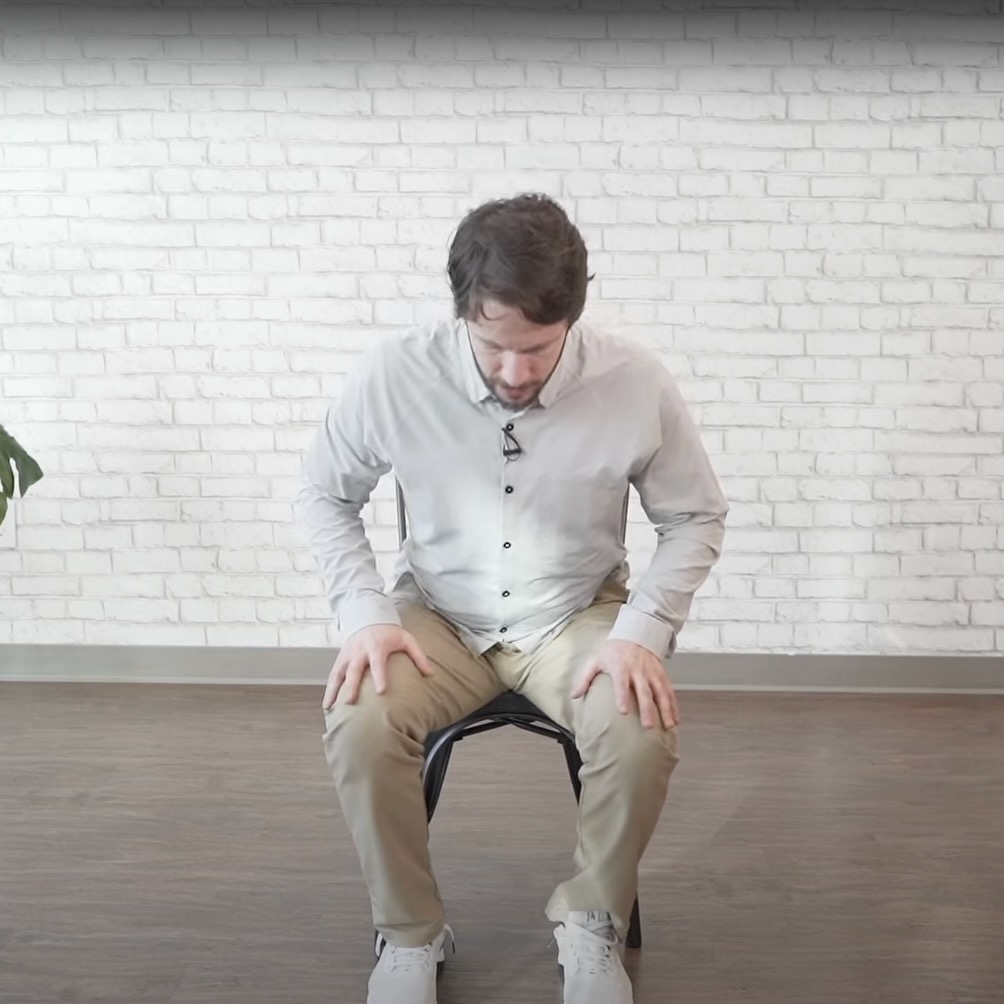
2. Sit-to-Stand
- Sit in a sturdy chair with your feet hip-width apart and flat on the floor.
- Lean slightly forward and push through your heels to stand up.
- Pause briefly at the top, then slowly lower yourself back down to sitting.
- Use your arms on the chair’s armrests if needed for support.
Goal: Two sets of eight to 10 repetitions
Focus: This builds the leg strength you need to get up from a low seat, use the toilet independently, or rise from bed without assistance.
Tip: Keep your weight in your heels, not your toes. As you get stronger, try using your arms less.
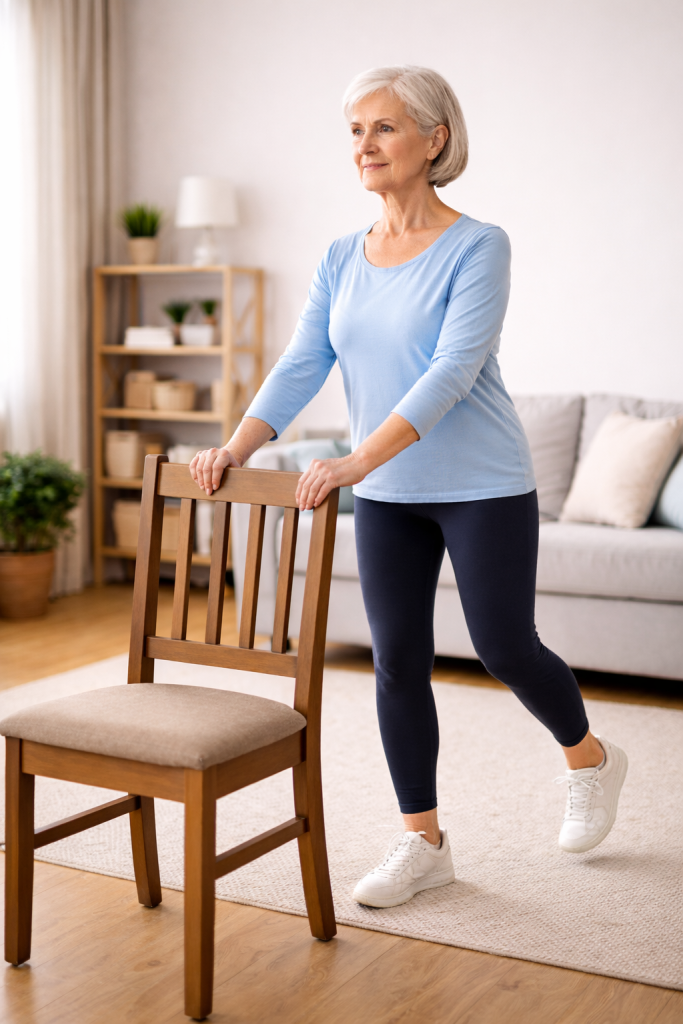
3. Standing Weight Shifts
- Stand behind a sturdy chair and hold the back lightly for balance.
- Shift your weight onto your right foot while slightly lifting your left heel off the ground.
- Hold for three to five seconds, then shift your weight to your left foot.
- Continue shifting side to side in a controlled manner.
Goal: Two sets of 10 shifts per side
Focus: This teaches your body to adjust when your weight moves unexpectedly, like when you reach for something or step on uneven ground.
Tip: Start with small shifts. As you improve, try lifting your foot higher off the floor.
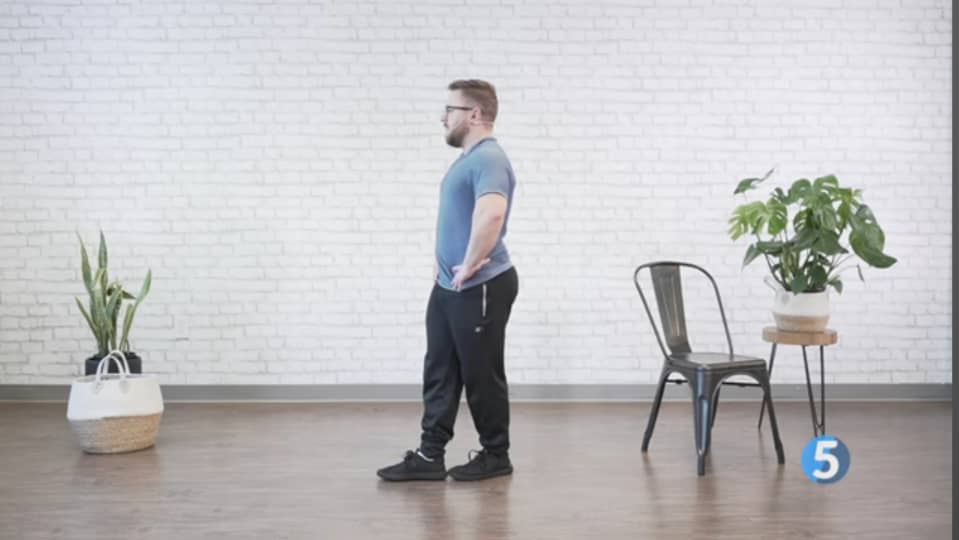
4. Heel-to-Toe Walk
- Stand near a wall or counter for support if needed.
- Place your right heel directly in front of your left toes, so they’re touching.
- Step forward and place your left heel directly in front of your right toes.
- Continue walking in a straight line for 10 to 15 steps.
Goal: Three to five passes down a hallway
Focus: This improves your balance while moving and helps you navigate narrow spaces with more confidence.
Tip: Look ahead, not down at your feet. Pause between steps if you feel unsteady.
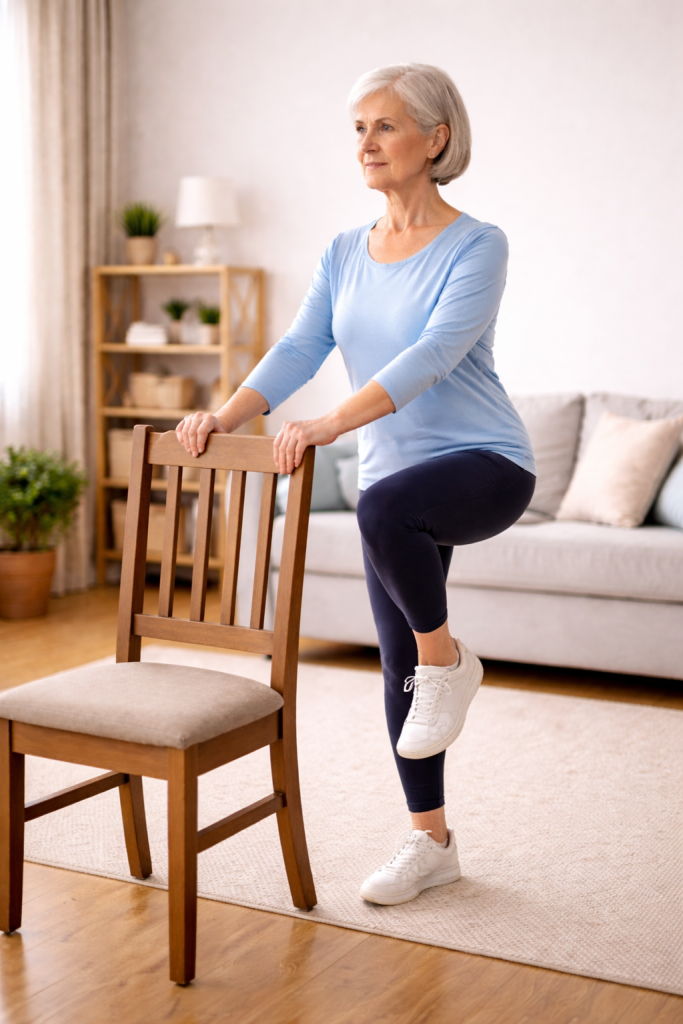
5. Single-Leg Stance with Chair Support
- Stand behind a sturdy chair and hold the back with both hands.
- Lift your right foot a few inches off the ground.
- Hold this position for 10 to 15 seconds, keeping your standing leg slightly bent.
- Lower your foot, rest briefly, then repeat with your left leg.
Goal: Three holds per leg, working up to 30 seconds each
Focus: This strengthens your ankle and hip stabilizers, which help you catch yourself if you start to lose balance.
Tip: Keep your core tight and avoid leaning heavily on the chair. Over time, try using just one hand for support.
Fall Prevention Tips Beyond Exercise
Targeted exercises done consistently can be effective in reducing your fear of falling as a senior. Nonetheless, other simple changes can help in addition to exercises.
Here are a few tips:
- Keep hallways, stairs, and the path from your bed to the bathroom free of clutter (shoes, baskets, small tables, pet toys).
- Route phone/charging cords along walls, use cord clips, and avoid running wires across open floors.
- If a rug slides or curls at the edges, it’s a trip risk. Use non-slip backing or remove it entirely.
- Improve lighting where you walk most by adding brighter bulbs, turning on lights before moving around, and using night lights in bedrooms, halls, and bathrooms.
- Use non-slip mats in the shower/tub, and consider grab bars near the toilet and bathing areas if you feel uncertain there.
- Make your stairs safer by keeping steps clear, using handrails every time, and avoiding carrying items that block your view of the steps.
- Wear supportive, non-slip shoes or slippers instead of socks on smooth floors.
- Many near-falls happen when standing up, turning quickly, or rushing to answer the phone. Pause, then take your first step with control.
Conclusion
You could do this alone, or you could follow a guided, progressive plan designed for seniors. The Fall Prevention Exercises Digital Class gives you a short, gentle routine that builds strength, mobility, & balance, and you can start right away with instant access and no floorwork.
Fear of falling often eases when your body gets regular practice with safe, controlled movements. Start with the options that feel most comfortable, use steady support when you need it, and repeat the basics often. Over time, “fear of falling” seniors exercise routines can help everyday moments like standing up, turning, and walking through your home feel more manageable.