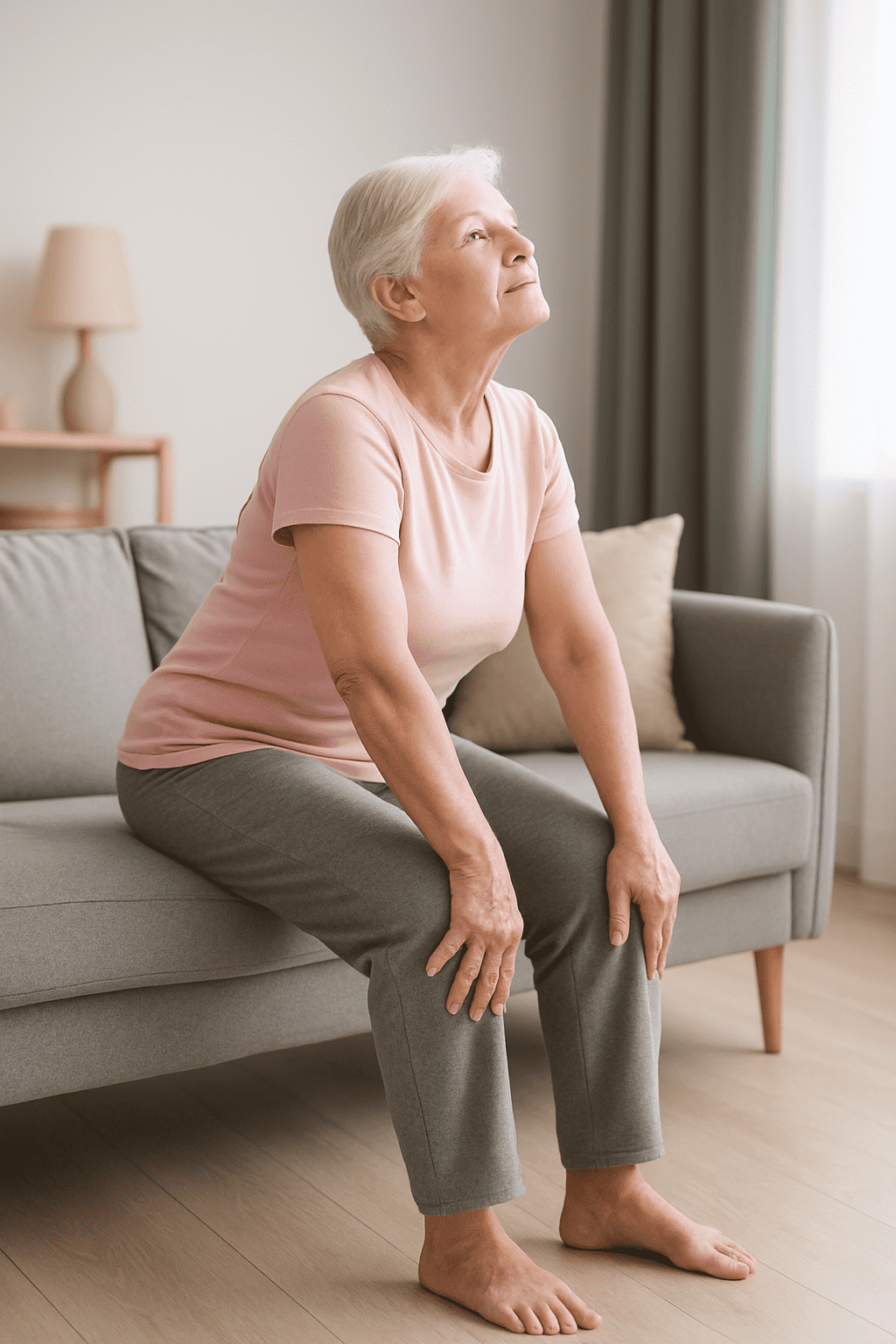
Flexibility After 60: Gentle Routines That Fit Your Day
It’s common for people in their 60s to notice changes in how easily they move, especially during everyday tasks that require bending, reaching, or turning. Conversations about flexibility after 60 often come up because these shifts can feel new or unexpected. Gentle stretching and mindful movement can be one way to explore what feels comfortable and supportive at this stage of life.
Instead of aiming for dramatic changes, the focus here is simply to notice how your body responds when movement is introduced gradually. Even small choices like breaking up long periods of sitting can make a difference. Everyone’s experience is different, and the goal is to offer a clear, practical starting point that you can shape around your own routines and comfort.
Why Flexibility Can Change After 60
Changes in how the body feels during everyday movement are common in later decades, and there are several factors that can contribute to this experience. These shifts vary widely from person to person, but the themes below help explain why flexibility may feel different over time.
Changes in Daily Activity Patterns
Many adults spend long hours sitting or repeating the same limited movements throughout the day. Over time, reduced variety in how the body moves can contribute to tightness in certain areas.
Research also notes that adults who sit for long periods and are less active often show smaller passive hip-extension ranges, which reflects how the front of the hip may move when relaxed.
Natural Shifts in Muscle & Connective Tissue
With age, the tissues that support the muscles can become less elastic. These changes can make the layers around the muscle glide less smoothly, which may influence how flexible or free certain movements feel. This varies widely among individuals and often reflects personal health history and activity patterns.
Shifts in Movement Habits & Confidence
People often change how they move in response to pain, stiffness, or injuries. Favoring one side, avoiding certain positions, or limiting certain motions can gradually influence overall mobility. These adaptations can shape how freely the body moves over time, even when tissues and joints are otherwise healthy.
Safe Approaches to Flexibility After 60
Gentle stretching tends to feel most supportive when it follows a few simple guidelines that keep comfort and safety at the center.
- Use a brief warm-up, such as slow walking or gentle arm movements.
- Start with gradual, comfortable movements.
- Ease into each stretch slowly and come out of it with the same control.
- Stay within a comfortable, pain-free range of motion.
- Aim for a light sense of lengthening rather than pushing into discomfort.
- Use a chair, wall, or countertop for added stability when needed.
- Choose supported positions if balance is a concern.
7 Easy Stretches to Maintain Flexibility After 60
Below are a few commonly used stretches that many adults find approachable. They can be adjusted for comfort and performed seated or standing when appropriate.
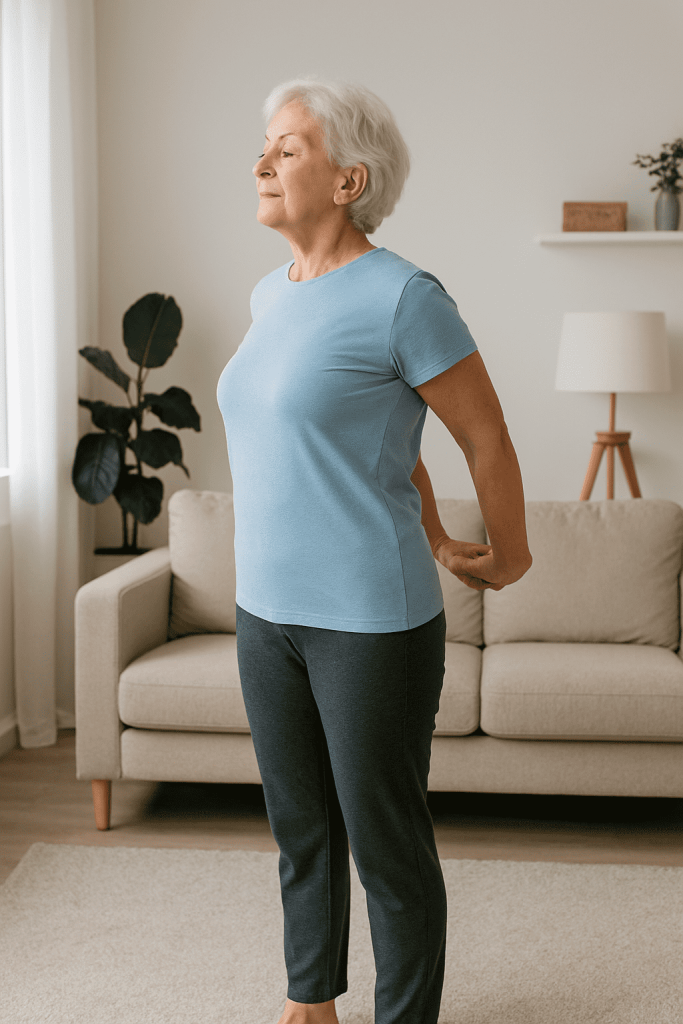
Shoulder Roll & Chest Opener
How to do it:
- Sit or stand tall with relaxed shoulders.
- Roll your shoulders up, back, and down in slow, smooth circles.
- After several rolls, place your hands on your hips or lightly behind you and lift your chest gently without leaning back.
What it may help with:
- Opening the chest area
- Easing tension around the shoulders
- Counteracting long periods of sitting
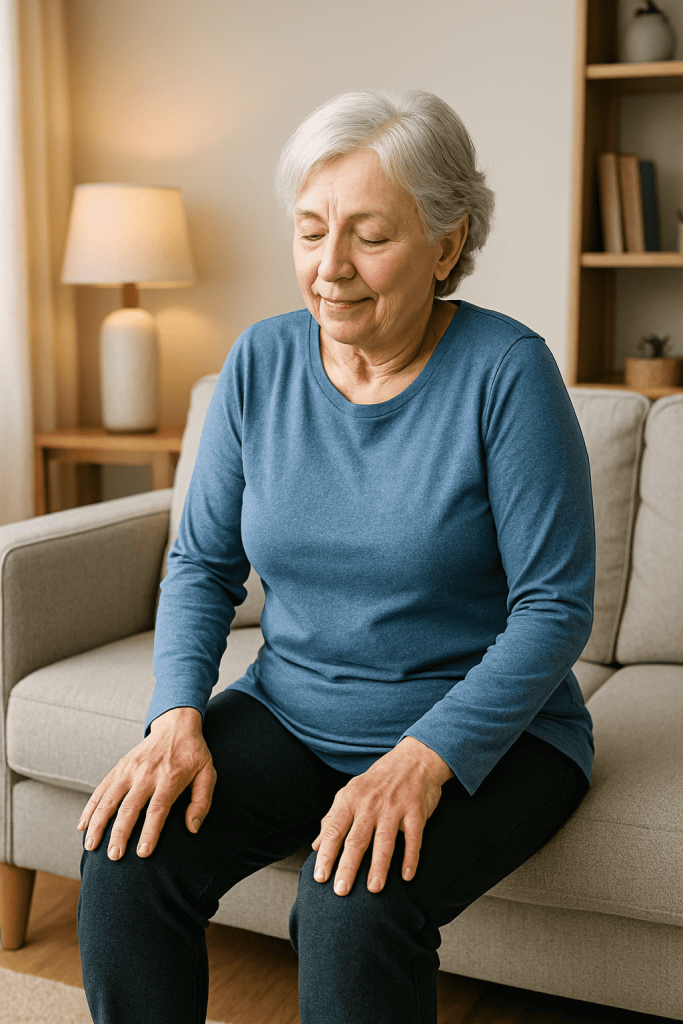
Seated Upper-Back Stretch
How to do it:
- Sit with your feet grounded and hands resting gently on your thighs.
- Round your upper back slightly while keeping your lower back supported.
- Imagine the space between your shoulder blades widening as you breathe.
What it may help with:
- Creating a sense of length through the upper back
- Relieving tightness from computer or phone use
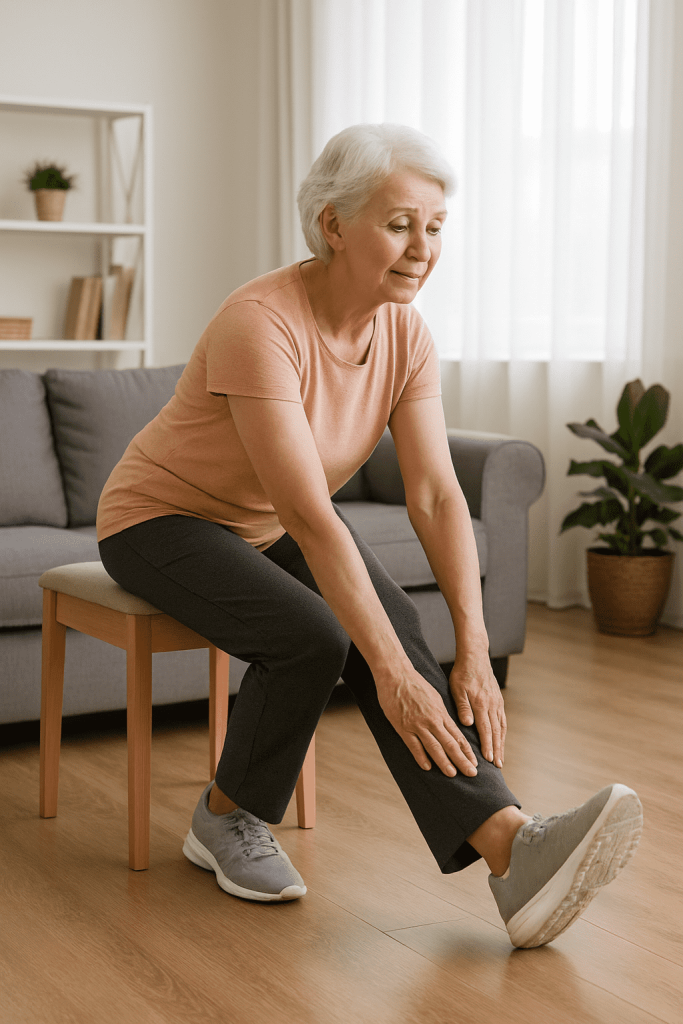
Seated Hamstring Stretch
How to do it:
- Sit on a chair with one leg extended forward, heel on the floor and toes relaxed upward.
- Keep your spine neutral and hinge forward slightly from the hips until you feel a comfortable stretch down the back of the leg.
What it may help with:
- Supporting ease during bending motions
- Reducing the feeling of tightness through the back of the thigh
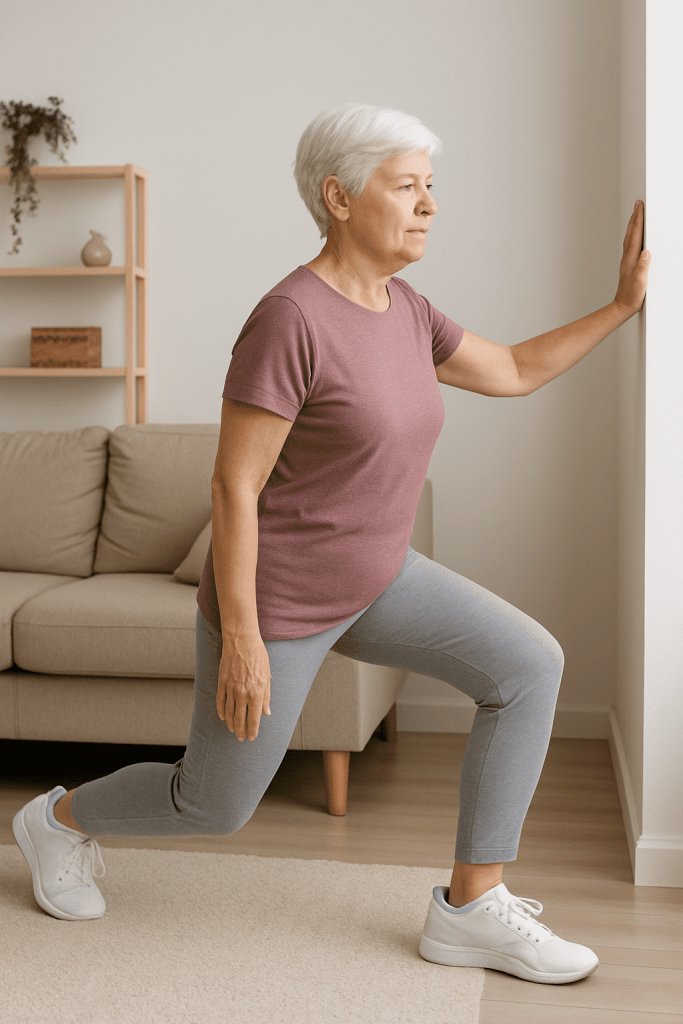
Gentle Hip-Flexor Stretch (Standing or Supported)
How to do it:
- Stand near a wall or counter for balance.
- Step one foot back and bend the front knee slightly.
- Keep your torso upright and shift your weight forward until you feel a mild stretch at the front of the hip of the back leg.
What it may help with:
- Offering relief from prolonged sitting
- Supporting movements that involve stepping or walking
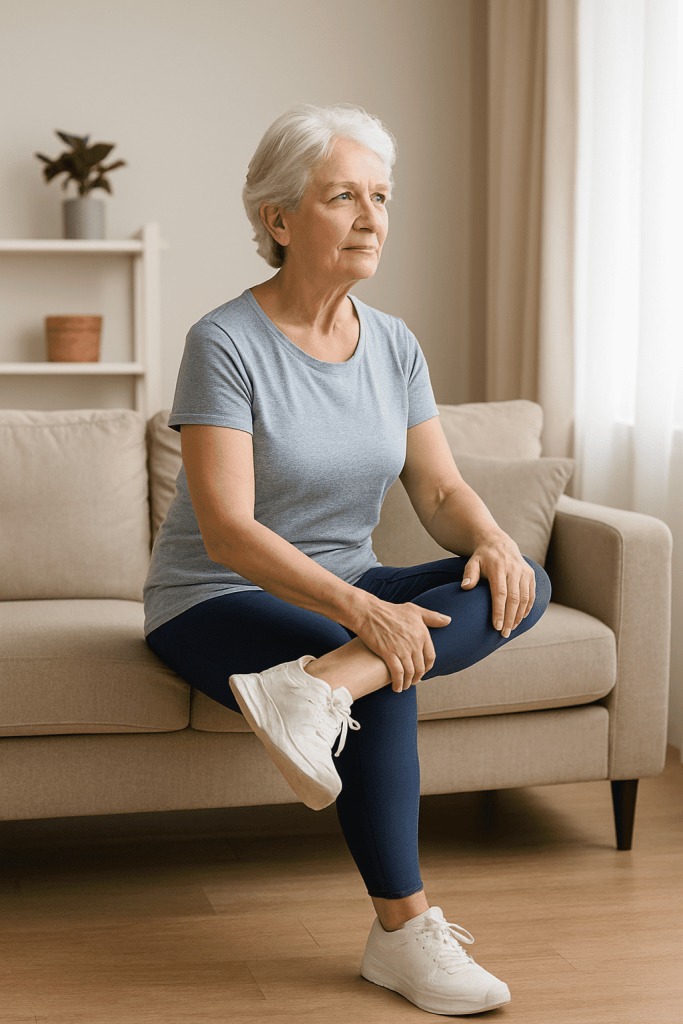
Figure-4 Hip Stretch (Seated Version)
How to do it:
- Sit tall on a chair and cross one ankle over the opposite knee.
- Let the lifted knee relax downward without pressing on it.
- If comfortable, lean forward slightly while keeping your spine long.
What it may help with:
- Easing tension around the outer hip
- Supporting comfortable turning and side-to-side movement
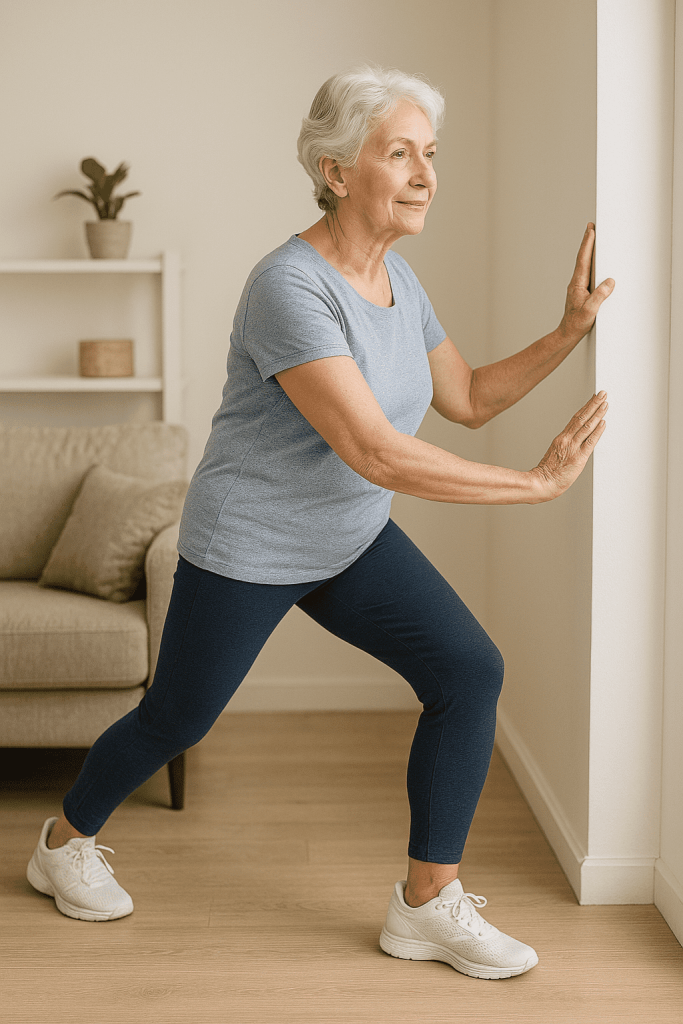
Calf Stretch & Ankle Circles
How to do it:
- Stand facing a wall with one foot forward and one back.
- Keep the back heel on the ground and lean forward gently until you sense the stretch in your calf.
- For ankle circles, sit or stand and slowly rotate each ankle in both directions.
What it may help with:
- Supporting comfort during walking
- Encouraging smoother ankle movement
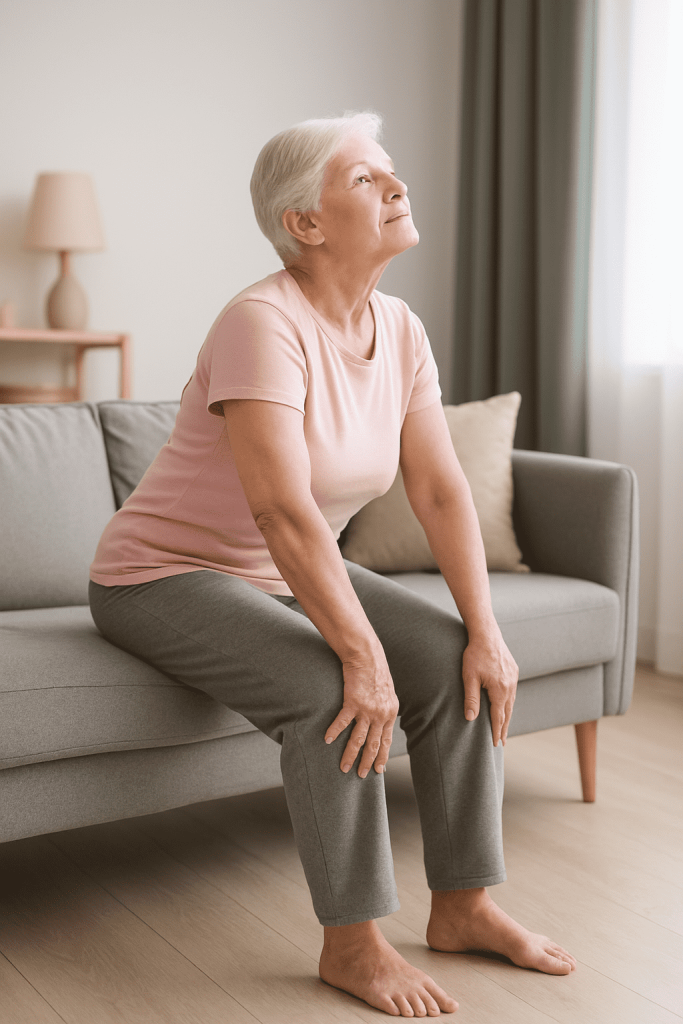
Cat–Cow (Chair or Floor)
How to do it:
- Chair version: Sit tall, place hands on your thighs, arch your back slightly as you inhale, then round your spine gently as you exhale.
- Floor version: On hands and knees, alternate between arching and rounding your spine in a slow rhythm.
What it may help with:
- Promoting a sense of ease through the spine
- Supporting comfortable bending and turning
Everyday Habits That Support Flexibility After 60
Small choices throughout the day can influence how the body feels during regular activities. Many adults find the habits below helpful when they want to support ease of movement.
- Light walking or gentle activity: Short bouts of movement can break up long periods of sitting and help the body feel less stiff.
- Regular position changes: Standing up, shifting posture, or taking brief movement breaks can keep your joints and muscles from settling into one position for too long.
- Simple strength exercises: Building strength in the legs, hips, and core can offer support for everyday motions like stepping, turning, and rising from a chair.
- Adequate hydration: Staying hydrated supports overall comfort and can influence how tissues feel during movement.
- Relaxed breathing: Slow, steady breathing may help ease muscle tension and make stretching feel more manageable.
Conclusion
If you’d like guided support, the Daily Stretches for Full Mobility program can be a helpful next step. It offers simple, approachable movements designed to fit easily into everyday life.
Taking a few minutes each day to move with intention can help your body feel more at ease during routine activities. There’s no need to focus on reaching a particular level of flexibility. Instead, the goal is to explore what feels steady, supportive, and comfortable for you. With small, consistent habits, many people find that daily motions such as standing up, reaching, and walking feel more manageable. Listening to your body and choosing movements that suit your current comfort level is what matters most.