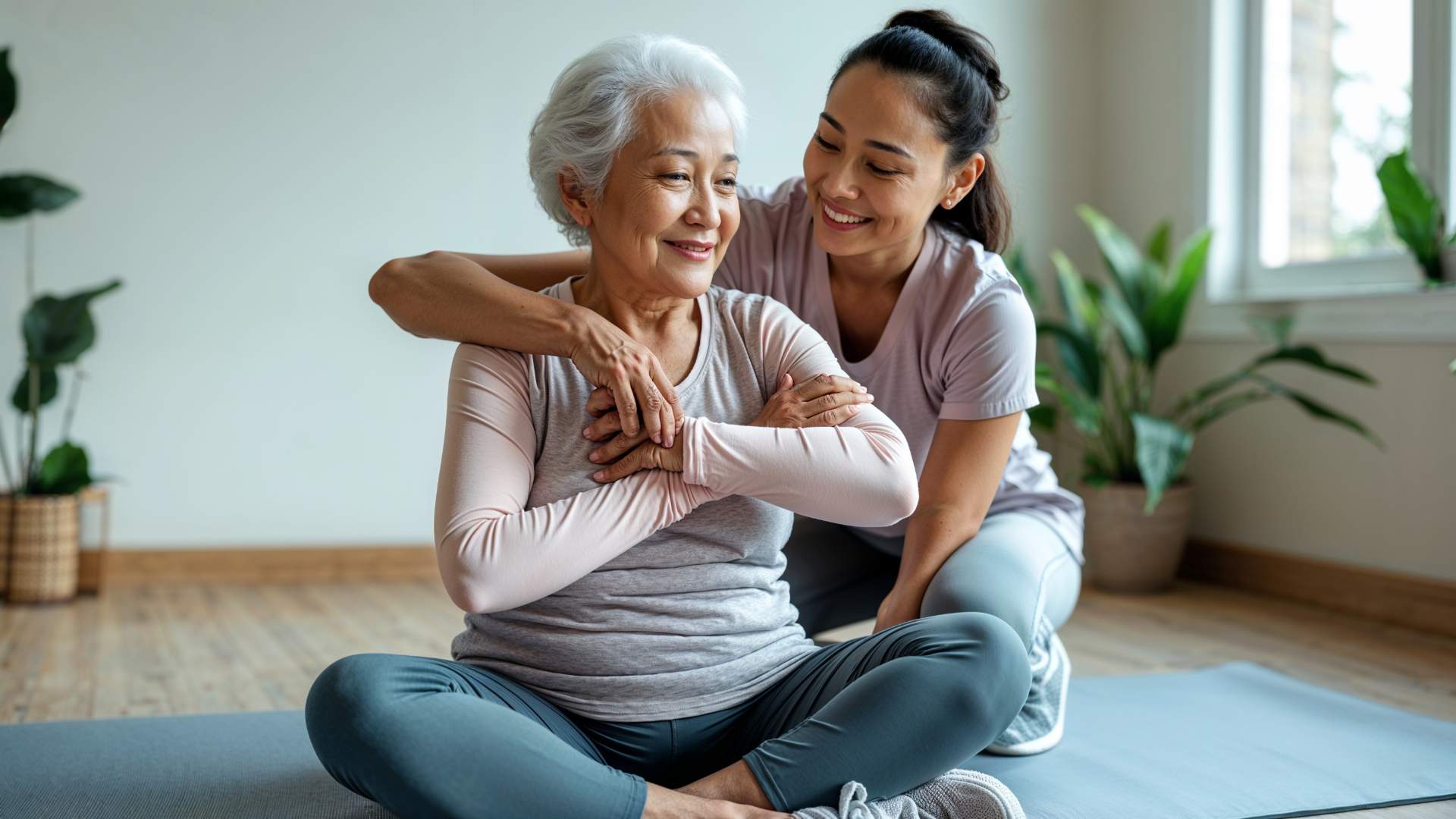
Get Your Flexibility Back With Assisted Stretching For 55+
Stretching is often recommended for keeping your muscles loose, your joints happy, and your body feeling younger. But what happens when stretching on your own feels difficult or even a little uncomfortable? That’s where assisted stretching can make all the difference. It’s a safe, supportive way for seniors to improve flexibility right at home—with a trusted partner guiding the way.
What Is Assisted Stretching?
Assisted stretching is a type of flexibility training where another person helps guide your body through gentle stretches. Instead of stretching on your own, a partner or trained professional supports your movement, helping you safely reach a deeper, more effective stretch than you might achieve alone.
For seniors, assisted stretching can be done with a fitness professional, a physical therapist, a caregiver, or even a family member. With the right support, it becomes easier to stretch safely and enjoy the many benefits of staying flexible and mobile.
Benefits Of Assisted Stretching
Stretching matters, but with a partner’s help, you gain benefits you can’t reach alone. Here’s why assisted stretching can make such a difference for older adults:
1. Deeper, Safer Stretches
When you stretch on your own, you might stop short out of fear of overdoing it or losing your balance. With a trained partner or a trusted loved one supporting your body, you can gently reach a fuller stretch, without strain or risk. They help guide your body safely into the position and out again.
2. Less Effort, More Relaxation
One of the biggest challenges with stretching alone is that you have to support your own body weight and remember the right form. Assisted stretching allows you to fully relax your muscles while your partner does the guiding. This relaxation helps your muscles release tension more effectively.
3. Improved Body Awareness
When someone assists you, they may notice areas of tightness or stiffness you didn’t realize were there. They can help adjust your position and give feedback on how your body is moving, which is hard to assess by yourself.
4. Encourages Regular Practice
Sometimes it’s easier to stay consistent when someone is doing it with you. Whether it’s a caregiver, spouse, or fitness instructor, having a partner keeps you motivated and accountable to stretch regularly.
5. Personalized, Guided Support
An assisted stretch session can be adapted to your unique needs. The person assisting can go gentler on your joints, work around a past injury, or focus on areas where you feel stiffest. This is much harder to do with self-stretching.
6. Safe Help for Limited Mobility
If you deal with limited mobility, arthritis, or balance issues, some stretches may feel difficult or even risky when done alone. Assisted stretching allows you to reach these movements more safely. With a partner’s support, there’s less chance of losing your balance, straining a joint, or holding the wrong position.
Research shows that regular assisted stretching can improve flexibility, muscle strength, and the ability to move through daily activities, even for people who can’t engage in high-intensity exercise. It’s a gentle, proven way to support your independence and make daily movements feel easier.
5 Assisted Stretches Seniors Can Try at Home
You don’t have to visit a clinic to enjoy assisted stretching. With a trusted partner, like a spouse, caregiver, or family member, you can try these simple stretches safely at home. Be sure to move slowly, breathe deeply, and stop if anything feels uncomfortable.
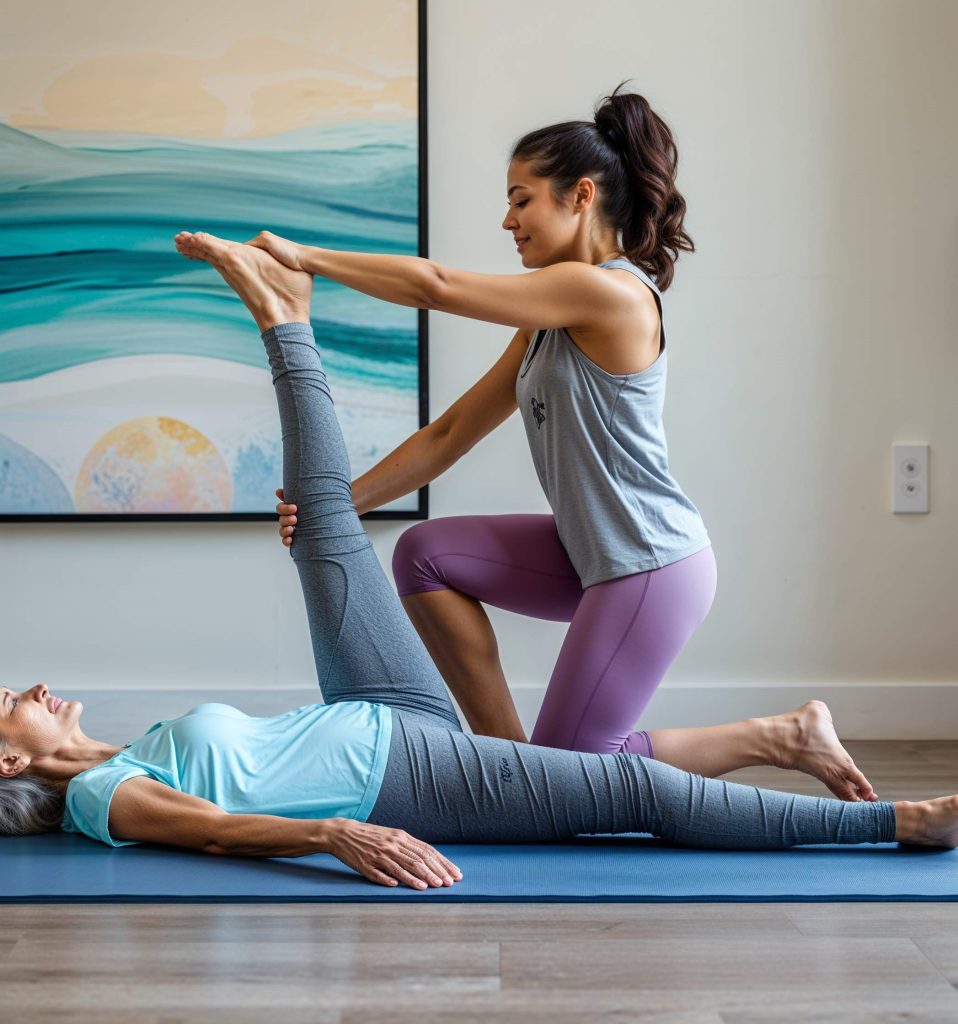
1. Hamstring Stretch (Lying or Seated)
- Lie on your back with one leg extended toward the ceiling.
- Your partner gently holds your leg behind the thigh or calf and slowly moves it toward your body until you feel a stretch in the back of your leg.
- Hold for 15–30 seconds, then switch legs.
Modification: Do this seated on a sturdy chair with your leg outstretched and your partner helping you lean forward slightly.
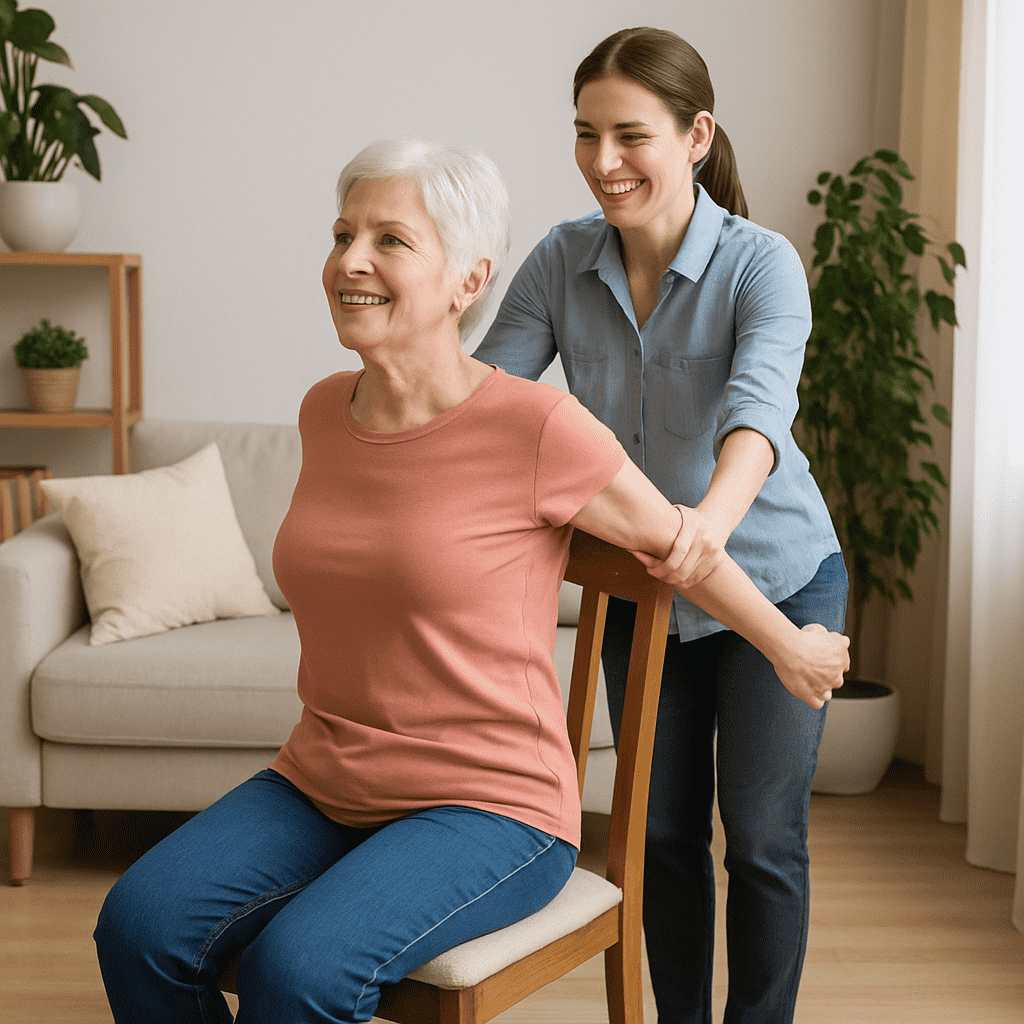
2. Chest Opener (Seated)
- Sit upright in a chair.
- Your partner stands behind you and gently helps you pull your arms backward, opening the chest.
- Feel a stretch across your chest and shoulders.
- Hold for 15–30 seconds, breathing deeply.
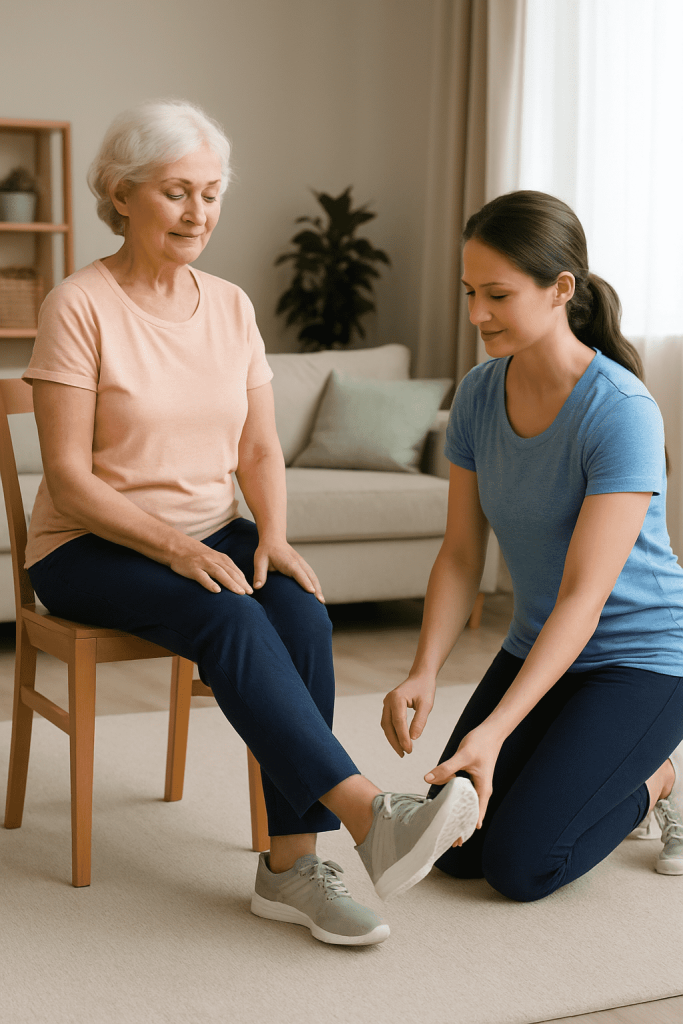
3. Calf Stretch (Seated or Standing with Support)
- Sit on a chair with one leg extended in front of you.
- Your partner gently presses your foot back toward your shin until you feel a stretch in your calf.
- Hold for 15–20 seconds. Switch sides.
- For standing, place your hands on a wall for balance while your partner helps position your foot.
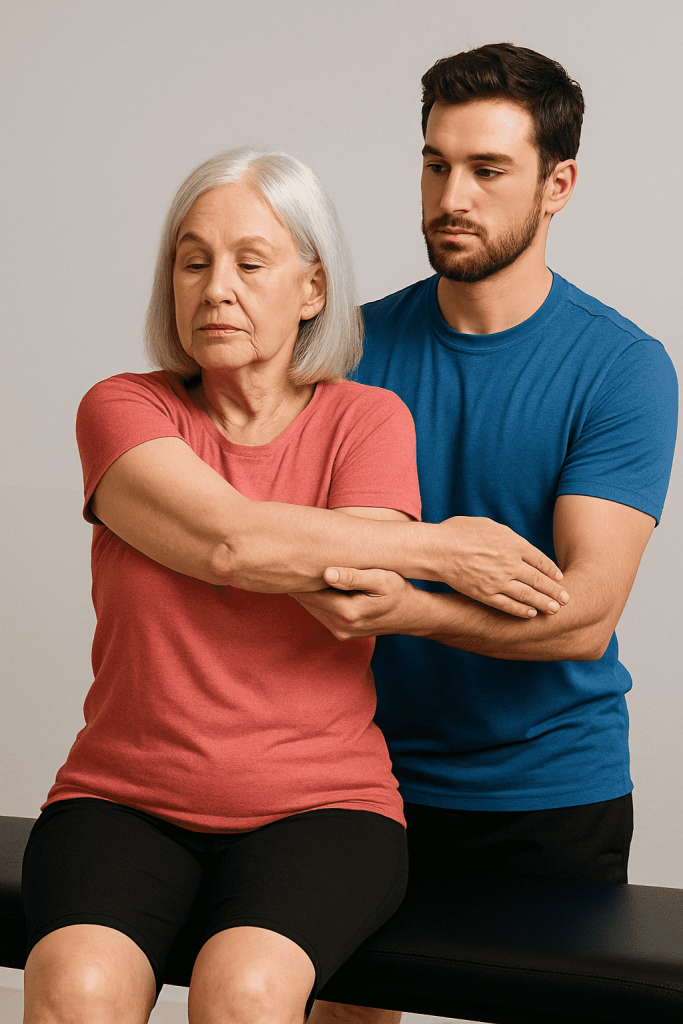
4. Shoulder Stretch (Seated)
- Raise one arm straight out in front of you.
- Your partner gently pulls the arm across your chest until you feel a stretch in your shoulder.
- Keep your shoulders relaxed.
- Hold for 15–20 seconds and switch sides.
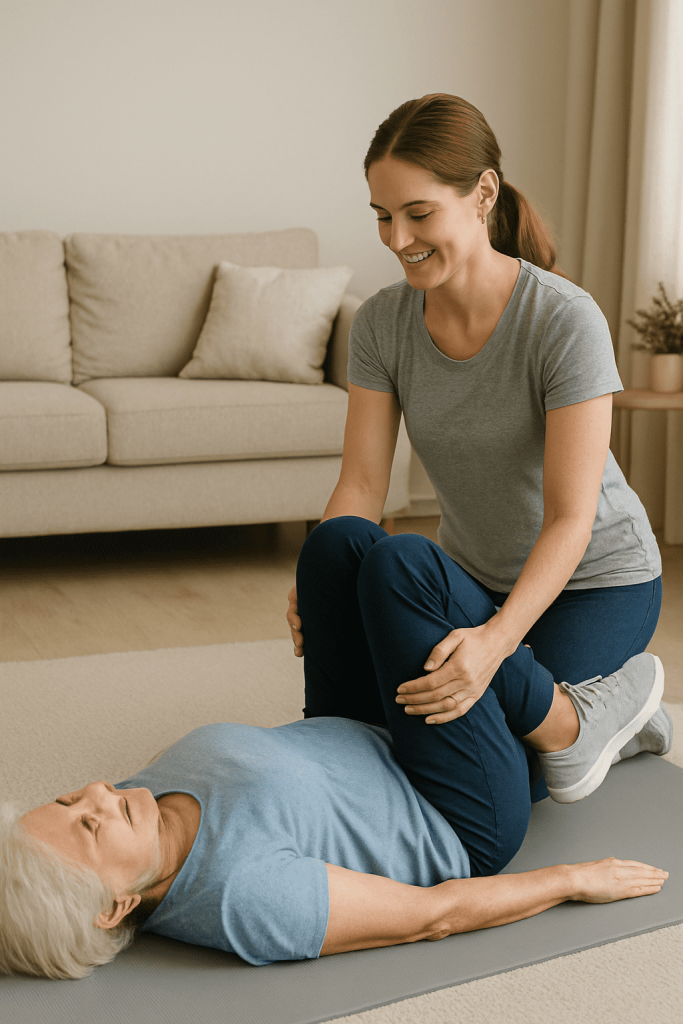
5. Gentle Lower Back Stretch (Lying)
- Lie on your back with both knees bent.
- Your partner gently guides both knees toward your chest to stretch your lower back.
- Only go as far as is comfortable.
- Hold for 15 seconds, then release.
Safety Tips for Assisted Stretching
Stretching should feel gentle and relieving, not painful. Here are some simple tips to stay safe:
- Communicate: Talk with your partner throughout the stretch. Let them know what feels good and what doesn’t.
- Move Slowly: Stretching should be slow and steady, never forced.
- Support Your Body: Use a chair, mat, or towel for extra comfort and stability.
- Watch for Medical Conditions: If you have osteoporosis, joint replacements, or chronic pain, work with a professional to learn modifications first.
- Stop at Discomfort: A stretch may feel tight, but it should never feel sharp or painful.
Wrap Up
The right stretches can help you feel more comfortable in your body each day. The 7 Days of Energy-Boosting Morning Stretches Class brings you simple, guided routines you can follow at home. Start today and build a habit that keeps you moving well.
Assisted stretching is just one part of staying mobile and active as you age. What truly makes the difference is consistency. You should give your body the care and movement it needs, day after day. Whether you stretch with support or on your own, the goal is the same: move with ease and keep doing the things you love.