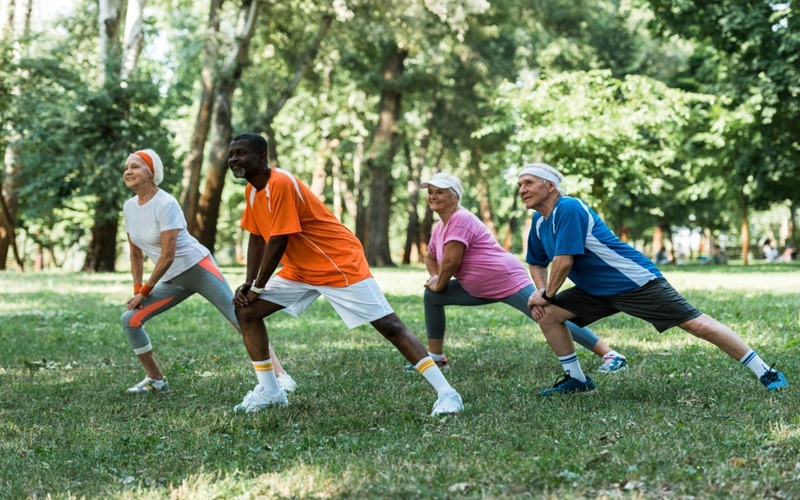
Glute Exercises for Seniors: 8 Safe Moves to Build Strength
The best glute exercises for seniors strengthen the hips, reduce back pain, and lower fall risk — and you can do them without getting down on the floor. Strong glutes are the foundation of everything: standing up from a chair, walking upstairs, maintaining balance, and protecting your knees. The eight moves below are safe, effective, and designed specifically for older adults.
Why Glute Strength Matters as You Age
Glute weakness is one of the most common and most overlooked problems in older adults. When the glutes aren't doing their job, other muscles compensate — your lower back tightens, your knees take on extra load, and your balance suffers. Research consistently links weak glutes to increased fall risk, hip pain, and difficulty with everyday movement.
The good news: glute strength responds well to targeted exercise at any age. You don't need heavy weights or a gym. The moves below use bodyweight, a sturdy chair, and a wall — nothing else.
8 Glute Exercises for Seniors (No Floor Required)
1. Seated Glute Squeeze
Sit tall in a sturdy chair with your feet flat on the floor. Squeeze your glute muscles as hard as you comfortably can, hold for 5 seconds, then release. This simple isometric move activates the glutes without any joint stress — a perfect starting point. Aim for 10–15 reps, 2–3 sets.
2. Sit-to-Stand (Chair Squats)
This is one of the most functional glute exercises for seniors — you're training the exact movement you do dozens of times per day. Start seated, feet hip-width apart and slightly behind your knees. Lean forward slightly at the hips, press through your heels, and stand up fully, squeezing your glutes at the top. Slowly lower back down. Do 8–12 reps. If you need support, hold the chair arms lightly on the way up.
Sit-to-stands are also a cornerstone of the Fall Prevention Exercises class at Better5, which pairs glute strength with balance training to reduce fall risk.
3. Standing Hip Extension (Chair Supported)
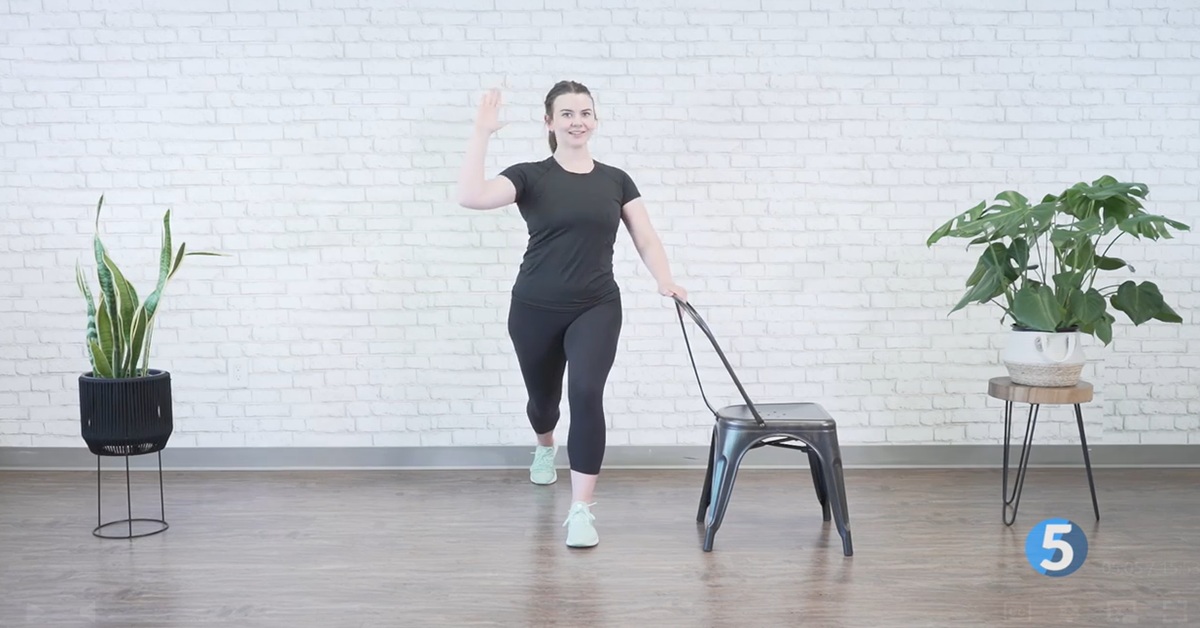
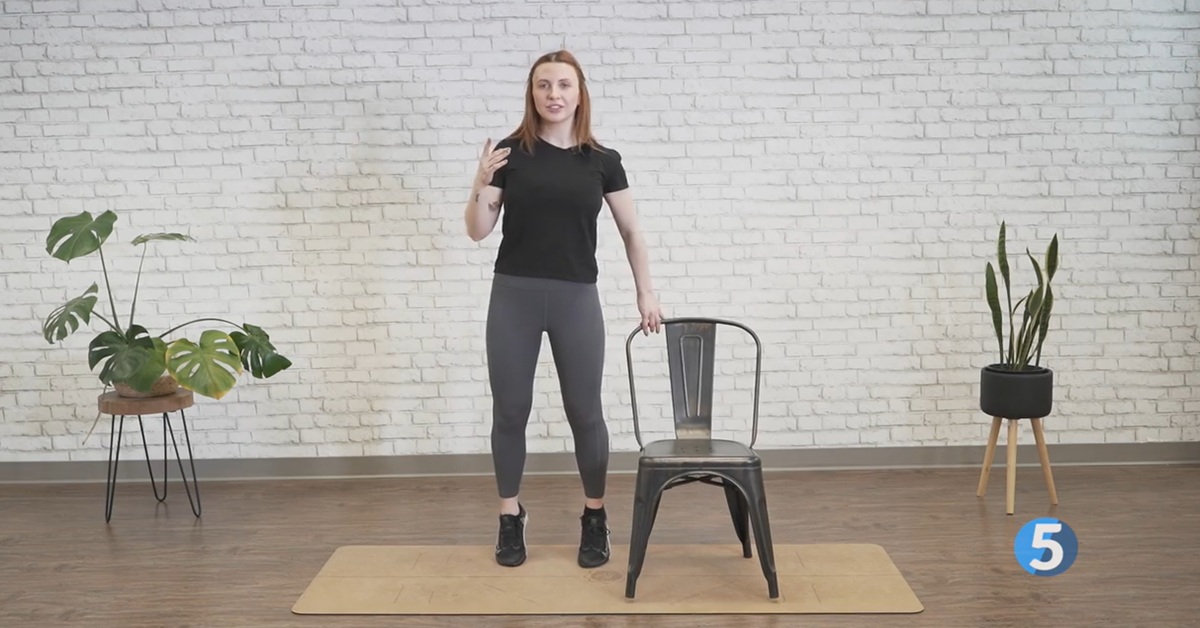
Stand behind your chair with both hands on the back for support. With a slight forward lean, lift one leg straight back — not out to the side — and hold for 2–3 seconds at the top. You should feel this in the back of the hip and glute, not the lower back. Lower slowly. Do 10–12 reps on each side. Keep your core gently engaged throughout.
4. Standing Hip Abduction
Still holding the chair back, stand on one leg and lift the other out to the side — about 12 inches is plenty. Hold for 2 seconds, lower slowly. This targets the gluteus medius, the hip stabilizer that's critical for balance and walking. Weak glute medius is a major contributor to falls and hip pain in older adults. Do 10–12 reps each side.
If you've been working on your hip stability, you'll recognize this movement from the 7 Days of Chair Pilates for Mobility program — it's one of the key moves for building lateral hip strength without floor work.
5. Mini Wall Squat
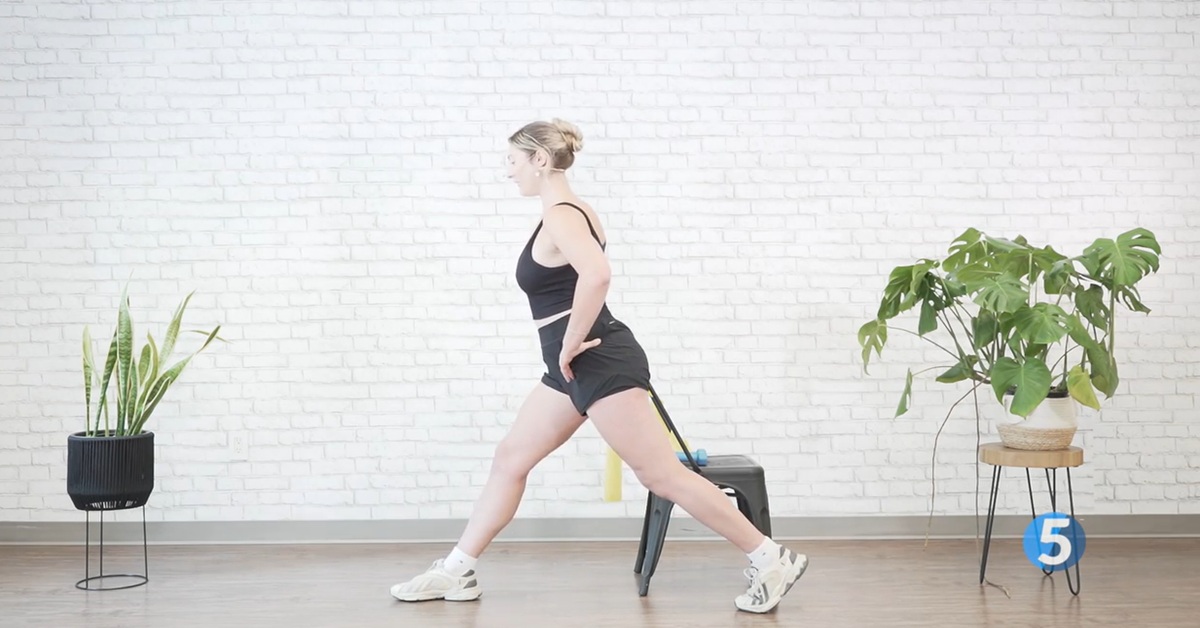
Stand with your back against a wall, feet 12–18 inches out from the wall. Slide down until your thighs are at roughly a 30–45 degree angle (not a full squat). Hold for 5–10 seconds, then push back up. This is a controlled, low-impact way to fire the glutes and quads together without knee stress. Start with a shallow squat and only go deeper as your strength builds. Do 8–10 reps.
6. Standing Kickback (Glute Focused)
Standing behind your chair, bend one knee to about 90 degrees and press that foot back and slightly up — like you're trying to push something away with your heel. This is different from the hip extension because the knee is bent, which isolates the glute more effectively. Hold the top position for 2 seconds. Do 10–12 reps each side. Keep your hips level and avoid arching your lower back.
7. Lateral Step (Side Step)
Step sideways — one large step to the right, then bring your left foot in to meet it. Take 8–10 steps in one direction, then return. This engages the glute medius with every step and mirrors the way your hips work during walking and balance correction. To add resistance, hold a chair back lightly for confidence but try to stay upright without leaning on it.
Lateral movement is also a key component of the balance program at Better5 — the Fall Prevention Exercises Volume 2 class walks you through progressive side-step and hip stability drills.
8. Standing Glute Squeeze with Heel Raise
Stand behind your chair, squeeze both glutes firmly, and at the same time rise up onto your toes. Hold for 3 seconds at the top, then lower. This combines glute activation with calf and ankle work — a multi-purpose move for stability. Do 10–12 reps. If heel raises are uncomfortable, just do the standing glute squeeze alone.
How to Structure These Exercises
You don't need to do all eight moves every day. A good starting point:
2–3 days per week — alternate with walking or other movement
2 sets of each exercise — work up to 3 sets as you get stronger
Rest 30–60 seconds between sets
Warm up first — 3–5 minutes of gentle walking or marching in place
Consistency matters more than intensity. Two focused sessions per week will build real strength over 4–6 weeks.
Common Mistakes to Avoid
Rushing through reps. Slow, controlled movement recruits more muscle fibers and protects your joints. The glutes are a large, powerful muscle — they respond to time under tension, not speed.
Using the lower back instead of the glutes. On hip extension and kickback exercises, if you feel your lower back working harder than your glutes, reduce the range of motion. The glutes should be driving the movement.
Skipping the isometric moves. Isometric exercises like the seated glute squeeze feel simple, but they're highly effective for seniors who are rebuilding mind-muscle connection after years of sedentary habits.
Pairing Glute Work with Other Strength Training
Glute strength works best as part of a broader lower-body program. If you've been building your lower-body strength with Seated Pilates exercises, adding glute work will complete the picture — your quads help push you up from a chair, while your glutes stabilize your hips and pelvis once you're standing.
For a complete lower-body program that combines knee stability, quad strength, and hip stability in one place, the Improved Knee Strength and Mobility class at Better5 is a natural complement to this glute routine.
How Long Until You See Results?
Most seniors notice improved ease with sit-to-stand movements within 2–3 weeks of consistent glute training. Measurable strength gains typically appear at 4–6 weeks. Balance improvements often follow around 6–8 weeks, as the hip stabilizers (gluteus medius) adapt to the new demands.
The key is showing up 2–3 times per week. Short sessions done consistently outperform long sessions done sporadically every time.
Glute Exercises for Seniors: Summary
Strong glutes protect your lower back, support your knees, and keep you steady on your feet. The eight glute exercises for seniors above are safe, equipment-free, and designed to be done at home. Start with 2 days per week, focus on slow controlled movement, and build from there.
Ready to take your lower-body strength further? Explore Better5 classes built for seniors like you — all designed for home, no equipment needed.