
Hand Exercises for Seniors: Improve Grip and Dexterity
Hand exercises for seniors are one of the simplest ways to reduce stiffness, ease arthritis pain, and hold on to the grip strength you need for everyday tasks. If opening jars, turning doorknobs, or holding a pen has become harder than it used to be, these eight gentle moves can help — no equipment needed, and you can do them from your chair.
Why Hand Exercises Matter as You Age
Most people don't think about their hands until something goes wrong. But the hands do an enormous amount of work every day — writing, cooking, buttoning clothes, carrying groceries, picking up grandchildren. As we get older, muscle mass in the hands decreases, joints stiffen, and conditions like arthritis become more common.
The good news: the hands respond well to gentle, consistent exercise. Research shows that regular hand and finger exercises can reduce pain, improve range of motion, and help maintain the fine motor skills needed for independence. Even five to ten minutes a few times a week can make a noticeable difference.
Hand strength is also closely linked to overall body strength and fall risk. Studies have found that grip strength is one of the strongest predictors of health outcomes in older adults — which makes it worth paying attention to, not just for convenience, but for longevity.

How to Do These Hand Exercises for Seniors Safely
Work in a pain-free range. A gentle stretch or mild effort is fine — sharp pain is not.
If you have active arthritis flare-ups, focus on slow, gentle range-of-motion moves only.
Warm up first — rinse your hands under warm water for a minute, or gently rub them together.
Perform these seated at a table or with your arms resting comfortably in your lap.
Aim for 2–3 sessions per week to start. Daily is fine once they feel easy.
8 Hand Exercises for Seniors
1. Finger Bend and Straighten
Start with your hand open, fingers relaxed and straight. Slowly curl your fingers down into a gentle fist, then straighten them fully. Don't force — keep the movement smooth and controlled. This lubricates the finger joints and reduces morning stiffness. Do 10 reps on each hand.
2. Thumb Circles
Hold your hand relaxed in front of you. Move your thumb in slow circles — 5 circles clockwise, then 5 counter-clockwise. The thumb does about 40% of all hand function, so keeping it mobile is critical for tasks like pinching and gripping. 3 sets per hand.
3. Finger Spread (Fan Out)
Place your hand flat on a table, palm down. Slowly spread your fingers as wide apart as you comfortably can, then bring them back together. This strengthens the small muscles between the fingers and improves dexterity. 10 reps per hand.
4. Wrist Flexion and Extension
Rest your forearm on a table with your hand hanging off the edge, palm facing down. Gently lift your hand up (extension), hold for a second, then lower it down (flexion). This keeps the wrist flexible and reduces tension that can contribute to hand stiffness. If you want to add more challenge over time, the Healthy Wrists and Improved Grip Strength in 7 Days at Better5 also works through lower-arm and grip strength with safe chair-based movements. 10 reps, 2 sets per hand.
5. Finger Pinch
Touch your thumb to each fingertip, one at a time — index, middle, ring, pinky — then reverse back to your index finger. Move through at your own pace. This targets the small muscles responsible for fine motor control and grip, and it's especially helpful if you find buttoning clothes or handling small objects challenging. 3 rounds per hand.
6. Grip Squeeze
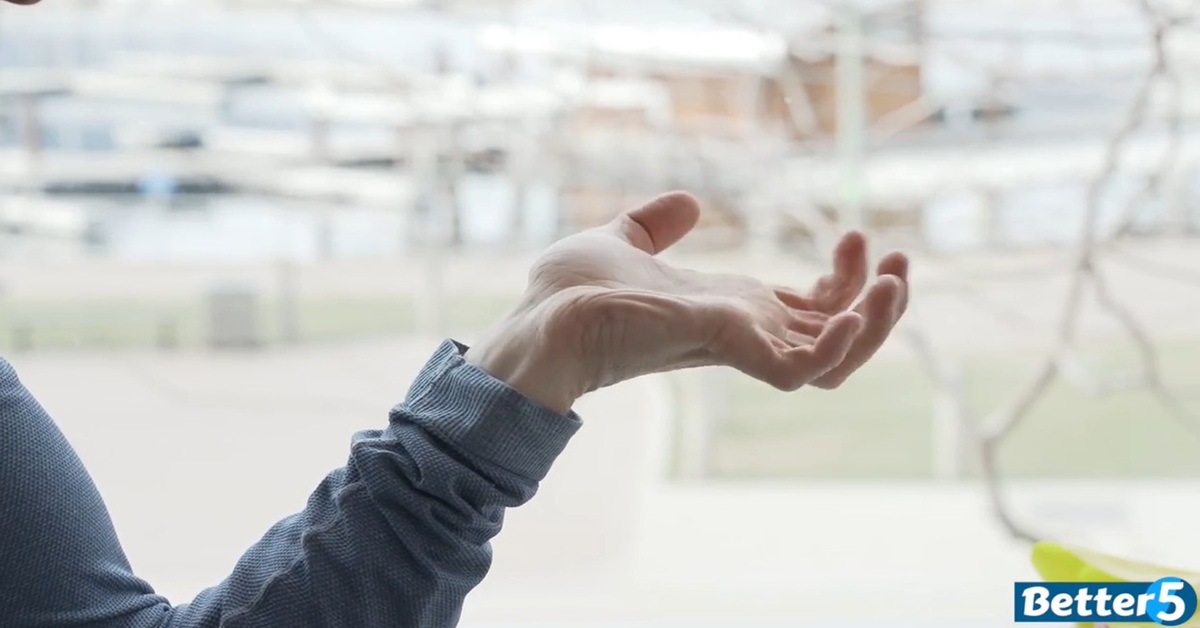
Roll a small towel into a cylinder, or use a soft stress ball. Squeeze firmly, hold for 3–5 seconds, then release slowly. This is one of the best ways to directly build hand and forearm grip strength. If you're working on overall strength in addition to hand health, pairing this with a program like the Fall Prevention Exercises class at Better5 builds the full-body stability that keeps you safe day to day. 10 reps per hand, 2–3 sets.
7. Knuckle Bend (Hook Fist)
Start with fingers straight. Bend only the top two knuckles of each finger, keeping the base knuckles straight — your fingers form a hooked or claw shape. Straighten, then repeat. This targets the tendons and smaller joints that are often the first to stiffen with arthritis. 10 reps per hand.
8. Wrist Rotation
Rest your forearm on your lap or a table, hand hanging over the edge. Slowly rotate your wrist — palm facing up, then palm facing down — like turning a doorknob. This maintains pronation and supination, the wrist movements you use constantly when cooking, dressing, and picking things up. 10 reps each direction, per hand.
Adding Hand Health to Your Routine
The best part about hand exercises is that you can do them almost anywhere — at the breakfast table, while watching TV, or during a rest break in the day. Consistency matters more than intensity here.
If you're also working on balance and overall mobility — which pairs well with hand strength for fall prevention — the gentle balance exercises guide at Better5 is a great companion resource, or try the 7 Days of Chair Pilates for Mobility & Strengthening class for a low-impact full-body program you can follow along with at home.
For whole-body strength that supports grip, posture, and everyday independence, the Get Stronger Arms in 7 Days seated class at Better5 builds the shoulder, arm, and wrist mobility that makes hand strength training even more effective.
How Often Should Seniors Do Hand Exercises?
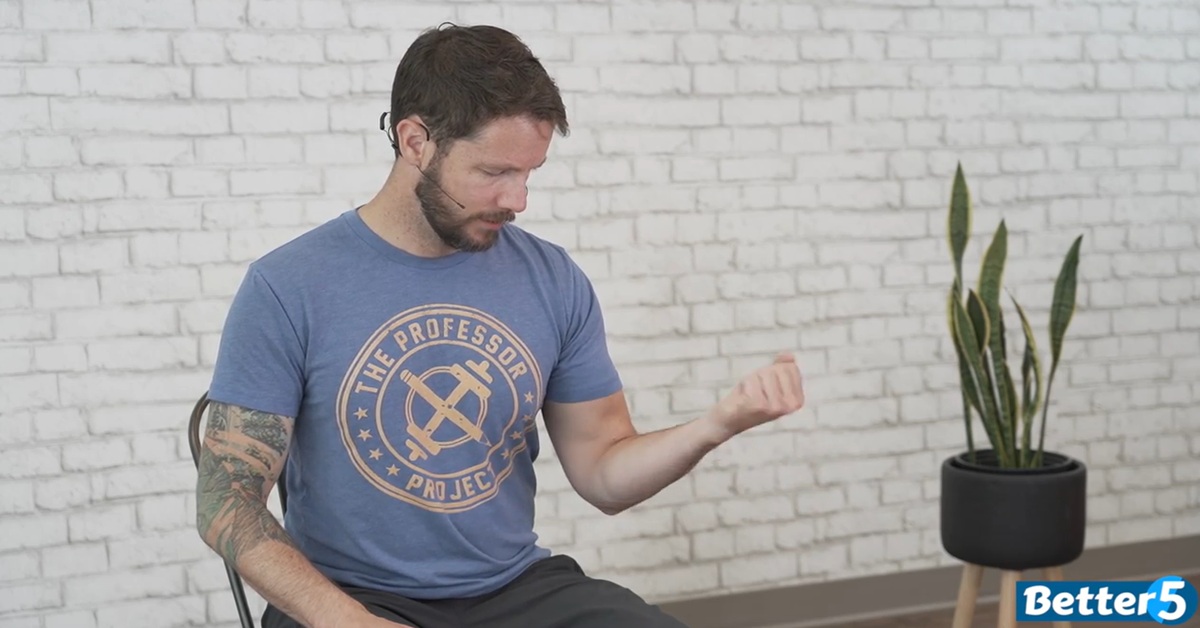
For most seniors, 2–3 sessions per week is a solid starting point. If your hands are particularly stiff in the morning (common with arthritis), a short 5-minute routine right after waking — while hands are warmed up from being under the covers — can make mornings significantly easier.
Listen to your body. If a movement causes a sharp, shooting, or unusual pain, stop that exercise. Mild soreness after a session is normal; sharp joint pain is not.
When to Talk to a Doctor
Hand exercises are safe for most seniors, but it's worth checking in with your doctor or a physiotherapist if you have a recent hand or wrist injury, severe rheumatoid arthritis, or nerve conditions like carpal tunnel syndrome. A professional can tailor the right exercises for your specific situation.
Start Building Grip Strength Today
Hand exercises for seniors are a small investment with a big payoff. Stronger, more flexible hands mean easier mornings, more independence in daily tasks, and better quality of life — and all eight of these moves take less than ten minutes. Start with two or three moves today and build from there.
Ready to build strength from head to toe? Explore Better5 classes built for seniors like you — gentle, guided, and designed for real results at home.