Hip Exercises for Seniors: 8 Safe Moves for Strength
Hip exercises for seniors strengthen the muscles that support walking, balance, and everyday movement — and they’re one of the best ways to reduce fall risk as you age. Whether you’re dealing with hip stiffness, recovering from a setback, or simply want to stay strong and independent, these 8 gentle moves are safe, effective, and require no equipment.
Why Hip Strength Matters After 60
Your hips are the engine of your lower body. They power almost every movement you make — getting out of a chair, climbing stairs, walking down the hall, or even just shifting your weight as you stand. When hip muscles weaken, everything downstream gets harder.
Here’s what weakened hips lead to:
- Wobbly balance — the hip abductors and glutes are key stabilizers; when they fade, you sway
- Increased fall risk — a direct link between hip weakness and falls has been well-established in older adults
- Lower back pain — tight hip flexors tilt the pelvis forward, loading the lumbar spine
- Reduced independence — daily tasks feel harder when your hips aren’t doing their job
The good news? Hip strength responds quickly to training. Even simple, consistent movement a few times a week creates noticeable change in how you feel and move.
8 Hip Exercises for Seniors (All Safe, No Equipment)
Do these in sequence for a 15–20 minute session, or pick 3–4 to add to your existing routine. Move slowly, breathe steadily, and stop if you feel sharp pain.
1. Seated Hip March
Target: Hip flexors, core
How to do it: Sit tall in a chair with feet flat on the floor. Slowly lift your right knee toward your chest, hold for 2–3 seconds, then lower. Repeat on the left side. That’s one rep.
Reps: 10–15 per side
Why it helps: Activates the hip flexors and gets blood flowing to the hip joint — a great warm-up move.
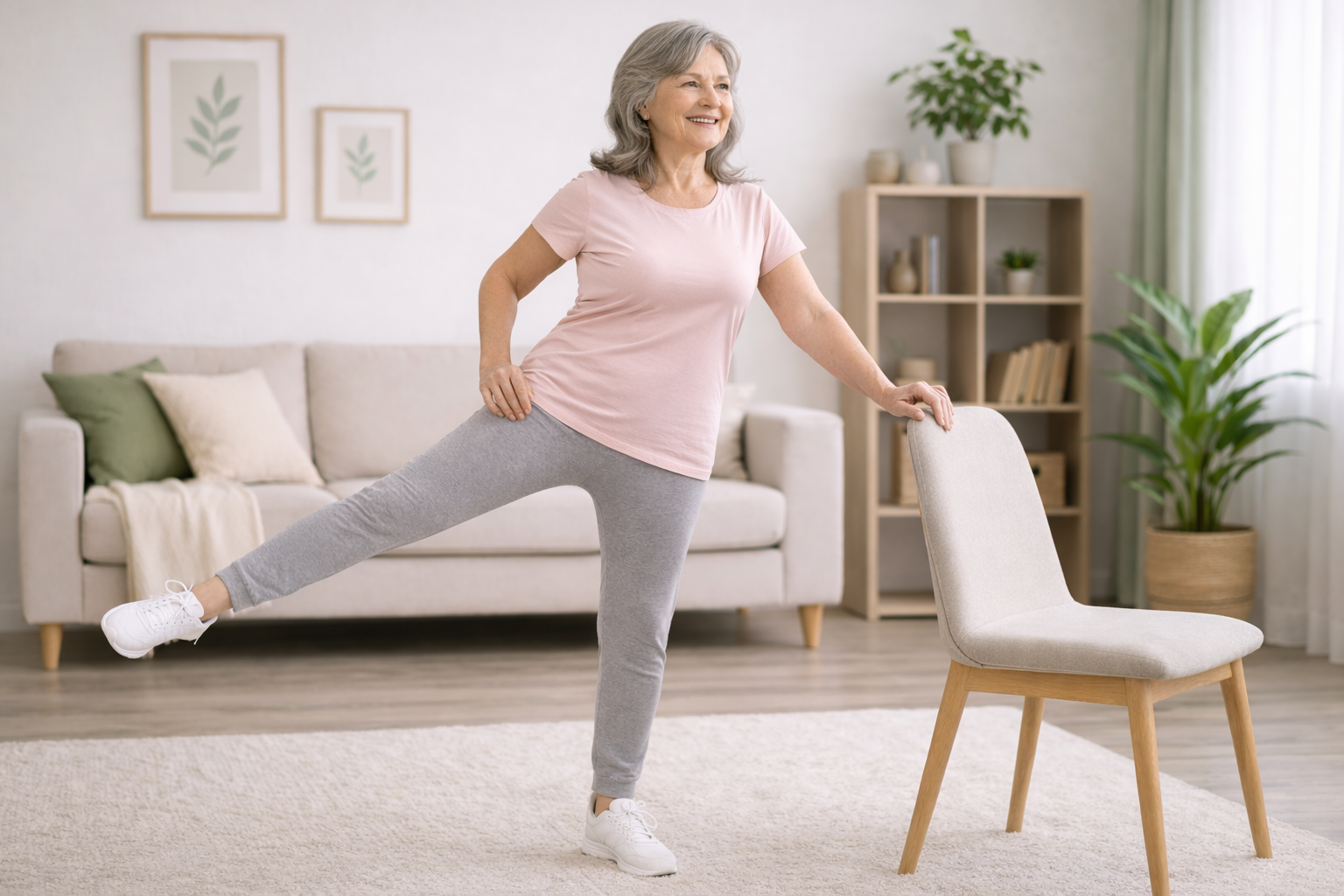
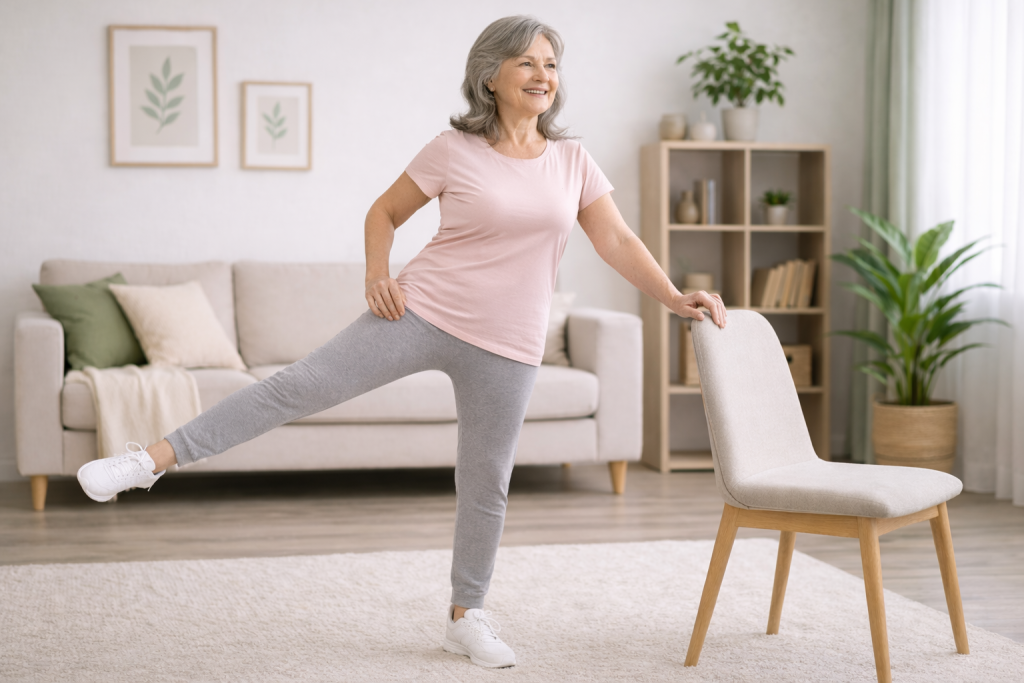
2. Standing Hip Abduction
Target: Hip abductors, glutes
How to do it: Stand behind a chair and hold the backrest for support. Keeping your back straight and toes pointing forward, slowly lift your right leg out to the side. Hold for 2 seconds, then lower with control. Switch sides.
Reps: 10–12 per side
Why it helps: Strengthens the lateral hip muscles that keep you stable when you’re standing on one leg — like stepping over a curb or taking stairs.
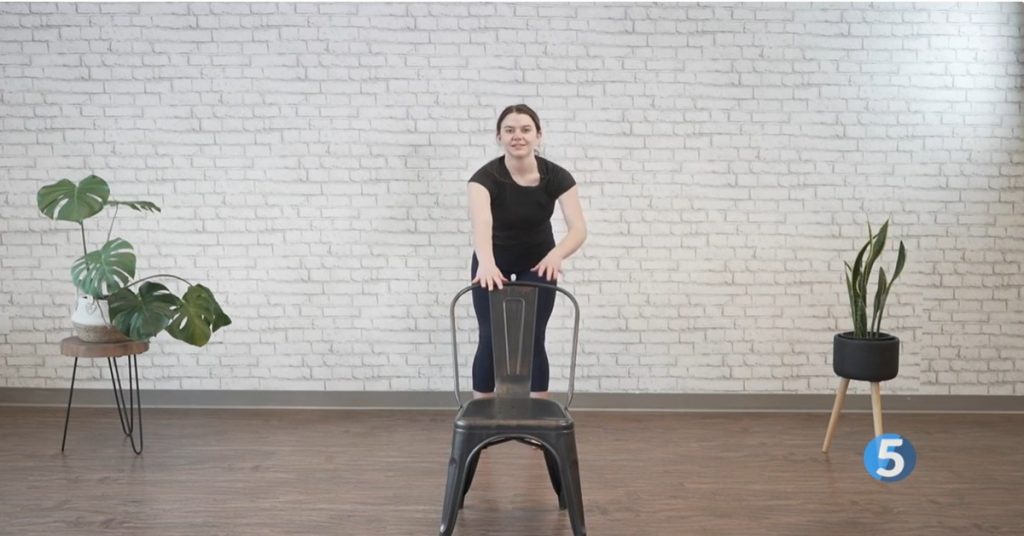
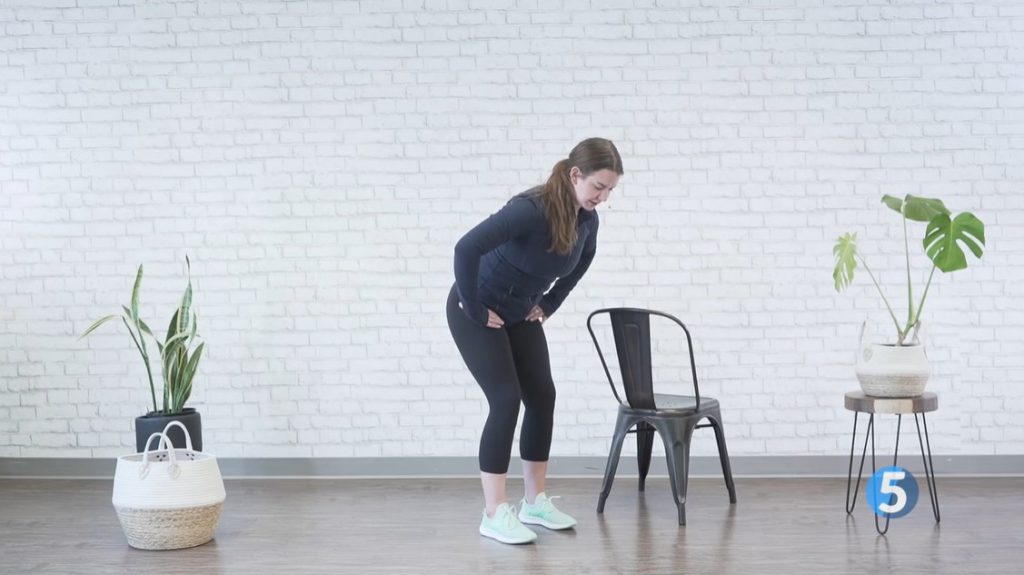
3. Hip Hinge (Chair-Assisted)
Target: Glutes, hamstrings, hip extensors
How to do it: Stand with feet hip-width apart, hands on a chair back. Push your hips back as if sitting down in slow motion — knees soft, back flat, chest up. Feel the stretch through the back of your hips, then press through your heels to stand tall.
Reps: 8–12
Why it helps: Teaches your body how to hinge safely from the hips, which protects your lower back every time you bend or pick something up.
4. Seated Clamshell
Target: Outer hips, glutes
How to do it: Sit at the edge of your chair. Place your feet together and let your knees fall slightly outward. Slowly open your right knee outward (like a clamshell opening), hold 2–3 seconds, then bring it back. Repeat on the left.
Reps: 10–15 per side
Why it helps: Targets the often-neglected outer hip muscles that help stabilize the pelvis — important for walking with confidence.
5. Standing Hip Extension
Target: Glutes, hip extensors
How to do it: Hold the back of a sturdy chair. Keeping your leg straight and your body upright, slowly lift your right leg straight back behind you. Don’t arch your back — let the glute do the work. Hold 2 seconds, lower slowly.
Reps: 10 per side
Why it helps: Directly strengthens the gluteus maximus — the largest muscle in your body and the primary driver of walking power.
6. Hip Circles (Seated)
Target: Hip joint mobility, hip flexors
How to do it: Sit tall in a chair. Lift your right knee and make slow, controlled circles with it — forward, out, back, and in. Reverse direction after 5 circles. Repeat on the left.
Reps: 5–8 circles each direction, each side
Why it helps: Lubricates the hip joint and improves range of motion. Great for people who feel stiff first thing in the morning.
7. Lateral Step (Side Step)
Target: Hip abductors, inner thighs, balance
How to do it: Stand with feet together near a chair or wall (for safety). Step your right foot out to the side, then bring your left foot to meet it. Take 5–8 steps right, then 5–8 steps left.
Reps: 2–3 sets
Why it helps: One of the most functional hip exercises you can do — mimics the lateral movements needed to catch yourself if you stumble, and builds the muscles that keep you upright while walking.
8. Standing Hip Flexor Stretch
Target: Hip flexors (front of hip)
How to do it: Stand behind a chair with both hands on the backrest. Step your right foot back about 2 feet. Gently tilt your pelvis forward (tucking your tailbone slightly) until you feel a stretch along the front of your right hip. Hold 20–30 seconds. Switch sides.
Reps: 2 holds per side
Why it helps: Tight hip flexors are extremely common in older adults — especially those who sit for long periods. Stretching them regularly relieves lower back tension and restores upright posture.
How Often Should Seniors Do Hip Exercises?
Aim for 3–5 times per week. The hip muscles respond well to consistent, gentle training — you don’t need to go hard to see results. If you’re new to exercise or recovering from an injury, start with 2–3 sessions per week and build gradually.
A simple rule: if your hips feel stiff the next day, you did enough. If they feel fine, you can add a few more reps next time.
Pairing Hip Work With Balance Training
Hip strength is one piece of the puzzle. For the best results — especially if fall prevention is your goal — pair these hip exercises for seniors with dedicated balance and lower-body work. The Fall Prevention Exercises class at Better5 is specifically designed to build the strength and stability that keeps you on your feet, and it pairs perfectly with this hip routine.
If you want to add a knee and hip mobility focus, the Seated Knee & Hip Exercises class at Better5 walks you through gentle chair-based movements that target both joints — ideal if you’re managing stiffness or discomfort.
You can also explore more targeted lower-body work in the 5 Easy Leg Strength Exercises for Seniors post, which covers the knee and quad muscles that work alongside your hips every time you walk or climb stairs.
For broader flexibility work that complements hip exercises, the 8 Stretching Exercises for Seniors post covers full-body moves that keep everything loose and mobile.
Start Small, Build Steadily
The best hip exercises for seniors are the ones you actually do. You don’t need a gym, equipment, or a lot of time — just a chair and a few minutes. Start with the seated moves if you’re newer to exercise, then add the standing exercises as your confidence and strength grow.
Consistent hip work — even just 10–15 minutes a few times a week — translates directly into easier walking, better balance, and more confidence in everyday life. That’s the whole point.
Ready to move more? Explore Better5 classes built for seniors like you — gentle, effective, and designed for older adults at every fitness level.