
Is It Too Late To Start Exercising? A Senior-safe Plan
“Is it too late to start exercising?” This question is common among the senior community for good reason. Jumping back into exercise after years or decades of little to no physical activity can feel daunting, especially when you’re unsure what’s safe, effective, or worth starting at all.
But the short answer is a resounding “no”—it’s not too late to start exercising, even if you’re in your 60s, 70s, or beyond. After decades of limited movement, it’s natural to question whether your body can still respond to exercise and change. This article looks at research that shows what your body can still do, where to begin, and safety tips to make it seamless.
Can You Start Exercising at 60, 70, or 80?
Yes, you can, and multiple studies back the viability of exercising in your senior years. Research from Birmingham University provides a clear answer to whether prior athletic experience is required for muscle growth later in life.
Scientists studied two groups of older adults between the ages of 60 and 80. One group had been athletic throughout their lives. The other group had barely exercised at all. Despite different exercise histories, both groups showed a similar muscle-building response after doing resistance exercise.
The gains aren’t small or symbolic either. To examine whether this capacity persists even at more advanced ages, a 2013 study of people in their 90s living in nursing homes showed meaningful improvements after just 12 weeks of twice-weekly training.
Participants improved their walking speed, balance, and muscle strength in their lower limbs.
That’s because muscles retain their ability to grow and adapt, regardless of how long they’ve been inactive. One reason for this is that the biological mechanisms responsible for muscle adaptation remain functional well into old age, even if they operate more slowly.
The message from multiple studies is consistent. Starting at 65 looks different from starting at 75 or 85, and different again from starting in one’s 90s, but the capacity to improve remains intact. Your body may take slightly longer to adapt with each passing decade, but adaptation can still happen.
Where to Actually Begin Exercising as a Senior
Now that you know it’s not too late to start exercising, it’s important to know where to begin. Starting doesn’t require a gym membership or complicated equipment. You can begin with movements so simple they barely feel like exercise. The point is to do something small enough that you’ll actually do it.
Here are five easy exercises to start with.

- Walking
Walking needs no introduction. It is one of the simplest ways to get your body moving, boost circulation, and build daily stamina. You can do it at your own pace, adjust the duration easily, and start with just a few minutes at a time.
- Start with 10 steps, twice a day.
- Set a timer and walk from your chair to the door and back.
- Add five more steps each week.
Tip: If you prefer, you can track this by time instead: start with 30 seconds and add 15 seconds each week.
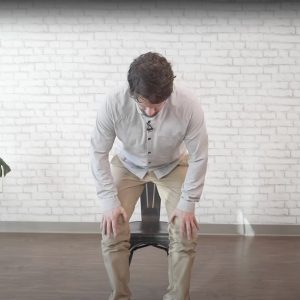
- Chair sit-to-stands
Chair sit-to-stand is a functional exercise that mimics an everyday movement you already do multiple times a day. It strengthens the thighs and glutes, supports better balance, and can make tasks like standing up from a couch or getting up from the toilet feel easier and more controlled.
- Sit in a sturdy chair.
- Stand up without using your hands if you can. If not, use your hands for support.
- Sit back down slowly.
- Repeat up to five times and rest for a minute.
- Repeat once more.
Tip: When it feels easier, add one rep to each round, or do the same reps with less hand support.
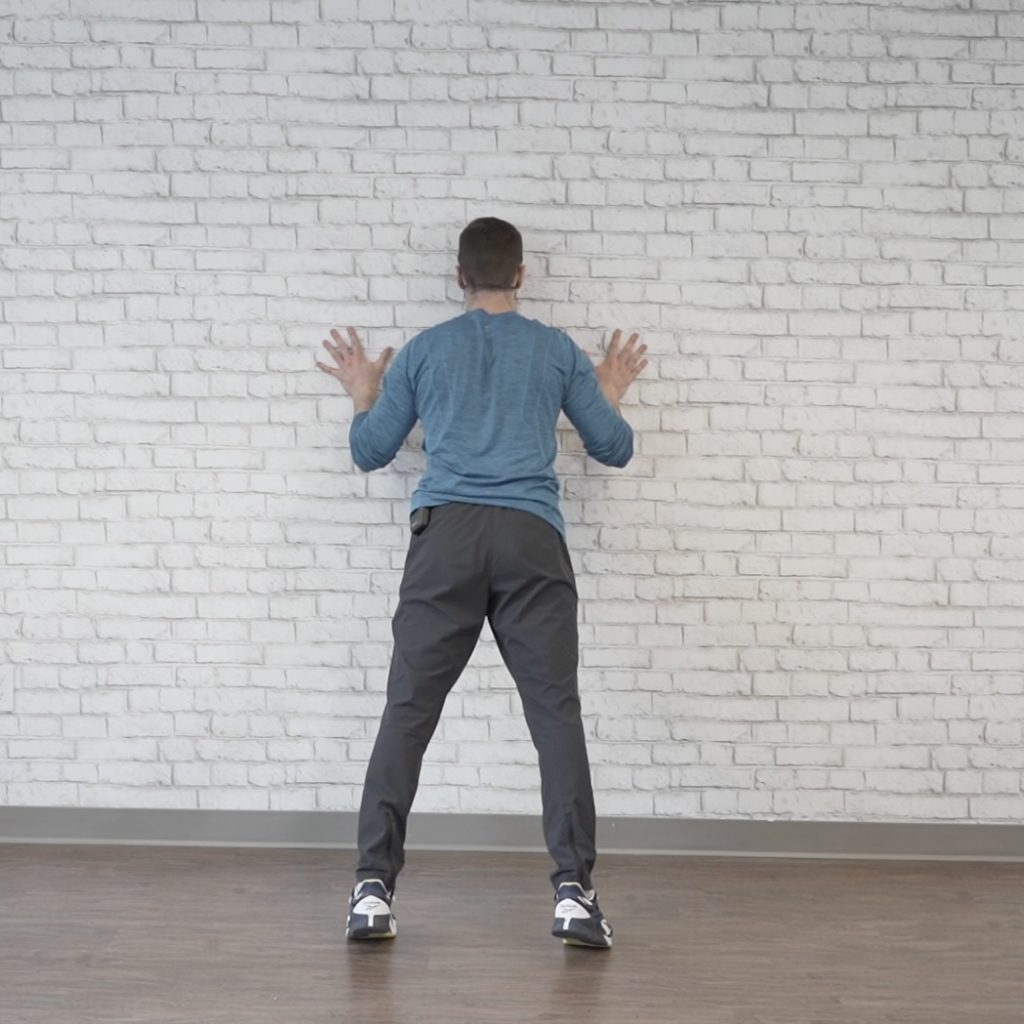
- Wall push-ups
Wall push-ups target the upper body muscles, specifically the muscles of the chest, shoulders, and arms, while also engaging your core for stability. Because you are standing and using a wall for support, they are a joint-friendly way to build strength without getting down on the floor.
- Stand at arm’s length from a wall.
- Place your hands flat against it at shoulder height.
- Lean forward until your nose nearly touches the wall.
- Push yourself back to standing.
- Do five of these while you wait for your coffee to brew.
Tip: As you get stronger, add one or two reps, or stand a little farther from the wall.
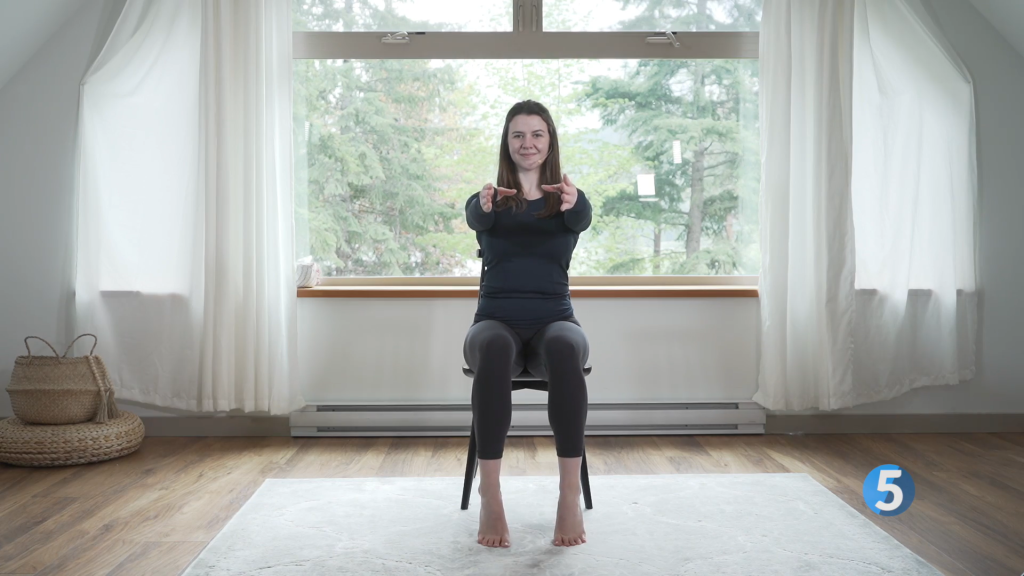
- Heel raises
Heel raises focus on strengthening the calves and the muscles around the ankles, which play a big role in balance and steady walking.
- Stand or sit with your feet hip-width apart.
- Hold a chair or counter for support if needed.
- Slowly rise onto your toes, then lower your heels back to the floor.
- Do this five times.
- Rest briefly, then repeat once more.
Tip: When it feels easier, add a few more reps or pause for a second at the top.
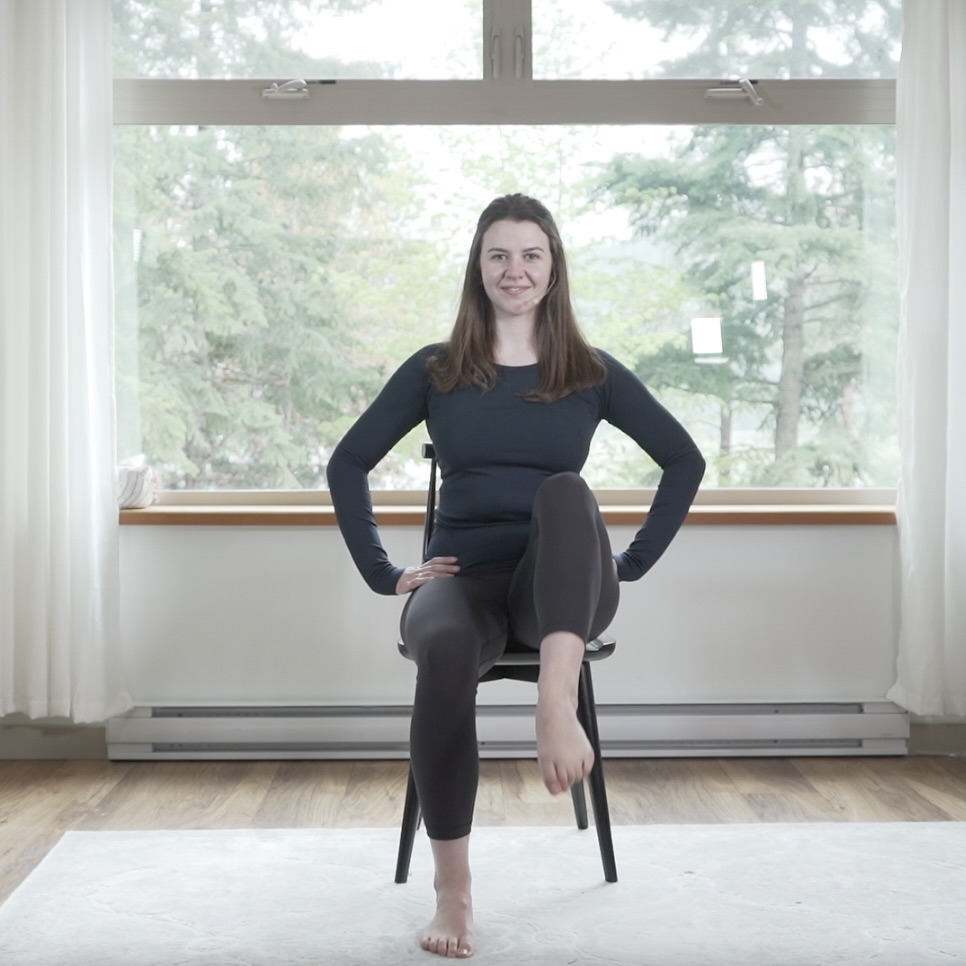
- Seated marches
Seated marches offer a low-impact way to raise your heart rate gently while waking up the hips and thighs. This movement is great for improving circulation, supporting hip mobility, and building coordination, especially on days when standing exercises feel like too much.
- Sit tall in a chair with your feet flat on the floor.
- Slowly lift one knee, then lower it and switch sides.
- Do five lifts per leg.
Tip: When it gets easier, add more lifts or switch legs faster.
Safety Tips for Returning to Exercise
Before jumping back into exercising after a long break, keep these guidelines in mind:
- Get medical clearance first. Check with your doctor before starting, especially if you manage conditions like heart disease or arthritis. Your doctor can identify movements you should avoid or modify.
- Start slower than you think you need to. If something feels too easy, that’s fine. You’re building a habit first and strength second. Pushing too hard too soon increases injury risk.
- Know the difference between discomfort and pain. Mild muscle fatigue is normal. Sharp pain, dizziness, chest tightness, or difficulty breathing are not. Stop immediately if you experience these.
- Use stable support without shame. Keep a sturdy chair nearby during standing exercises. Hold onto a counter or wall for balance work. Support keeps you safe while building strength.
- Stay hydrated and time your meals. Wait at least an hour after eating before exercising. Keep water within reach, especially indoors.
- Rest days matter as much as active days. Your muscles need recovery time. Two to three sessions per week is enough when starting.
Final Thoughts
Ready to start where you are? Try Better5’s Better Balance with Chair-Assisted Leg Strengthening for gentle, chair-supported sessions that build lower-body strength and steadier balance at home.
The takeaway is simple. Your body can still respond, even if you are starting late. Research on older adults, including people in their 90s, shows that consistent strength and balance work can improve how you move and how strong you feel in a surprisingly short time. You do not need a perfect history or intense workouts. You just need a plan you can repeat. If you are wondering, is it too late to start exercising? The answer is no. Start small, stay consistent, and let the progress compound.