Proven Steps For A Safer Start To Chair Pilates For Seniors
Chair Pilates for seniors offers a gentle path to strength, balance, and flexibility without needing to get on the floor. But even with such a supportive approach, how you set up and move makes all the difference. Simple details like chair height, posture, and breathing can determine whether the exercise feels smooth and helpful or leaves you stiff and uncomfortable.
This guide focuses on keeping you safe from the start. You’ll learn how to prepare your space, follow core movement principles, and avoid the mistakes that often hold people back. Chair Pilates is not only one of the safest ways for seniors to exercise, but it’s also one of the most reliable ways to feel steady and capable in your daily routine.
Getting Ready for Chair Pilates
Chair Pilates for seniors is simple to start, but a few small steps make each session safer and more comfortable. Before you begin, take a moment to prepare.
Talk to your doctor
If you’re managing arthritis, osteoporosis, or recovering from an injury, it’s best to speak with your doctor first. A quick check-in helps you know which movements are suitable and which ones might need adjustments.
Choose the right chair
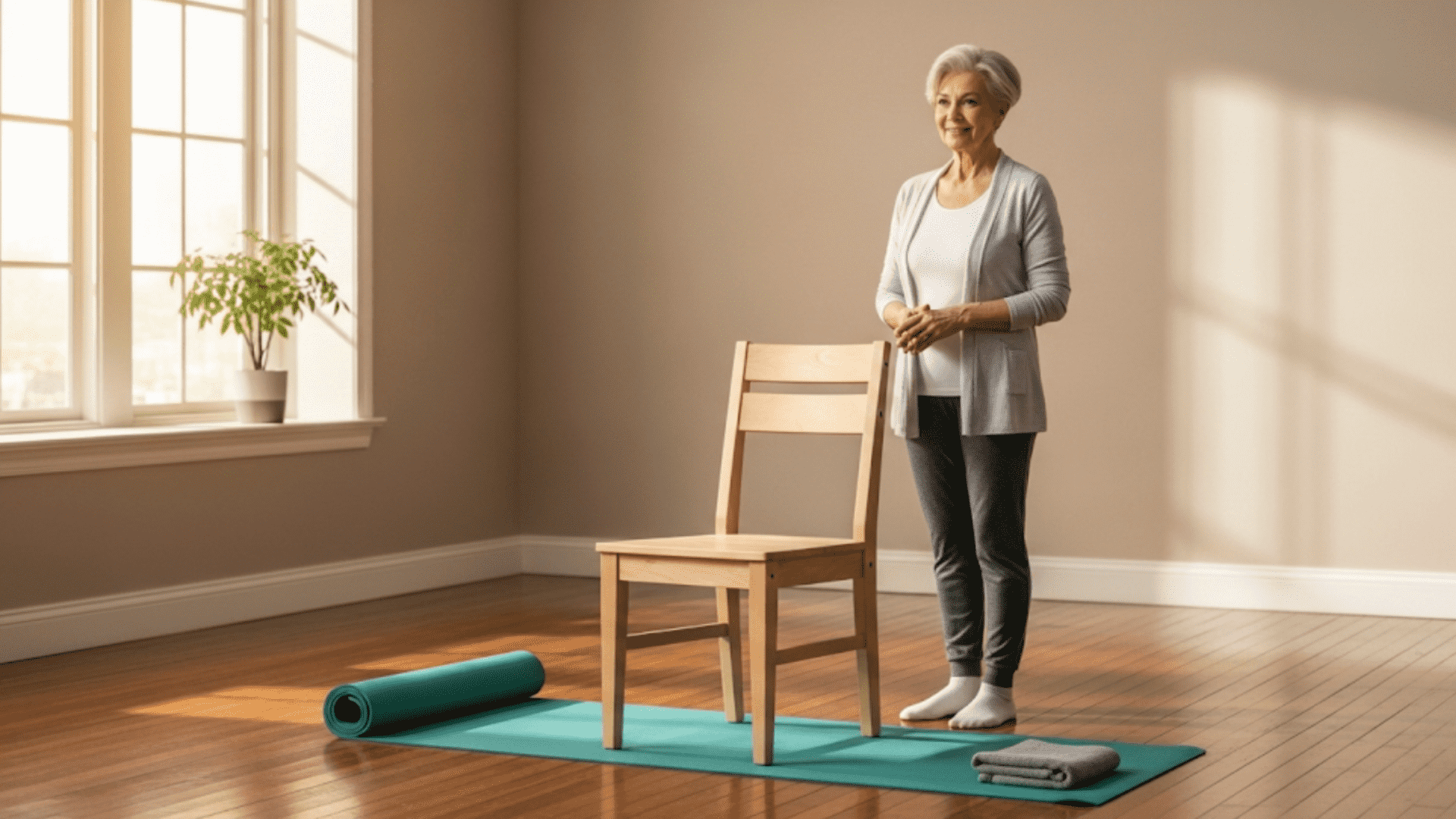
The chair you use shapes the entire experience of chair Pilates. Stability is key, so avoid anything with wheels or a wobbly frame. A flat, firm seat is better than a cushion that sinks, since you need a steady base to sit tall.
Pay attention to seat height as well. When you sit, your feet should rest flat on the floor with your knees bent at about a right angle. If the chair is too low, your knees will sit higher than your hips, which makes good posture harder to maintain. If it is too high, your feet may dangle, creating strain in your lower back. You can fix this by placing a cushion under your hips or a small block under your feet. Also, use the backrest for support when resting, but try not to lean into it during exercises.
Prepare your space
Clear a few feet around the chair so you have room to move freely, and place it on a non-slip surface such as a rug with grip or a mat. Good lighting helps you check your posture, and wearing loose, comfortable clothing allows for easier movement. Keeping a glass of water nearby is also a good habit.
Core Movement Principles & Breathing in Chair Pilates For Seniors
Chair Pilates is about control more than speed. The movements look simple, but the way you perform them makes the difference between safe, effective practice and wasted effort.
Posture comes first
Begin each session by checking how you sit. Your shoulders should be relaxed, not hunched, and your spine should feel long, as if you’re gently lifting from the crown of your head. Your feet stay flat on the floor, with weight balanced evenly. This upright posture supports your joints and helps your core muscles engage properly. A systematic review confirmed that Pilates can be useful in improving body posture problems.
Small, steady movements
Chair Pilates is not about speed, but precision. Small, deliberate movements help protect your joints and teach your muscles to work properly. Studies show that older adults who practice Pilates with careful, controlled motion improve balance and coordination. One systematic review found Pilates training made consistent and measurable improvements in both dynamic and static balance among older adults.
Breathe with intention
Breathing is central to Pilates. Each inhale and exhale is paired with movement, which helps you stay present and avoid rushing. Slow, deep breathing also engages the diaphragm and supports your posture. For older adults, this isn’t just about calm focus; it’s about safety.
Common Mistakes to Avoid in Chair Pilates for Seniors
Even simple routines can potentially feel challenging when you first begin. Paying attention to a few common pitfalls will help you move safely and get the most out of each session.
Rushing Through the Exercises
One of the biggest mistakes is moving too quickly. Fast, jerky motions don’t give your muscles time to activate properly and may strain your joints. Slow, steady pacing is safer and more effective.
Sitting Too Far Back or Forward
If you sit slouched against the chair’s backrest or too close to the edge, you reduce stability. Instead, position yourself so that your feet stay flat on the floor, knees at roughly a right angle, and your back upright without leaning.
Holding Your Breath
It’s easy to forget to breathe when concentrating on a new move. Holding your breath can increase tension and make movements harder than they should be. Keep a steady pattern: exhale during effort, inhale as you release.
Ignoring Pain Signals
Mild muscle effort is normal, but sharp pain or dizziness is not. If something doesn’t feel right, stop immediately. Small adjustments, like reducing the range of motion, usually solve the problem.
Skipping Warm-Up or Cool-Down
Even though chair Pilates is gentle, warming up prepares your muscles and joints, while cooling down helps reduce stiffness afterward. A few minutes of easy stretches or shoulder rolls make a big difference.
Simple Chair Pilates Moves for Seniors
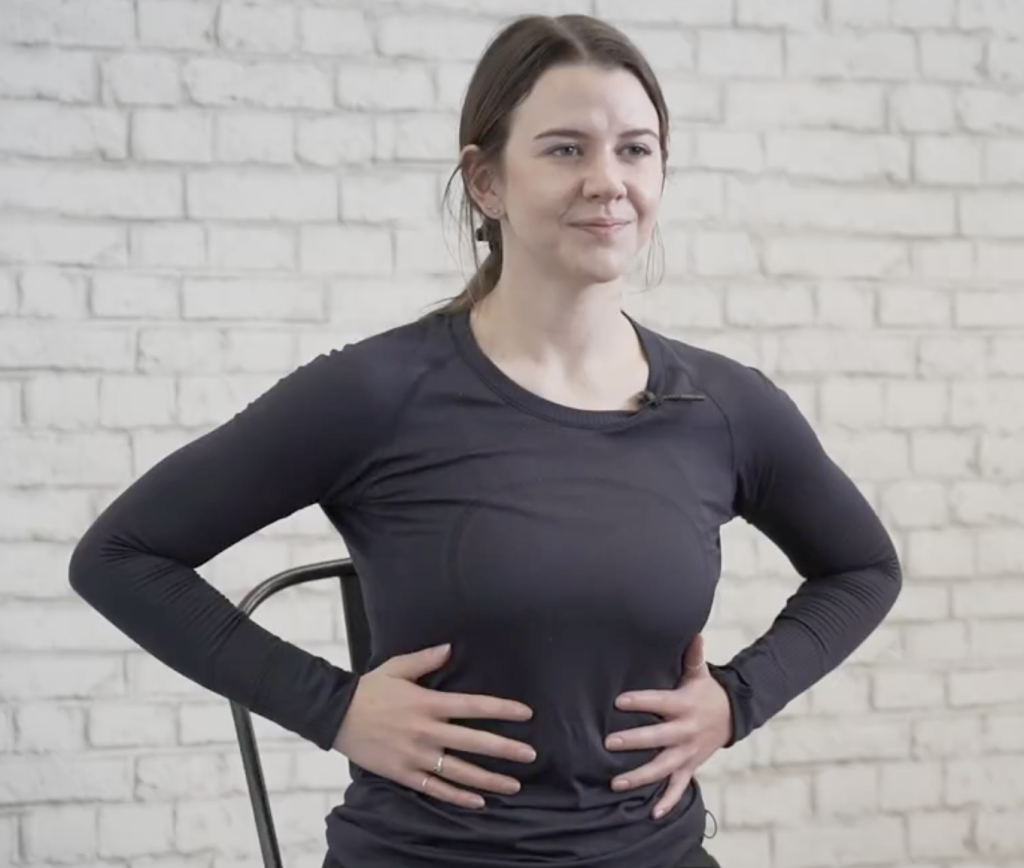
Neutral Alignment & Breathing
Step 1: Sit Tall
- Sit on a sturdy chair with your feet flat on the floor.
- Place one hand on your chest and the other on your lower belly.
- Adjust your posture until your spine feels long and upright, with a small natural curve in your lower back.
Step 2: Relax Your Upper Body
- Drop your hands to your sides.
- Let your shoulders relax while keeping your chest open.
- Keep your chin level, as if a string is gently lifting the top of your head.
Step 3: Practice Your Breath
- Inhale slowly through your nose, letting your ribcage expand outward.
- Exhale through your nose, drawing your belly button gently toward your spine.
- Repeat for three slow breaths, keeping your posture steady.
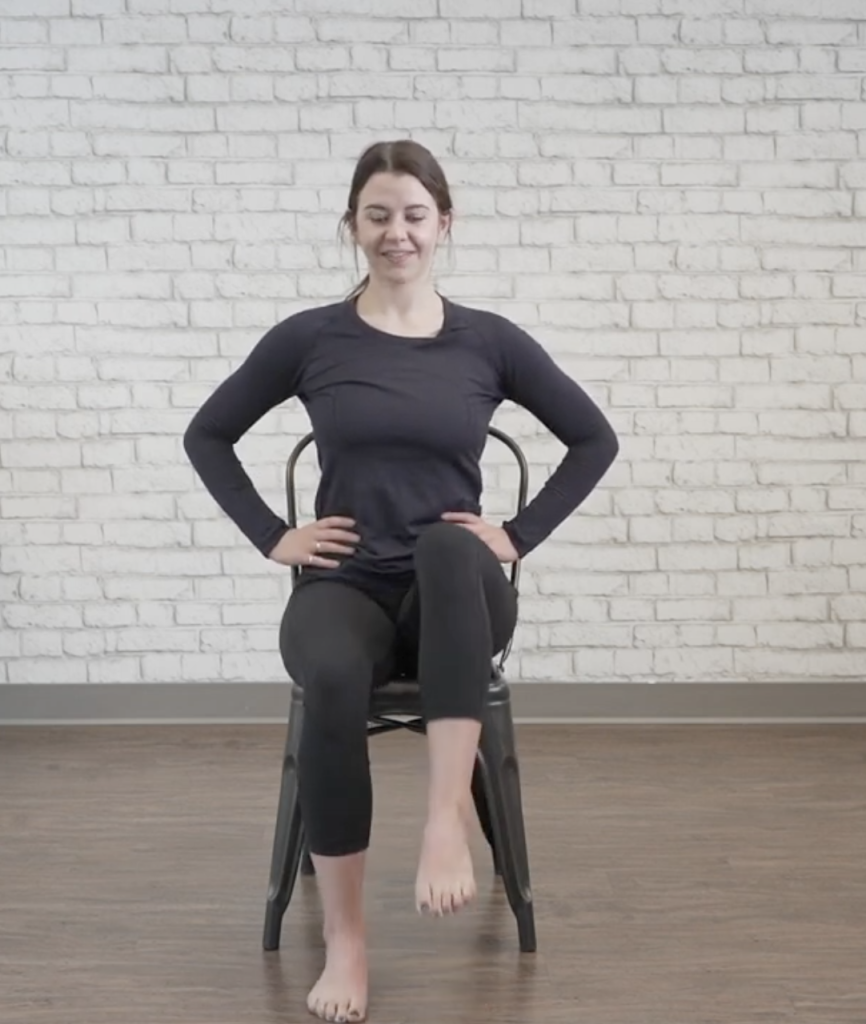
Seated Marches
Step 1: Position Yourself
- Sit tall on a sturdy chair with your feet flat on the floor.
- Place your hands on your hips for stability, if that feels comfortable.
- Keep your shoulders relaxed and your head lifted as if reaching gently toward the ceiling.
Step 2: Engage Your Core
- Gently draw your belly button in toward your spine.
- Engage your pelvic floor by tightening the muscles you’d use to stop urinating mid-flow.
- Maintain this gentle engagement throughout the exercise.
Step 3: Begin the March
- Lift your right knee as high as you comfortably can, then lower it.
- Lift your left knee the same way.
- Continue alternating legs in a steady marching motion for about 30 seconds.
- Keep breathing evenly as you march.
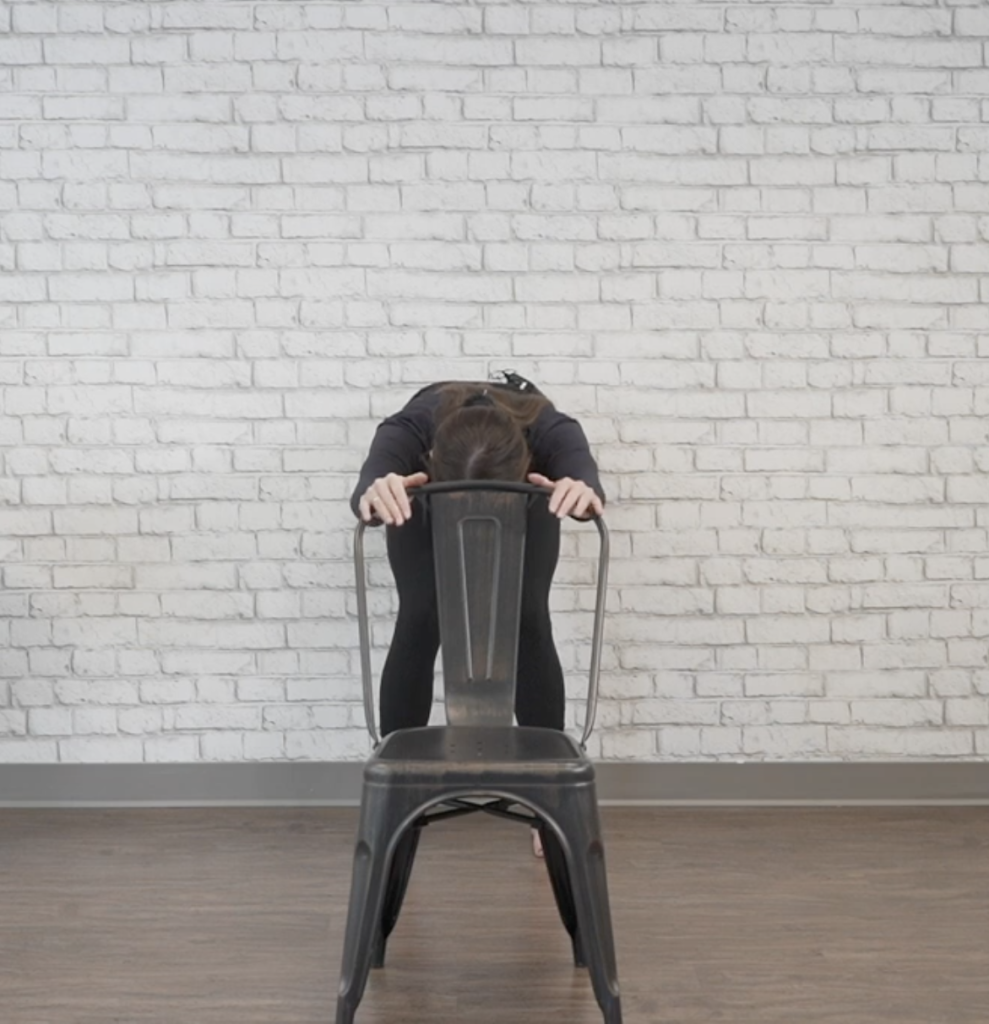
Modified Puppy Pose Stretch with Chair
Step 1: Set Up
- Stand behind a sturdy chair, about three feet away.
- Adjust the distance if needed so your arms can rest comfortably on the back of the chair.
Step 2: Position Your Body
- Bend your knees slightly.
- Place both hands on the backrest for support.
- Shift your hips back as if you are reaching them behind you.
Step 3: Lower Into the Stretch
- Let your chest and head drop gently toward the floor, keeping your arms straight on the chair.
- Go only as far as feels comfortable. You should feel a stretch in your shoulders, and possibly in the backs of your legs.
Step 4: Breathe and Hold
- Look down toward the floor.
- Take slow, deep breaths, expanding the lower part of your lungs.
- Hold the position for 20–30 seconds, or as long as it feels steady.
Step 5: Release Safely
- To come out, slowly walk your feet closer to the chair.
- Lift your torso upright with control.
Safety Tips: Avoid overlocking your elbows or overextending your spine. Stop if you feel sharp pain, dizziness, or lightheadedness.
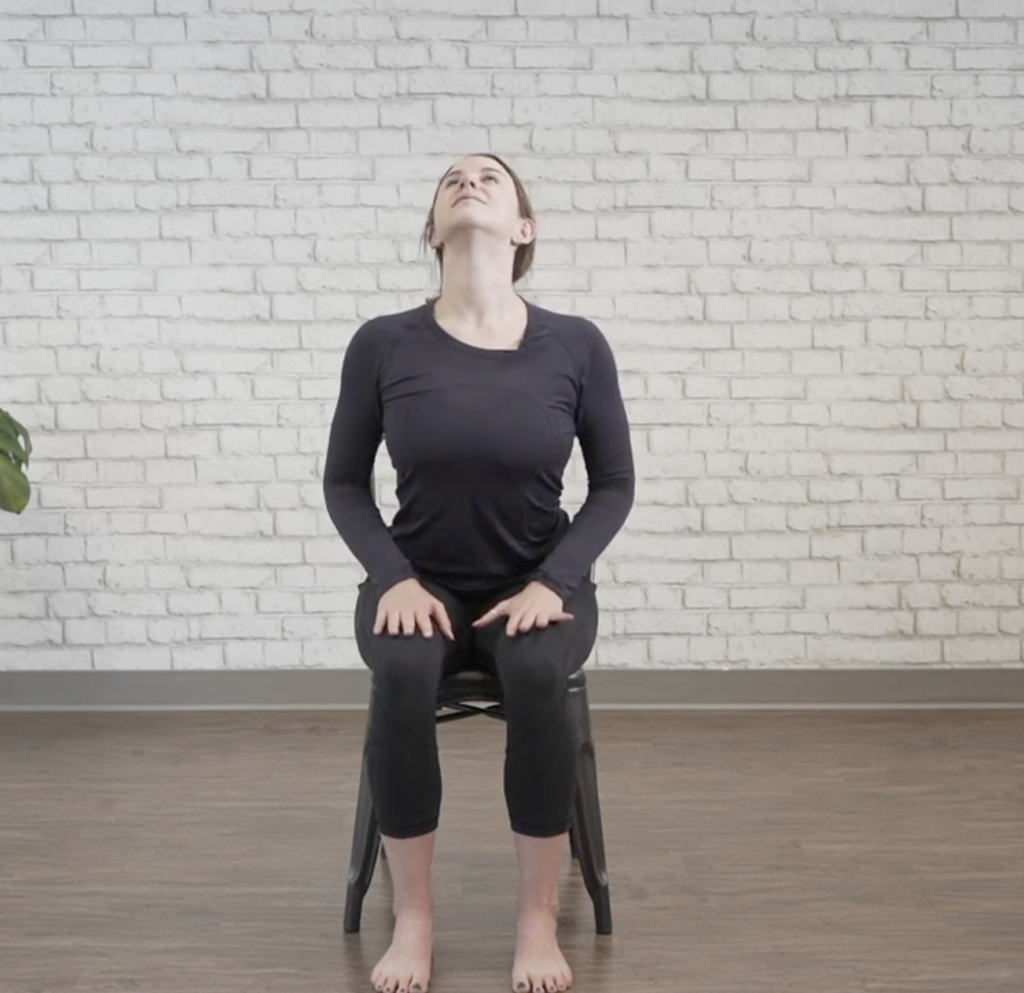
Seated Cat-Cow Stretch
Step 1: Sit Tall
- Sit on a sturdy chair with your feet flat on the floor.
- Lengthen your spine and relax your shoulders.
- Widen through your collarbones, as if gently reaching them left and right.
Step 2: Inhale and Arch
- As you inhale, lift your chest and look slightly upward.
- Let your shoulder blades move gently down your back.
- Keep your spine long and your neck comfortable.
Step 3: Exhale and Round
- As you exhale, tuck your pelvis forward and curve your spine.
- Draw your belly button lightly toward your spine.
- Keep the movement slow and controlled, within a comfortable range.
Step 4: Match Your Breath
- Continue moving in sync with your breath: inhale as you arch, exhale as you round.
- Repeat for one or two more cycles.
Step 5: Return to Neutral
- After completing the rounds, sit tall in a neutral position.
- Take a few deep, steady breaths before moving on.
Safety Tips: Move only within a range that feels comfortable; avoid forcing your back.
Try a Guided Session
If you want a safe, guided way to practice chair Pilates, this 15 Minute Chair Pilates Digital Class is designed for seniors. Follow along at your own pace and reinforce the posture, breathing, and movements covered here.
Chair Pilates brings the benefits of traditional Pilates into a chair-assisted, accessible format. Focusing on posture, core engagement, controlled movement, and breath, it supports flexibility and stability without straining your joints. Following proper alignment and working within a comfortable range, chair Pilates for seniors offers a gentle, effective way to stay active every day.