
Safe & Effective Hip Bursitis Exercises for Seniors at Home
Hip bursitis is a condition that causes inflammation and discomfort around the hip joint, often affecting seniors. This condition often arises when the small, fluid-filled sacs that cushion the hip joint—called bursae—become irritated. While it can be painful, relief is possible with simple hip bursitis exercises for seniors that gently support healing & improve mobility. Read on to find out more about these gentle exercises and other lifestyle tips to help you move with more comfort and confidence each day.
Risk Factors for Hip Bursitis
- Uneven leg length: A significant difference in leg length can throw off your gait, leading to joint irritation around the hips.
- Spinal alignment issues: Conditions like scoliosis can affect posture and walking patterns, which increases strain on the hip.
- Inflammatory conditions: Rheumatoid arthritis and similar issues can cause inflammation in the bursa itself.
- Direct Trauma or Prolonged Pressure: Falls, bumps, or lying on one side for too long (e.g., during recovery from surgery or bed rest) can compress the hip bursa, triggering inflammation.
In addition to these factors, studies show GTPS, which includes hip bursitis, is especially common in older women. The condition is 2 to 5 times more likely to affect women than men. Researchers believe this may be due to differences in anatomy, biomechanics, and the influence of sex hormones.
Gentle Hip Bursitis Exercises for Seniors
Now that we’ve covered causes, let’s focus on solutions.
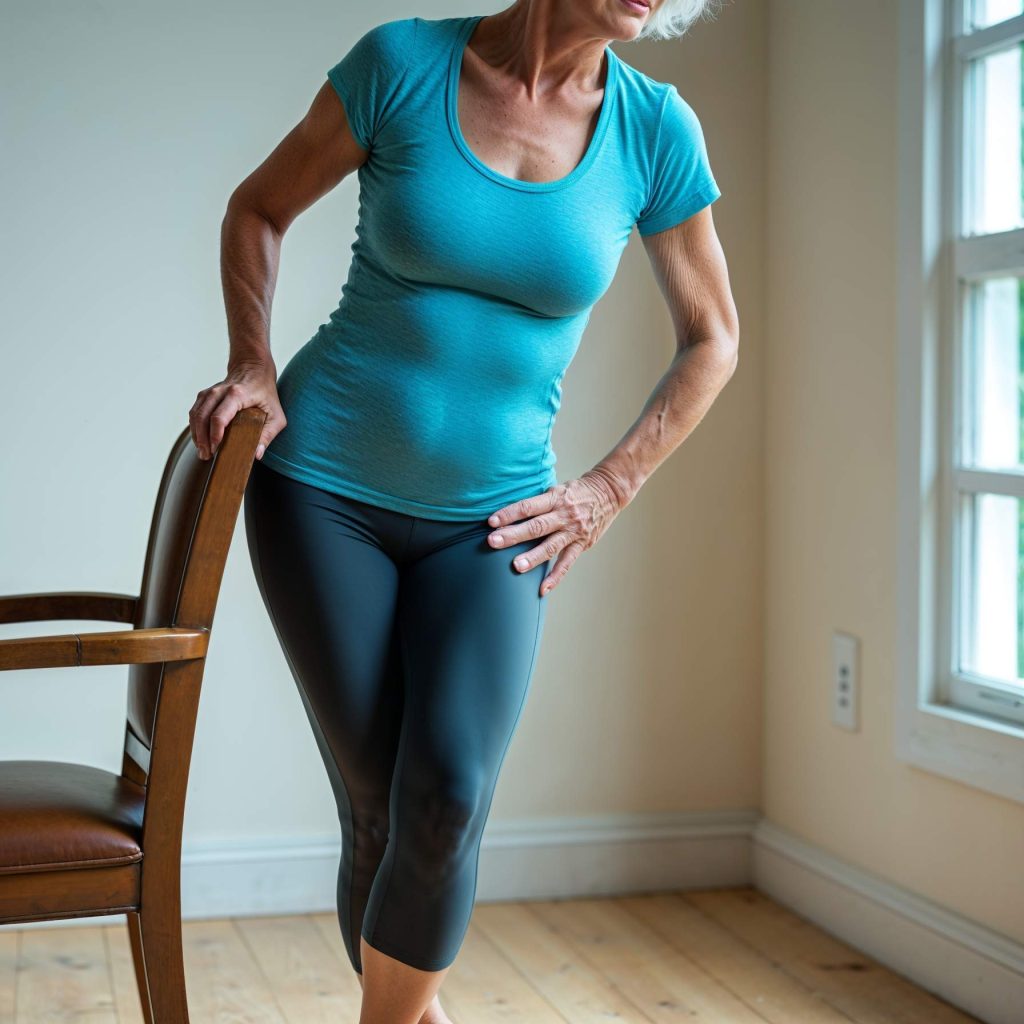
Iliotibial Band Stretch
Benefits: Alleviates pain by decreasing friction between the iliotibial band and the surrounding tissues.
- Stand next to a wall or chair, with the affected hip closest to the support.
- Cross the unaffected leg in front of the affected one.
- Slightly bend your front knee.
- Gently push your hips toward the support—you should feel a stretch on the outside of your hip.
- Hold this stretch for up to 1 minute while breathing steadily.
- Repeat 2 to 3 times on each side.
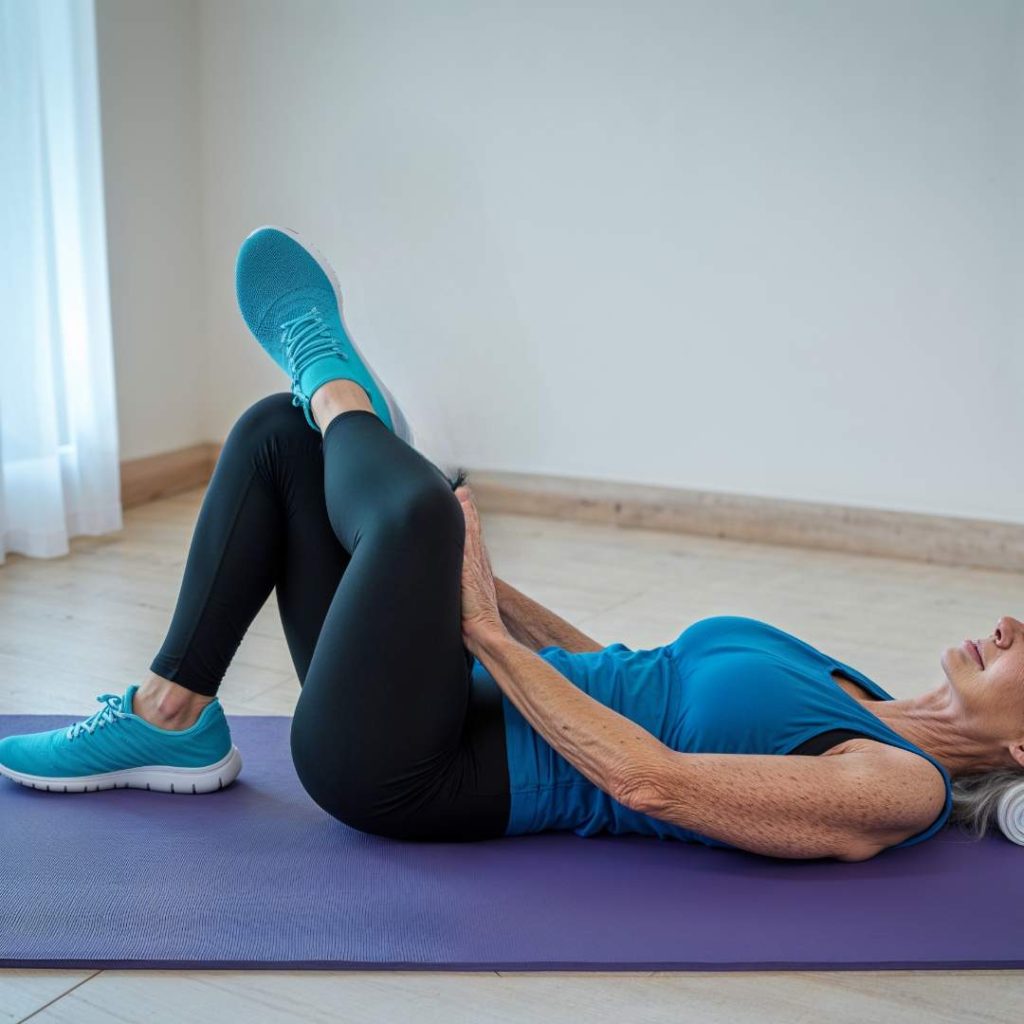
Piriformis Stretch
Benefit: Improves the flexibility and mobility of the hip joint
- Lie on your back with both knees bent and your feet flat on the floor or mat.
- Cross the ankle of the affected leg over the opposite knee, forming a figure 4 shape.
- You should feel a stretch in the back of your hip.
- If not, gently press down on the crossed knee.
- Hold the stretch for up to 1 minute while breathing calmly.
- Switch sides if needed.

Clamshell
Benefit: Strengthens the muscles around the hip
- Lie on your side with the sore hip on top.
- Bend both knees and keep your legs stacked.
- Keeping your feet together, slowly lift your top knee—like opening a clamshell.
- Raise your knee until there are about 8 to 10 inches between your knees. Don’t let your hips roll back.
- Hold the raised position for 6 seconds, then slowly lower your knee.
- Rest for about 10 seconds.
- Repeat 8 to 12 times, then switch sides if needed.
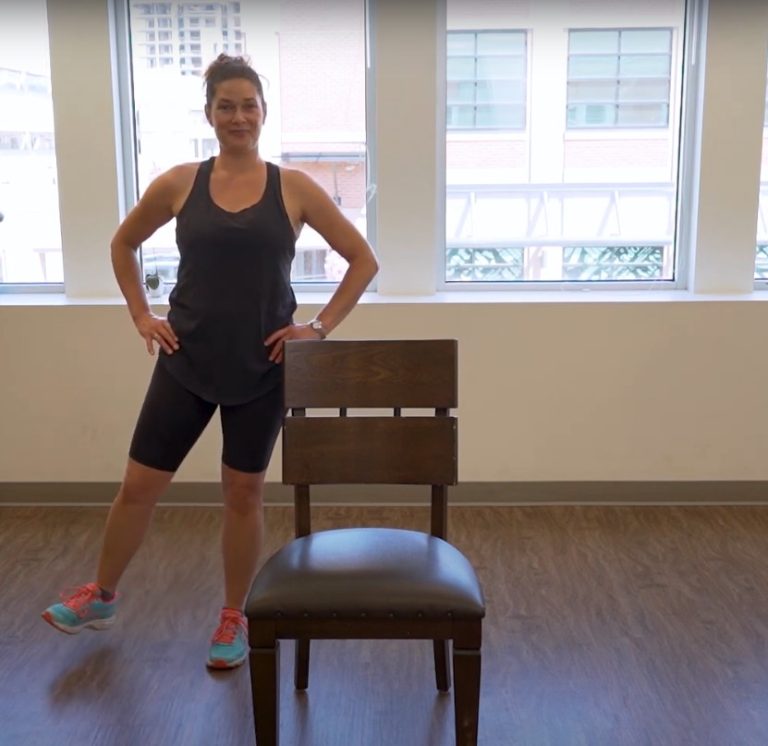
Standing Hip Abduction
Benefit: Reduces irritation around the gluteal tendons and bursae
- Stand with your feet shoulder-width apart.
- Place one hand on a chair or counter for support.
- Slowly lift your sore leg out to the side with your knee straight. You should feel the muscles on the outside of your hip working.
- Keep your back straight and your thigh muscles engaged without leaning or twisting.
- Pause for a few seconds at the top of the movement.
- Slowly lower your leg back down to the starting position.
- Do this 10 to 12 times, then switch to the other leg.
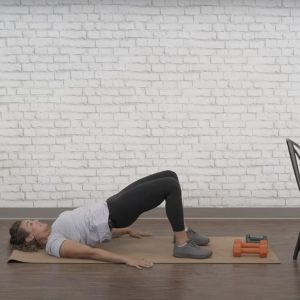
Glute Bridges
Benefit: Strengthens the glutes and the surrounding hip muscles
- Lie on your back with your knees bent and your feet flat on the floor, about hip-width apart.
- Gently tighten your belly muscles to support your lower back.
- Press through your heels and squeeze your glutes to lift your hips off the floor.
- Hold the lifted position for 3 seconds.
- Slowly lower your hips back down with control.
- Repeat 8 to 10 times.
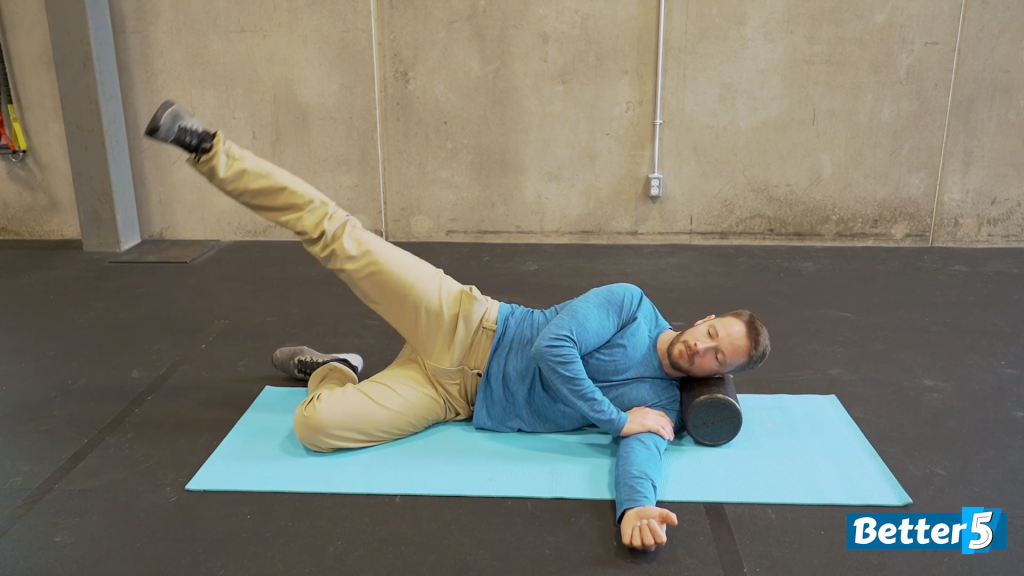
Lying Lateral Leg Raises
Benefit: Strengthens muscles that support the hip
- Lie on your side with your sore hip facing up.
- Place a pillow under your head for support if needed.
- Bend your bottom leg at the knee for stability.
- Keep your top leg straight, with your toes pointing forward.
- Slowly lift your top leg as high as is comfortable.
- Hold at the top for 2 to 3 seconds.
- Lower it gently back down until both legs are stacked again.
- Repeat 8 to 10 times.
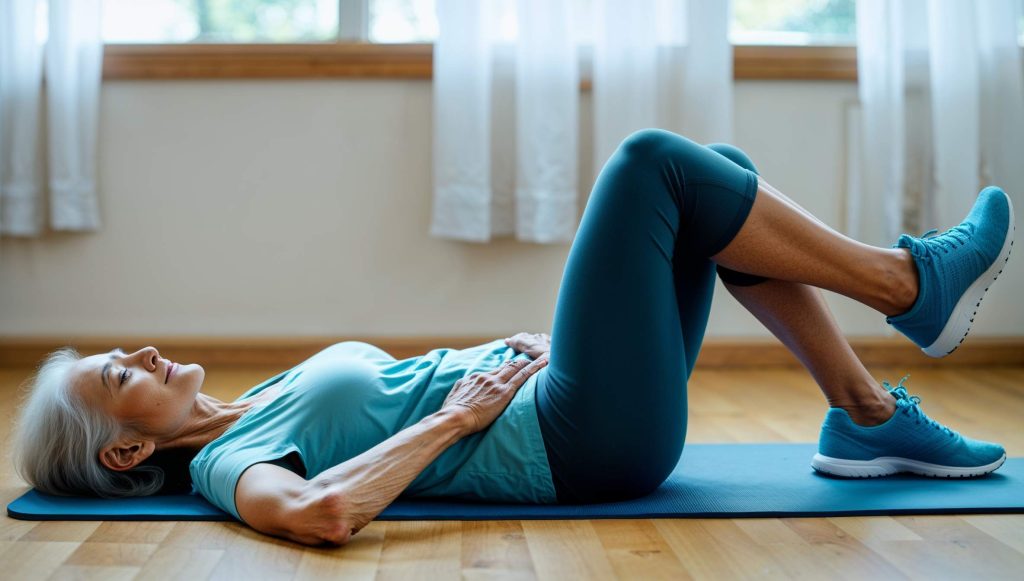
Supine Marches
Benefit: Strengthens lower abdominals for better hip stability
Lie on your back with your knees bent and feet flat on the floor, about hip-width apart.
- Gently tighten your belly muscles to support your lower back.
- Lift one foot a few inches off the floor, keeping your knee bent.
- Lower it back down with control.
- Now, lift the other foot the same way.
- Keep alternating legs until you’ve done 10 on each side.
- Rest for 1 to 3 minutes.
- Repeat for a total of 3 sets.
Everyday Habits To Manage Hip Bursitis in Seniors
While regular hip bursitis exercises for seniors are key to easing discomfort, daily habits can make a big difference, too.
Stay active throughout the day: Short walks, light chores, or gentle stretching between periods of rest can help keep the joints moving. Avoid sitting or lying down for too long—movement keeps stiffness at bay.
Watch your weight: Carrying extra weight can add pressure to the hip joints and slow healing. Maintaining a healthy weight—through a mix of movement and smart eating—can help ease the load on your hips.
Choose anti-inflammatory foods: Adding more fruits, vegetables, whole grains, and omega-3-rich foods like salmon or walnuts may help calm inflammation in the body. Small changes in your meals can support healing from the inside out.
Use support when sitting or standing: Soft, supportive shoes and cushioned seats can reduce pressure on your hips. If you spend a lot of time seated, try adding a wedge cushion or sitting on firmer surfaces that keep your hips aligned.
Final Thoughts
Hip bursitis arises when the small, fluid-filled bursae near your hip joint become inflamed—often leading to sharp pain & limited mobility. While this condition can feel isolating, hip bursitis exercises for seniors provide a safe, non-invasive path to reduce inflammation & regain independence in daily life. They’re a safe way to support healing without overdoing it. For extra guidance, the Advanced Hip Restoration Digital Class is a great next step to build on these hip bursitis exercises for seniors and keep you moving with confidence.