Safe Exercises for Seniors: 9 Easy Moves at Home
Staying active supports strength, balance, and independence as you age. For many older adults, the primary concern is whether the exercise can be performed safely. When you think of safe exercises for seniors, the focus is on controlled, joint-friendly movements that build strength and stability while reducing fall risk.
Safety matters because it affects how confidently you move. When exercises prioritize control and steady support, you are less likely to strain joints or lose balance. That sense of security also makes it easier to stay consistent and keep movement part of your routine.
Safe Exercises for Seniors: What to Look For
Exercise choice plays a direct role in how safe and comfortable movement feels. The right exercises support strength and balance without placing unnecessary strain on your joints. That is why exercise selection matters just as much as staying active in the first place.
Such exercises follow a few clear principles that help you move in a controlled, supported way, so exercise feels appropriate and sustainable. Those principles guide the movements you include and the ones you avoid.
Controlled Movement
For any exercise to be considered safe for seniors, you should be able to set the pace and decide how far to move in each direction. There are no sudden jerks, bouncing, or momentum-driven motions that could throw you off balance. Every part of the exercise should stay within your control from start to finish.
Adjustable Support & Modifications
Safe exercises for seniors typically include options you can adjust based on what you need. A sturdy chair or wall provides physical support when balance feels uncertain.
Time and repetitions can be shortened or extended depending on your current strength. If standing on one leg without support feels risky, you keep one hand on a chair. If holding a position for 30 seconds is too much, you start with 10. The exercise adapts to where you are right now.
Low Impact & Joint-friendly
These exercises account for common physical changes later in life, such as lower bone density, less joint cushioning, and shifts in balance. A joint-friendly approach matters because it supports movement without adding unnecessary strain.
According to the Centers for Disease Control and Prevention, about one in four adults over 65 reports a fall each year. Exercises that protect your joints while building strength and stability can help reduce that risk over time. Research shows that well-chosen strength training can support daily function for seniors living with osteoarthritis.
9 Safe Exercises for Seniors
Building a complete exercise routine means addressing different aspects of physical fitness. From balance to strength and flexibility, a well-rounded approach ensures you’re building capability in all the areas that matter for staying independent and injury-free.
Safe Balance Exercises for Seniors
Balance gives you the confidence to move without constantly calculating your next step. It shows up when you’re walking across uneven pavement, turning quickly, or moving through your home without scanning for something to steady yourself on.
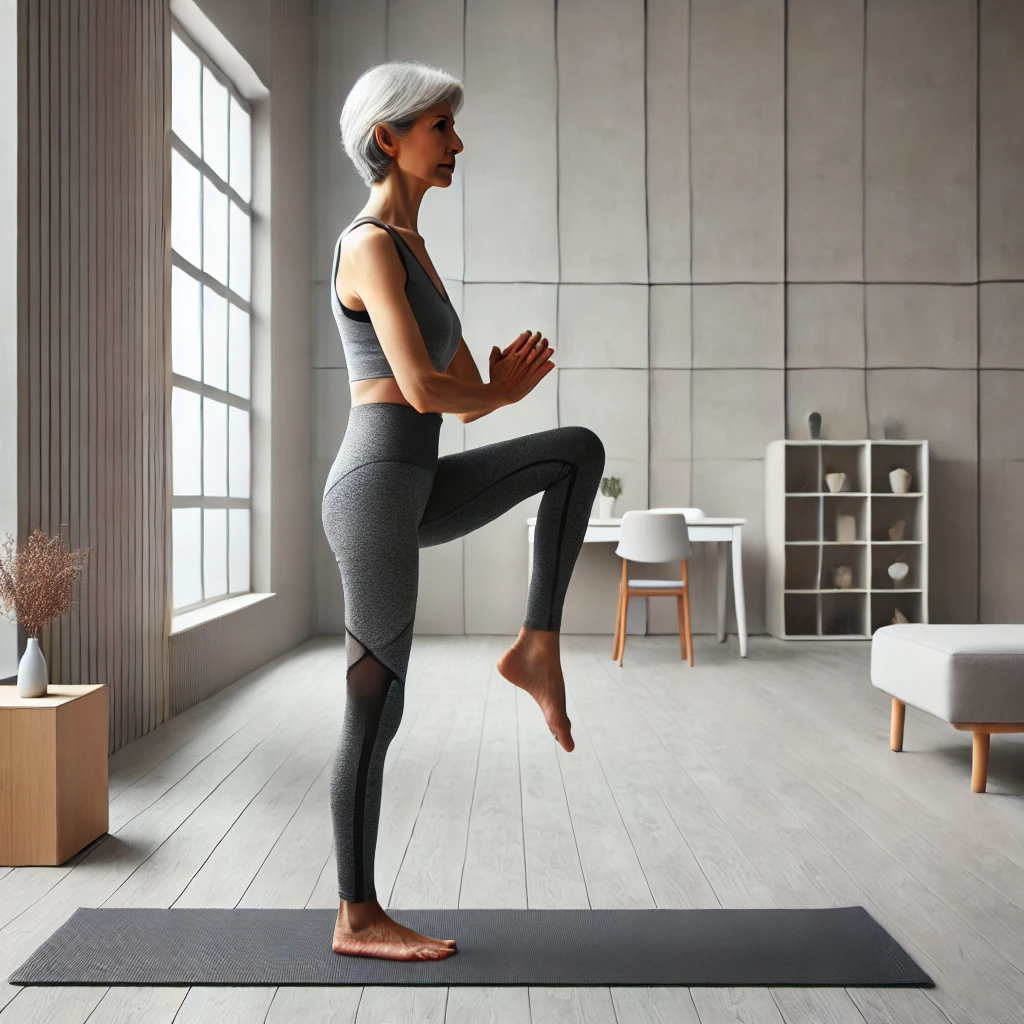
Single-Leg Stance
How to do it:
- Stand near a sturdy chair with one hand resting lightly on it for support.
- Shift your weight onto your right leg and lift your left foot 2-3 inches off the floor.
- Hold this position, keeping your standing leg slightly bent.
- Lower your foot and repeat on the other side.
Goal: Hold for 30 seconds on each leg without needing chair support.
Why this helps: This strengthens the muscles you use to catch yourself when you stumble or step onto an uneven surface.
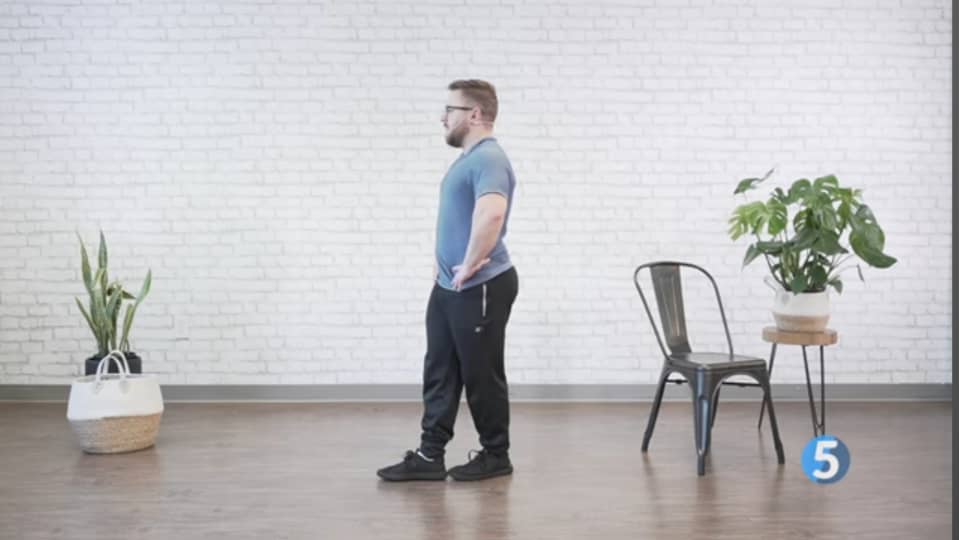
Heel-to-Toe Walk
How to do it:
- Stand next to a wall you can touch if needed.
- Place your right foot directly in front of your left so the heel touches the toes.
- Step forward with your left foot, placing it directly in front of your right.
- Continue this pattern for 10-15 steps, then turn and walk back.
Goal: Walk 20 steps in a straight line without touching the wall.
Why this helps: This trains your body to maintain balance when your feet aren’t wide apart, like when navigating tight spaces or walking on curbs.
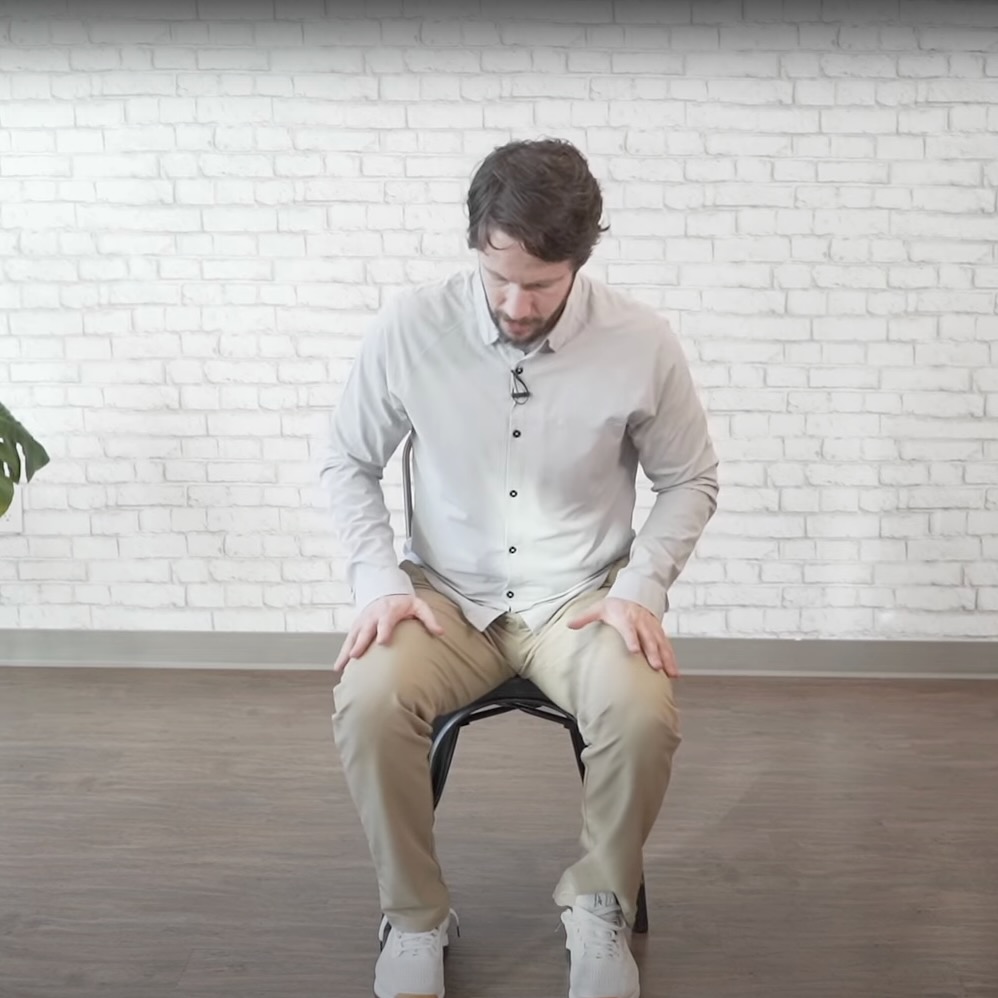
Sit-to-Stand
How to do it:
- Sit toward the front edge of a chair with feet flat, hip-width apart.
- Lean forward slightly from your hips.
- Push through your heels to stand up, keeping weight centered over your feet.
- Lower yourself back down with control.
Goal: Complete 10 repetitions without using your hands.
Why this helps: This builds leg strength for getting up from chairs and trains the balance transition between sitting and standing, when many falls occur.
Safe Strength Exercises for Seniors
Strength shows up when you’re pushing up from a low seat without using your hands, catching yourself when you stumble, or bending down without planning the whole movement first. These exercises use your body weight—no gym required.
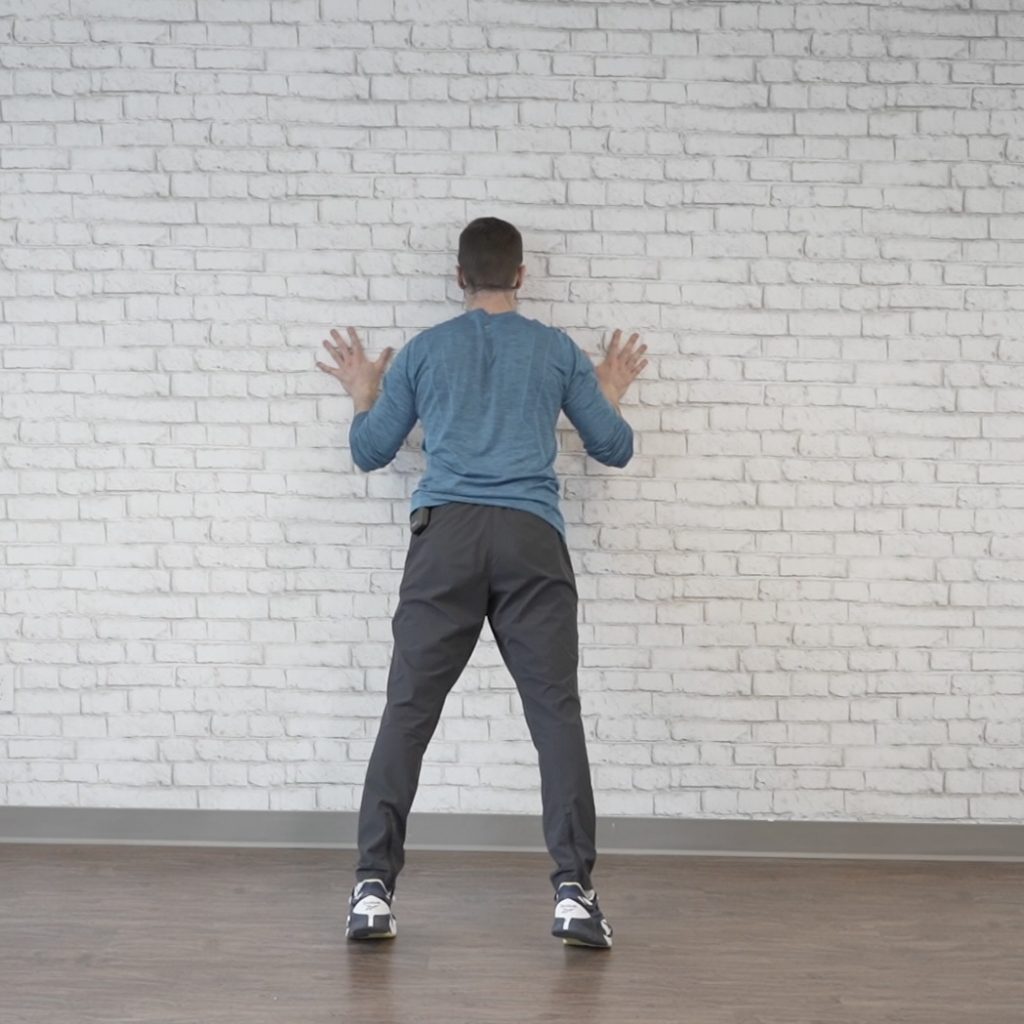
Wall Push-Ups
How to do it:
- Stand at arm’s length from a wall with feet hip-width apart.
- Place your palms flat on the wall at shoulder height.
- Bend your elbows and lean toward the wall, keeping your body straight.
- Push back to the starting position.
Goal: Complete 10-15 repetitions with controlled movement.
Why this helps: This builds upper body strength for pushing yourself up from furniture or steadying yourself against surfaces when you lose balance.
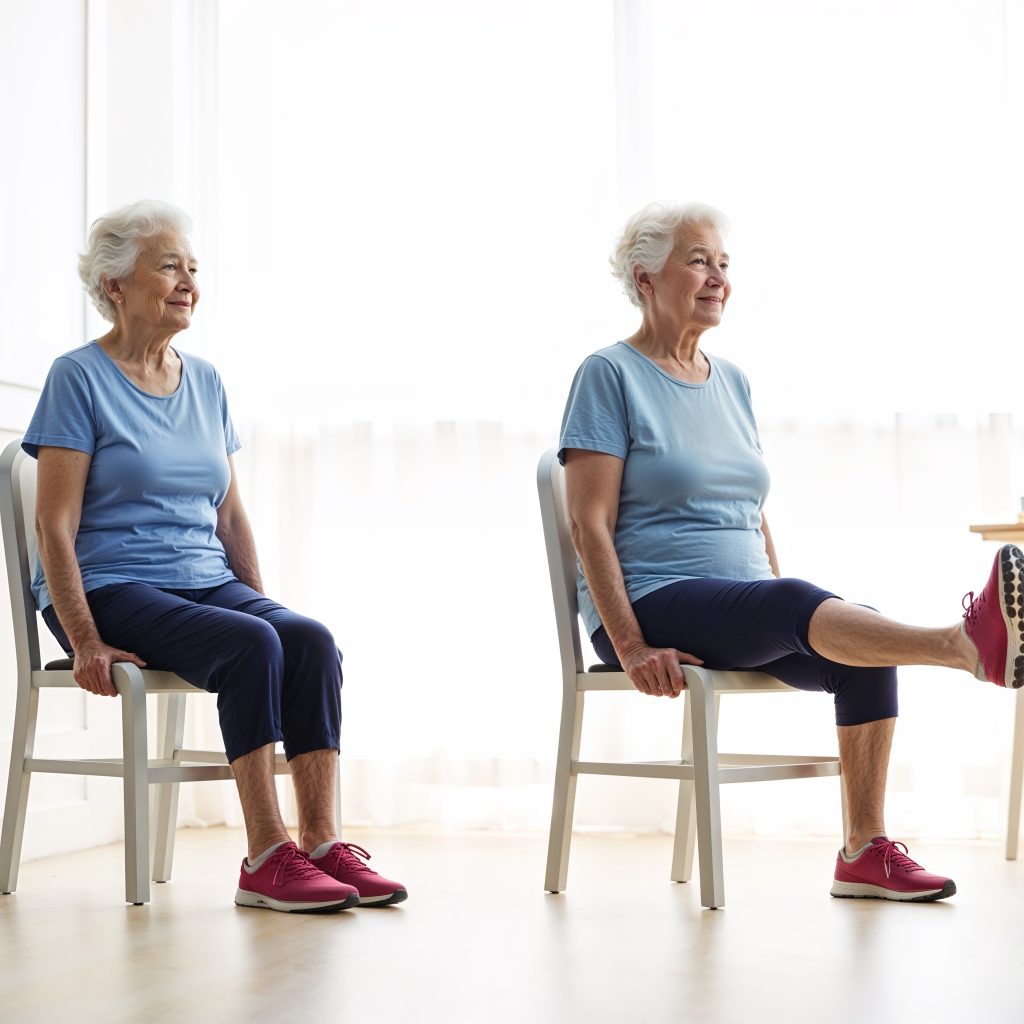
Seated Leg Lifts
How to do it:
- Sit upright in a sturdy chair with your back against the backrest.
- Keep your left foot flat on the floor.
- Straighten your right leg and lift it until parallel with the floor.
- Hold for 3-5 seconds, then lower with control.
- Complete your repetitions, then switch legs.
Goal: Complete 10 lifts per leg without needing to rest between repetitions.
Why this helps: This strengthens your thigh muscles, which you use for standing up, climbing stairs, and maintaining stability while walking.
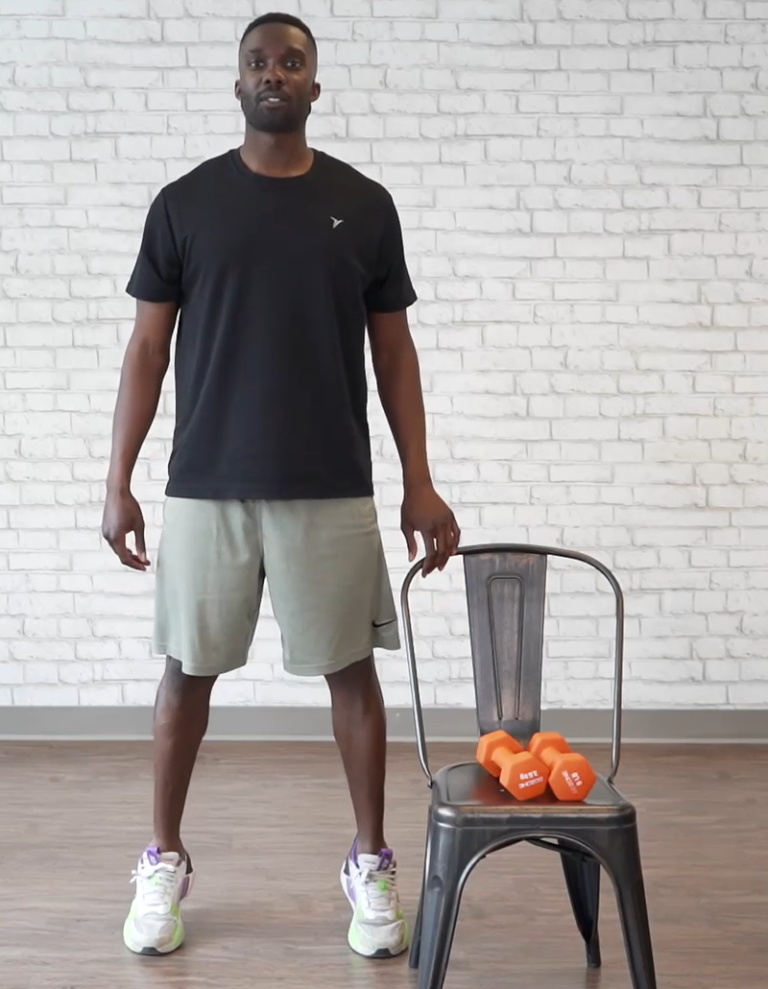
Standing Calf Raises
How to do it:
- Stand behind a sturdy chair with both hands resting lightly on the back.
- Keep your feet hip-width apart.
- Rise up onto the balls of your feet, lifting your heels off the ground.
- Hold for 2-3 seconds at the top.
- Lower your heels back down with control.
Goal: Complete 15 repetitions without needing to grip the chair tightly.
Why this helps: This strengthens your ankles and calves, which help you maintain balance when walking on uneven ground or recovering from a stumble.
Safe Flexibility Exercises for Seniors
Flexibility helps you reach for items, turn to look behind you, and move through daily tasks without stiffness. These stretches can help maintain your range of motion.
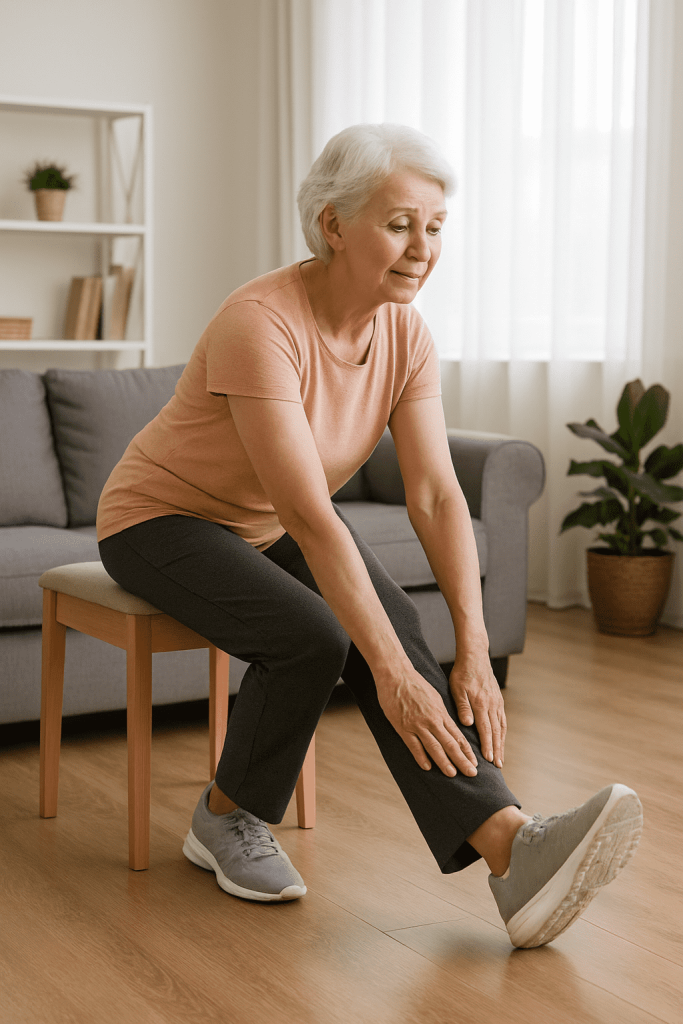
Seated Hamstring Stretch
How to do it:
- Sit toward the front edge of a chair with your left foot flat on the floor.
- Extend your right leg straight with your heel on the floor and toes pointing up.
- Keep your back straight and lean forward gently from your hips.
- Hold for 20-30 seconds, then switch legs.
Goal: Feel a gentle stretch in the back of your thigh without pain.
Why this helps: This maintains flexibility in your hamstrings, which helps you bend forward, walk with a full stride, and get in and out of cars.
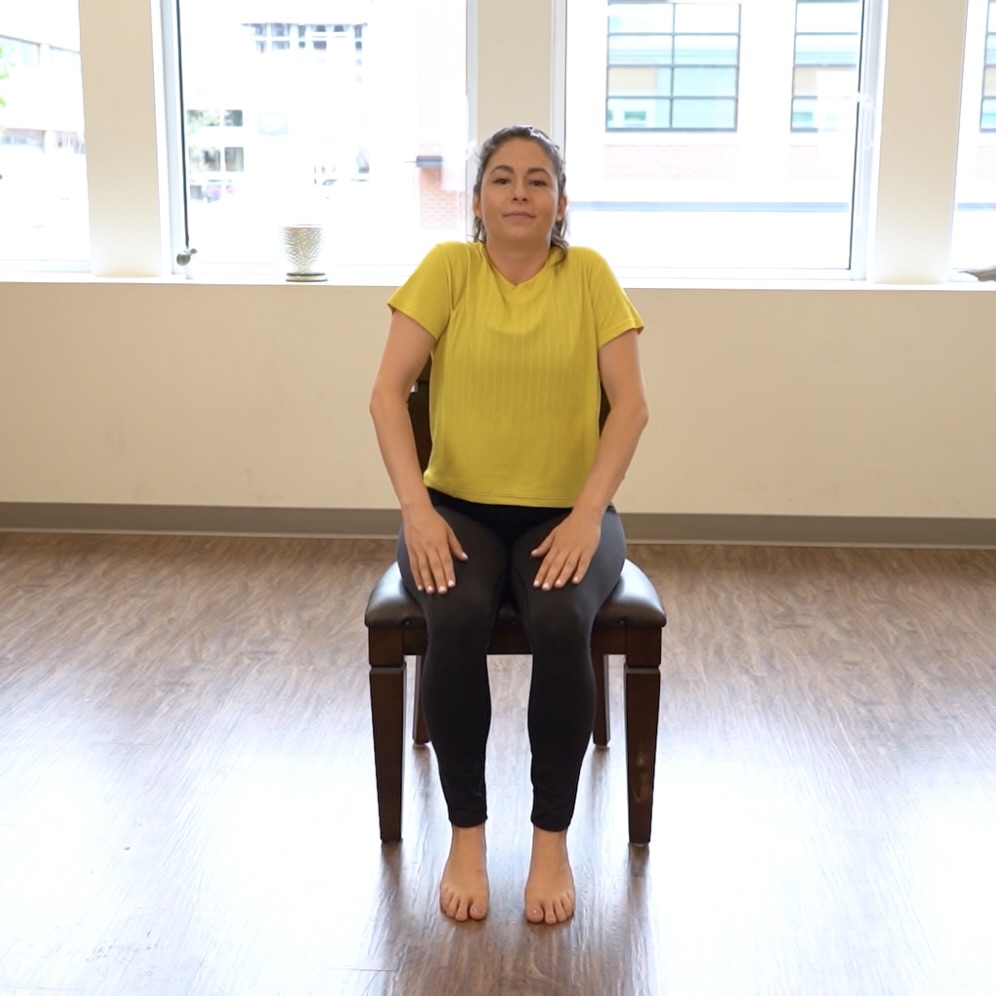
Shoulder Rolls
How to do it:
- Sit or stand with your arms relaxed at your sides.
- Lift your shoulders up toward your ears.
- Roll them back and down in a circular motion.
- Complete 10 slow rolls backward.
Goal: Complete the movement smoothly without tension in your neck.
Why this helps: This reduces stiffness in your shoulders and upper back, which can improve your posture and make reaching easier.
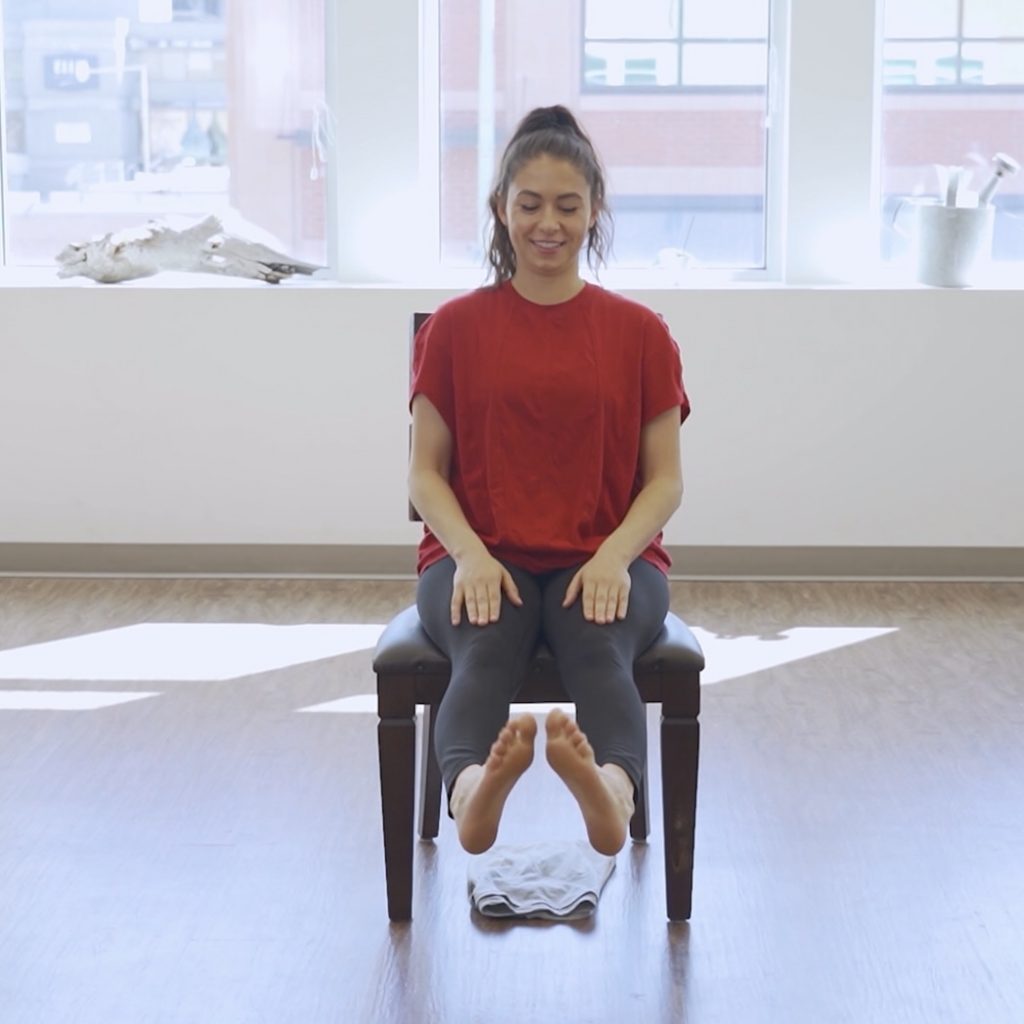
Ankle Circles
How to do it:
- Sit in a chair with your back supported.
- Lift your right foot slightly off the floor.
- Slowly rotate your foot in a circle, moving only at the ankle.
- Complete 10 circles in one direction, then reverse.
- Switch to your left foot.
Goal: Complete smooth, controlled circles without wobbling.
Why this helps: This maintains ankle mobility, which you need for walking on different surfaces and adjusting your balance when you step on something uneven.
Safe Aerobic Exercises for Seniors
Beyond strength, balance, and flexibility, aerobic exercise plays an important role in heart health and endurance. Mayo Clinic notes that aerobic exercises can help keep the arteries clear and reduce the risk of many conditions, including obesity, heart disease, and type 2 diabetes.
Walking remains one of the safest and most accessible options for seniors. Start with 10-15 minutes on flat, well-lit surfaces and gradually increase your time as you build stamina. Swimming and water aerobics offer low-impact alternatives that reduce stress on your joints while still providing cardiovascular benefits. Stationary cycling works well if balance is a concern.
The most important thing is to find an activity you can sustain consistently without pushing into breathlessness or joint pain. Aim for 20-30 minutes of moderate intensity aerobics on most days of the week, but listen to your body and adjust based on how you feel.
Start Exercising Safely Today
These exercises work best when combined in a specific order that builds stabilizing strength systematically. The Fall Prevention Exercises Class takes you through five days of guided 15-minute video sessions that target the stabilizing muscles crucial for keeping you upright.
The exercises above address balance, strength, and flexibility using only your body weight and a chair. You can start with any of them today. Consistent movement like this remains one of the most effective tools for reducing fall risk and maintaining lifelong independence. When chosen carefully and performed with control, these safe exercises for seniors protect your mobility rather than threaten it.