
Shoulder Exercises for Seniors: 8 Moves to Ease Stiffness
Shoulder exercises for seniors are one of the most effective ways to reduce stiffness, improve your range of motion, and stay independent at home. Tight or weak shoulders make everyday tasks — reaching overhead, dressing yourself, lifting groceries — harder than they need to be. The good news: just a few targeted moves done consistently can make a real difference.
These 8 exercises are safe for adults over 60, require no equipment, and can be done sitting or standing. Start slow, listen to your body, and stop if you feel sharp pain.
Why Shoulder Strength Matters After 60
As we age, the muscles surrounding the shoulder joint naturally lose mass and elasticity. Rotator cuff injuries become more common, posture often rounds forward, and stiffness sets in — especially if you're not moving much. The result: reaching for things becomes uncomfortable, overhead movements hurt, and your confidence in daily activities drops.
The good news is that the shoulder responds well to gentle, consistent exercise. You don't need weights or a gym. Just the right movements, done regularly, can restore a surprising amount of function.
Strong shoulders also support your posture, which directly affects balance. Poor posture shifts your center of gravity forward — increasing fall risk. Improving shoulder strength and mobility is one of the most underrated ways seniors can reduce that risk.

8 Shoulder Exercises for Seniors
Do each movement slowly and with control. Aim for 8–10 repetitions per exercise, or hold stretches for 20–30 seconds. Rest between moves as needed.
1. Shoulder Rolls
Sit or stand tall. Roll both shoulders forward in a slow, wide circle — up, back, down, and forward again. Reverse direction. This warms up the joint and releases tension from the upper traps and neck.
Reps: 10 forward, 10 backward
2. Pendulum Swing
Stand beside a table or chair for support. Lean slightly forward and let one arm hang loose. Gently swing the arm forward and back, then side to side, then in small circles. The momentum does the work — don't force it. This is excellent for reducing rotator cuff tightness.
Reps: 10 each direction, then switch arms
3. Wall Slide
Stand facing a wall, arms at shoulder height with forearms resting on the wall. Slowly slide both arms up the wall as high as comfortable, then back down. Keep your back flat — don't arch. This builds shoulder strength and improves overhead reach.
Reps: 8–10
4. Doorway Chest Stretch
Stand in a doorway and place both forearms on the door frame at shoulder height. Gently lean forward until you feel a stretch across the chest and front of the shoulders. Hold, then release. Most seniors carry tightness in the front of the shoulder from years of hunching forward — this stretch directly addresses it.
Hold: 20–30 seconds × 2–3 sets
5. Seated Shoulder Press (No Weights)
Sit in a sturdy chair. Bring both hands to shoulder height, palms facing forward. Slowly press both arms up until nearly straight overhead, then lower back down. Go at your own pace. If this causes pain, skip it and focus on the other moves until your shoulder mobility improves.
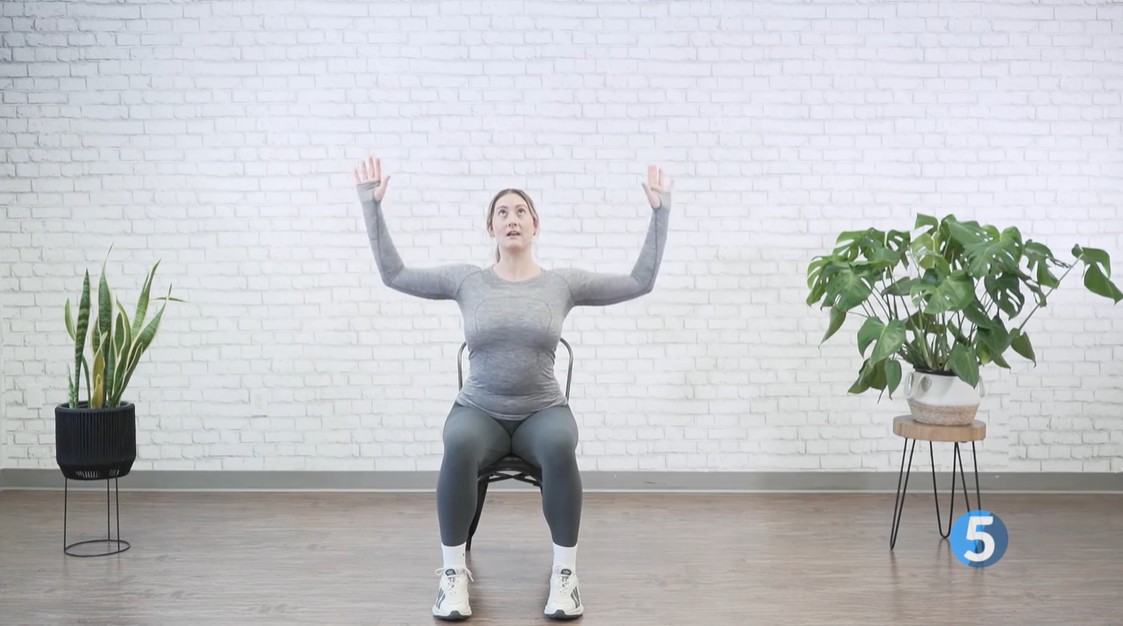
Reps: 8–10
6. Arm Circles
Stand with feet hip-width apart and extend both arms out to the sides. Make small forward circles, gradually increasing size. Then reverse direction. This lubricates the shoulder joint and improves range of motion.
Reps: 10 small + 10 large, each direction
7. Cross-Body Shoulder Stretch
Bring one arm across your chest. Use the opposite hand to gently draw it closer to your body until you feel a stretch in the back of the shoulder. Hold, then switch. This targets the posterior shoulder — an area that gets chronically tight in older adults.
Hold: 20–30 seconds each side × 2 sets
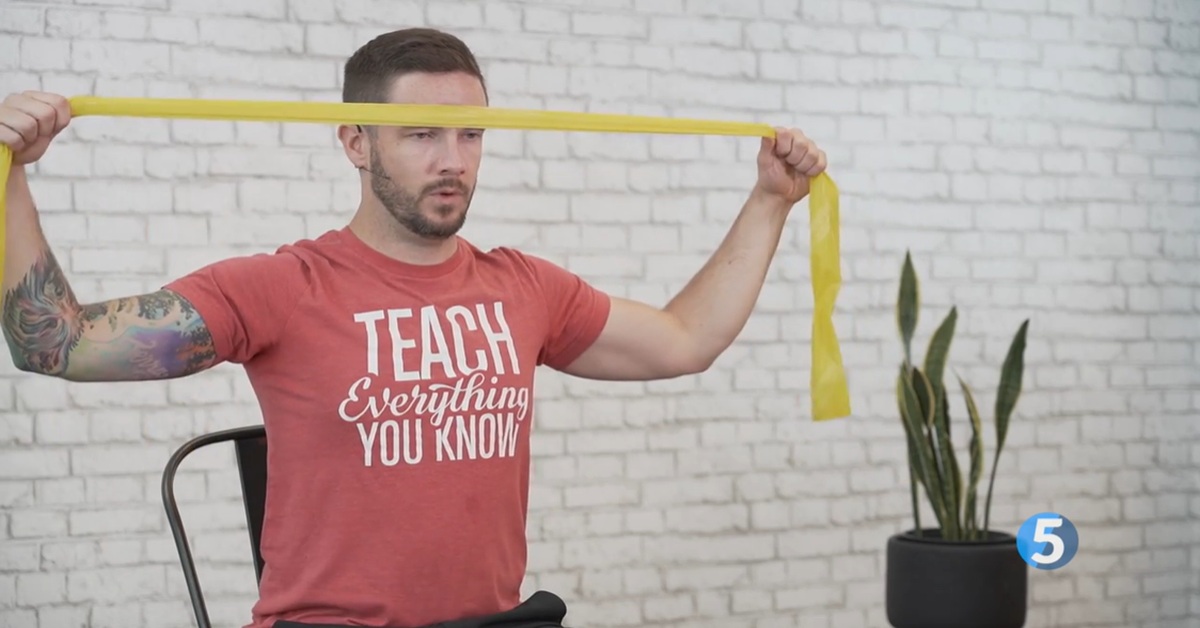
8. Towel Stretch (Internal/External Rotation)
Hold a towel or belt behind your back — one hand at the top, one at the bottom. Gently pull the top hand upward to stretch the lower shoulder, then pull the lower hand down to stretch the other. Switch grip and repeat. This improves rotational range of motion, which is often the first thing seniors lose.
Hold: 20 seconds each direction, switch grip
How Often Should Seniors Do Shoulder Exercises?
Aim for 3–4 times per week. Consistency matters more than intensity. If your shoulders feel stiff after waking up, even 5 minutes of gentle shoulder rolls and arm circles can make your whole day more comfortable.
If you're dealing with a specific issue — rotator cuff pain, arthritis, post-surgery recovery — check with your doctor before starting. These moves are designed for general stiffness and weakness, not acute injury.
Pair Shoulder Work With Full-Body Movement
Shoulders don't work in isolation. A stronger core supports better posture, which takes pressure off the shoulder joint. Better hip mobility means your whole body moves more efficiently. That's why the most effective approach for seniors combines targeted shoulder work with a broader movement practice.
The 7 Days of Chair Pilates for Mobility class at Better5 is a great complement to these shoulder moves — it builds full-body strength and stability from a seated position, making it safe and accessible even on tough days.
For seniors who want to address balance alongside strength, the Fall Prevention Exercises class covers the key stability work that helps you stay confident on your feet. Our free guide to gentle balance exercises for seniors is also a helpful starting point.
And if shoulder stiffness is part of a wider mobility challenge, the 10 Days of Hatha Yoga class works through the whole body with gentle, guided flexibility work designed specifically for adults over 60.
Tips for Getting the Most Out of These Shoulder Exercises
Warm up first. Even 2–3 minutes of walking in place helps get blood flowing before you start.
Don't push through sharp pain. Mild discomfort is normal. Pain that's sharp, shooting, or worsening is a signal to stop.
Breathe. It sounds obvious, but many people hold their breath during stretches. Exhale on the stretch — it helps muscles release.
Go slow. The slower you move, the more you activate stabilizing muscles and the safer the exercise becomes.
Track your progress. Notice if reaching overhead gets easier, or if morning stiffness decreases. Small wins are real wins.
Final Thoughts
Shoulder exercises for seniors don't need to be complicated or intense. These 8 moves — done consistently — can reduce stiffness, improve your reach, and support better posture and balance over time.
Start with the easiest moves, build the habit, and give yourself a few weeks before expecting big changes. Your shoulders took decades to get stiff — they won't loosen up overnight. But they will respond.
If you want to take your shoulder work further with guided instruction, our Chair-Assisted Arm & Shoulder Strengthening class at Better5 walks you through seated, chair-assisted moves designed to ease stiffness and rebuild strength in the shoulders — a natural next step from the exercises above.
Ready to feel the difference? Explore Better5 classes built for seniors like you — gentle, guided, and designed for adults over 60.