Standing Exercises for Seniors: Safe Moves to Build Balance
Standing Exercises for Seniors: 8 Safe Moves to Build Balance
Standing exercises for seniors are one of the best ways to build balance, strengthen your legs, and reduce your risk of falling — all without getting down on the floor. If you're over 60 and want to stay steady on your feet, this routine is designed specifically for you: no equipment needed, no gym required, and every move can be done next to a chair for extra support.
Why Standing Exercises Matter for Seniors
As we age, the muscles that keep us upright — our legs, hips, and core — naturally weaken. This is one of the leading reasons falls become more common after 60. The good news? Research consistently shows that regular standing balance exercises can significantly reduce fall risk, even when started later in life.
Standing exercises work multiple muscle groups at once: your quads, glutes, calves, and stabilizing muscles around the ankles all get a workout just from holding a controlled position. That's functional fitness — strength that translates directly to walking, climbing stairs, and moving confidently through your day.
If you've been working on your balance with seated or floor-free exercises, adding these standing moves is a natural next step.
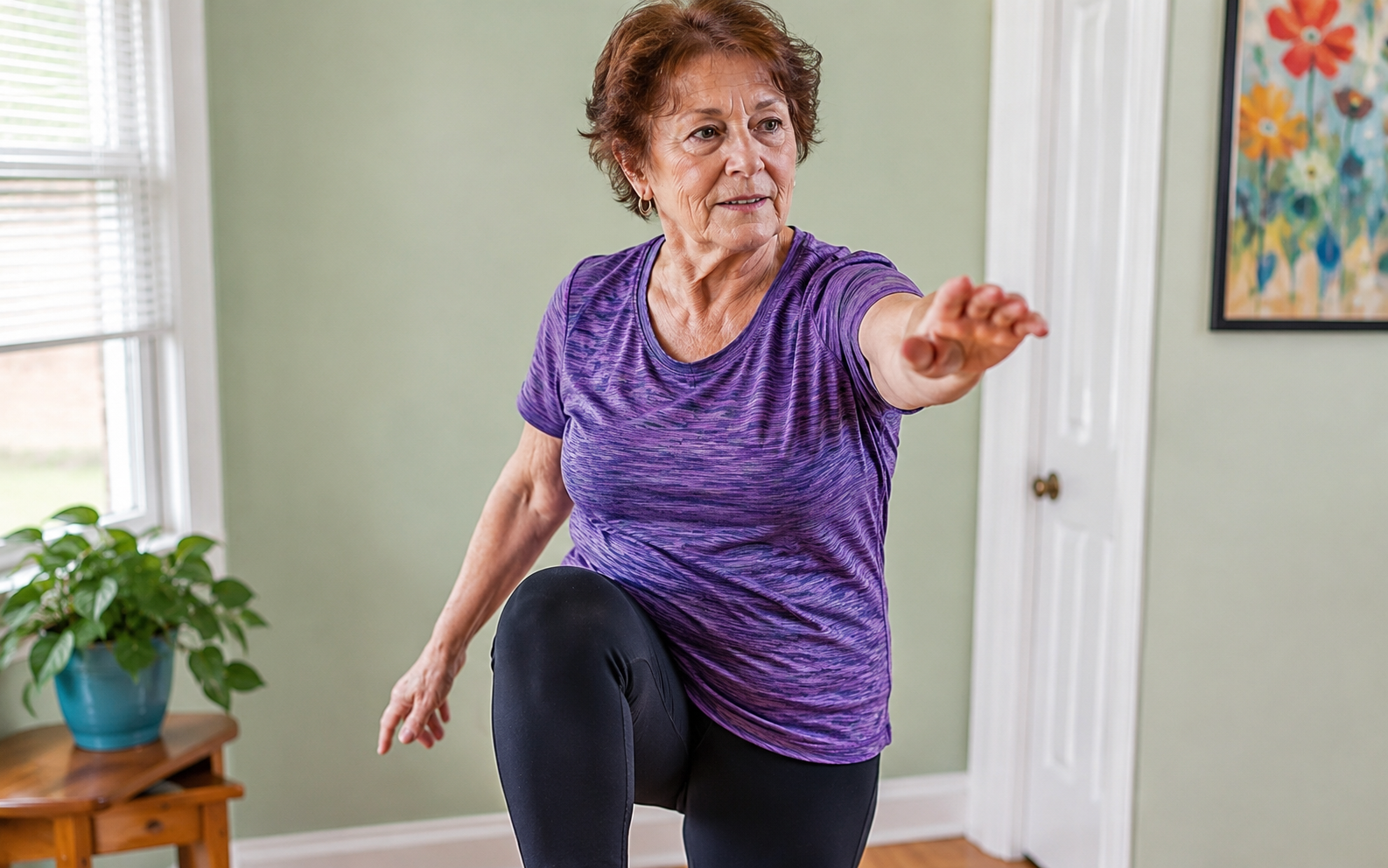
Before You Begin: Safety First
Set yourself up for success before starting:
Place a sturdy chair beside you to hold if needed
Wear supportive footwear — no socks on slippery floors
Clear the space around you of rugs or obstacles
Move slowly and breathe steadily throughout
Stop and rest if you feel dizzy or off-balance
You don't need to do all 8 exercises in one session. Start with 3–4 that feel comfortable, and build from there.
8 Standing Exercises for Seniors
1. Standing Marching
Stand tall behind your chair with both hands lightly resting on the back. Slowly lift your right knee toward your hip, hold for 2 seconds, then lower it. Alternate legs. Do 10 reps per side. This warms up your hip flexors and gets blood moving through your lower body — a perfect way to start any standing routine.
2. Heel Raises
Stand with feet hip-width apart, hands on the chair back. Slowly rise onto the balls of your feet, hold for 2–3 seconds, then lower down. Do 12–15 reps. Heel raises strengthen your calf muscles and improve ankle stability, which plays a huge role in preventing trips and stumbles.
3. Toe Raises
Stand tall with your heels on the floor. Lift your toes and the front of your feet up toward your shins, hold briefly, then lower. Do 12 reps. This targets the tibialis anterior — the muscle along your shin that helps you clear the ground when walking. Weakness here is a common contributor to falls.
4. Single-Leg Stand
Hold the back of your chair lightly. Shift your weight onto your left foot and lift your right foot slightly off the floor. Hold for 10–20 seconds, then switch sides. Work up to holding without touching the chair. This is one of the most effective standing balance exercises for seniors — it directly trains the balance system your body uses when walking.
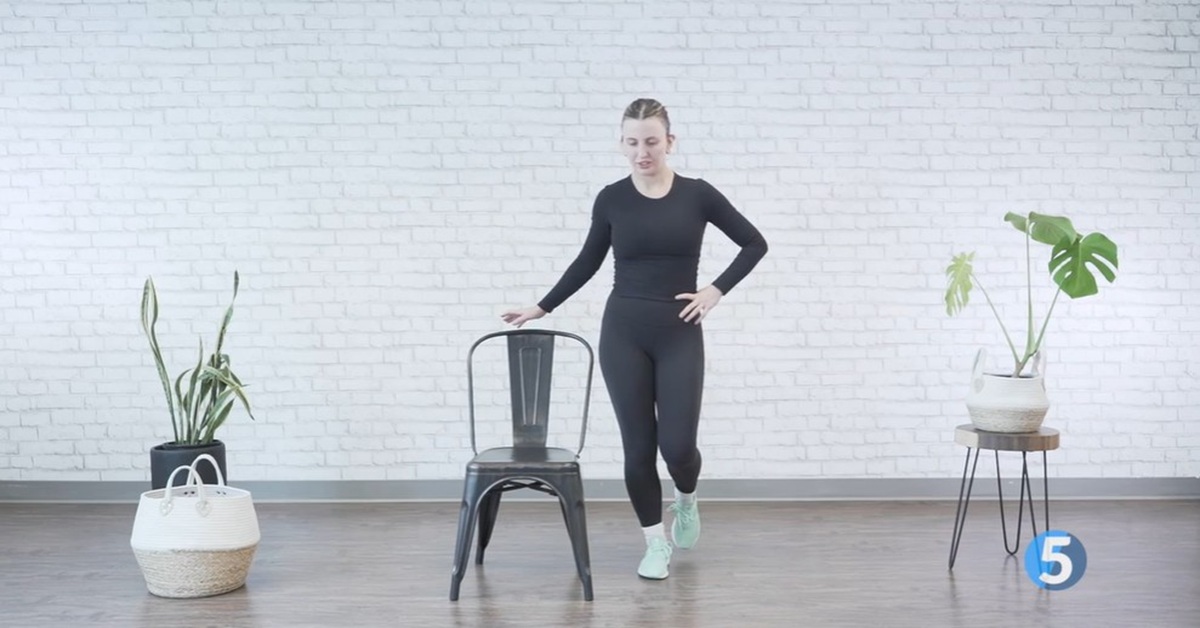
5. Side Leg Raises
Stand beside your chair and hold on for support. Keeping your leg straight, lift it out to the side about 12–18 inches, then slowly bring it back down. Do 10 reps per side. Side leg raises strengthen the hip abductors — the muscles on the outer hip that stabilize your pelvis when you step to the side or walk on uneven ground.
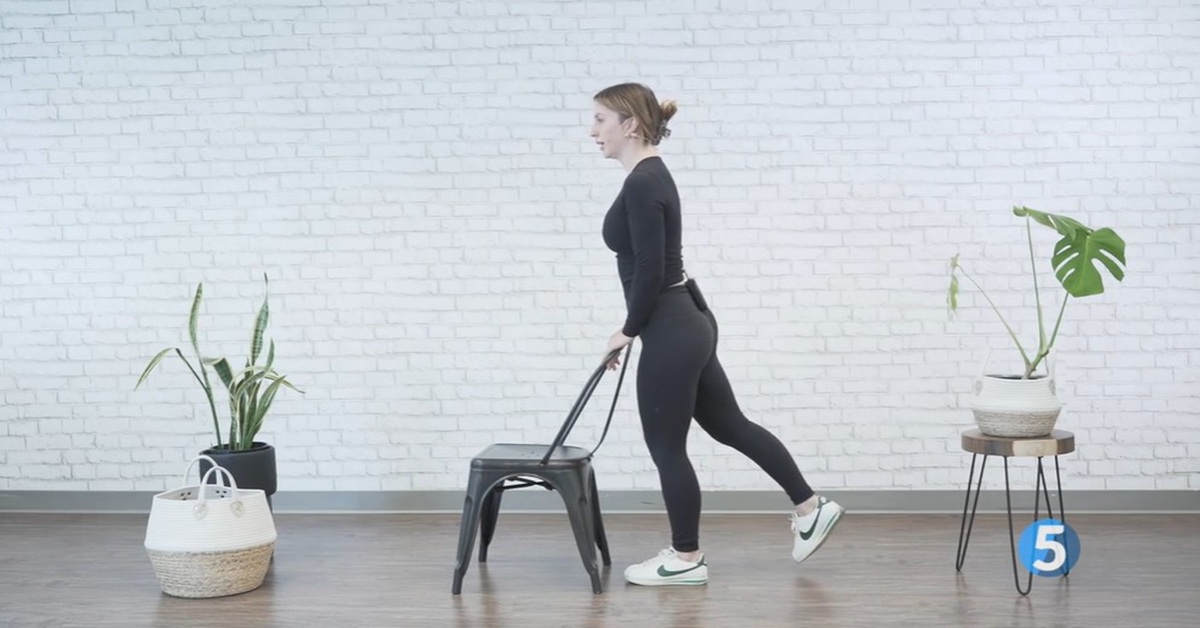
6. Backward Leg Raises
Standing behind your chair, slowly extend one leg straight back (not arched), hold for 2 seconds, then return. Keep your core gently braced and avoid leaning forward. Do 10 reps per side. This targets your glutes, which are critical for hip stability and power during walking. If you want to build lower body strength safely, the Fall Prevention Exercises class at Better5 includes guided glute and hip work built for seniors.
7. Tandem Standing (Heel-to-Toe)
Stand with one foot directly in front of the other, heel touching the toe of the back foot. Hold this position for 10–30 seconds, then switch feet. Hold the chair if needed at first — the goal is to work toward doing this without support. This exercise directly challenges the balance system and is used by physiotherapists as a balance assessment tool.
8. Mini Wall Squat
Stand with your back lightly against the wall, feet shoulder-width apart and about 12 inches away from the wall. Slowly bend your knees to about a 45-degree angle (like you're starting to sit), hold for 3–5 seconds, then press back up. Do 8–10 reps. Mini squats build quad and glute strength without the knee strain of a full squat — making them one of the safest standing strength exercises for older adults.
How Often Should Seniors Do Standing Exercises?
Aim for 3–4 times per week. Consistency matters more than intensity — even two or three of these moves done daily will add up to meaningful improvement in your balance and leg strength over 4–6 weeks.
If you're also working on mobility and flexibility, pairing these standing exercises with a structured class can accelerate your results. The 7 Days of Chair Pilates for Mobility at Better5 is a great complement — it targets the same core and hip stability muscles from a seated position, so you can rotate between both formats.
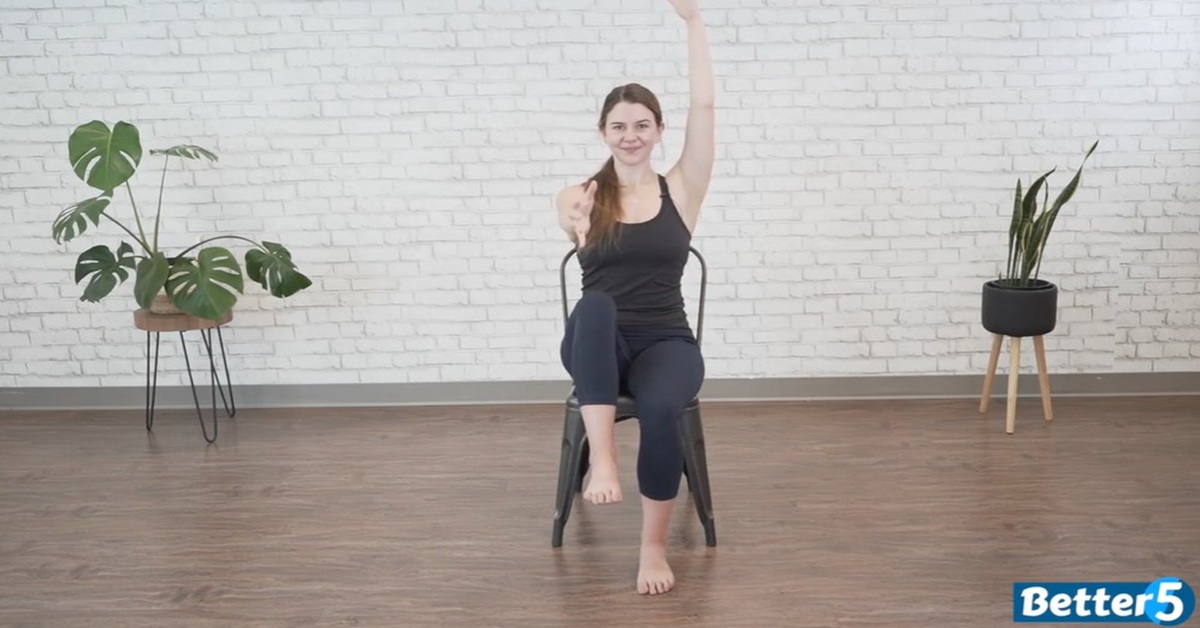
What If You Can't Do Them Without Holding On?
That's completely normal, especially when starting out. Always use the chair. Over time, try holding on with just one finger, then just hovering your hand near the chair without touching it. Progress happens gradually — and that's the goal. You're building the neurological pathways that keep you steady, and that takes consistent practice.
For a gentler starting point, check out our gentle balance exercises for seniors — a free PDF with 13 moves, none requiring you to get on the floor.
Standing Exercises for Seniors: The Bottom Line
The eight standing exercises in this routine — marching, heel raises, toe raises, single-leg stands, side and backward leg raises, tandem standing, and mini wall squats — cover the full range of what your body needs to stay balanced and strong on your feet. They're safe, effective, and adaptable to your current fitness level.
Start with what feels manageable, move slowly, and trust that each session is building a stronger, steadier version of you.
Ready to take your balance further? Explore Better5 — fitness classes built for seniors, available anytime at home.