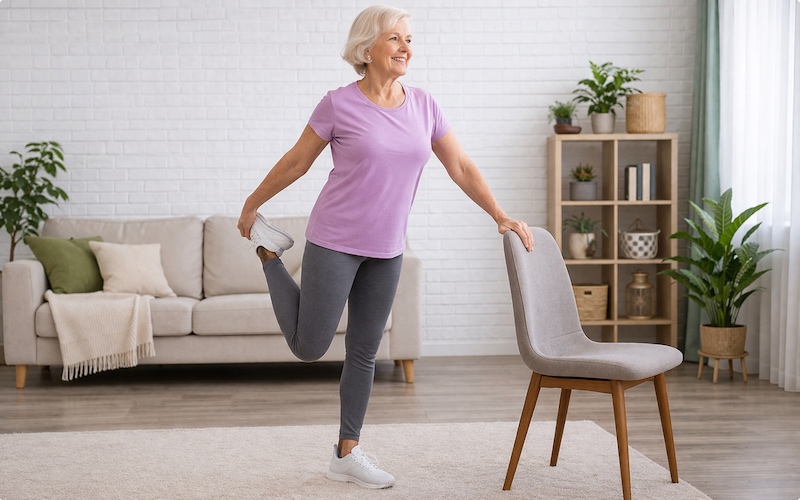
Stretching Exercises for Seniors: 8 Safe Moves
Stretching exercises for seniors are one of the most effective ways to maintain flexibility, reduce stiffness, and lower your risk of falls as you get older. Whether you’re 60, 70, or 80+, adding just a few gentle stretches to your day can make a real difference in how your body feels and moves.
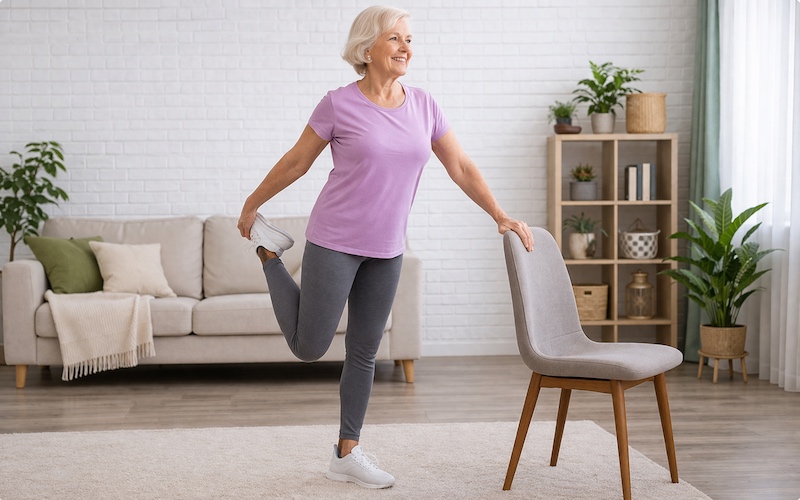
Why Do Stretching Exercises for Seniors Matter?
As we age, our muscles naturally become shorter and tighter. This loss of flexibility can affect how we walk, reach, bend, and balance — and it’s one of the leading reasons older adults experience falls and injuries.
Here’s the good news: regular stretching can reverse much of that tightness. Studies show that consistent flexibility work helps seniors:
- Reduce muscle soreness and joint stiffness
- Improve posture and reduce back pain
- Increase range of motion in hips, knees, and shoulders
- Boost circulation and reduce injury risk
- Improve balance and reduce fall risk
The key is consistency. Even 10 minutes of gentle stretching each day can produce noticeable improvements in just a few weeks.
How to Stretch Safely as a Senior
Before you dive in, a few safety tips:
- Never stretch cold muscles. Walk around for 5 minutes or do some gentle chair marching first.
- Hold each stretch for 20–30 seconds. Don’t bounce — that can cause injury.
- Breathe steadily. Exhale as you go into the stretch; never hold your breath.
- Stretch to a point of mild tension, not pain. If something hurts, back off immediately.
- Use a chair or wall for balance on standing stretches if needed.
If you have a specific condition like osteoporosis, arthritis, or recent joint surgery, always check with your doctor or physical therapist before starting a new stretching routine.
8 Gentle Stretching Exercises for Seniors
These 8 stretching exercises for seniors target the areas most prone to tightness: hips, hamstrings, calves, chest, shoulders, and neck. You can do these seated or standing, depending on your comfort level.
1. Seated Hamstring Stretch
Tight hamstrings are one of the most common issues for seniors and a major contributor to lower back pain and poor balance.
How to do it:
- Sit on the edge of a sturdy chair.
- Extend your right leg straight out in front of you, heel on the floor.
- Sit tall and gently lean forward from the hips (not the waist) until you feel a stretch along the back of your thigh.
- Hold for 20–30 seconds. Switch sides.
Pairs well with our Improved Knee Strength & Mobility seated chair class to work the full lower body.
2. Calf Stretch (Standing)
Tight calves reduce ankle flexibility and make it harder to walk steadily — stretching them regularly is a simple way to improve your gait.
How to do it:
- Stand facing a wall, hands resting on it for support.
- Step your right foot back about 2 feet. Keep it flat on the floor.
- Bend your left knee slightly while keeping your right leg straight.
- You should feel a stretch in the back of your right lower leg.
- Hold 20–30 seconds. Switch sides.
3. Hip Flexor Stretch (Seated)
Sitting for long periods tightens the hip flexors, contributing to lower back pain and a hunched posture. This seated version is safe and effective.
How to do it:
- Sit on the edge of your chair.
- Slide your right foot back so your knee is slightly behind your hip.
- Sit up tall and gently push your hips forward. You’ll feel a stretch at the front of your right hip.
- Hold 20–30 seconds. Switch sides.
4. Chest Opener Stretch
Years of sitting and forward head posture tighten the chest. This stretch counters that by opening the front of the body and pulling the shoulders back.
How to do it:
- Sit or stand tall.
- Interlace your fingers behind your back.
- Straighten your arms and gently lift your hands while squeezing your shoulder blades together.
- Hold 20–30 seconds. Repeat 2–3 times.
This stretch pairs perfectly with our 7 Days of Chair Pilates for Mobility & Strengthening class, which includes several upper-body posture exercises.
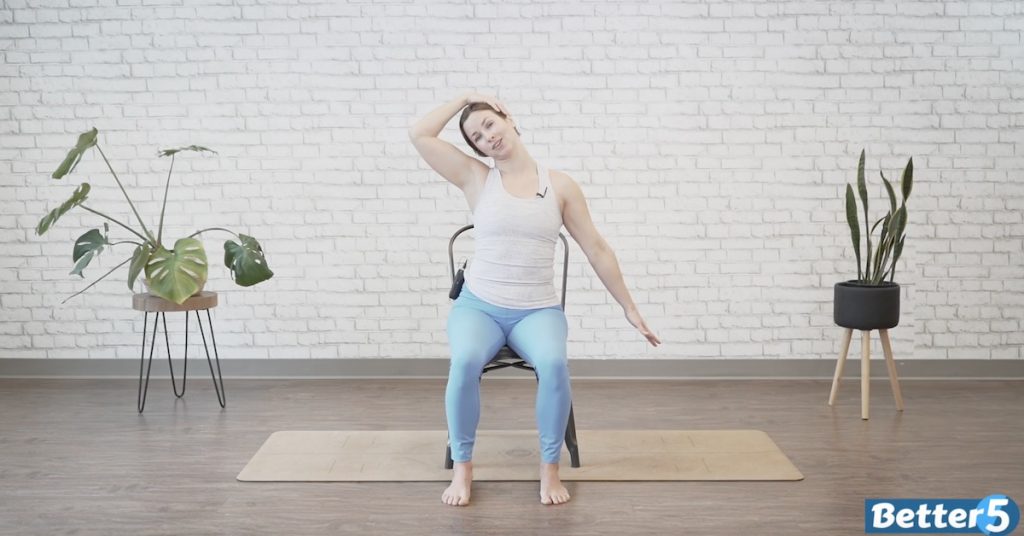
5. Neck Side Stretch
Tension in the neck and upper trapezius is incredibly common, especially if you use a phone or computer. This simple stretch can provide quick relief.
How to do it:
- Sit or stand tall with your shoulders relaxed.
- Slowly tilt your right ear toward your right shoulder.
- For a deeper stretch, gently place your right hand on top of your head (no pulling).
- Hold 20–30 seconds. Switch sides.
6. Shoulder Cross-Body Stretch
This classic stretch targets the back of the shoulder and the rotator cuff — both areas that stiffen with age and can limit your ability to reach overhead.
How to do it:
- Bring your right arm across your chest at shoulder height.
- Use your left hand to gently press your right arm closer to your chest.
- Hold 20–30 seconds. Switch sides.
7. Seated Figure-Four Hip Stretch
This stretch targets the piriformis and glutes — areas that get extremely tight from extended sitting and can radiate pain down the leg (sciatica-like symptoms).
How to do it:
- Sit upright in your chair.
- Place your right ankle on top of your left knee (“figure four” position).
- Gently press down on your right knee while leaning slightly forward from the hips.
- Hold 20–30 seconds. Switch sides.
If hip tightness or pain is something you regularly deal with, you might enjoy our guide on easing hip pain in the elderly, which includes additional exercises and tips.
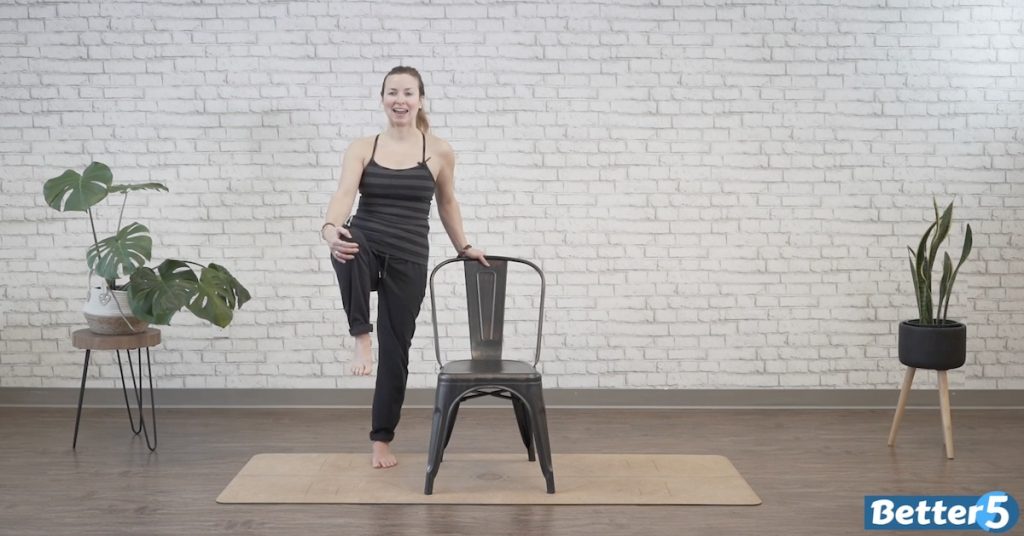
8. Standing Quad Stretch (With Chair Support)
The quadriceps are the large muscles on the front of your thigh. Keeping them flexible is essential for climbing stairs, getting up from chairs, and walking without pain.
How to do it:
- Stand behind your chair and hold the backrest with both hands.
- Bend your right knee and bring your heel toward your buttock.
- Hold your ankle with your right hand if comfortable. Keep knees together.
- Stand tall — don’t lean forward. Hold 20–30 seconds. Switch sides.
How Often Should Seniors Stretch?
Most fitness experts recommend that seniors stretch at least 2–3 times per week, though daily stretching is ideal. The key is frequency over intensity — short, gentle daily sessions will produce better long-term results than occasional intense sessions.
A good starting routine looks like this:
- Morning: 5 minutes of gentle chair stretches to ease morning stiffness
- After exercise: 5–10 minutes targeting the muscles you just used
- Evening: A few relaxing stretches to wind down before bed
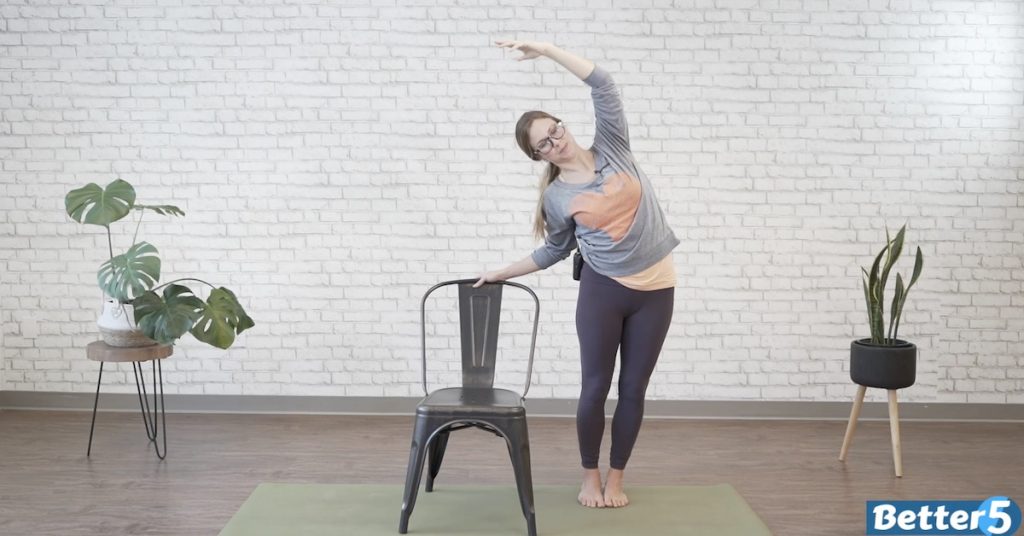
The Link Between Stretching and Fall Prevention
One reason we emphasize stretching exercises for seniors so strongly is the direct connection to fall prevention. Tight hip flexors, stiff ankles, and weak calf muscles all contribute to tripping and loss of balance — which leads to over 36 million falls among older adults every year in the U.S.
Improving flexibility means your joints and muscles can respond more quickly when you step on an uneven surface or catch yourself mid-stumble. Pair a stretching routine with dedicated balance training for maximum protection. Our Fall Prevention Exercises class is a great complement to the routine above — it builds the stability your body needs to stay upright.
Stretching vs. Strengthening: Do You Need Both?
Short answer: yes. Stretching improves flexibility and range of motion, but it doesn’t build the muscle strength needed for everyday activities like getting up from the floor or carrying groceries. The two work together — flexible muscles are easier to strengthen, and strong muscles can stretch farther without injury.
If you’re ready to add strengthening to your routine, check out our post on gentle strength training for seniors for a beginner-friendly guide.
Ready to Get More Flexible?
The 8 stretching exercises for seniors in this post are a solid starting point. But if you’re looking for guided video routines, expert instruction, and a full program that builds on these foundations, Better5 has everything you need.
Our classes are designed specifically for adults 60+ — gentle, progressive, and safe to do at home. Whether you want to focus on flexibility, balance, or full-body strength, there’s a class for you.
Take the first step toward a more flexible, comfortable body with Daily Stretches For Full Mobility Digital Class
Or explore Better5 classes built for seniors like you.
Frequently Asked Questions
Is it safe to stretch every day as a senior?
Yes — daily gentle stretching is safe and encouraged for most older adults. Just avoid overstretching into pain, and warm up with light movement first.
What are the best stretching exercises for seniors with arthritis?
Gentle range-of-motion stretches — like the ones above — are usually safe for arthritis. Focus on slow, controlled movement and hold positions rather than bouncing. Always check with your doctor if you’re unsure.
How long should seniors hold a stretch?
Most guidelines recommend holding a stretch for 20–30 seconds and repeating each stretch 2–3 times per session. For older adults, the goal is consistency and comfort, not depth.
To summarize: stretching exercises for seniors are a safe, effective, and completely free way to improve your flexibility, reduce pain, and lower your risk of falls. All it takes is 10 minutes a day and a chair. Start with the 8 moves above, and you’ll feel the difference within weeks. The best part about building a daily stretching routine as a senior is that the benefits compound — every week you stay consistent, your body gets a little more mobile and a little more resilient. Stretching exercises for seniors work best when you make them a habit, not an afterthought.