
The Easiest Resistance Training for Seniors Over 55
You’ve probably heard that resistance training for seniors is important, but every time you think about starting, that little voice whispers, “What if I hurt myself?” or “I’m too old for this.” While you’re hesitating, your muscles get weaker. Simple tasks become harder, and weak muscles increase your fall risk. Resistance training offers you a simple way to turn this around. It can be as simple as doing chair squats in your living room or using a stretchy band while watching TV.
What is Resistance Training For Seniors?
Resistance training for seniors refers to exercises that make your body work against a force. These forces could be weights, resistance bands, or even your own body weight. Think of it as giving your muscles a gentle challenge.
When you do a chair squat, your muscles work against gravity and your body weight. Pulling apart a resistance band makes your muscles work against the band’s tension. It’s primarily about helping you maintain and build the strength you need for everyday life.
8 Resistance Training Exercises For Seniors You Can Do at Home
No gym? No problem. These exercises use body weight or simple tools you likely already have. Aim for 2 sets of 8–12 repetitions of each exercise, resting between sets. Go at your own pace.
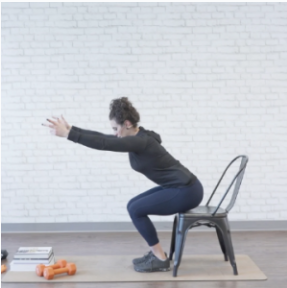
Chair Squats
Benefit: Builds leg strength for easier standing, walking, and climbing stairs.
Instructions:
- Stand in front of a sturdy chair, feet shoulder-width apart.
- Extend your arms forward for balance.
- Slowly lower your body as if sitting down.
- Lightly touch the chair—don’t fully sit.
- Push through your heels to return to standing.
Modification: Hold the back of the chair for support or place a cushion on the seat to reduce the range.

Wall Push-Ups
Benefit: Strengthens arms, shoulders, and chest without floor pressure.
Instructions:
- Stand facing a wall with arms extended at shoulder height.
- Place your palms flat on the wall, shoulder-width apart.
- Step your feet back slightly.
- Bend your elbows to bring your chest toward the wall.
- Push away to return to the starting position.
Modification: Lower your hands slightly or keep elbows closer to your sides for less shoulder strain.
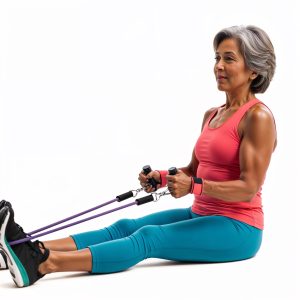
Seated Band Rows
Benefit: Improves posture and strengthens the upper back.
Instructions:
- Sit tall in a sturdy chair with feet flat on the floor.
- Loop a resistance band around the bottoms of both feet.
- Hold one end of the band in each hand.
- Pull your hands toward your waist, elbows close to your body.
- Slowly return to the starting position.
Modification: Use a towel if you don’t have a resistance band. Keep tension gentle.
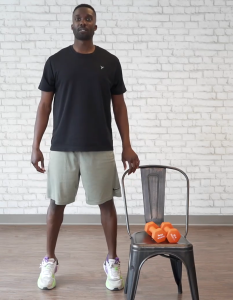
Standing Calf Raises
Benefit: Strengthens calves and ankles, and improves balance.
Instructions:
- Stand behind a chair, holding the back for support.
- Slowly lift your heels to stand on your tiptoes.
- Pause at the top.
- Lower your heels gently back to the floor.
Modification: Perform the movement seated if standing feels unsteady. Raise one heel at a time.
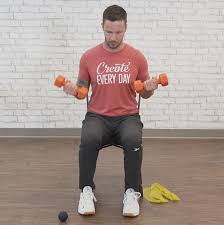
Bicep Curls With Dumbbells
Benefit: Strengthens arms for lifting and carrying everyday items.
Instructions:
- Hold a water bottle (or light dumbbell) in each hand.
- Keep your arms at your sides, palms facing forward.
- Slowly curl the weights toward your shoulders.
- Pause, then lower with control.
Modification: Do one arm at a time if it feels easier, or use canned goods instead of bottles.
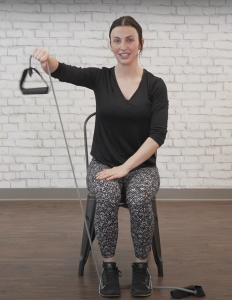
Lateral Arm Raise with Resistance Band
Benefit: Strengthens the shoulder muscles gently.
Instructions:
- Stand tall with your feet shoulder-width apart.
- Place the center of a resistance band under one foot to anchor it.
- Hold one end of the band in each hand, keeping it taut.
- Let your arms hang at your sides, elbows slightly bent, palms facing your body.
- Slowly raise both arms out to the sides until they reach shoulder height.
- Pause briefly, then lower your arms back down with control.
Modification: If using both arms feels challenging, perform the raise one arm at a time.
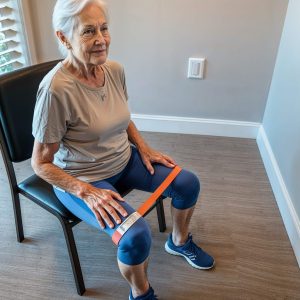
Seated Banded Hip Abduction
Benefit: Strengthens the outer thighs and hips.
- Sit tall near the edge of a sturdy chair or bench.
- Place a resistance band around your legs, just above the knees.
- Position your feet about hip-width apart or slightly closer.
- Keep your back straight and core gently engaged.
- Press your knees outward against the resistance of the band.
- Pause briefly at the widest point, then slowly return to the starting position.
- Repeat 8 to 12 times.
Tip: When returning to the starting point, don’t let your knees snap back in.
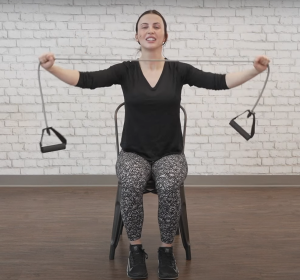
Seated Resistance Band Pull-Apart
Benefit: Strengthens the upper back and shoulders and helps counteract slouching.
Instructions:
- Sit with your shoulders relaxed and feet flat on the floor
- Hold a resistance band with both hands, arms extended straight in front of you at shoulder height.
- Keep your elbows soft (not locked) and your palms facing down.
- Slowly pull the band apart by moving your hands outward to your sides, keeping your arms straight.
- Focus on squeezing your shoulder blades together as the band stretches.
- Pause briefly when your arms are wide, then return slowly to the starting position.
- Repeat 8 to 12 times.
How to Make Resistance Training for Seniors a Habit
Getting started with resistance training for seniors is great. Making it a habit is what turns small steps into long-term strength and independence.
- Warm up for 3–5 minutes with gentle movements like marching in place or shoulder rolls.
- Keep movements controlled and breathe steadily; exhale as you lift, inhale as you lower.
- Start with 2–3 sessions per week to see strength improvements without overdoing it.
- Create a routine by setting reminders or pairing your workouts with daily habits like watching TV.
- Keep your gear visible to stay consistent.
- Tracking your progress lets you see how far you’ve come and helps you stay motivated as your strength improves.
Wrapping Up
Try the Full Body Resistance Band Exercises digital class today. It’s a gentle, chair-assisted way to rebuild strength without dumbbells or floor work.
You don’t need to do it all at once. Just a few minutes of resistance training for seniors a few times a week can help you feel stronger, steadier, and more in control of your body. Over time, these small efforts can lead to big changes that make you feel more confident in your movement. Start where you are, move at your pace, and know that every rep is a step toward a more active, independent life.