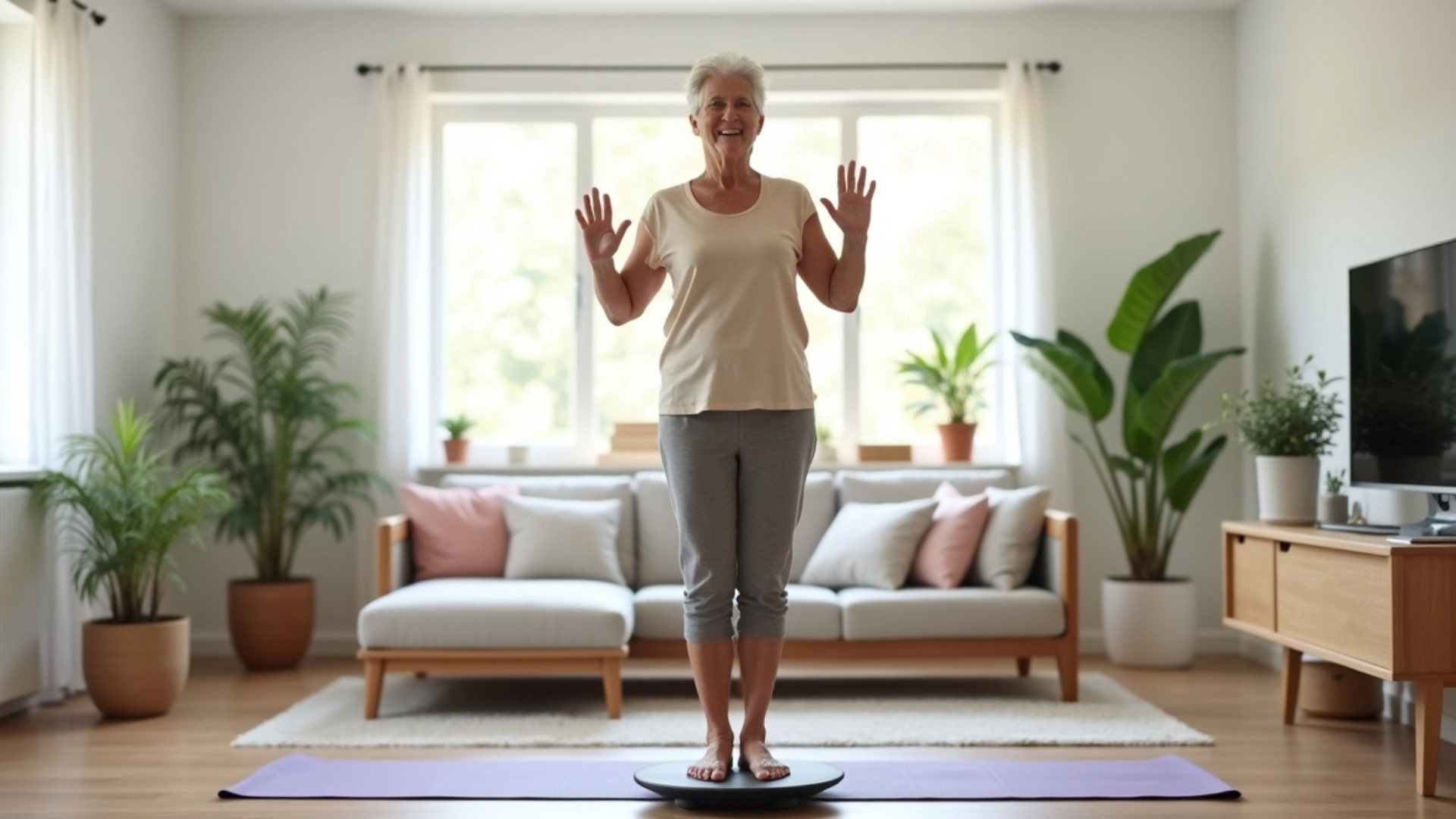
Top 5 Beginner Exercises Using a Balance Board For Seniors
Balance boards are versatile fitness tools in the class of resistance bands—simple, adaptable, and ideal for workouts at any age. While stability is a key benefit of the equipment, various beginner exercises using a balance board for seniors can be adapted to target more than just balance. These exercises also promote overall strength, coordination, & mobility, offering a well-rounded approach to fitness that meets the unique needs of seniors.
What are Balance Boards?
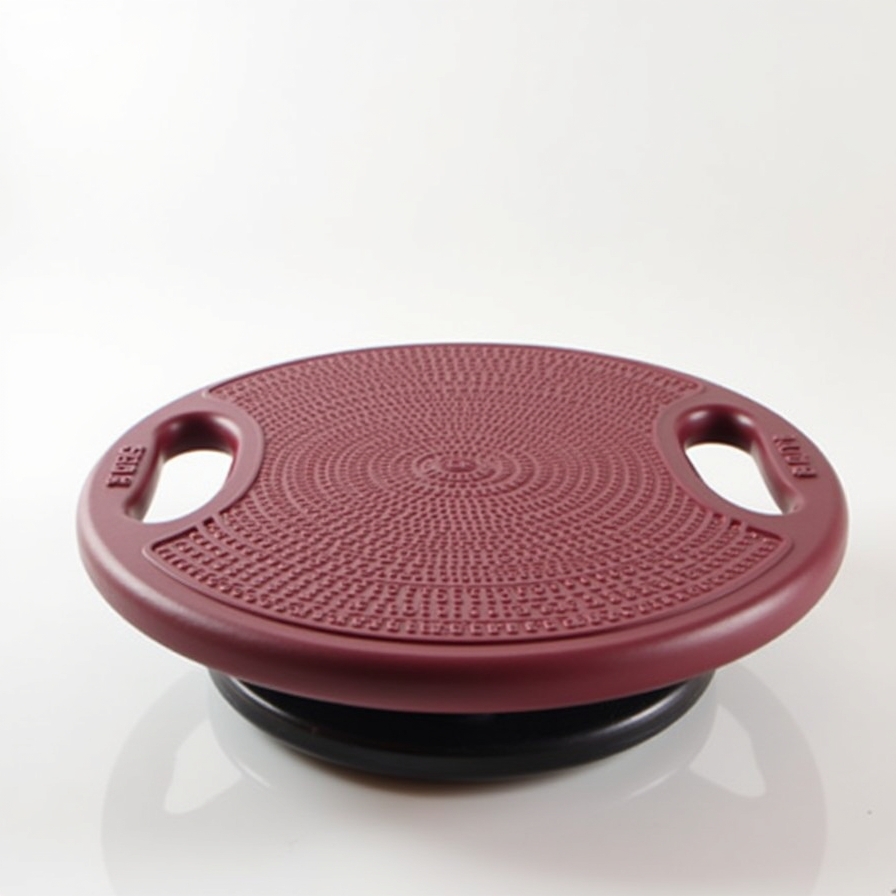
A balance board is a flat, portable fitness platform designed to challenge stability by creating controlled instability. Typically made of wood, plastic, or foam, it sits atop a rounded base (like a dome or roller) or pivots on a central point. When you stand, sit, or kneel on it, the board tilts in response to your movements, forcing your body to engage muscles to stay balanced. You can think of it as a “movement playground” that adapts to your fitness level.
Types of Balance Boards
Balance boards come in different designs, each offering a unique challenge. Here are the most common types:
- Rocker Board (Best for Beginners)
A rocker board typically has a flat board with a curved base that rocks in one direction (front-to-back or side-to-side). It provides controlled movement, making it ideal for seniors or those new to balance training.
- Wobble Board
Wobble boards have a round or square board with a dome-shaped base, allowing movement in all directions. They engage more muscles and improve 360-degree stability.
- Roller Board (Rocker-Roller Board)
The board rests on top of a cylindrical roller, creating an advanced balance challenge. Using this type of balance board requires greater core strength and coordination.
- Spring Balance Board
They are equipped with springs that allow movement in multiple directions. These boards have a dynamic workout that enhances balance, strength, and flexibility.
Rocker boards and wobble boards are the most practical options for seniors as they provide a balance challenge without excessive risk.
Why Balance Boards Are Great Workout Tools for Seniors & Beginners
Using a balance board offers seniors far more than just better balance. Here’s how it enhances overall wellness:
- Better Balance & Coordination: Balance boards train proprioception (body awareness), helping you react quickly to uneven surfaces like rugs and stairs while also improving rhythmic movement control.
- Stronger Stabilizer Muscles: It engages underused muscles in the legs, hips, and core, which are essential for posture, mobility, and fall prevention.
- Increased Joint Flexibility: Gentle motions enhance knee, ankle, and hip mobility, reducing stiffness and promoting smoother movement.
- Sharper Mind-Body Connection: The focus required to maintain balance strengthens cognitive processing and reaction time, making it a light workout for both the brain and body.
Best Beginner Exercises Using a Balance Board for Seniors
If you have a balance board and don’t know how to get started or are planning to get one, here are simple, safe exercises for seniors.
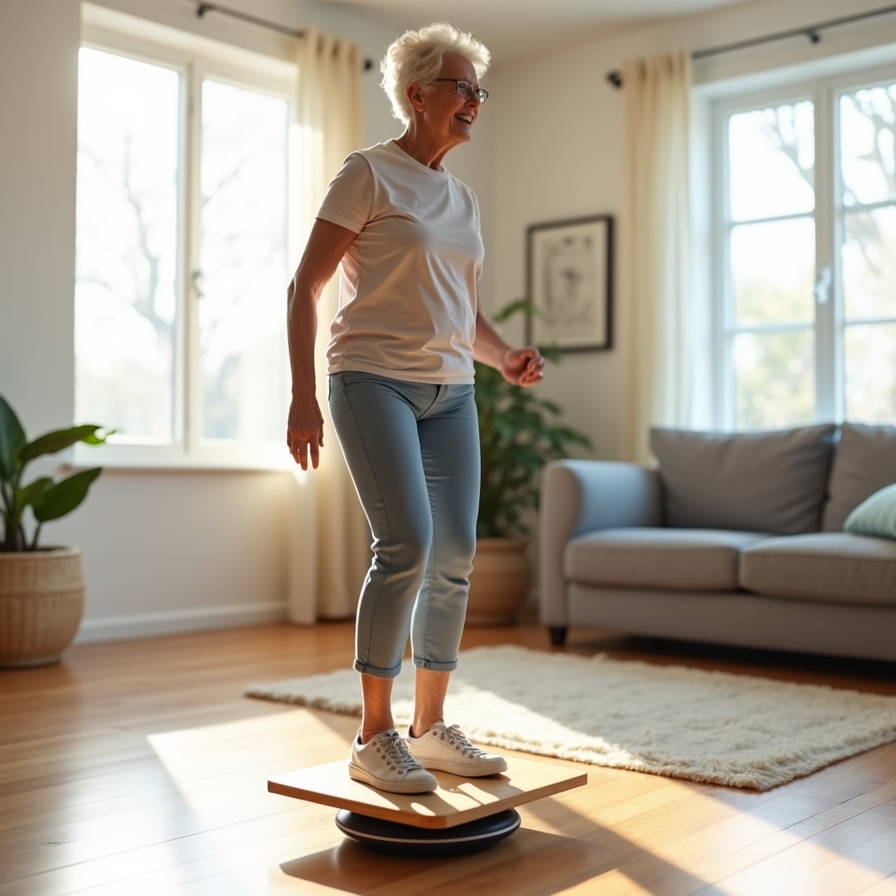
Balance Hold
To start, stand close to a wall or position a sturdy chair within arm’s reach for safety.
- Stand on the balance board, feet hip-width apart near the edges.
- Stand tall, shoulders relaxed, spine neutral.
- Fix your gaze on a steady object.
- Press gently through your feet to lift the board’s edges slightly off the floor.
- Keep your arms relaxed at your sides or lightly hold the chair.
- Aim to maintain balance for 10 seconds. Focus on slow, steady breaths.
- Step off, rest for 30 seconds, and repeat 1–2 times.
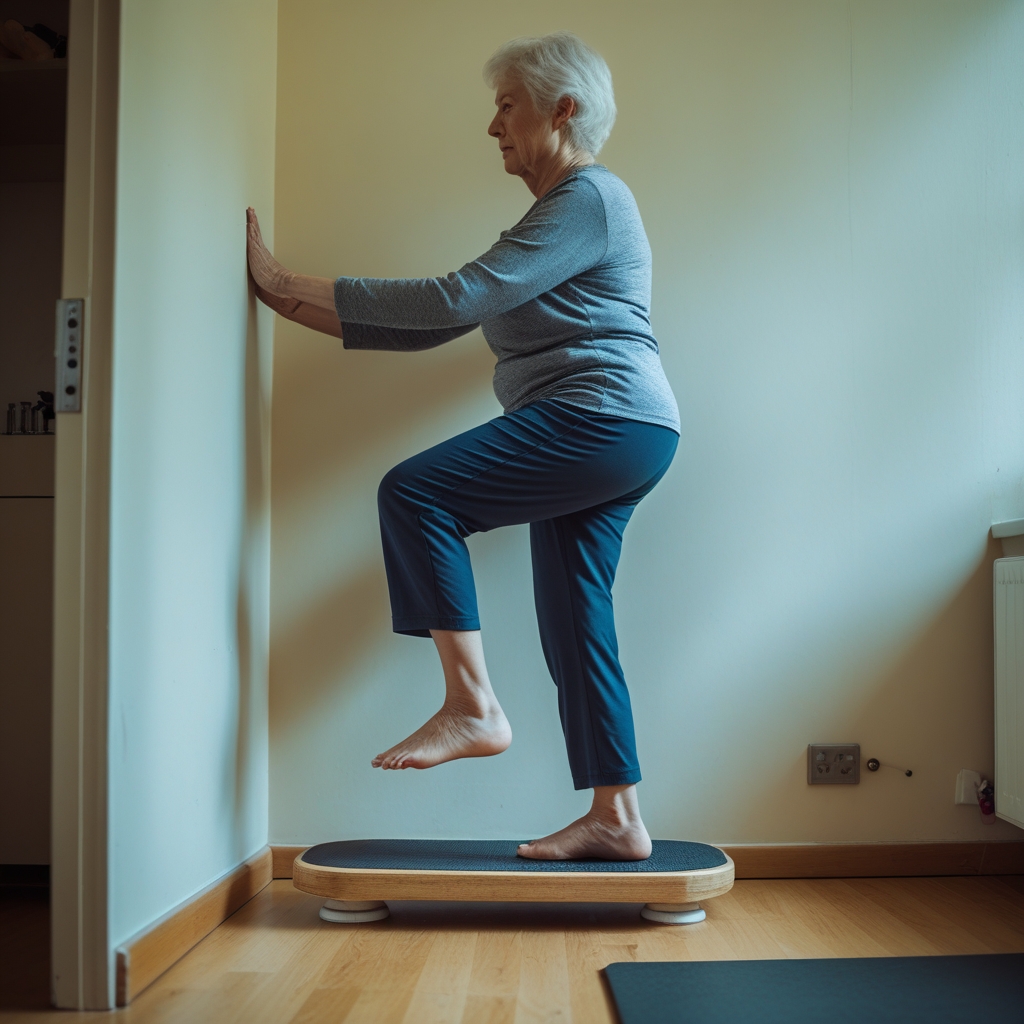
Balance Board Calf Raises
- Stand next to a sturdy wall and place one hand on it for support.
- Position one foot in the center of the balance board.
- Slowly raise your heel off the board by engaging your calf muscles.
- Hold for a few seconds, feeling a gentle stretch in your calf.
- Lower your heel back down with control.
- Repeat for 8 reps, then switch to the other side.
To make it easier, try doing this with both feet on the board for extra stability.
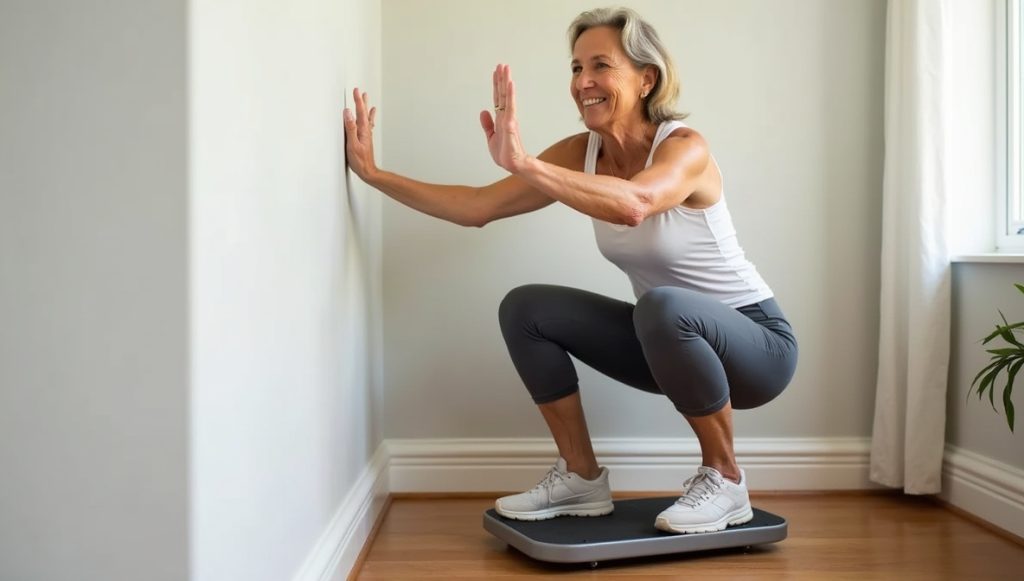
Balance Board Mini Squats
- Place a sturdy chair, countertop, or wall within arm’s reach for support.
- Stand on the balance board with feet slightly wider than hip distance.
- Extend your arms in front of you or lightly rest your hands on the support surface.
- Slowly bend your knees into a shallow squat.
- Only lower as far as it feels stable and comfortable
- Press through your heels to return to standing.
- Aim for 5–8 gentle reps.
- Rest for 10 seconds between reps if needed.
- Complete 1–2 sets in all.
If you feel comfortable enough, you can go deeper for a full squat.
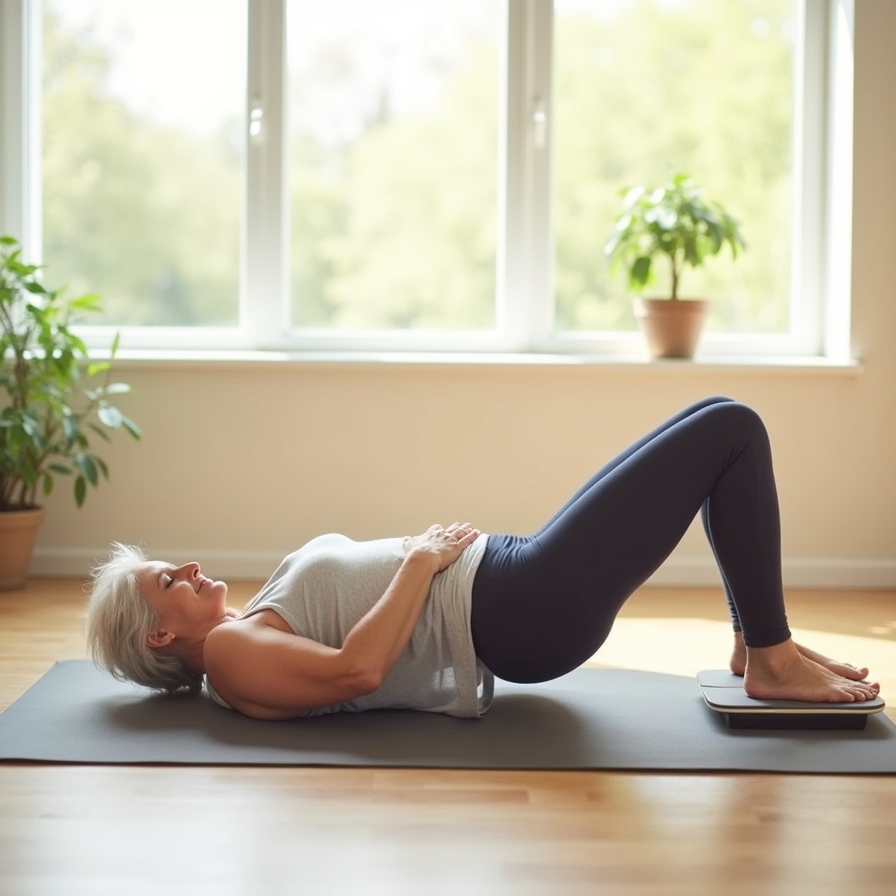
Balance Board Glute Bridge
- Lie on your back on a yoga mat.
- Bend your knees and place your feet flat on the balance board.
- Keep your arms relaxed at your sides, palms down.
- Engage your core and gently press through your heels to lift your hips a few inches off the floor.
- Focus on squeezing your glutes—no need to arch your back.
- Hold the lift for 2–3 seconds, then slowly lower back down.
- Complete 5–8 controlled reps.
- Rest for 10 seconds between reps if needed.
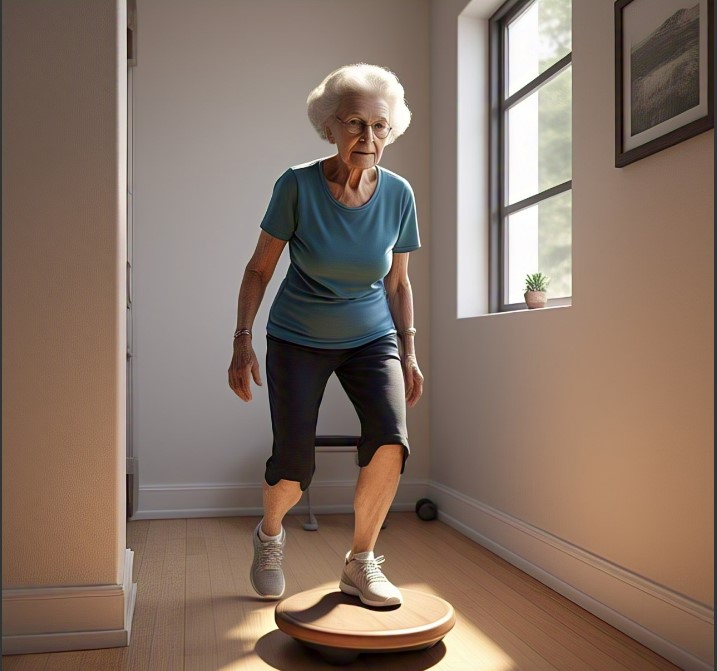
Balance Board Lunges
- Stand on the floor with your feet hip-width apart.
- Step forward with one leg onto the balance board, gently shifting your body weight forward.
- Keep your spine straight as you slowly lower your body until your front thigh is parallel to the floor.
- Ensure your back knee stays just above the floor.
- Press back up through your heel to return to the starting position.
- Complete 3–5 reps on one leg, then switch to the other leg.
Use a stable support, like a wall or chair, if you need extra balance during the exercise.
Final Thoughts
Building balance and strength is accessible and rewarding with the right approach. A balance board helps you take it a step further. Always remember to prioritize safety, adapt movements to your comfort, & progress gradually to make the most of beginner exercises using a balance board for seniors. With consistency, these routines empower you to stay active and confident. If you don’t feel ready for balance board exercises, you can try the 7 Days of Chair-Assisted Balance Exercises Digital Class instead for step-by-step guidance tailored to your needs.