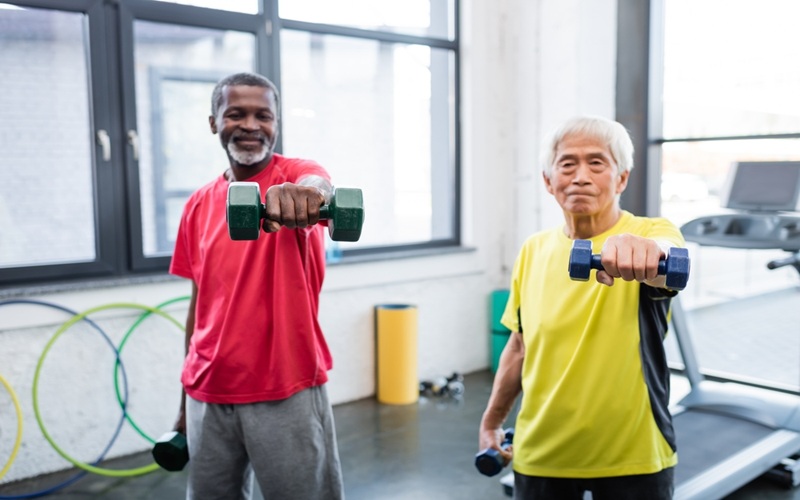
Weight Lifting for Men Over 60: 9 Safe Moves
Weight lifting for men over 60 is not only safe, it is one of the best things you can do for your strength, balance, and independence. The right approach is simple: lift light to moderate weights, use good form, and build up slowly. This guide gives you 9 safe moves you can start at home this week, plus how to progress without hurting yourself.
If you have wondered whether weight lifting for men over 60 is worth it, the answer is a firm yes. Muscle does not disappear because of age alone. It shrinks from disuse. Start training it again, and it responds at any age. That is the whole idea behind sensible weight lifting for men over 60: give the body a reason to stay strong.
Why Weight Lifting Works So Well After 60
After about age 50, men lose muscle faster if they stop challenging it. That lost muscle is what steals your grip, your balance, and your ability to carry groceries or climb stairs. Lifting weights reverses the trend. It signals the body to rebuild fibers, thicken bone, and sharpen the nerve signals that fire your muscles.
The benefits stack up fast. Stronger legs mean a steadier walk and fewer stumbles. A stronger back and core protect your spine when you bend and lift. Better grip strength shows up in everyday tasks, from opening jars to holding a railing. And because muscle burns energy around the clock, regular lifting helps keep weight in check without a punishing diet. A gentle, structured program like our Functional Strength Training Without Floorwork class is built to deliver exactly these gains without putting you on the floor.
Before You Start: A Few Ground Rules
Warm up for five minutes with easy marching, arm circles, and slow squats to a chair. Pick a weight you can lift for 10 to 12 reps with good form, where the last two reps feel like work but never a strain. Breathe out on the effort, in on the release, and never hold your breath. Stop any move that causes sharp joint pain, and if you have a heart condition or recent surgery, clear a new routine with your doctor first. Rest a day between sessions so muscle can rebuild.
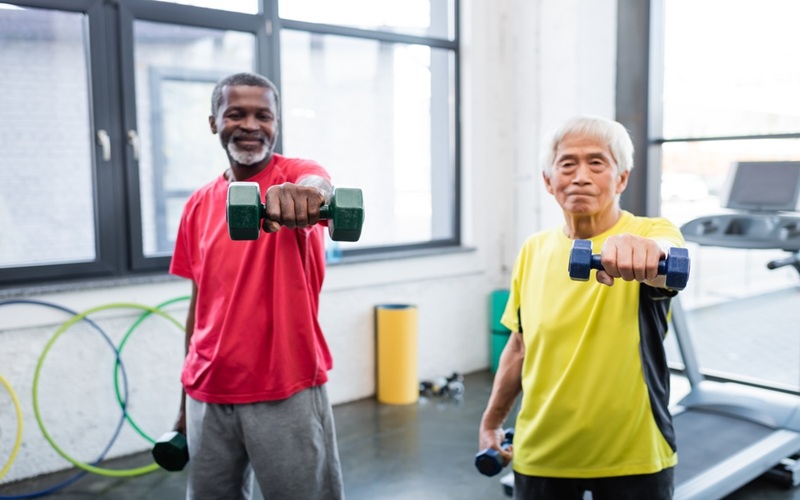
9 Safe Weight Lifting Moves for Men Over 60
Work through these with a pair of dumbbells, or use resistance bands or filled water bottles to start. Aim for 2 to 3 sets of 10 to 12 reps each, two or three days a week on non-consecutive days.
1. Goblet Squat
Hold one dumbbell vertically against your chest with both hands. Stand with feet shoulder-width apart, sit back as if lowering into a chair, then drive up through your heels. Place a real chair behind you for safety. This move builds the quads, glutes, and core that power every sit-to-stand and stair climb.
2. Dumbbell Chest Press
Lie on a sturdy bench or the floor, a dumbbell in each hand at chest level, elbows out. Press the weights up until your arms are straight, then lower with control. This strengthens the chest, shoulders, and triceps you use to push open doors and rise from the ground.
3. Bent-Over Row
Hinge forward at the hips with a slight knee bend and a flat back, a dumbbell in each hand. Pull the weights toward your ribs, squeezing the shoulder blades, then lower slowly. Rows build the upper back and improve the posture that tends to round with age.
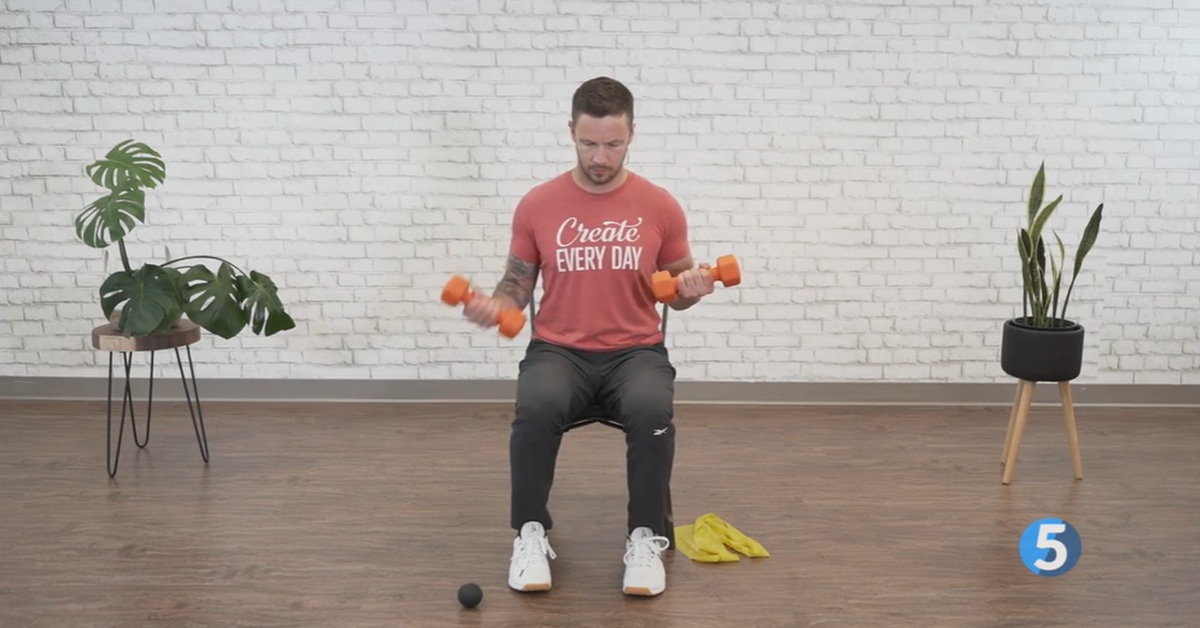
4. Overhead Press
Stand tall with a dumbbell in each hand at shoulder height. Press straight overhead until your arms are nearly locked, then lower under control. This targets the shoulders and triceps, keeping your arms strong for reaching high shelves. Keep the weight modest here, since shoulders are a common sore spot.
5. Romanian Deadlift
Hold dumbbells in front of your thighs. With a soft knee bend and a flat back, push your hips back and lower the weights along your legs, then stand tall by driving the hips forward. This is one of the best moves for the hamstrings, glutes, and lower back that protect you when you lift from the floor.
6. Biceps Curl
Stand with a dumbbell in each hand, palms forward. Curl the weights toward your shoulders, keeping elbows pinned to your sides, then lower slowly. Strong biceps make carrying and lifting easier and support the elbow joint.
7. Standing Calf Raise
Hold a counter or chair for balance. Rise onto the balls of your feet, pause at the top, then lower slowly. Add a light dumbbell in one hand once it feels easy. Strong calves steady your walk and help prevent the ankle rolls that lead to falls.
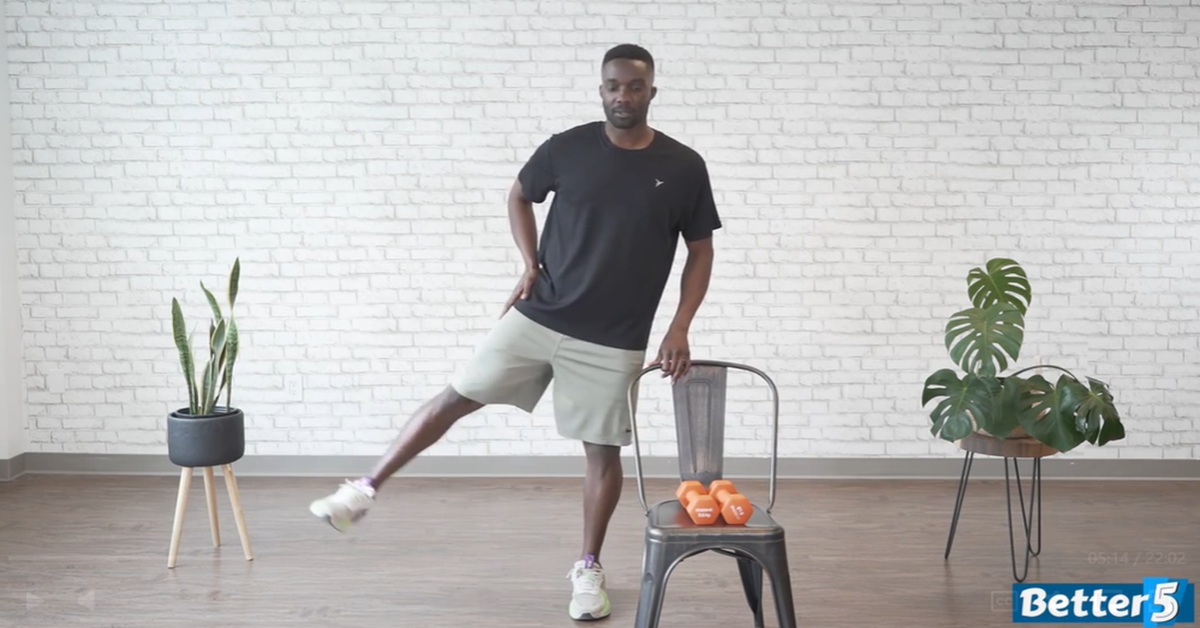
8. Farmer's Carry
Hold a dumbbell in each hand at your sides and walk slowly and tall for 20 to 40 steps. This deceptively simple move hammers your grip, core, and posture all at once, and grip strength is one of the clearest markers of healthy aging.
9. Glute Bridge with Weight
Lie on your back, knees bent, a dumbbell resting on your hips. Squeeze your glutes to lift your hips into a straight line, hold for a second, then lower. This strengthens the glutes and lower back that keep your hips stable and pain free. If you want more hip and knee support, our Improved Knee Strength & Mobility with Seated Chair Exercises class pairs perfectly with this move.
How to Progress Safely
Start light and master the movement before you add weight. When 12 reps feel easy with clean form, nudge the weight up by the smallest increment you have, often 2 to 3 lb. Progress one variable at a time: more weight, or more reps, or more sets, never all at once. If a joint aches the next day, back off the load and keep the range of motion. Speaking of range, mobility is what lets you lift safely for years, so pair your lifting with our Restore Your Range of Motion class to keep the shoulders, hips, and spine moving freely.
Consistency beats intensity every time. Two or three short sessions a week, done steadily for months, will do far more than one exhausting workout you dread. And do not skip balance work. Strength and steadiness go together, which is why many men pair lifting with our Fall Prevention Exercises class to lock in the stability that keeps them upright and confident.
How Much Weight Should a Man Over 60 Lift?
There is no single right number, because the honest answer is the weight that challenges you for 10 to 12 clean reps and no more. For most men starting out, that means dumbbells in the 5 to 15 lb range for upper-body moves and a bit heavier for legs. If you can breeze through 15 reps, the weight is too light to build much. If your form falls apart before rep 8, it is too heavy. Aim for that middle zone where the last two reps are honest work but never a grind, and let the number climb naturally as you get stronger.
Track it simply. Jot down the weight and reps for each move so you can see progress week to week. That record is motivating, and it stops you from guessing. Over a few months you will watch those numbers rise, which is proof your muscle is coming back.
Building a Simple Weekly Routine
You do not need a complicated plan. Pick two or three days a week, spaced out so you never lift heavy two days running. On each day, run through all nine moves for 2 to 3 sets, resting 30 to 60 seconds between sets. The whole session takes 20 to 30 minutes. On your off days, keep moving with a walk or some gentle mobility work so the joints stay loose and blood keeps flowing to the muscles you are rebuilding.
If you prefer a done-for-you plan rather than piecing it together yourself, a follow-along program removes the guesswork. It tells you what to do, how many reps, and when to rest, so you can focus on form instead of planning.
Common Mistakes to Avoid
The biggest mistake is going too heavy too soon, chasing the weights you lifted at 40. Ego lifting is how you tweak a shoulder or a back. The second is rushing the reps: control both the lift and the lower, because the slow lowering is where much of the strength is built. Third is skipping the warm-up. Cold muscles and stiff joints are far easier to strain. Finally, do not train through sharp pain. Soreness is normal; joint pain is a signal to stop and reassess.
Start Your Strength Journey Today
Weight lifting for men over 60 is a proven path to a stronger, steadier, more independent life, and you can begin right now with two dumbbells and 20 minutes. For guided, senior-safe workouts you can follow at home, join the Better5 All-Access Membership and get every strength, balance, and mobility class in one place, led step by step at your pace. Your future self, the one carrying groceries and climbing stairs with ease, will thank you.