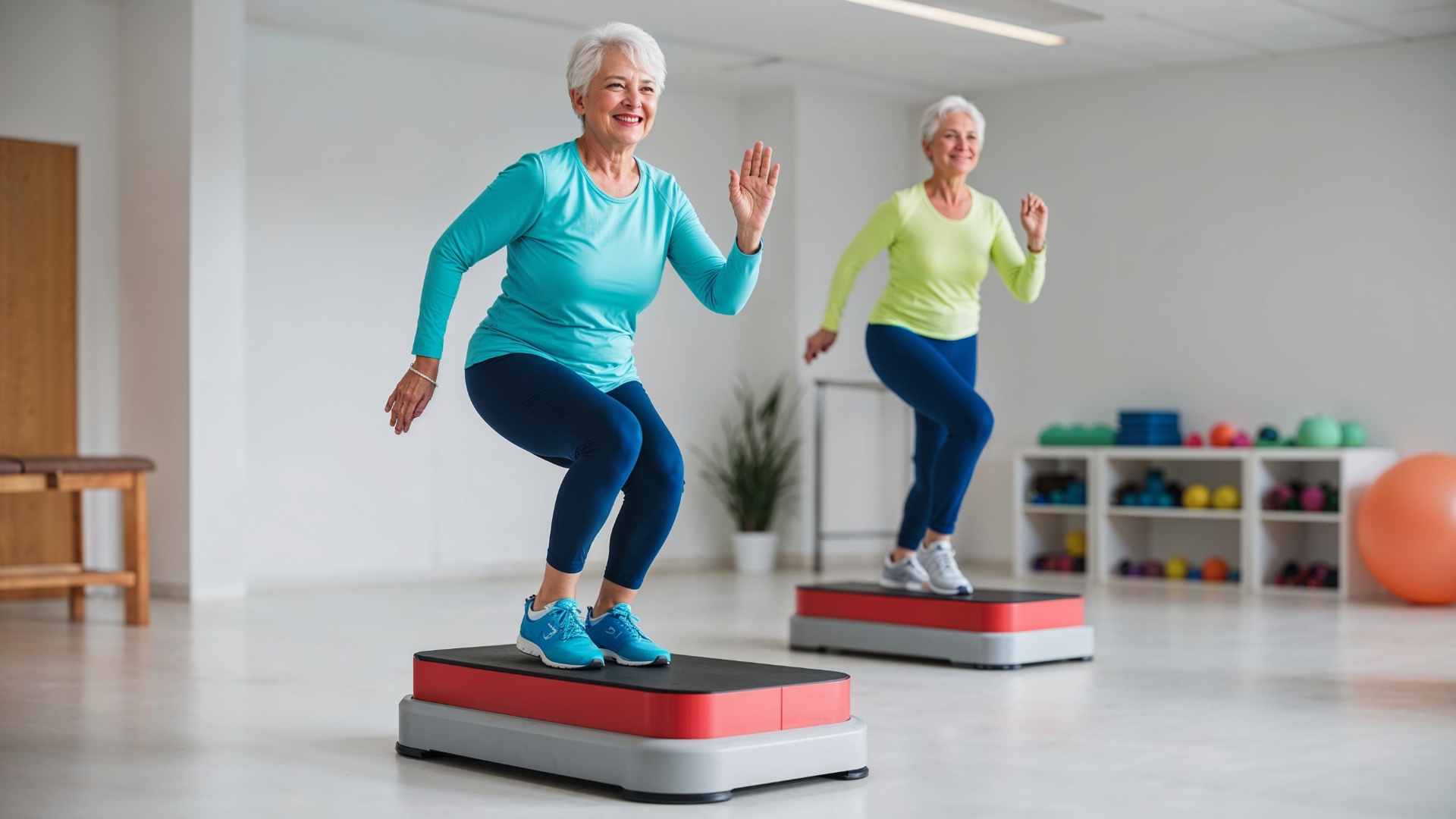
Why HIIT Workouts For Seniors Are Worth Trying
Fitness trends come and go, but HIIT workouts have proven to stand the test of time. As an older adult, you may be wondering if this high-intensity trend is really for you. The truth is that HIIT workouts for seniors are possible and incredibly rewarding when done safely. With the right guidance and a few adjustments, there’s no reason you can’t join in and make the most of this popular fitness style.
What Is HIIT?
HIIT, short for high-intensity interval training, is a fitness style that combines periods of intense effort with short recovery times. The idea is to push the body hard for a set period before switching to a period of low- to moderate-intensity activity. This cycle is then repeated several times. If you read “hard” and thought that’s not for you at your age, keep reading to find out what it really means!
Why HIIT Workouts Are Great For Seniors
Improves Cardiovascular Health
Using the concept of “intensity,” HIIT workouts can improve your cardiovascular health by strengthening your heart and enhancing blood circulation. The alternating periods of effort and recovery challenge your cardiovascular system, making it more efficient over time. This can also help lower blood pressure over time.
Burns Calories Faster
The time efficiency of HIIT makes it a powerhouse for seniors looking to maximize calorie burn in minimal time. Unlike steady-state cardio, HIIT triggers the afterburn effect, where your body continues burning calories for hours post-workout—even while resting. A study found that individuals performing HIIT burned almost 30% more calories than those doing moderate exercise, thanks to this metabolic boost. For time-crunched schedules, a 15-minute HIIT session can deliver the calorie-burning benefits of a 30-minute jog, with no marathon sessions required.
Aids Fat Loss
If moderately intense workouts aid with fat loss, HIIT must be considered a powerhouse for shedding extra weight. While HIIT won’t always lead to dramatic weight loss on the scale, research confirms it reshapes your body composition—burning stubborn fat while preserving lean muscle.
Research has shown that both HIIT and moderate-intensity workouts improve body fat percentage, waist circumference, and muscle mass equally in overweight adults. The kicker? HIIT delivers these changes in half the time.
Helps Regulate Blood Sugar Level
If you’re battling high blood sugar or managing conditions like type 2 diabetes, HIIT workouts can be a valuable addition to your routine. The intense bursts of activity followed by recovery periods improve how your muscles use glucose for energy. This process helps lower blood sugar levels both during and after exercise.
Over time, regular HIIT sessions can enhance insulin sensitivity, making it easier for your body to regulate blood sugar naturally. For older adults, these benefits can play a crucial role in managing health and reducing the risk of complications related to diabetes.
HIIT Workouts Are Adaptable To Your Abilities—At Any Age
Despite the high intensity it is known for, another upside of HIIT is that it can be tailored to any fitness level. That means you shouldn’t be worried about the “high intensity” label as a senior. Exercises can be modified to reduce impact, shorten the intensity periods, or increase recovery times.
Whether you’re a beginner, dealing with joint issues, or simply prefer a gentler approach, there are ways to tailor HIIT to your abilities. As a senior, you can adjust each interval’s duration, intensity, and impact to match your abilities.
Getting Started Safely With HIIT Workouts For Seniors
Before you get going, there are a few pre-HIIT boxes that need ticking.
- Consult with your physician or healthcare practitioner: Get medical clearance, especially if you have chronic conditions like heart disease, arthritis, or diabetes.
- Identify what “high intensity” means for you: It’s not about pushing to exhaustion—aim for a 7-8/10 effort level.
- Invest in proper footwear: Choose supportive, non-slip shoes to reduce the risk of falls and joint strain.
- Start with a warm-up: Spend 5-10 minutes on gentle stretches or light cardio (e.g., walking in place) to prepare your muscles & joints.
- Hydrate and fuel up: Drink water before and after your workout, and have a light snack if needed.
- Set up a safe workout space: Ensure your area is clutter-free, well-lit, and has a sturdy chair or wall for support if necessary.
- Know your limits: Begin with low-impact exercises and shorter intervals to build stamina gradually.
- Track your progress: Use a journal or app to monitor your workouts, heart rate, & how you feel after each session.
Sample HIIT Workouts For Seniors
1. Beginner-Friendly 10-Minute Seated HIIT
- Warm-Up (2 mins):
- Seated Arm Circles (1 minute): Extend arms to the sides and make small circles forward, then backward.
- Ankle Circles (1 minute): Lift feet off the floor and rotate ankles in circles.
- Workout (6 mins – repeat 2x)
- Seated Marching (30 seconds): Sit tall, lift one knee at a time (like marching), and swing opposite arms at a quick pace.
- Active Rest (60 seconds): Slow down and march at a slow, manageable pace.
- Seated Jabs (30 seconds): Punch forward with alternating arms, keeping movements controlled but at a quicker pace.
- Active Rest (60 seconds): Slow down and do seated jabs at a slow, manageable pace.
- Cool-Down (2 mins):
- Seated Forward Fold (1 minute): Reach hands toward your toes (or as far as comfortable).
- Shoulder Rolls (1 minute): Roll shoulders forward and backward in slow circles.
Modification: Use light hand weights for added resistance.
2. Low-Impact 15-Minute Standing HIIT
A step up for seniors with better balance and mobility.
- Warm-Up (3 mins):
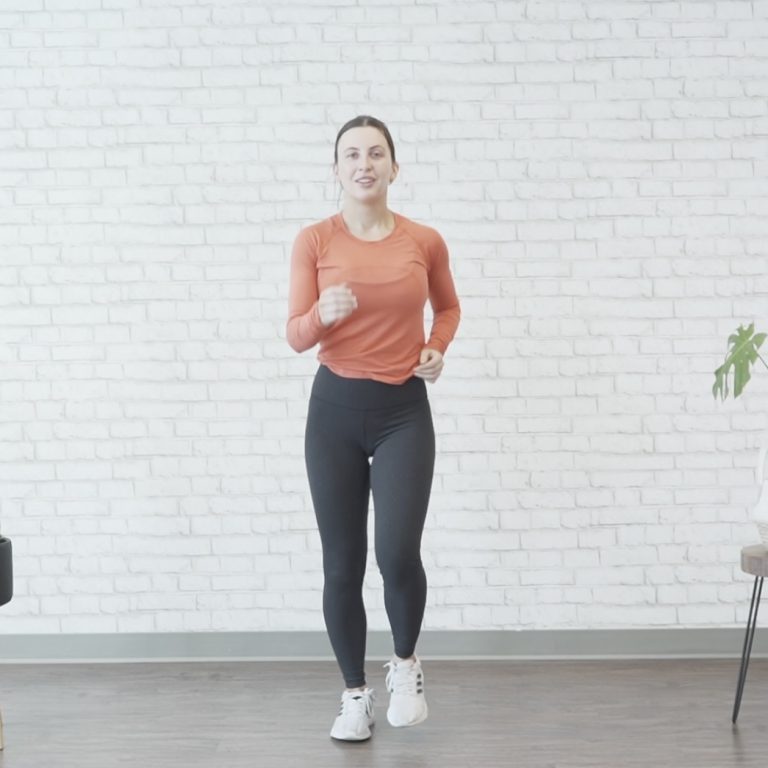
- Marching in Place (2 minutes): Lift knees gently while swinging arms.
- Arm Swings (1 minute): Swing arms side-to-side and across your chest.
- Workout (10 mins):
- Step-Ups (30 seconds): Step one foot onto a sturdy chair or low step, then the other. Step down one foot at a time.
- Active Rest (60 seconds): March in place at a slow, manageable pace.
- Standing Leg Lifts (30 seconds): Hold a chair for balance and lift one leg to the side, then switch.
- Active Rest (60 seconds): March in place at a slow, manageable pace.
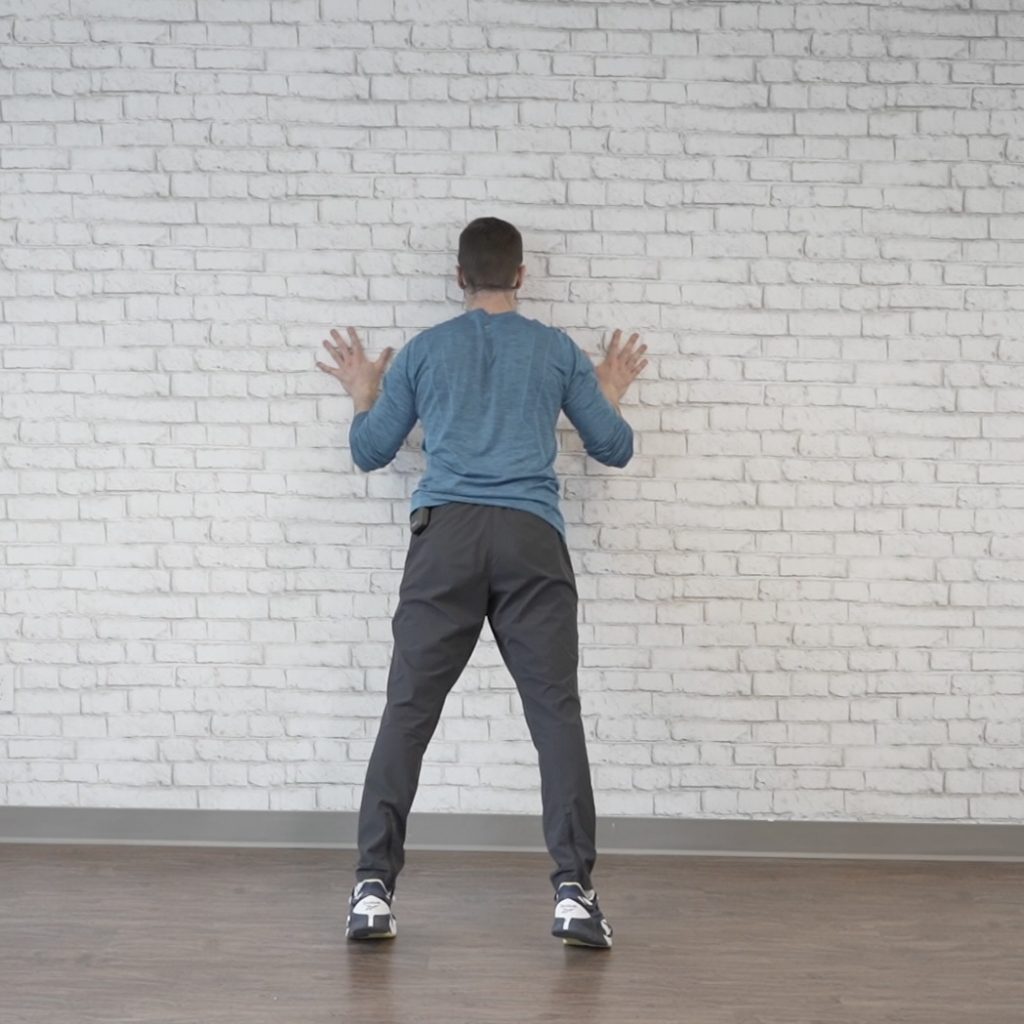
- Wall Push-Ups (30 secs): Stand arm’s length from a wall, place hands on the wall, and bend elbows to lean in, then push back.
- Active Rest (60 seconds): March in place or sway side-to-side.
- Cool-Down (2 mins):
- Calf Stretch (1 minute): Hold a chair, step one foot back, and press the heel into the floor.
- Shoulder Rolls (1 minute): Roll shoulders forward and backward.
3. 20-Minute Hybrid HIIT (Strength + Cardio)
For seniors ready to combine cardio with light strength training.
- Warm-Up (3 mins):
- Light Walking in Place (1 minute): Swing your arms as you walk.
- Dynamic Stretches (2 minutes): Arm circles and gentle torso twists.
- Workout (18 mins):
- Marching with High Knees (60 seconds): Lift knees higher than usual while marching at a quick pace.
- Active Rest (30 seconds): March in place at a slow, manageable pace.
- Bodyweight Squats (60 seconds): Stand with feet shoulder-width apart, lower into a chair-like position, and stand back up. Use a chair for support if needed.
- Active Rest (30 seconds): March in place at a slow, manageable pace.
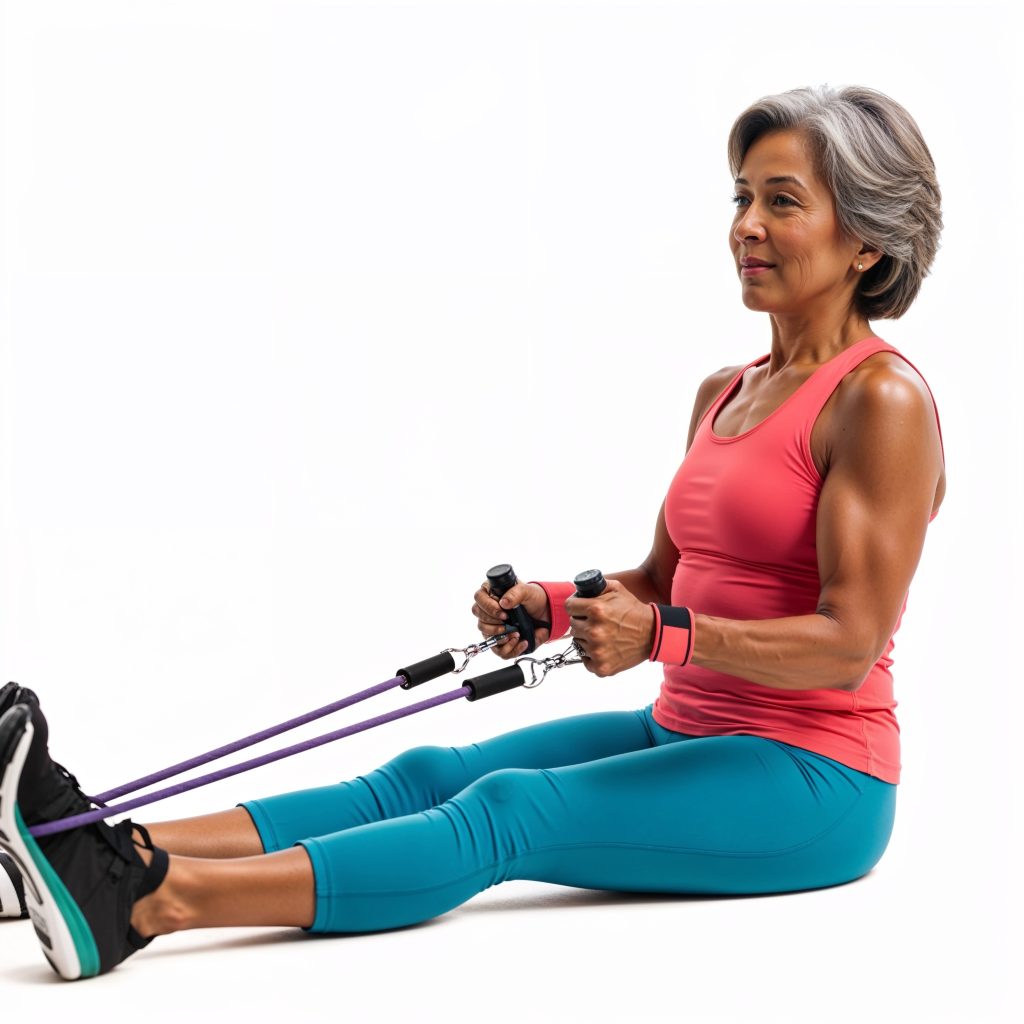
- Seated Resistance Band Rows (60 seconds): Sit with your legs extended, loop a resistance band around your feet, and pull the band toward your chest to complete each rep.
- Active Rest (30 seconds): March in place at a slow, manageable pace.
- Seated bicep curls (60 seconds): Sit with your back straight in a chair, holding a light pair of dumbbells (or soup cans). Curl your arms up in front of you bringing the dumbbells to your chest to complete each rep.
- Active Rest (30 seconds): Put the dumbbells down and continue to do bicep curls at a slow pace without weight.
- Repeat 3x.
- Cool-Down (2 mins):
- Hamstring Stretch (1 minute): Sit on the edge of a chair, extend one leg, and reach toward your toes.
- Deep Breathing (1 minute): Inhale for 4 counts, exhale for 6 counts.
Modification: Use lighter resistance bands or shorten work intervals.
Final Thoughts
HIIT workouts prove that staying active doesn’t have to mean long, exhausting routines. Short bursts of movement can build strength & keep your body feeling capable. The routines we’ve included offer a simple way to ease into HIIT workouts for seniors at your own pace. If you’re looking for a gentler approach, Fit & Fabulous Over 55 provides gentle, effective workouts tailored just for you. Let’s make HIIT workouts for seniors a part of your day—no stress, just results.