Knee Exercises for Seniors: 8 Safe Moves to Reduce Pain
Knee exercises for seniors are one of the most effective ways to reduce pain, improve stability, and stay independent at home. The best knee exercises for seniors strengthen the muscles around the knee joint, the quads, hamstrings, and calves — without putting stress on the joint itself. Done consistently, these moves can reduce stiffness, ease everyday aches, and make climbing stairs, getting up from a chair, and walking feel noticeably easier.
Weak knee muscles are one of the leading causes of fall risk and reduced mobility in adults over 60. The good news: you don't need a gym, heavy weights, or any floorwork to get results. The eight exercises below are safe, chair-friendly, and designed specifically for seniors.
Why Knee Strength Matters as You Age
Your knees bear more load than almost any other joint in your body. Every step you take sends roughly 1.5 times your body weight through the knee joint. With age, the cartilage that cushions the joint thins, the muscles that support it weaken, and inflammation from conditions like arthritis can make movement painful and unpredictable.
But muscle doesn't disappear overnight — it responds to use. Research consistently shows that targeted strengthening exercises reduce knee pain in older adults and improve functional movement. The key is working the supporting muscles (quads, hamstrings, glutes, and calves) rather than loading the joint directly.
Regular knee exercises for seniors also improve proprioception — your body's ability to sense where your joints are in space — which directly reduces fall risk. For more on how leg strength connects to balance, the Fall Prevention Exercises class at Better5 is a great companion to this routine.
8 Knee Exercises for Seniors (No Floorwork Required)
Do these exercises seated or standing with support. A sturdy chair is all the equipment you need. Aim for 2–3 sessions per week, with a rest day between sessions. Start with one set of 8–10 reps and build to two sets as you get stronger.
1. Seated Leg Extension
Sit tall in your chair with your feet flat on the floor. Slowly straighten one leg until it's parallel to the floor, squeezing your quad at the top. Hold for 2 seconds, then lower with control. Repeat 10 times per leg.
Why it works: Directly strengthens the quadriceps — the muscle group most responsible for stabilizing the knee during walking and standing up.
2. Seated Heel Raises
Sit upright and lift both heels off the floor as high as comfortable, pressing through the balls of your feet. Hold 2 seconds, lower slowly. Do 12–15 reps.
Why it works: Strengthens the calves and improves circulation in the lower legs, which supports overall knee stability.
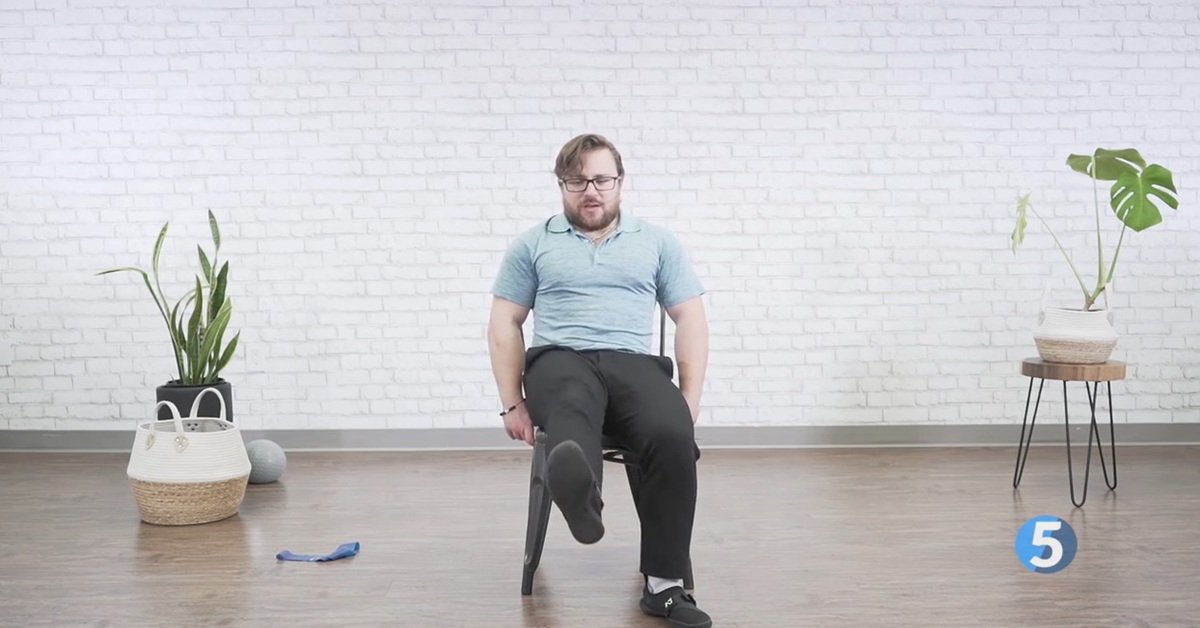
3. Straight Leg Raise (Seated)
Tighten your thigh muscle on one leg, then lift the entire leg a few inches off the chair. Keep the leg straight and the core gently engaged. Hold 3 seconds. Lower and repeat 8–10 times each leg.
Why it works: Builds quad strength through a short range of motion with zero joint compression, ideal for anyone with knee pain or arthritis.
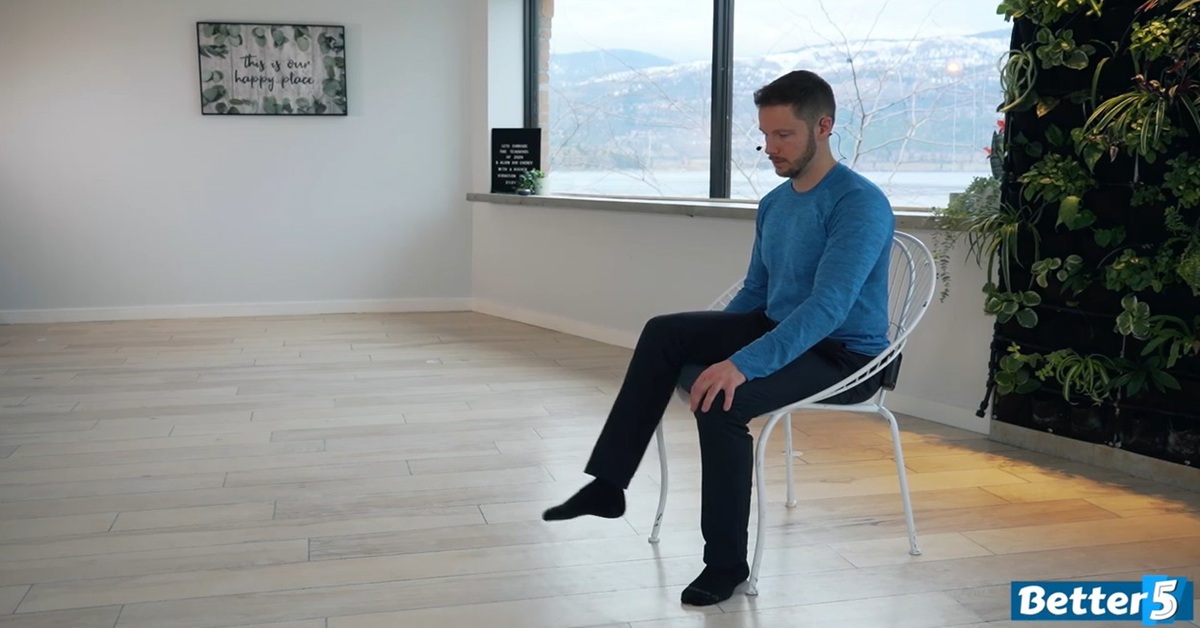
4. Seated Knee Flexion
Sit forward slightly in your chair. Slowly bend one knee, sliding your foot back under the chair as far as comfortable. Hold 2–3 seconds, then return to start. Repeat 10 times each leg.
Why it works: Activates the hamstrings, which are the primary muscles that protect the back of the knee from hyperextension.
5. Standing Chair Squat (Sit-to-Stand)
Sit near the edge of your chair with feet hip-width apart. Lean forward slightly (nose over toes), then push through your heels to stand up slowly. Pause at the top, then lower yourself back down with control — don't drop back into the seat. Do 8–10 reps.
Why it works: This functional movement trains quads, glutes, and hamstrings together, exactly what your body needs for stairs, getting in and out of a car, and rising from low surfaces.
6. Standing Calf Raise (with Chair Support)
Stand behind your chair, lightly resting your hands on the back for balance. Rise up slowly onto the balls of your feet, hold 2 seconds, then lower with control. Do 12–15 reps.
Why it works: Strengthens the gastrocnemius and soleus muscles that absorb impact below the knee, reducing stress on the joint above.
7. Standing Side Leg Raise
Stand behind your chair and hold the back for support. Keep both legs straight and slowly lift one leg out to the side, about 12 inches. Hold 2 seconds. Lower. Repeat 10 times each leg.
Why it works: Strengthens the hip abductors, muscles that play a critical role in keeping the knee aligned properly during walking and balance activities. Weak hip abductors are a common, often overlooked contributor to knee pain in seniors.
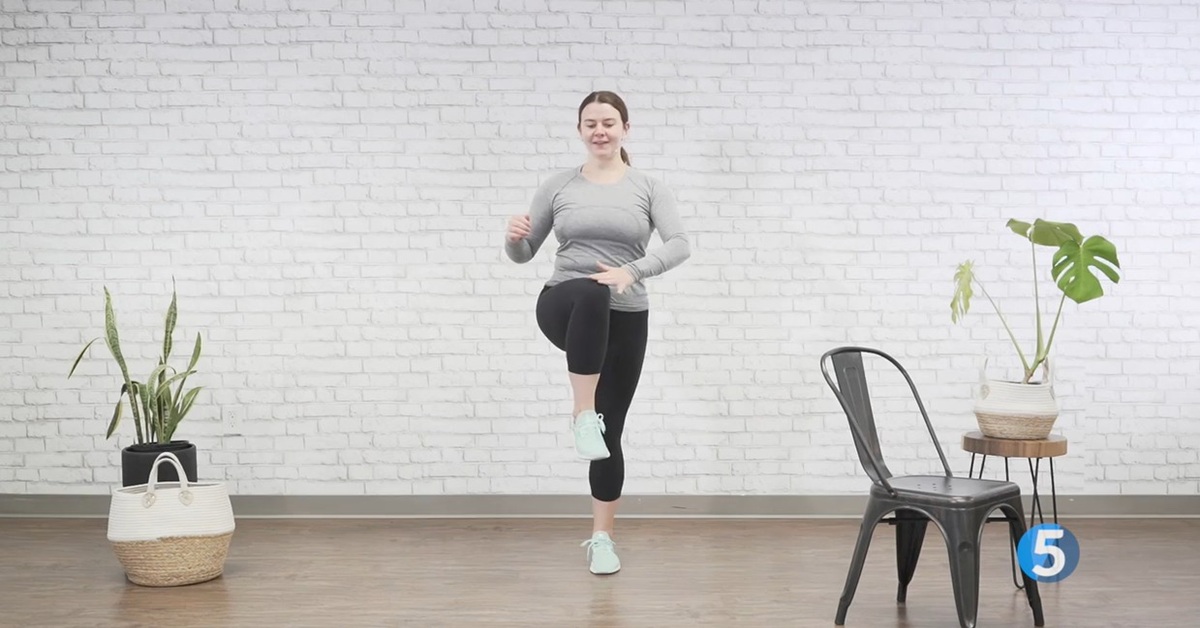
8. Terminal Knee Extension (Standing)
Stand with a slight bend in both knees, holding the chair back. Slowly straighten one knee from slightly bent to fully extended, squeezing your quad as you lock out. Release slowly. Do 10 reps each leg.
Why it works: This targeted movement isolates the VMO (vastus medialis oblique) — the teardrop-shaped quad muscle that's essential for knee tracking and stability. Physical therapists commonly use this exercise for knee rehab.
How Often Should Seniors Do Knee Exercises?
For most seniors, 2–3 sessions per week is the sweet spot. This gives your muscles enough stimulus to get stronger while allowing recovery time between sessions. If you're managing arthritis or recovering from a knee injury, start with 2 sessions per week and only increase when movement feels comfortable.
Consistency matters more than intensity. Ten minutes of focused knee work three times a week will build more lasting strength than a single 45-minute session once a week. Think of it as daily maintenance — like brushing your teeth for your joints.
For a structured program that takes the guesswork out of daily knee care, the Daily Knee Restoration class at Better5 is a 7-day guided program designed specifically to reduce knee pain and rebuild function from the ground up — all done seated or standing with chair support.
What to Do If Your Knees Hurt During Exercise
A little muscle fatigue is normal and expected. Sharp, stabbing, or worsening pain is not — stop the exercise if you feel that. Here's a simple guide:
Mild ache or stiffness: Okay to continue — reduce range of motion and go slower
Pain that increases during the movement: Stop, rest, and try a lower-intensity variation
Pain above a 4/10: Skip that exercise for the day; try again next session
Swelling or heat in the joint: Rest the joint, apply ice 10–15 minutes, consult your doctor if it persists
Most older adults find that the first session or two produces mild post-exercise soreness — this is normal and usually resolves within 24–48 hours. After a few weeks of consistent training, many people notice their knees feeling more stable and their pain diminishing noticeably.
If knee pain is a daily challenge for you, the Improved Knee Strength & Mobility class at Better5 walks you through seated chair exercises specifically designed to reduce pain and rebuild range of motion safely.
Adding Variety: Seated Knee & Hip Work
The knee and hip joints work as a team. Tightness or weakness in the hip often shows up as knee pain — because when the hip can't do its job, the knee compensates. Pairing the exercises above with some targeted hip work is one of the smartest moves you can make for long-term joint health.
The Seated Knee & Hip Exercises class at Better5 is built around this exact connection — using gentle seated movements to address both joints together, making sitting, walking, and standing easier over time.
For more on building lower-body strength without floorwork, the hip exercises for seniors guide on the Better5 blog covers the key hip moves that support healthy knees.
The Bottom Line
Knee exercises for seniors work — and they don't have to be complicated. The eight moves above cover everything you need to strengthen the muscles that support the knee, reduce pain, and move with more confidence every day. Start with two sessions this week. Notice how your knees feel on day 4.
Small, consistent effort adds up faster than most people expect.
Ready to take your knee health further? Explore Better5 classes built for seniors — including guided knee, hip, and balance programs.